Discover Parks & Wildlife contains affiliate links and is a member of the Amazon Services LLC Associates Program. If you make a purchase using one of the Amazon links, we may receive compensation at no extra cost to you. We may also use select AI tools to support our creative process, but all content is reviewed, refined, and finalized by our human team. See our disclosure policy and our AI use policy for more information.
12 Epic Day Hikes Across Europe That Reward Without Technical Skills
Hiking in Europe is a special kind of magic. It’s a continent where you can start your morning on a trail carved by Roman soldiers, pause for a lunch of cheese and bread that tastes like history itself, and end your day in a village that looks like it was plucked from a storybook.
Unlike trekking through vast, uninterrupted wilderness, a European hike often weaves through a tapestry of dramatic nature and deep-rooted culture. One minute you’re navigating a high alpine pass with views that stretch for miles, and the next you’re meandering through a vineyard where the grapes have been grown the same way for centuries.
The beauty of it all is how accessible some of these incredible landscapes are. You don’t need to be a seasoned mountaineer with an ice axe and a death wish to experience the best views. Many of the most stunning paths are well-maintained trails that simply ask for a good pair of shoes, a bit of energy, and a willingness to be completely captivated.
You can conquer a dramatic Scottish ridgeline, wander along the impossibly blue Italian coast, or stroll through a Swiss valley so perfect it feels CGI-generated, all before dinner. It’s about earning your views, one step at a time (and then rewarding yourself with a slice of cake that’s locally famous).
Cinque Terre Trail – Italy
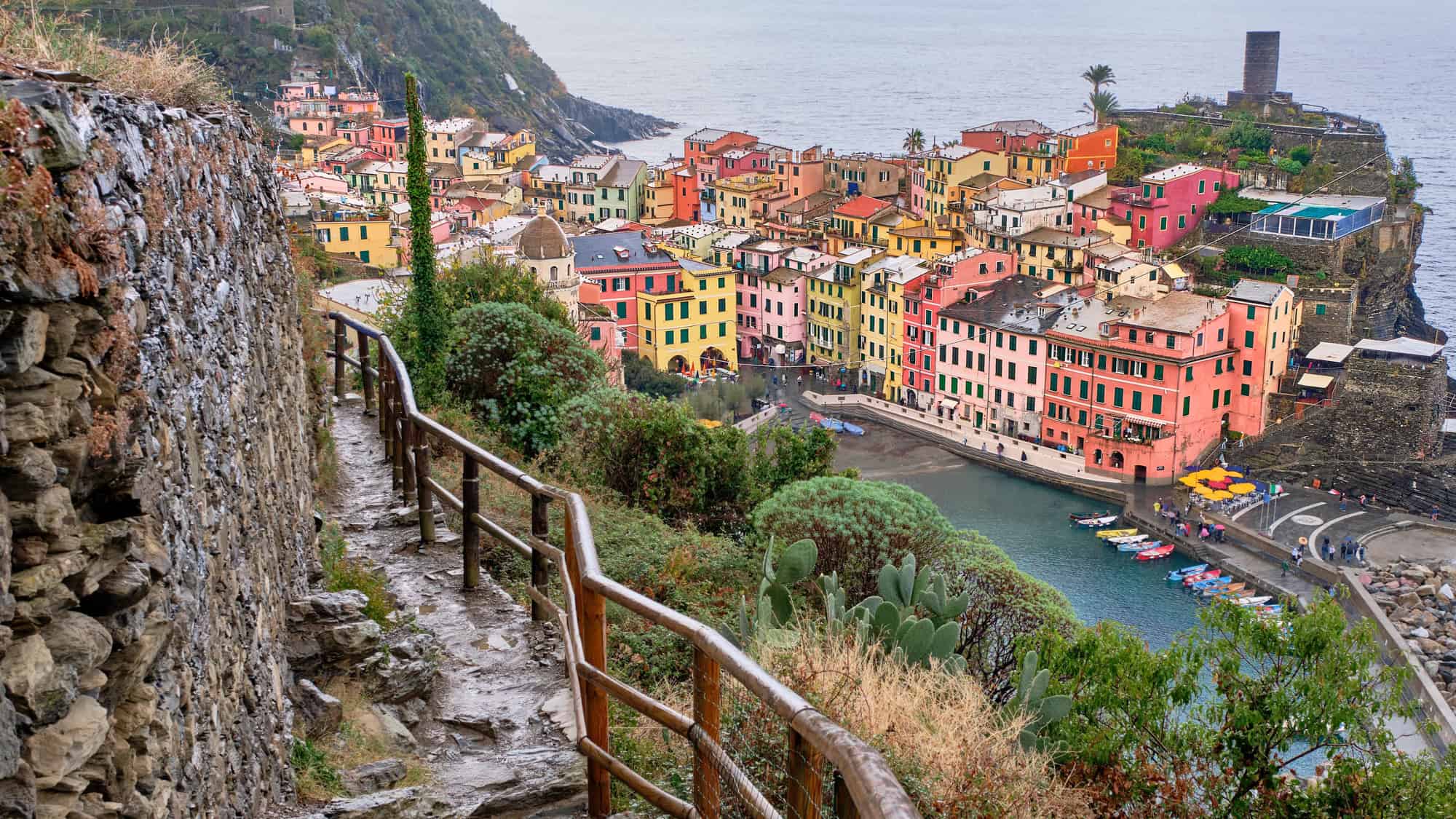
The Cinque Terre, or “Five Lands,” is a string of five ancient fishing villages clinging to the Italian Riviera like colorful barnacles on a cliff. For centuries, these towns were linked only by mule tracks, the sea, and a railway line cut into the rock. Today, you can follow these pathways.
The most famous of these paths is the Sentiero Azzurro, or Blue Trail, which connects all five villages. While a section of the path between Riomaggiore and Manarola, the famed Via dell’Amore, has been closed for years due to a landslide (because even Italy’s most romantic path has drama), the segments linking the other villages are open and offer an absurdly scenic coastal workout.
The trail from Monterosso to Vernazza is a popular choice, winding through terraced vineyards and fragrant lemon groves. You’ll be treated to jaw-dropping views of the turquoise Ligurian Sea, with Vernazza’s harbor appearing like a screensaver come to life.
The path is well-maintained but involves a fair number of steps, so your glutes will definitely know you’ve been hiking. But it’s a good way to justify the extra scoop of gelato you’ll inevitably get later. Just be sure to purchase a Cinque Terre Card, as it’s required to access the trail and helps fund its maintenance.
Plitvice Lakes Loop – Plitvice Lakes NP, Croatia
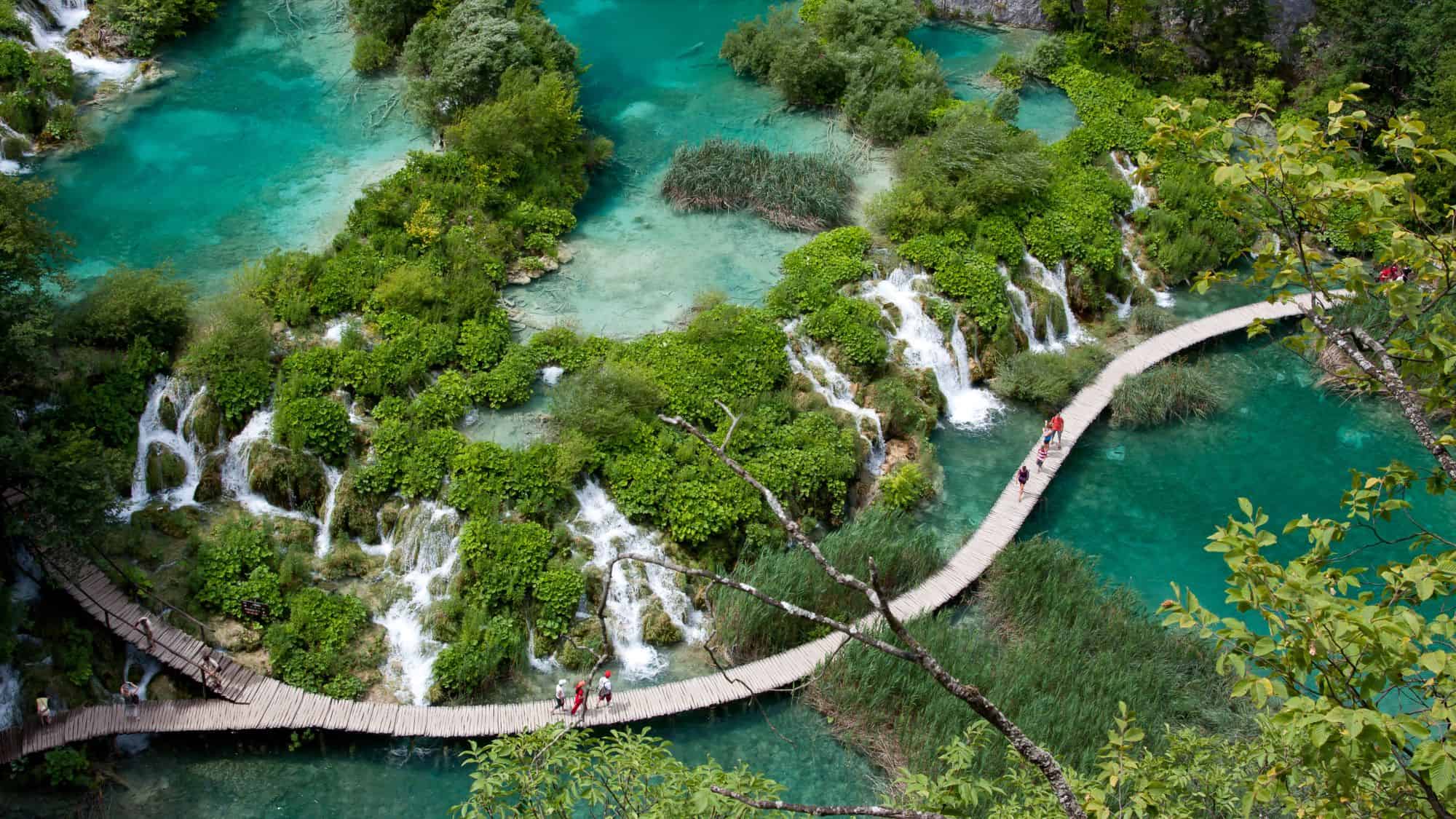
Plitvice Lakes National Park feels like a place that was dreamed up by a fantasy author and then accidentally brought to life. It’s a sprawling wonderland of 16 terraced lakes, all interconnected by a series of spectacular waterfalls and cascades. The water is an almost impossibly vibrant shade of turquoise, thanks to the unique combination of minerals and organisms in the karstic landscape.
The park is a UNESCO World Heritage Site, and for good reason, it’s a geological and hydrological phenomenon. A network of wooden boardwalks and pathways snakes around and across the water, allowing you to walk right over the gushing falls and crystalline pools without getting your feet wet… unless you’re clumsy, which is a definite possibility here.
The “Upper Lakes to Lower Lakes” loop is a fantastic way to see the highlights. You’ll wander through lush forests, past roaring waterfalls, and along serene lakeshores. It’s a choose-your-own-adventure kind of place with several marked routes of varying lengths, so you can tailor your hike to your energy level.
The trails are mostly flat and easy to navigate, making it a perfect spot for a hike that delivers maximum visual reward for relatively minimal effort.
Lake Bled Panorama Trail – Slovenia
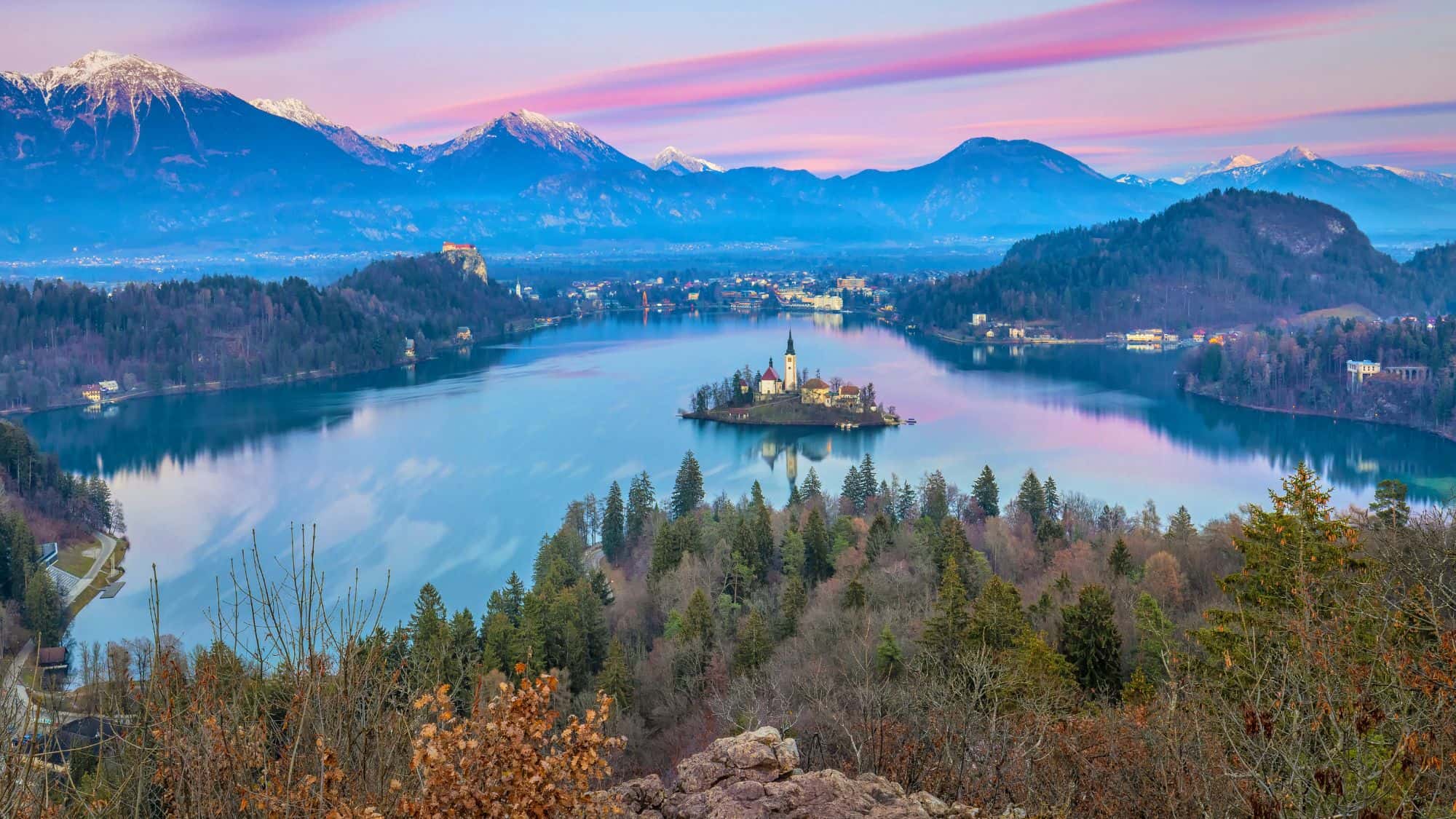
Lake Bled is the very definition of a fairytale setting. With its placid blue-green water, a tiny island topped with a church, and a medieval castle perched on a clifftop, it looks almost too perfect to be real.
While many visitors are content to stroll around the lake’s edge, the real magic happens when you gain a bit of elevation. The “Ojstrica” and “Mala Osojnica” viewpoints offer the iconic panoramic shot you’ve seen all over social media, and the trail to get there is a short but satisfyingly steep climb.
Starting from the western shore of the lake, the path winds up through a dense forest. It can be a bit of a huff-and-puff ascent, but it’s mercifully brief. Ojstrica is the lower of the two viewpoints and features a perfectly placed bench for catching your breath and soaking in the view.
For an even more epic perspective, continue a little further up to Mala Osojnica. From here, the entire scene unfolds below you, the Julian Alps providing a dramatic backdrop. It’s the kind of view that makes you feel like you’ve stumbled into a landscape painting. The best part is that this million-dollar view can be achieved in under an hour, leaving you plenty of time to reward yourself with a slice of Bled’s famous cream cake.
Quiraing Loop – Isle of Skye, Scotland
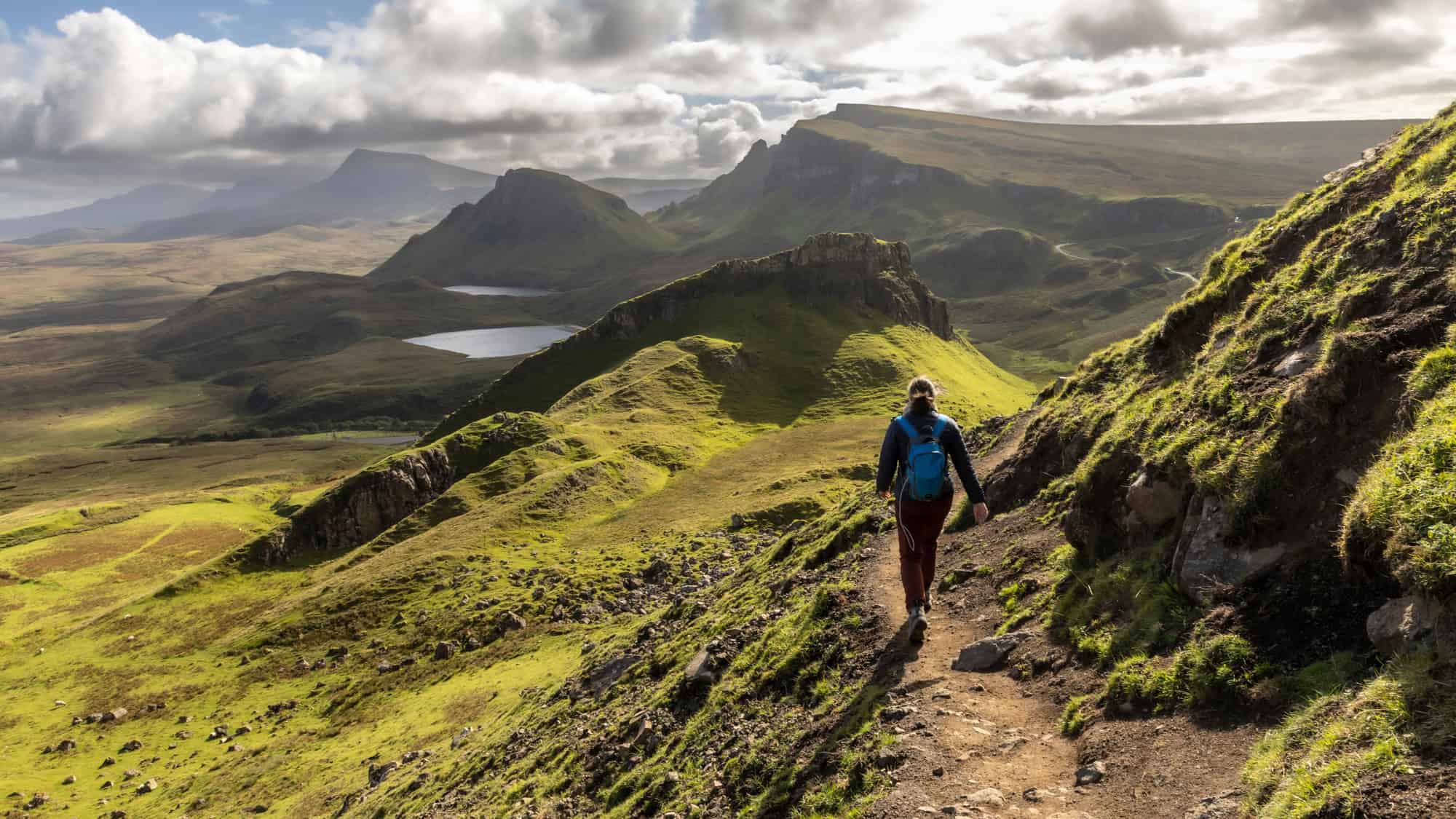
The Isle of Skye is a place of myth and dramatic landscapes, and the Quiraing is its crown jewel. This otherworldly landslip on the Trotternish Peninsula looks like a landscape that is still in the process of being formed.
Giant pinnacles of rock, like “The Prison” and “The Needle,” jut out from the earth, while hidden plateaus and cliffs create a scene of wild, untamed beauty. The Quiraing Loop is arguably one of the most spectacular walks in all of Scotland. The path traverses this bizarre and beautiful terrain, offering views that seem to change with every step.
One moment you’re looking down on a secret, grassy tableland, the next you’re gazing out across the sea towards the mainland. The trail itself is a narrow track that hugs the side of the escarpment. It’s not technically difficult, but you’ll want a good head for heights and sturdy footwear, as the path can be muddy and uneven.
The weather on Skye is famously fickle, so be prepared for sun, rain, or wind (possibly all three in the span of ten minutes). But the dramatic, shifting light only adds to the atmosphere, making the whole experience feel even more epic.
Samaria Gorge – Crete, Greece
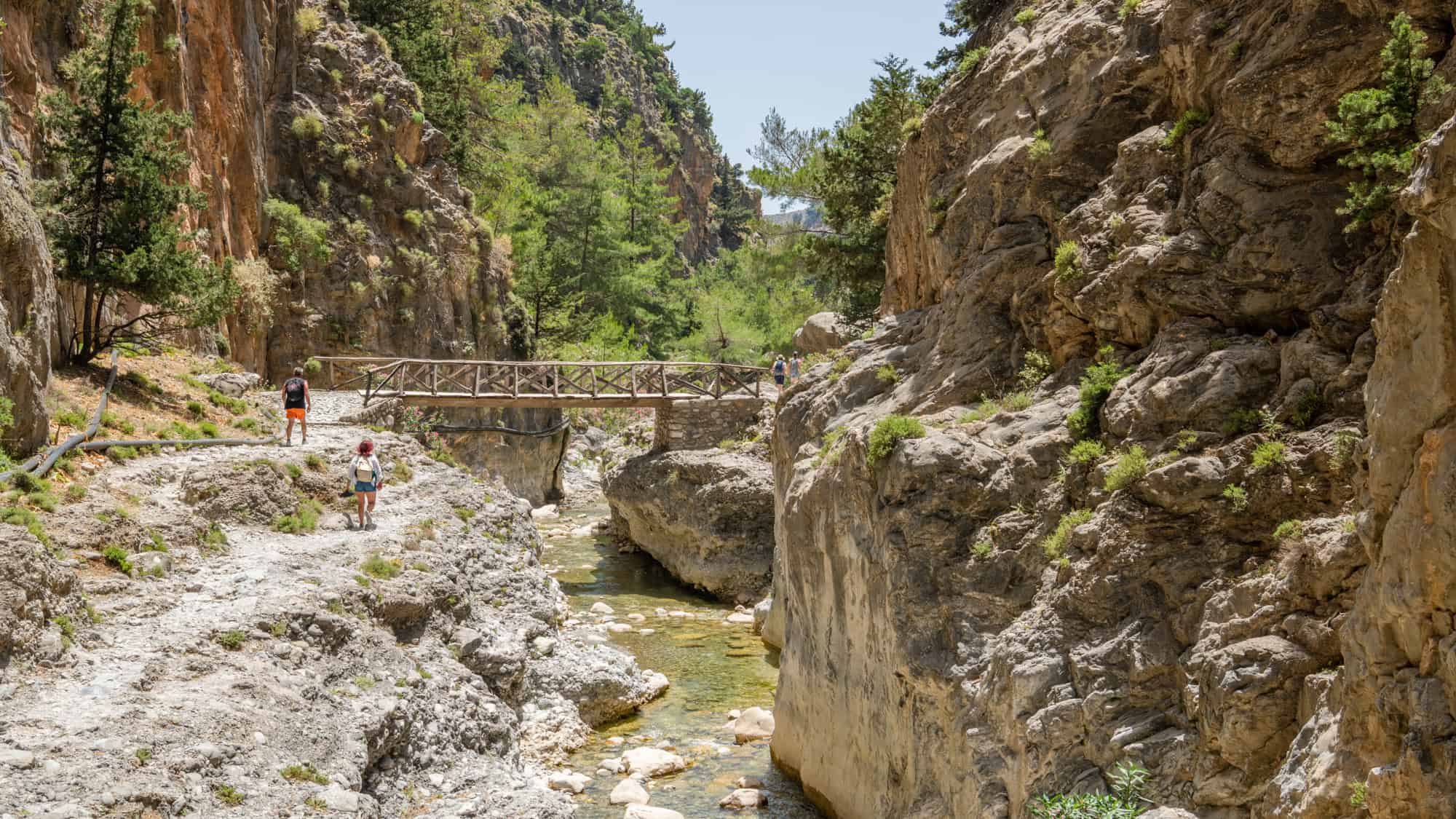
Hiking the Samaria Gorge is a rite of passage for many visitors to Crete. It’s one of Europe’s longest and most famous gorges, a massive geological rift that slices through the White Mountains for about 10 miles.
The trek is a one-way, downhill affair, which sounds easy but is a serious workout for your knees and thighs. You start high up at Xyloskalo, over 4,000 feet above sea level, and descend all the way to the Libyan Sea. And the scenery is nothing short of spectacular, changing dramatically as you go.
You’ll walk through forests of cypress and pine, cross a riverbed dozens of times on stepping stones, and pass by soaring cliffs that reach nearly 1,000 feet high. The most famous point is the “Iron Gates,” where the gorge narrows to only a width of just 13 feet. It’s a truly humbling experience to stand between such immense walls of rock.
The trail ends in the coastal village of Agia Roumeli, where you can reward your tired legs with a dip in the sea and a celebratory meal at a seaside taverna. A ferry then takes you to a nearby town where buses wait to transport you back.
Lauterbrunnen Valley Trail – Switzerland
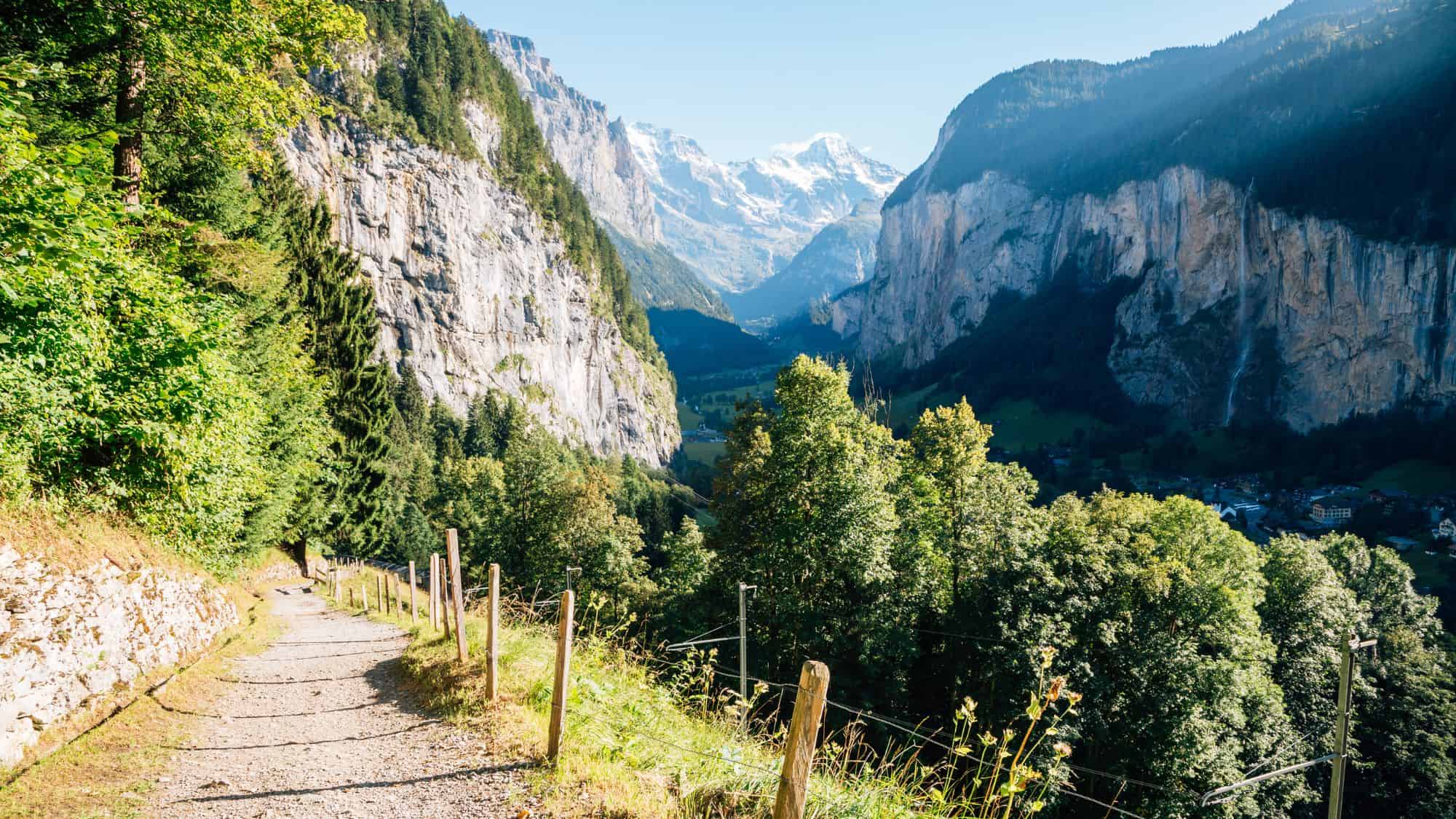
The Lauterbrunnen Valley is so ridiculously beautiful that it almost seems fake. It’s a classic U-shaped glacial valley, flanked by sheer cliffs from which 72 waterfalls cascade down into the lush meadows below. J.R.R. Tolkien was so inspired by its beauty that it became his model for Rivendell, and it’s easy to see why.
The valley floor walk is one of the easiest and most rewarding hikes in the Swiss Alps. The trail is mostly flat and wide, making it accessible to pretty much everyone. You can start in the village of Lauterbrunnen and simply follow the path south towards Stechelberg.
Along the way, you’ll be surrounded by some of the most iconic peaks of the Bernese Oberland, including the Eiger, Monch, and Jungfrau. As you walk deeper into the valley, you’ll pass charming farmhouses, grazing cows with their clanging bells, and more waterfalls than you can count (seriously, bring extra SD cards if you’re into photos). The most famous waterfall is Staubbach Falls, which plunges nearly 1,000 feet right near the village.
The trail eventually leads to the cable car station for the Schilthorn, but you can turn around whenever the cows start giving you judgmental looks. It’s a hike that allows you to be fully immersed in quintessential Swiss scenery without any of the heart-pounding ascents (or yodel-induced side stitches).
Camino de Santiago – Spain
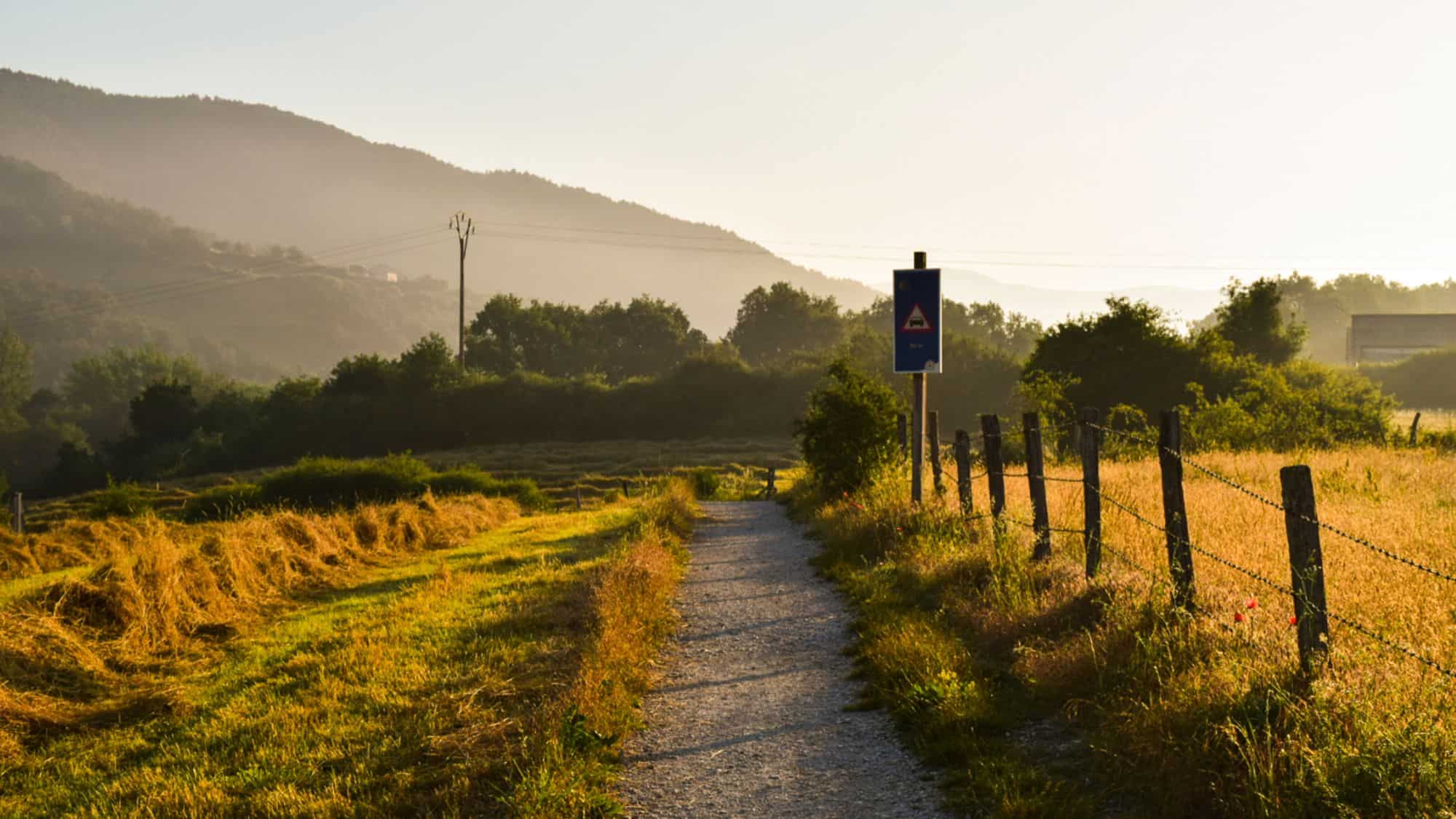
The Camino de Santiago, or the Way of St. James, isn’t a single trail but a vast network of pilgrimage routes that all lead to the cathedral of Santiago de Compostela in northwestern Spain.
While walking the entire thing can take over a month, you don’t need to quit your job to experience its magic (unless you want to, but that’s HR’s problem). Thousands of people walk short sections as day hikes or multi-day trips.
One of the most popular and scenic sections for a day hike is the final stage into Santiago from O Pedrouzo, a manageable 12-mile walk. This part of the Camino Frances, the most famous route, takes you through fragrant eucalyptus forests, sleepy Galician villages, and rolling green countryside. You’ll share the path with pilgrims from all over the world, a moving river of humanity carrying their stories and intentions. The sense of camaraderie is palpable.
The trail culminates at the Monte do Gozo (Mount of Joy), where pilgrims traditionally catch their first glimpse of the spires of the Santiago de Compostela Cathedral. From there, it’s a final descent into the city and through the historic streets to the magnificent Praza do Obradoiro. It’s a hike that’s as much about the inner journey and shared human experience as it is about the physical path.
Lake Bohinj to Savica Waterfall – Slovenia
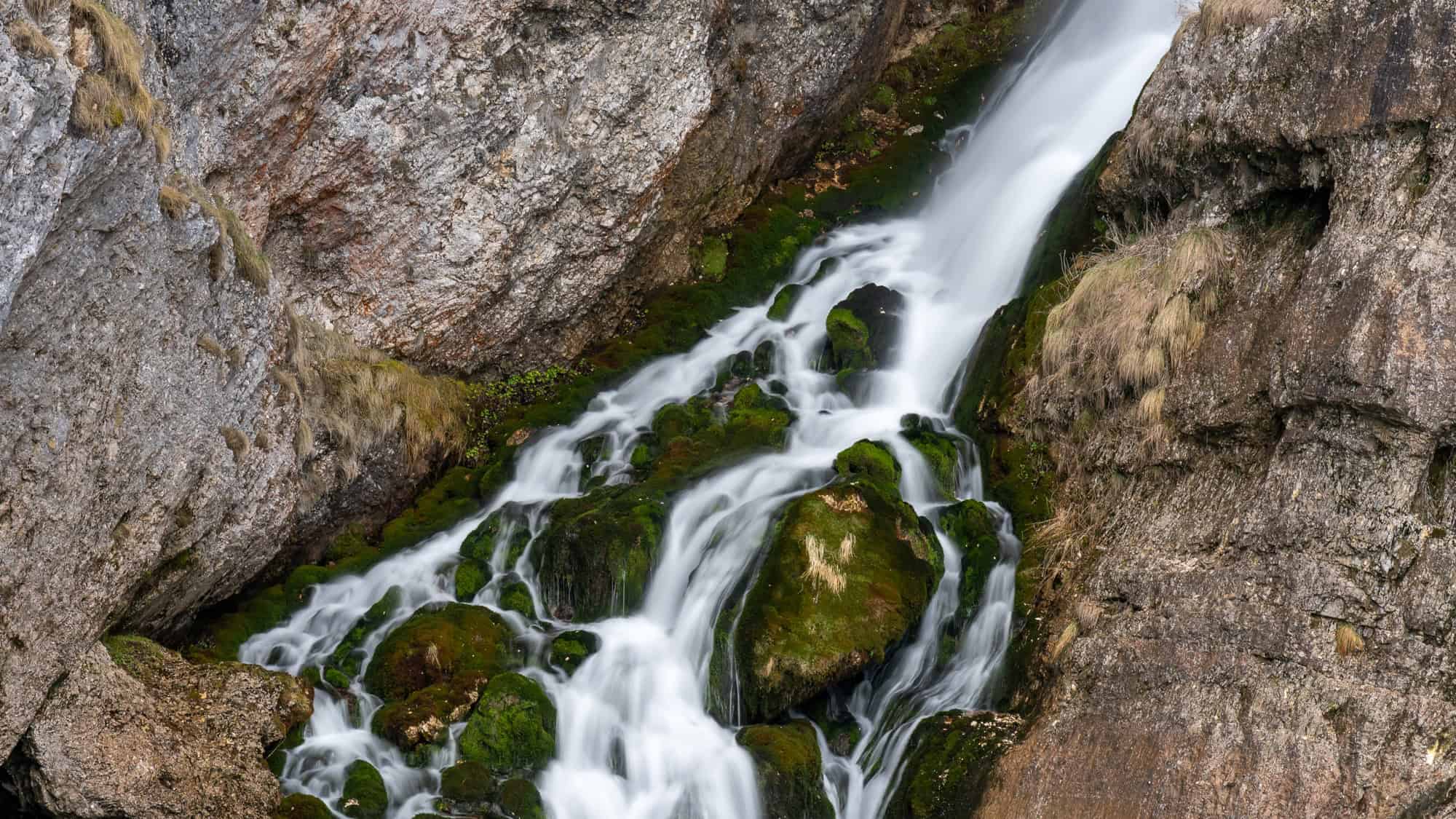
While Lake Bled gets most of the spotlight, its larger, wilder neighbor, Lake Bohinj, is arguably just as stunning and far less crowded (unless you count the local ducks).
Located in the heart of Triglav National Park, Slovenia’s only national park, Lake Bohinj is a pristine alpine lake surrounded by the towering peaks of the Julian Alps. A beautiful, mostly flat trail runs along the lake’s northern shore, offering a tranquil and scenic walk.
Starting from the village of Ribcev Laz, with its iconic stone church, you can follow the path for about 3 miles to the settlement of Ukanc. The walk takes you through peaceful forests and along pebble beaches, with the crystal-clear water of the lake always by your side (though, warning: dipping your toes can be bracing even in summer).
From Ukanc, it’s another easy walk of about an hour to the entrance of the Savica Waterfall. Savica is one of Slovenia’s most famous falls, gushing out from a crack in a sheer cliff face and plunging into a vibrant emerald pool below. From the entrance, it’s a steady climb up 553 stone steps to reach the waterfall itself.
Glendalough Spinc Trail – Ireland
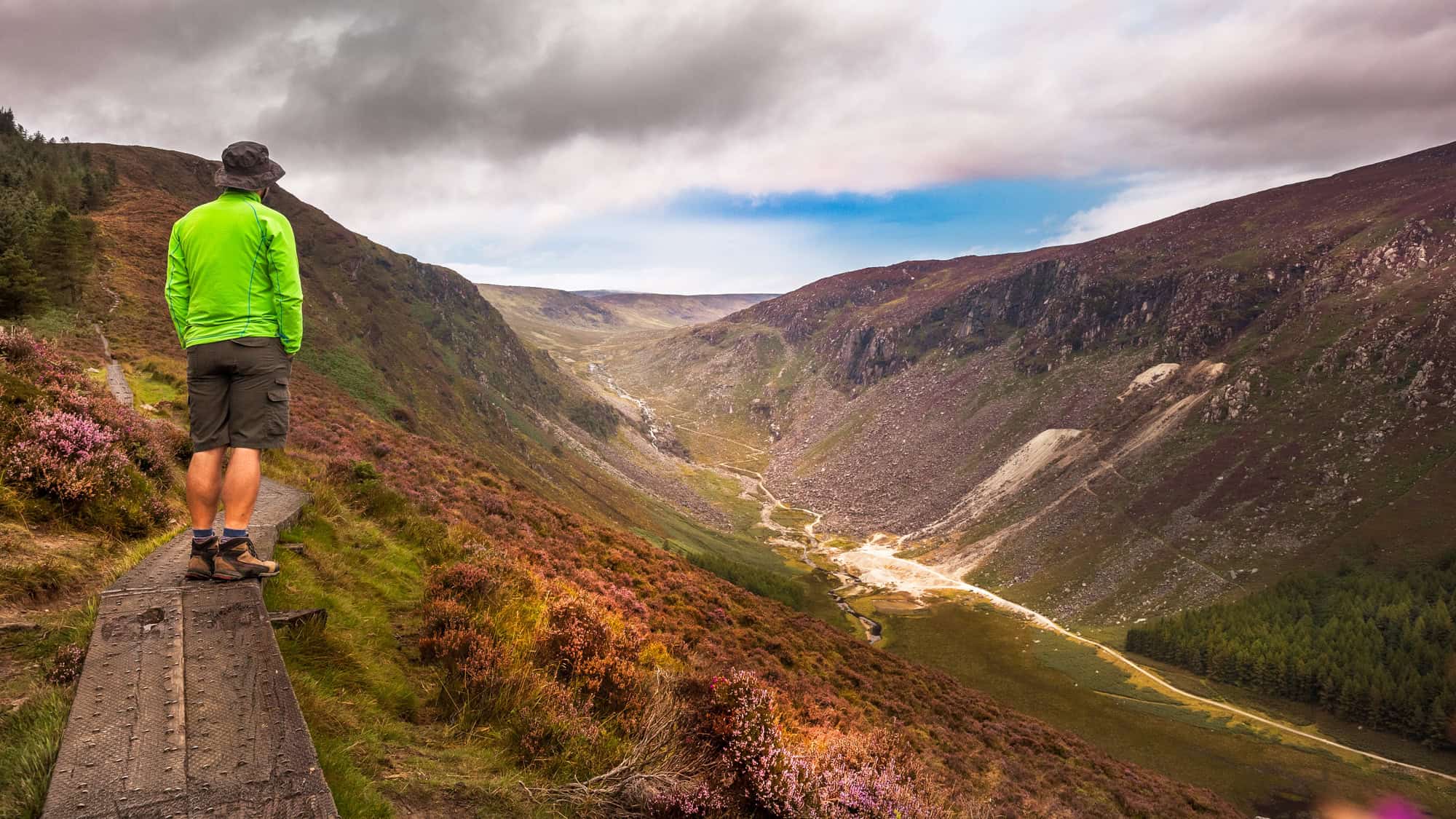
Glendalough, which translates to “valley of two lakes,” is one of Ireland’s most beautiful and historic sites. Located in the heart of the Wicklow Mountains National Park, it combines stunning natural scenery with the haunting ruins of an early medieval monastic settlement. It’s perfect if you prefer your views with a side of ancient mystery.
The Spinc and Glenealo Valley Walk (the “White Route”) is the undisputed champion for epic views. “Spinc” is an Irish word meaning “pointed hill,” and the trail involves a steep climb up a wooden boardwalk of about 600 steps. It’s a bit of a leg-burner, but the payoff is immediate and immense.
Once you reach the top, you’re rewarded with breathtaking views over the Upper and Lower Lakes and the ruined monastery. The trail then follows the ridge of the Spinc, before descending into the glacially-carved Glenealo Valley. This part of the walk is often quieter, and you might spot herds of wild deer or feral goats doing their best impression of unbothered locals.
The path then follows the valley floor back towards the lakes, completing a spectacular and varied loop. It’s a hike that perfectly blends Ireland’s rugged natural beauty with its deep, ancient history. Plus, a misty morning will make you feel like you’ve wandered onto a movie set.
Trolltunga Approach – Norway (Short Route Option)

Trolltunga, or the “Troll’s Tongue,” is one of Norway’s most iconic and photographed natural landmarks (though you’ll get bragging rights only if you survive narrating your day to family afterward). This sliver of rock juts out horizontally from a mountain about 2,300 feet above the shimmering Lake Ringedalsvatnet, and getting the classic photo of yourself standing on the edge is a bucket-list item for many. Though, warning: your palms may get sweaty just from the thought.
The traditional hike is a grueling, 10-to-12-hour, 17-mile round trip, which is a little much for most casual travelers. However, a new access road and parking area at P3 Magelitopp have made it much more manageable.
Starting from this higher trailhead shaves off a significant amount of distance and elevation gain, cutting the round-trip hike to a more reasonable (but still challenging) 12 miles. The trail from P3 takes you through Norwegian high mountain terrain, a moonscape of exposed rock, patches of snow, and streams that are always colder than they look. The first few miles are a steady ascent before the terrain levels out.
Be prepared for a long day and variable weather, and always bring plenty of food, water, and warm layers. No one wants to be remembered as the hiker who thought shorts and a rainstorm were a good combo.
Rila Lakes Trail – Bulgaria
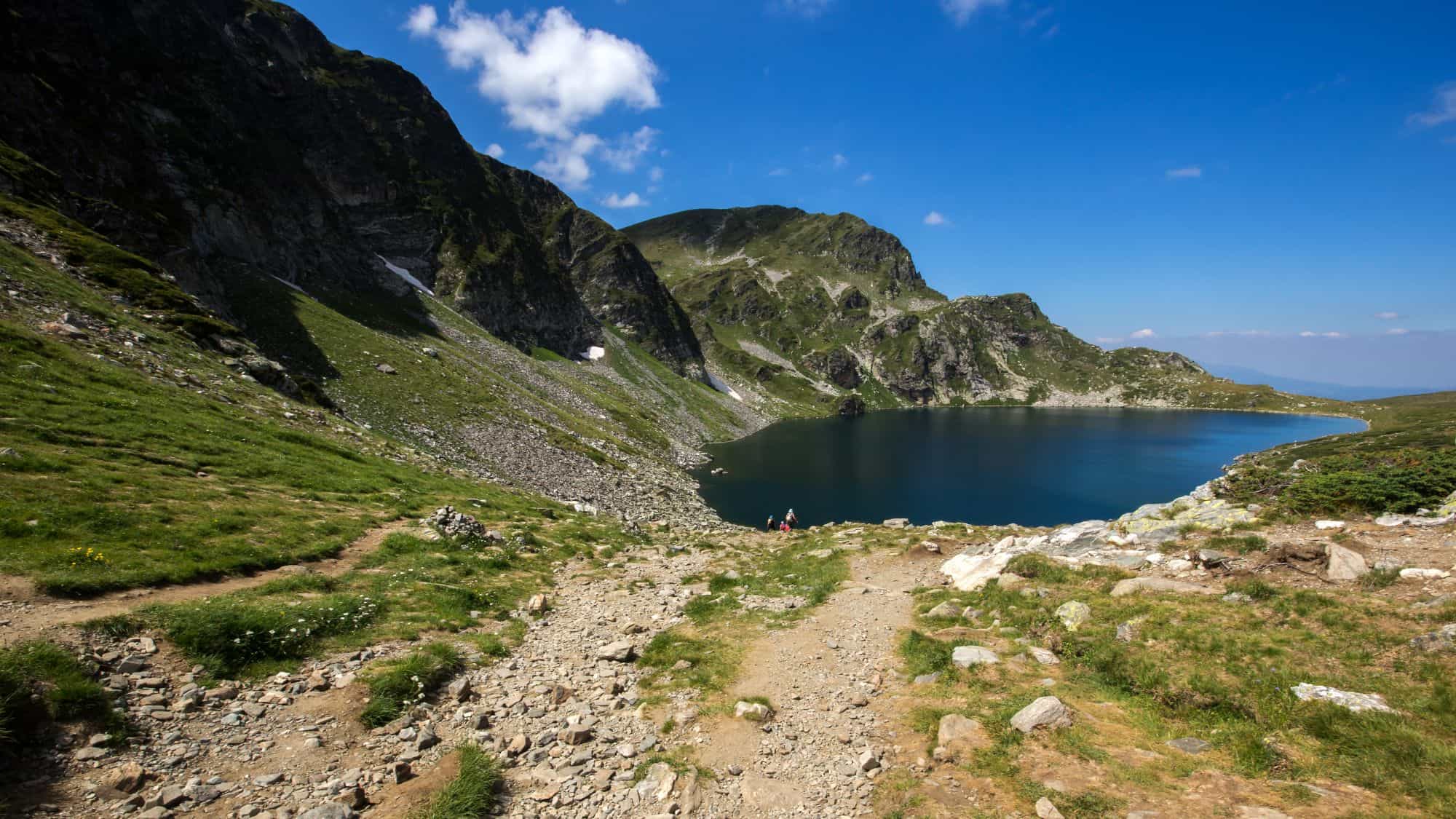
Tucked away in Bulgaria’s Rila Mountains, the Seven Rila Lakes are a series of stunning glacial pools that feel as mystical as their names: The Tear, The Eye, The Kidney, The Twin, The Trefoil, The Fish Lake, and The Lower Lake. Don’t worry, it sounds less medical and more magical once you see them.
A chairlift from the base at Panichishte whisks you up to the Rila Lakes Hut, saving your knees for the good part. From there, you’ll set off on a well-marked loop that climbs steadily past each of the lakes. The views get more jaw-dropping with each ascent.
The grand finale is the Lake Viewpoint, which offers a panorama of all seven lakes nestled in a natural amphitheater. It’s one of Bulgaria’s most beloved hikes, especially in summer, but still remains relatively peaceful compared to the Alpine crowds.
The terrain is a blend of grassy slopes and rocky paths, and while you’ll earn your picnic with some notable elevation gain, the trail is more impressive than intimidating. Just remember, if you find yourself out of breath, blame the scenery (we won’t tell otherwise). This hike brings a little bit of fairy tale and just enough exercise to justify a return trip for more mountain cheese.
Dolomites Alpe di Siusi Loop – Italy
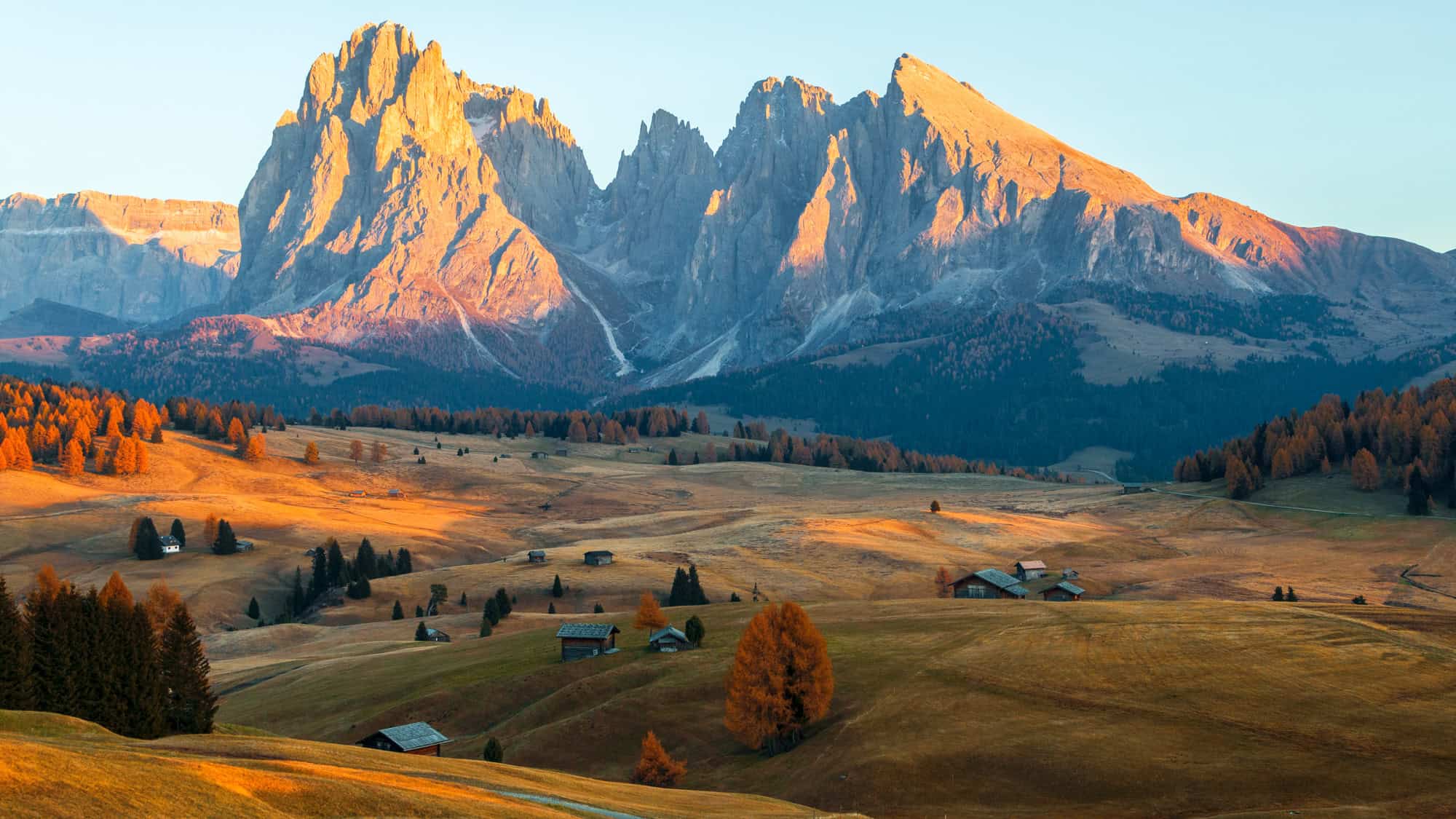
The Alpe di Siusi, or Seiser Alm, is Europe’s largest high-altitude meadow, stretching out with such charm that even cows look extra photogenic. This rolling plateau sits in the shadow of the jagged Dolomites, serving up classic Alpine scenery with a hearty side of Tyrolean hospitality.
A cable car from Ortisei lets you float up to Mont Seuc, saving your knees. From the station, an easy network of gravel paths crisscrosses emerald fields scattered with wooden huts and those aforementioned cattle, who seem unfazed by both scenery and passing hikers.
Head toward the dramatic Sassolungo and Sassopiatto peaks for an easy loop; every turn delivers a swoon-worthy view. Then stop for lunch at a rifugio (a mountain hut) and indulge in speck, dumplings, or anything involving melted cheese. You’ve earned it, obviously.
With weaving trails and panoramic views that don’t require heroic effort, this is a rare slice of the Alps that welcomes hikers of every age and ability. And if a mountain stroll could recharge your spirit and fill your camera in equal measure, this is the place.
Like Our Content? Follow Us on MSN (or click the Follow Button above) for more from Discover Parks & Wildlife.
15 Astonishing Natural Rock Formations That Defy Belief
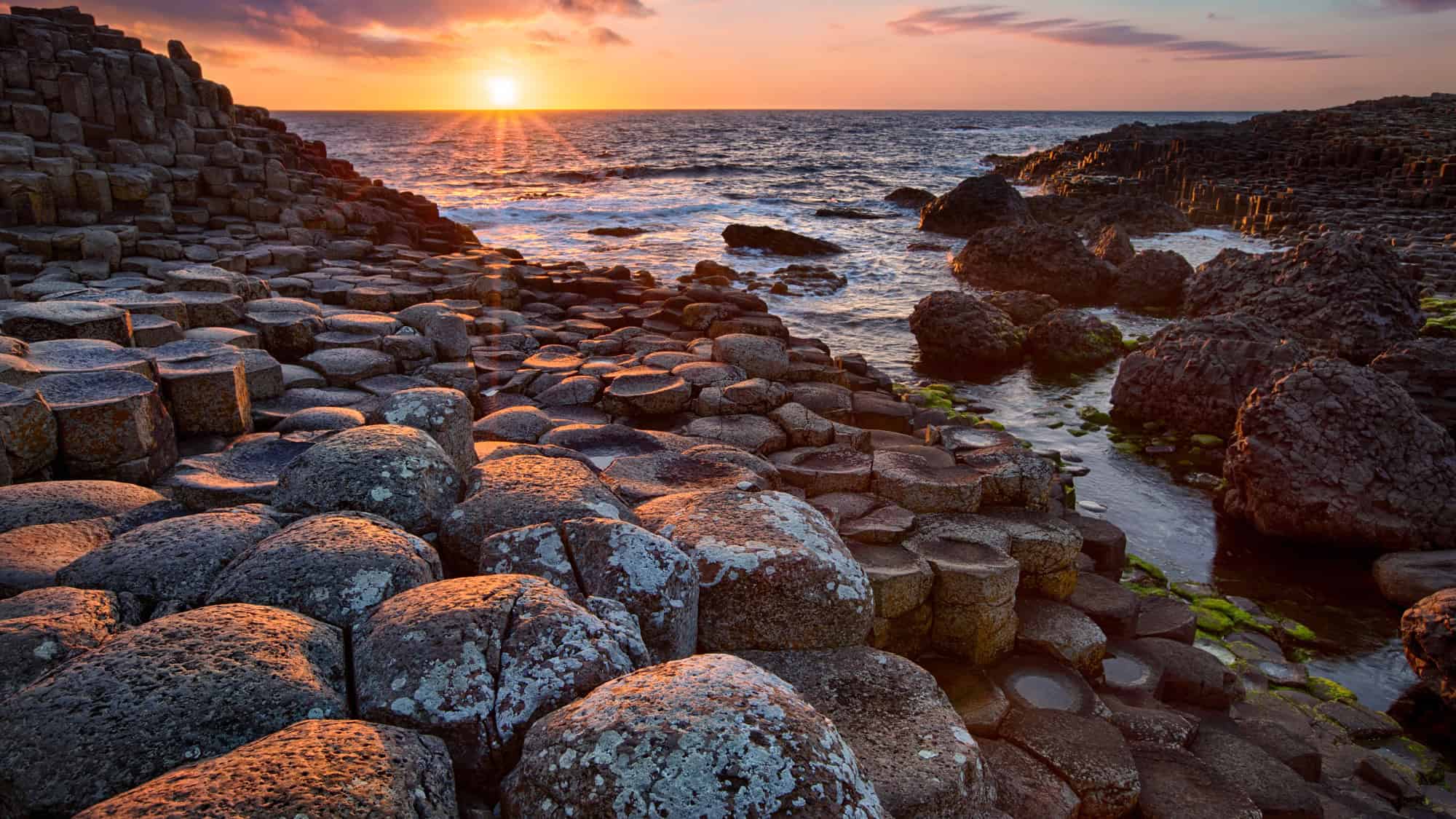
Prepare to have your mind twisted like a pretzel as you explore mind-blowing rock formations that look like nature was inhaling sand and exhaling pure magic.
15 Enchanting Desert Destinations You’ll Be Amazed You’ve Never Heard Of
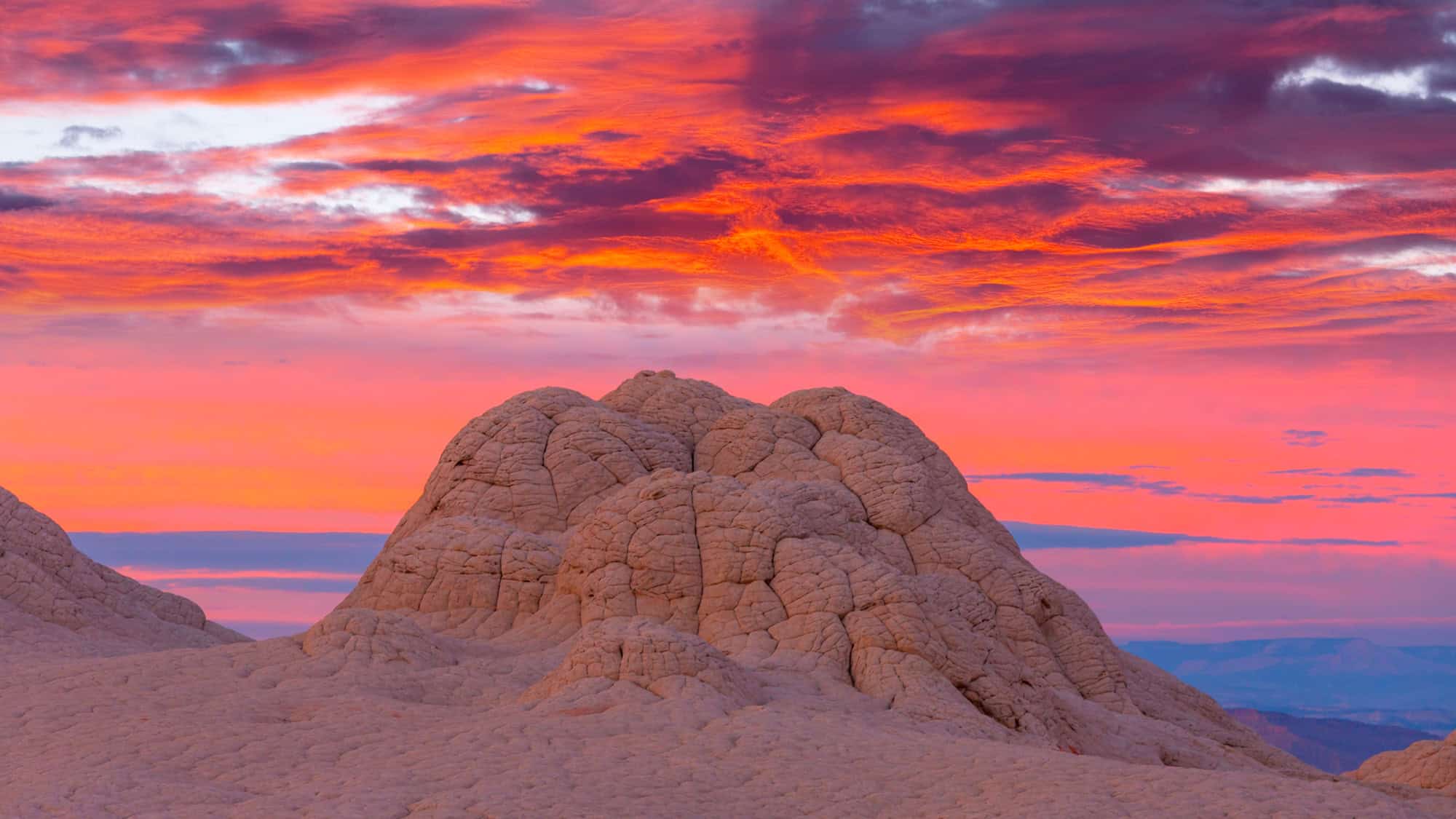
Ready to uncover some secret sandy and hot spots that’ll make you throw shade at every other vacation you’ve had?
11 Breathtaking Mountain Lakes That Demand Your Attention Now

Your jaw is about to hit the floor. These mountain lakes redefine the meaning of “scenic.”