Discover Parks & Wildlife contains affiliate links and is a member of the Amazon Services LLC Associates Program. If you make a purchase using one of the Amazon links, we may receive compensation at no extra cost to you. We may also use select AI tools to support our creative process, but all content is reviewed, refined, and finalized by our human team. See our disclosure policy and our AI use policy for more information.
11 Elusive Winter Wildlife Sightings That Prove National Parks Don’t Sleep When The Snow Falls
Winter transforms the American wilderness into a landscape of stark beauty and profound silence. Snow blankets the ground, muffling sound and creating a clean slate that records the passage of every creature bold enough to move across it.
While many animals migrate to warmer climates or retreat into deep hibernation to wait out the cold, others remain active, engaging in a high-stakes game of survival where stealth is the most valuable asset. And for the wildlife that stays behind, blending in becomes a matter of life and death.
The shift in seasons triggers remarkable changes in physiology and behavior, allowing predators and prey alike to vanish into the white backdrop. Coats turn from earthy browns to pristine whites, providing camouflage that is as effective as it is beautiful. Movement becomes deliberate and calculated to conserve precious energy in the biting cold.
Observing these animals requires patience and a keen eye, as they often move like ghosts through the trees, leaving only fleeting tracks or the faintest rustle of snow as evidence of their presence.
Bundle up and grab your binoculars, because these are some of the stealthiest winter residents in their element.
Yellowstone National Park, Wyoming – Snowshoe Hare
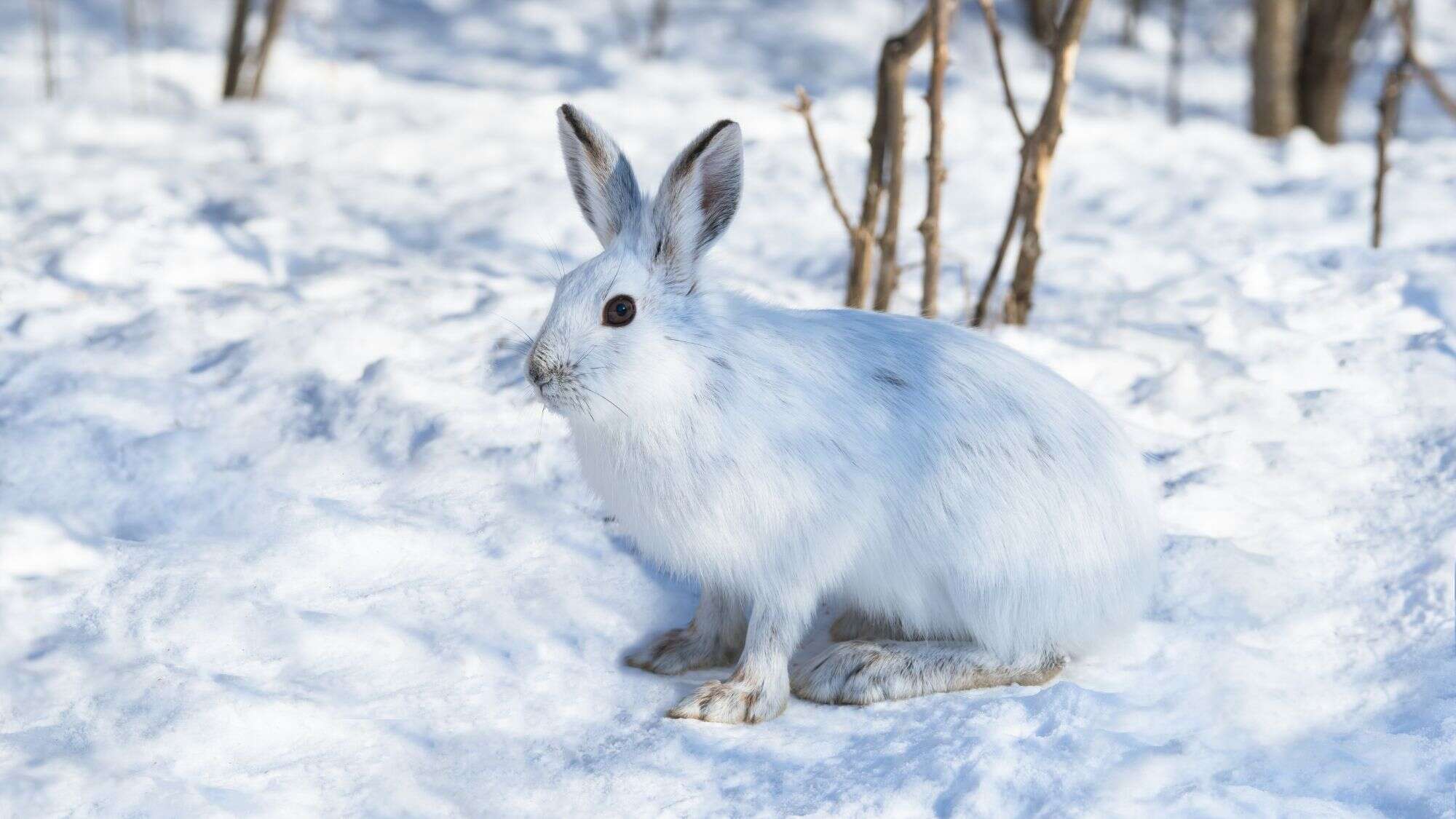
Yellowstone National Park is a winter wonderland where geothermal features steam against the cold air, creating a dramatic setting for wildlife viewing. And one of the most perfectly adapted residents here is the snowshoe hare, a master of seasonal disguise.
These hares are named for their enormous, furry hind feet that act like natural snowshoes, allowing them to travel on top of deep snow without sinking. This adaptation is crucial in Yellowstone, where snowpack can accumulate to several feet, making movement difficult for predators like coyotes and bobcats.
The most striking feature of the snowshoe hare is its changing coat, which shifts from rusty brown in summer to brilliant white in winter. This camouflage is so effective that you might be looking directly at one without realizing it until it blinks or twitches an ear.
They rely heavily on this blending ability, often remaining perfectly motionless for long periods to avoid detection.
Your best chance of spotting one is to look for their black-tipped ears or dark eyes against the snow near dense thickets of young lodgepole pines or willows where they feed on bark and twigs. Early mornings and late afternoons are prime times to catch them active before they settle into their forms for the night.
Denali National Park, Alaska – Willow Ptarmigan
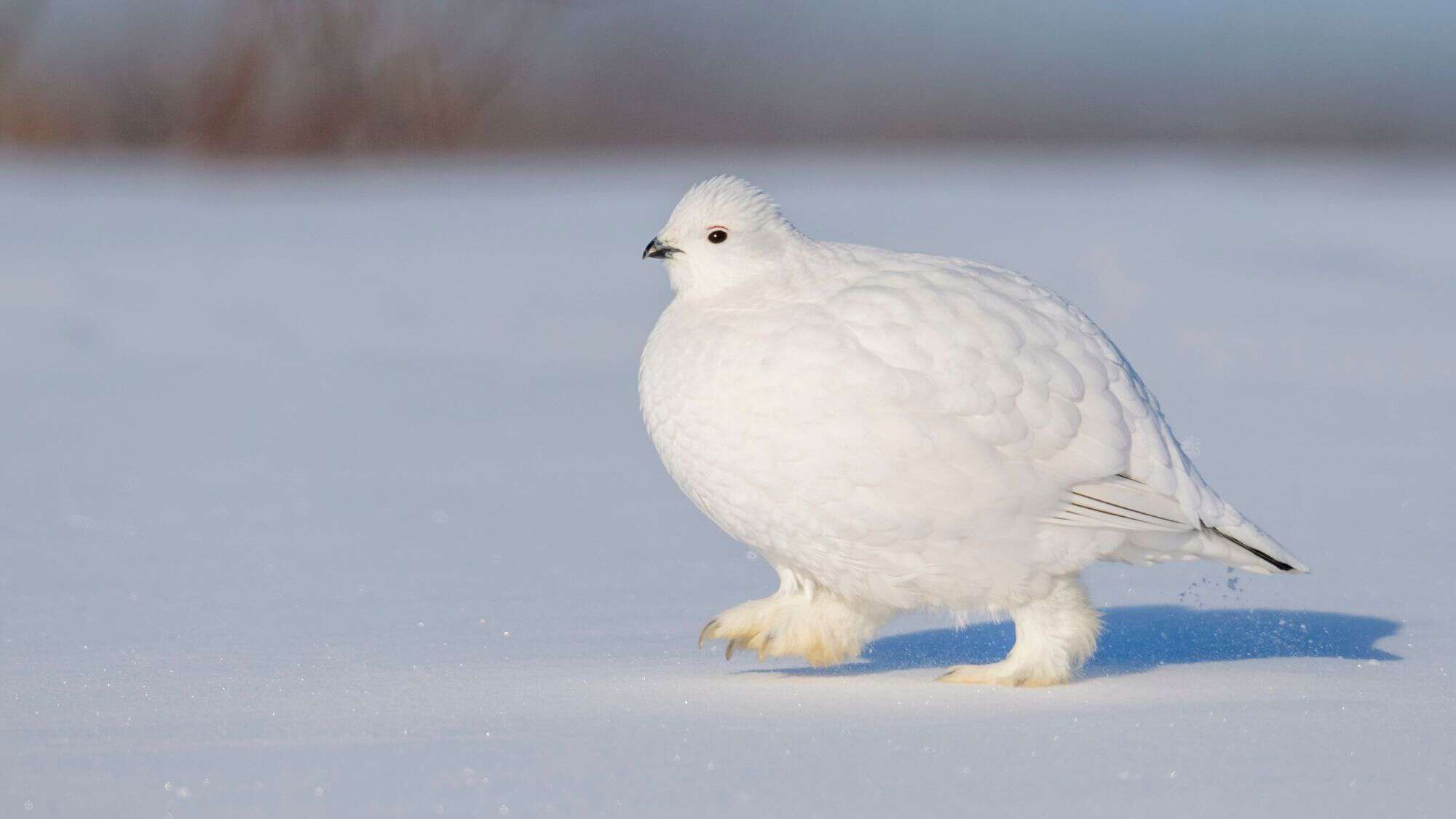
Denali National Park offers a harsh, breathtaking environment where temperatures can plummet well below zero, yet the hardy willow ptarmigan thrives here year-round.
As the state bird of Alaska, this grouse-like species is well-known for its incredible ability to withstand extreme cold. They possess feathered feet that not only keep them warm but also function like snowshoes, helping them walk atop the powder rather than sinking in.
During the winter, they often burrow into snow banks to create insulated roosts that protect them from the biting wind and frigid air. And like the snowshoe hare, the willow ptarmigan changes its plumage to match the season, transforming from mottled brown to pure white as winter sets in.
Only their black tail feathers remain dark, which they cleverly hide when at rest to complete their camouflage.
You are most likely to spot these birds in shrubby areas where willows (their primary food source) poke through the snow.
They tend to move in flocks during the winter months, so if you see one, scan the area carefully for others nearby. Their distinct, low-pitched calls often give away their location before you actually see their ghostly shapes moving against the white tundra.
Glacier National Park, Montana – Mountain Goat

Glacier National Park is famous for its rugged, vertical terrain, which serves as the perfect home for the sure-footed mountain goat. These incredible climbers are built for life on the edge, inhabiting steep cliffs and rocky outcrops that keep them safe from most predators.
Their hooves are specially designed with a hard outer edge and a soft, rubbery inner pad that grips rock and ice with amazing traction. This adaptation allows them to navigate icy ledges and sheer drops that would be impossible for other animals to traverse.
Winter pushes mountain goats to lower elevations where wind sweeps the snow off exposed ridges, revealing the grasses and mosses they need to survive.
Their thick, double-layered white coats provide exceptional insulation against the fierce winds and sub-zero temperatures common in Glacier. Plus, this shaggy white fur also helps them blend seamlessly into the snowy landscape, often appearing as just another patch of snow on a cliff face.
Look for them on south-facing slopes where the sun melts the snow faster, or use a spotting scope to scan the high cliffs along the Going-to-the-Sun Road corridor, which is partially open to skiers and snowshoers in winter.
Rocky Mountain National Park, Colorado – Long-Tailed Weasel
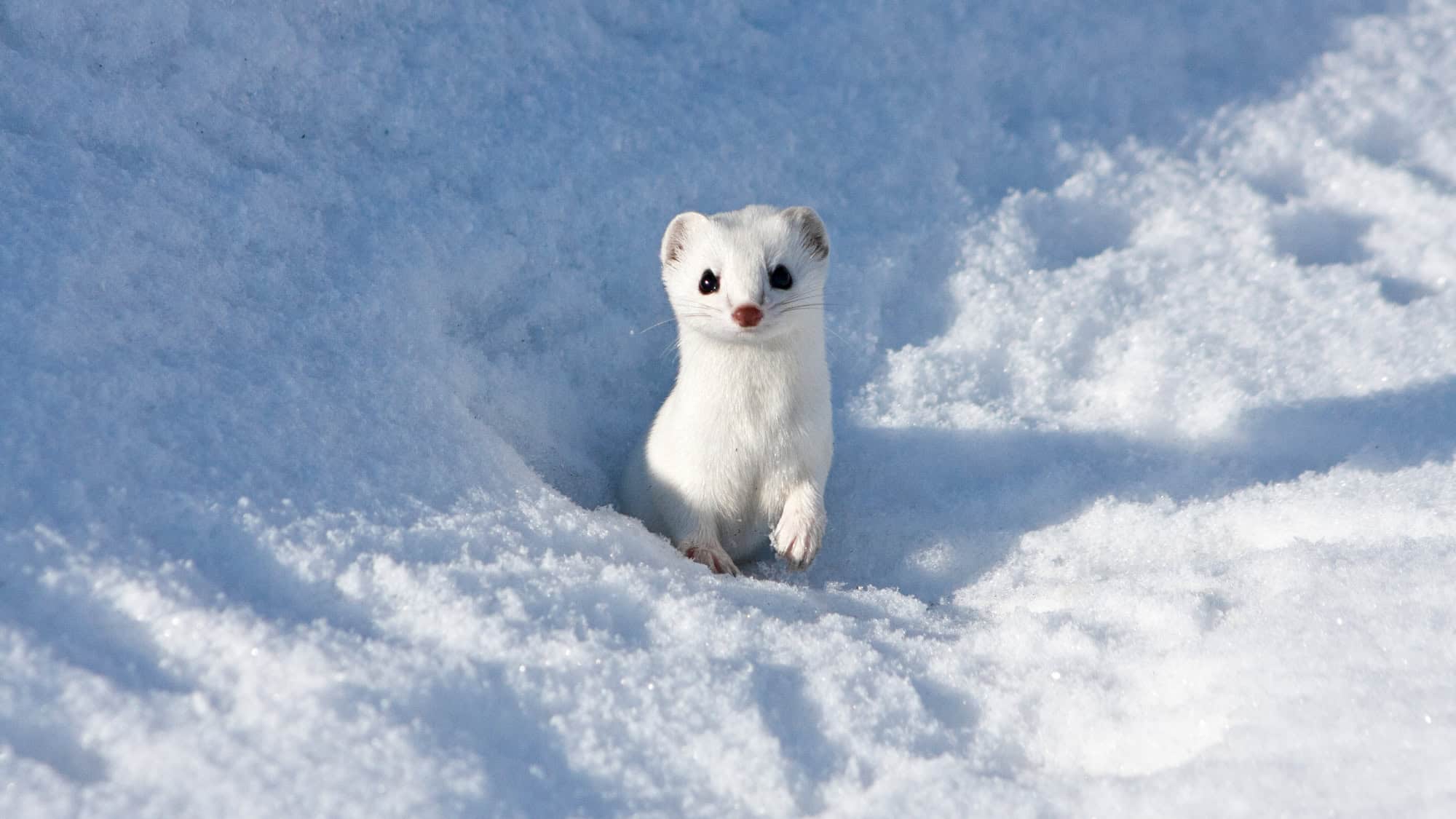
Rocky Mountain National Park hosts a diverse array of wildlife, but few are as energetic and elusive as the long-tailed weasel.
These small, slender carnivores are fierce hunters, capable of taking down prey much larger than themselves, such as ground squirrels and pocket gophers. Their long, flexible bodies allow them to pursue rodents directly into their underground burrows and snow tunnels.
Despite their small size, they have a high metabolism that requires them to hunt constantly, making them active day and night throughout the winter.
To survive and hunt effectively in the snow, the long-tailed weasel undergoes a complete molt in late fall. It trades its brown summer fur for a coat of pure white, retaining only a black tip on its tail. This black tip serves a clever purpose: it distracts predators, drawing their strike to the tail rather than the weasel’s vital organs.
You might catch a glimpse of this “ermine” (as they are known in their white phase) darting frantically across a snow-covered meadow or weaving through rock piles. Also keep an eye out for their distinctive bounding tracks, which often appear in pairs, near the edges of forests and open areas like Moraine Park.
Gates Of The Arctic National Park, Alaska – Arctic Fox
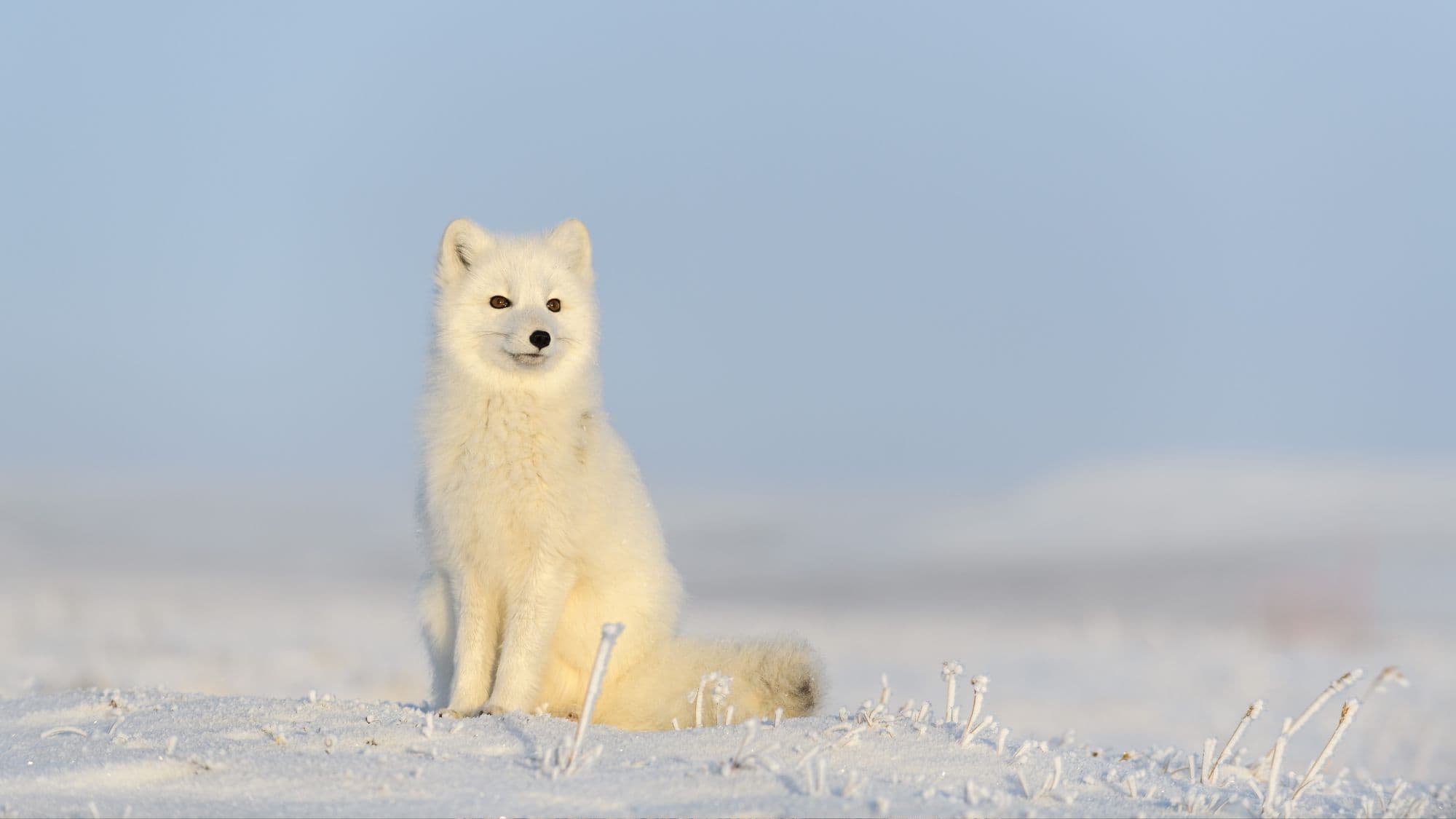
Gates of the Arctic National Park is one of the wildest and most remote places in North America, sitting entirely above the Arctic Circle in Alaska.
Here, the arctic fox survives in conditions that would freeze other animals solid, thanks to some of the warmest fur of any mammal. Their compact bodies, short ears, and short muzzles reduce surface area to minimize heat loss, an essential adaptation for surviving temperatures that can drop to -50°F.
They are also known to curl up tightly and tuck their noses under their fluffy tails to conserve warmth during blizzards.
During the winter, the arctic fox sports a pristine white coat that makes it nearly invisible against the treeless, snowy tundra. This camouflage is vital both for hiding from larger predators like wolves and for sneaking up on lemmings and voles beneath the snow. They have incredible hearing that allows them to pinpoint the movement of small rodents under several feet of hard-packed snow before diving headfirst to catch them.
Spotting one of these adorable foxes requires scanning the vast, open expanses of the Brooks Range foothills, where their small, white forms can sometimes be seen trotting purposefully across the landscape in search of food.
Grand Teton National Park, Wyoming – Trumpeter Swan
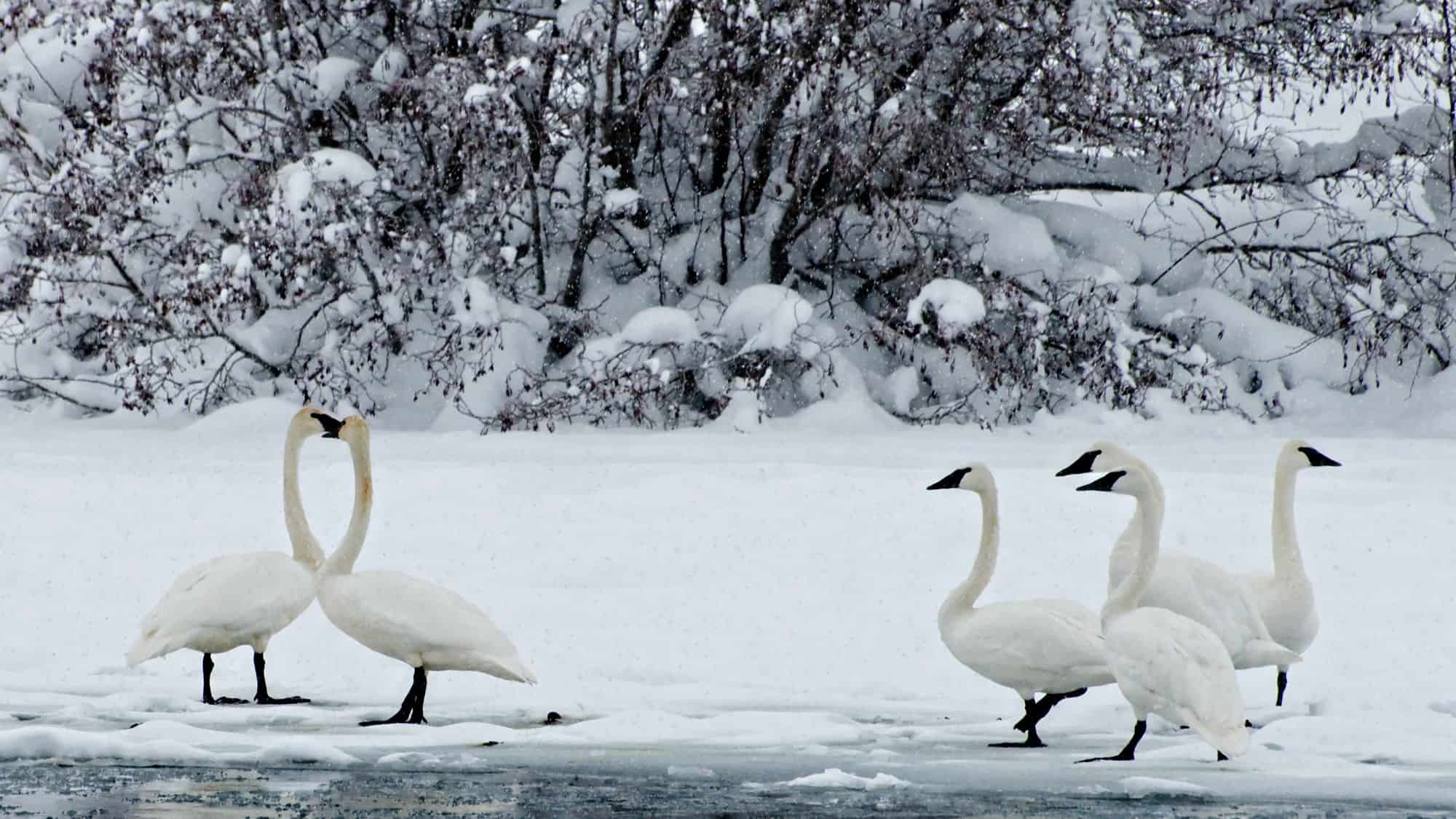
Grand Teton National Park provides a stunning backdrop of jagged peaks for the graceful trumpeter swan, the largest waterfowl species in North America. These majestic birds can weigh over 25 pounds and have a wingspan exceeding seven feet, making their flight a powerful sight to behold.
While many birds migrate far south, a population of trumpeter swans remains in the Greater Yellowstone Ecosystem year-round, gathering where geothermal activity keeps waters from freezing (they require open water to access aquatic plants, tubers, and insects buried in the riverbed).
In winter, the stark contrast of their snowy white feathers against the dark, flowing waters of the Snake River makes them easier to spot than many other winter wildlife species. However, their white plumage renders them almost invisible when they rest on snow-covered banks.
You can often hear them before you see them; their call is a deep, resonant, trumpet-like honk that carries for miles across the quiet winter valley.
Look for them at Oxbow Bend or along the National Elk Refuge just south of the park, where thermal springs ensure open water is available even in the deepest freeze.
Voyageurs National Park, Minnesota – Gray Wolf

Voyageurs National Park transforms into a vast, frozen network of lakes and boreal forest in winter, offering prime territory for the elusive gray wolf.
This park is unique because water covers nearly 40% of its surface area. But when the lakes freeze, they become highways for wolf packs patrolling their territory.
Wolves here hunt white-tailed deer and moose, using the frozen waterways to travel quickly and efficiently over long distances. Their large paws act like snowshoes, distributing their weight and giving them an advantage over heavier prey that may break through the crust and struggle in deep snow.
Wolves are also highly social animals that rely on their pack structure for survival. So you might have a good chance to hear them in the winter, as leafless trees carry howls further in the crisp, cold air.
While seeing a wolf is never guaranteed, the stark white backdrop of the frozen lakes makes their dark shapes stand out clearly at a distance. Your best bet is to look for fresh tracks on the ice or listen for howling at dusk and dawn near the Kabetogama or Rainy Lake areas.
Wrangell-St. Elias National Park, Alaska – Lynx

Wrangell-St. Elias National Park is the largest national park in the United States, a land of massive glaciers and peaks where the secretive Canada lynx roams.
This medium-sized cat is perfectly built for deep snow, featuring massive paws that function like natural snowshoes to keep them afloat on the powder. And the lynx’s thick, silvery-gray fur provides excellent insulation and camouflage in the shadowy, snow-dusted spruce forests they call home.
They are highly specialized predators that rely almost exclusively on snowshoe hares for food; their populations actually rise and fall in a synchronized cycle with hare numbers.
They are famously elusive and primarily nocturnal, making a sighting rare and special. However, winter is the best time to look for them because their tracks are distinct and easy to follow in fresh snow.
Look for their tell-tale signs(large, round prints with no claw marks) along the edges of dense forests where hares are plentiful. The Nabesna Road area offers some of the most accessible terrain for scanning the brush for these tufted-eared hunters.
Katmai National Park, Alaska – Snow Bunting
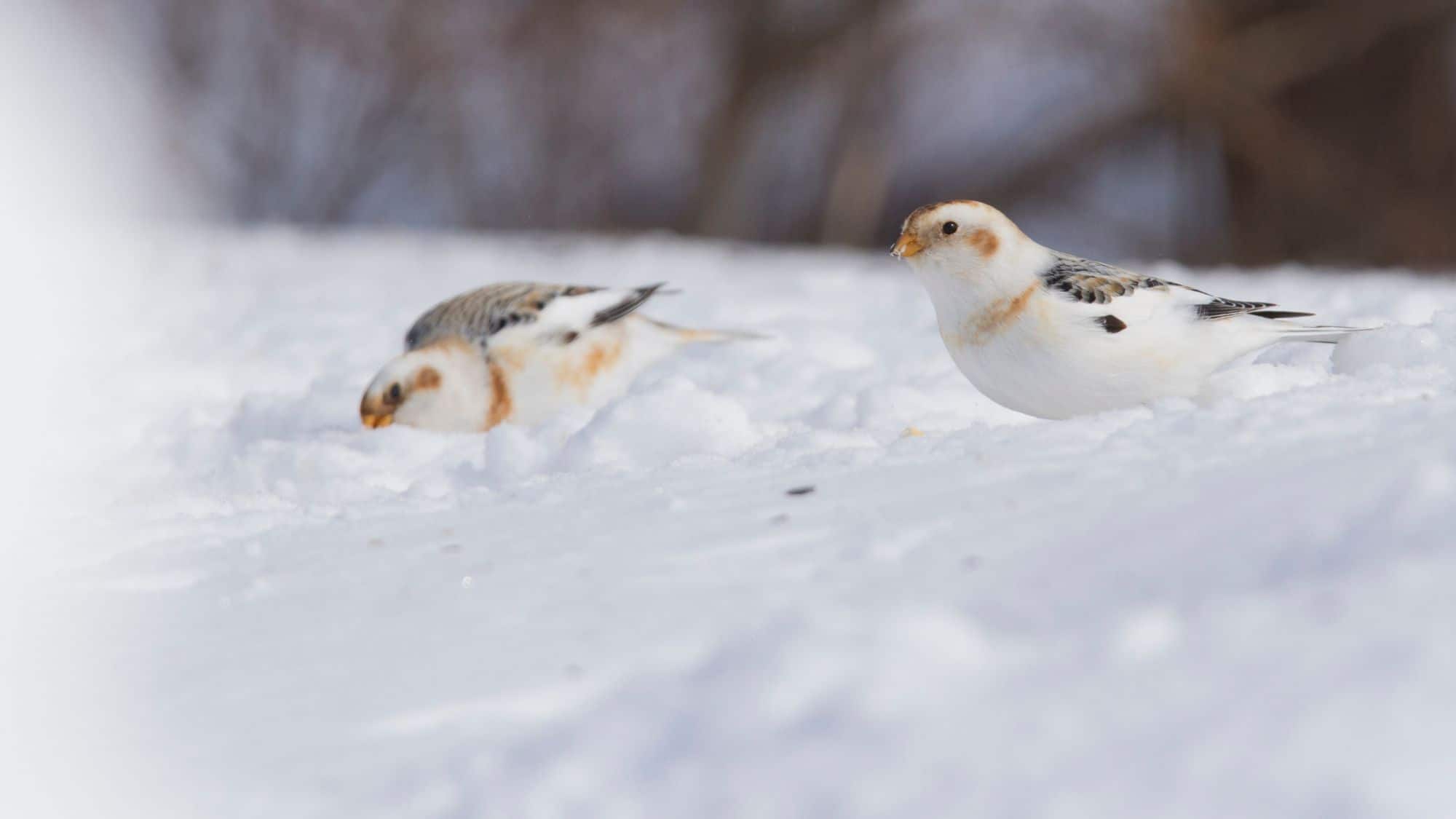
Katmai National Park is famous for its brown bears, but in winter, the landscape belongs to tougher, smaller residents like the snow bunting. These hardy songbirds breed in the high Arctic and migrate to “southern” wintering grounds like Katmai, which still feels exceptionally wild and frigid.
Males are unmistakable in breeding season with their striking black and white plumage, but in winter, both sexes adopt a wash of rusty brown and white that helps them blend into dried grasses and patchy snow.
Snow buntings are often seen in restless, swirling flocks that drift across the landscape like snowflakes, a behavior that has earned them the nickname “snowflakes.”
They forage on the ground for seeds and dormant insects, often burrowing into the snow to stay warm at night. This burrowing behavior is critical for survival when temperatures drop, and winds howl across the open tundra.
Keep an eye out for flocks along windswept coastal areas or open ridges where the wind clears the snow to reveal seeds, their primary winter food source.
North Cascades National Park, Washington – Clark’s Nutcracker

North Cascades National Park is known for its steep, jagged peaks and heavy snowfall, an environment where the intelligent Clark’s nutcracker feels right at home.
Clark’s nutcrackers are recognizable by their light gray bodies and striking black-and-white wings, which flash visibly during flight.
These birds are members of the corvid family (related to crows and jays) and possess remarkable spatial memory. They spend the fall harvesting seeds from whitebark pines and hiding them in thousands of caches across the landscape. They sometimes bury over 30,000 seeds in a single season.
Their ability to remember the exact locations of these seed caches under feet of snow is critical for their winter survival and for the forest itself, as unretrieved seeds grow into new trees.
In winter, they are often seen at high elevations near the timberline, actively digging through the snow to retrieve their hidden meals. Make sure to listen for their harsh, grating calls echoing off the canyon walls, which often reveal their presence long before you spot them perched atop a snow-laden conifer.
Acadia National Park, Maine – Barred Owl
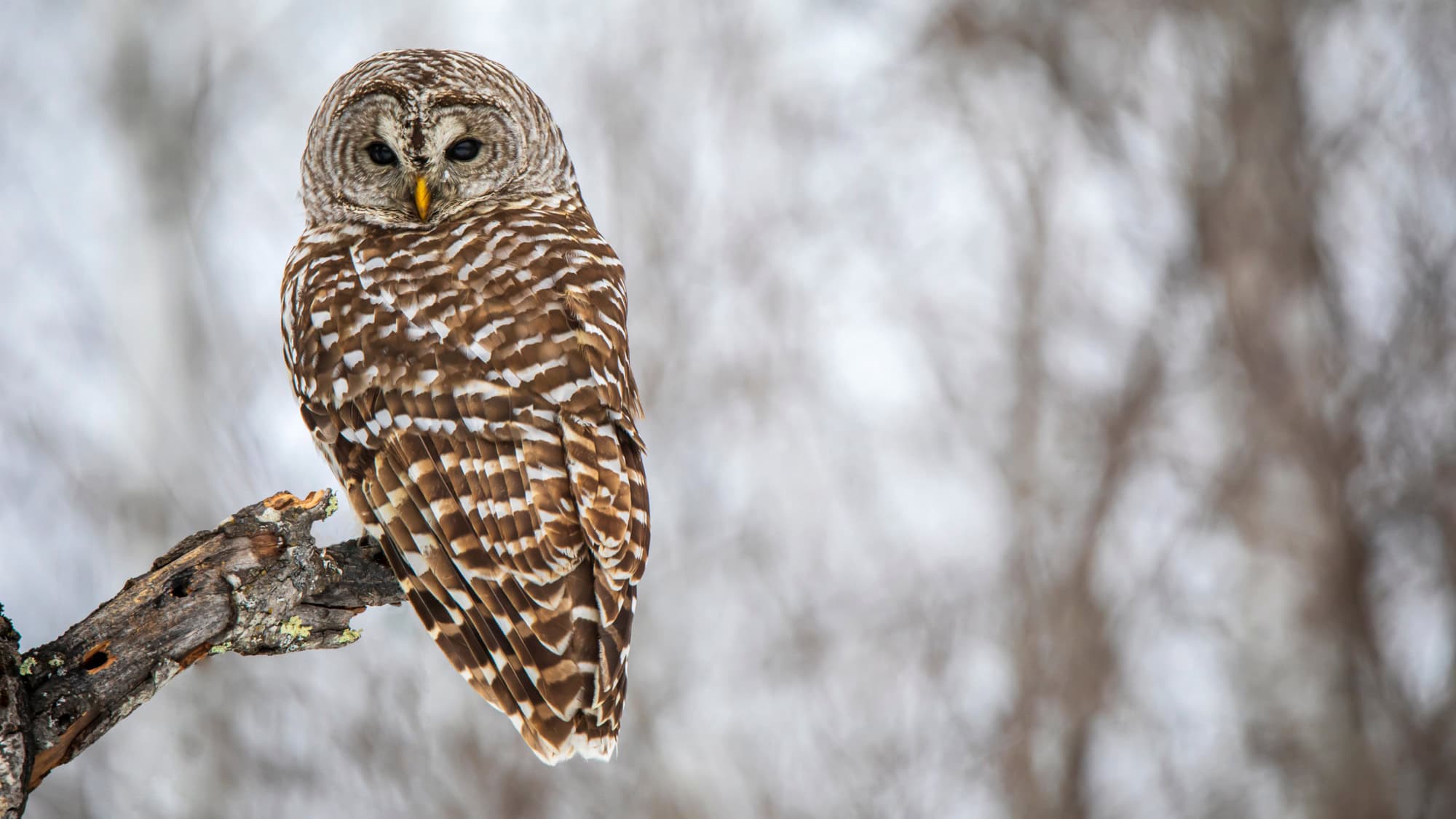
Acadia National Park on the coast of Maine offers a mix of ocean scenery and dense woodlands, a perfect habitat for the vocal and charismatic barred owl. Unlike many other owls that are strictly nocturnal, barred owls are often active during the day, especially in winter when food can be scarce.
They have a distinctive call that sounds like “Who cooks for you? Who cooks for you-all?” which often echoes through the silent, snowy woods. And these owls have incredible hearing and vision, adaptations that allow them to hunt small mammals like mice and voles even when they are moving under a layer of snow.
They hunt by perching silently on a low branch and listening intently before swooping down to punch through the snow crust with their talons.
Plus, their mottled brown and white plumage offers excellent camouflage against the bark of deciduous and evergreen trees.
You are most likely to spot one perched quietly in a mixed forest near a frozen wetland or meadow, scanning the ground for the slightest movement beneath the white surface.
Like Our Content? Follow Us on MSN (or click the Follow Button above) for more from Discover Parks & Wildlife.