Discover Parks & Wildlife contains affiliate links and is a member of the Amazon Services LLC Associates Program. If you make a purchase using one of the Amazon links, we may receive compensation at no extra cost to you. We may also use select AI tools to support our creative process, but all content is reviewed, refined, and finalized by our human team. See our disclosure policy and our AI use policy for more information.
Surprising Details in the Statue of Liberty That Make It Even More Fascinating
Millions of people recognize the copper-green silhouette standing tall in New York Harbor. She appears in countless movies and photographs as the ultimate symbol of freedom and hope.
Most visitors take the ferry ride and stare up at the massive pedestal without realizing they are looking at a marvel of engineering filled with secrets. Turns out, this national monument is far more than just a statue or a gift from France. It is a carefully constructed masterpiece where every inch of metal tells a story.
The sheer scale of Lady Liberty often distracts from the smaller details that Bartholdi and Eiffel worked so hard to include. You might know she holds a torch and a tablet. You might even know she is made of copper.
But the true genius of the monument lies in the features you cannot see from the ground or the history that has been quietly obscured by time. From the hidden chains at her feet to the brilliant engineering that keeps her standing in gale-force winds, the Statue of Liberty holds fascinating stories that go untold in standard history books. Let’s take a look.
Symbolic Elements You Might Have Missed
Frederic-Auguste Bartholdi did not choose any element of the statue by accident. He designed every fold of her robe and every spike on her crown to convey a specific message about liberty and the human spirit.

The Broken Chains And Her Feet In Motion
Lady Liberty is not standing still. If you look at the position of her legs and feet, you will see that her right foot is raised and her heel is lifted. She is caught in mid-stride, a vital part of the statue’s design that changes her entire meaning.
A static statue would suggest that liberty has been achieved, and we can all rest. A moving statue suggests that the work is ongoing. She is marching forward into the future and carrying her light into the darkness.
This forward motion is made even more powerful by the details at her feet. If you could hover directly above the pedestal, you would see broken shackles and chains lying by her right foot.
These chains are not visible from the ground, which means countless visitors leave the island without ever knowing they exist. Bartholdi included them to explicitly symbolize the end of slavery and oppression, as the statue was dedicated in 1886, just over two decades after the American Civil War.
Her position is crucial; she is striding forward and stepping out of them. Together, the raised foot and broken chains create a powerful declaration that freedom is not a static state but an active movement away from bondage.
Seven Spikes On The Crown
The radiant crown is one of the most recognizable features of the entire monument. It creates a halo effect that gives the statue her divine presence.
Many people assume the spikes are simply an artistic choice to represent the sun. While they do evoke the sun’s rays, the number seven is intentional and specific.
These seven rays represent the seven continents and the seven seas. The concept was to show that liberty is not just for one nation but is a universal right that should enlighten the entire world. The light from her crown is meant to reach across the oceans to every landmass.
It transforms the statue from a national monument into a global icon of enlightenment.

The Tablet’s Inscription
Held firmly in her left hand is a massive tablet that evokes the idea of law and justice. It is not blank. Bartholdi inscribed it with a specific date that marks the birth of the United States. The date is July 4, 1776.
You will not find the standard Arabic numerals here. The date is written in Roman numerals as JULY IV MDCCLXXVI. This stylistic choice aligns the American experiment with the classical traditions of the Roman Republic and the concept of law.
The tablet itself is 23 feet 7 inches tall. And the inscription is a permanent reminder that true liberty is based on the rule of law rather than the whims of rulers.
Symbolism Of The Robe
The heavy robes that drape over the statue’s massive frame are not just clothing. They are a reference to the Roman goddess Libertas.
In ancient Rome, Libertas was the personification of freedom and was often depicted in similar flowing garments. Bartholdi chose this classical attire to lend the monument a sense of timeless dignity.
The folds of the copper are designed to create a play of light and shadow that makes the statue readable from great distances. The robe connects the modern American ideals of democracy back to the ancient civilizations that first experimented with the concept of a republic.
Her Torch
The torch is the literal high point of the monument, representing enlightenment and the path to freedom. The torch you see today, however, is not the one Bartholdi saw in his lifetime.
The original design was a copper flame that was gilded to shine in the sun. Over time, that original torch was modified with glass panes and internal lights, which caused it to leak and corrode.
During a massive restoration project in the 1980s, the old, structurally unsound torch was removed on July 4, 1984. It was replaced with the current design that faithfully replicates Bartholdi’s original vision.
The current torch, installed in 1986, is a copper flame covered in 24-karat gold leaf. It reflects the sun during the day and is illuminated by floodlights at night, restoring the artistic vision of a solid, glowing flame rather than a lantern.
The old torch was not thrown away. It was preserved and is now displayed in the Statue of Liberty Museum, where you can witness the damage caused by a century of weather and alterations.
Structural Secrets
Beneath the copper skin lies an industrial skeleton that revolutionized construction. The beauty of the statue often hides the beast of engineering required to keep it upright.

The Internal Eiffel Connection
Before he built his famous tower in Paris, Alexandre Gustave Eiffel was hired to design the internal framework of the Statue of Liberty. Bartholdi was a sculptor, not an engineer, and he needed someone to figure out how to make the hollow copper shell stand up.
Eiffel designed an ingenious iron pylon tower that serves as the statue’s spine. He then created a secondary framework of lighter trusses that connect the skin to the center. This curtain-wall construction was ahead of its time.
It allows the copper skin to hang on the frame rather than bearing its own weight. Without Eiffel’s structural mastery, Lady Liberty would have collapsed under her own weight long ago.
Wind-Resistant Flexibility
The harbor is a windy place. A rigid structure of this size would eventually crack or snap under the pressure of constant gusts. Eiffel understood this. He designed the connection between the copper skin and the iron frame to be flexible.
The statue acts almost like a living thing in a storm. In high winds of 50 miles per hour, the statue can sway up to three inches. The torch can sway even more, moving up to six inches.
This flexibility prevents structural damage. The armature bars that hold the skin are not rigidly fixed but act like springs. This allows the statue to absorb the energy of the wind rather than fighting against it.

A Hidden Star-Shaped Fort Below
The pedestal does not sit directly on the ground of the island. It sits inside an ancient military fortification. Long before the statue arrived, the island was home to Fort Wood. This eleven-point star-shaped fort was built between 1807 and 1811 to protect New York Harbor.
When it came time to build the pedestal, the designers realized the old fort provided a perfect foundation. They filled in the center of the star fort with concrete and built the pedestal on top.
If you look at aerial photos, the eleven-pointed star is clearly visible radiating out from the base of the monument. It is a literal representation of peace rising from a foundation of war.
Aesthetic Elements
The visual impact of the statue is undeniable. Yet many of the aesthetic choices are surrounded by rumors and myths. The reality of how she looks and why she looks that way is grounded in specific historical and chemical facts.

Facial Inspiration
The stern and dignified face of Liberty has sparked debate for decades. Some speculated it was modeled after Isabella Eugenie Boyer, the widow of Isaac Singer. Others thought it might be based on an African model, though no evidence supports this.
The most widely accepted theory is that Bartholdi modeled the face after his own mother, Charlotte Beysser Bartholdi. He was known to be very close to her.
The statue’s face possesses a strong, classical jawline and a serious expression that matches portraits of his mother. It turns the monument into a colossal tribute to the woman who raised him.
Her Sandal Size
The sheer size of the statue is hard to comprehend until you break it down into familiar measurements. Her nose is four and a half feet long. Her index finger is eight feet long. But her feet are truly massive.
Based on the length of her foot, which is approximately 25 feet, it is estimated that Lady Liberty wears a women’s shoe size 879.
She would need a sandal that is roughly 25 feet long to fit comfortably. These massive feet are necessary to provide the visual weight and stability required for such a tall figure.
Her Crown’s Windows
The crown is not just a solid piece of copper. It functions as an observation deck for those willing to climb the stairs. The crown features a series of 25 windows that offer panoramic views of the harbor and the New York skyline.
These windows were originally intended to symbolize the gemstones found on the earth and the heavenly rays shining over the world. They allow light to flood into the head of the statue.
At night, the lights from inside the crown shine out through these windows, creating the effect of a glowing jewel in the sky.
Green Patina Is Protective
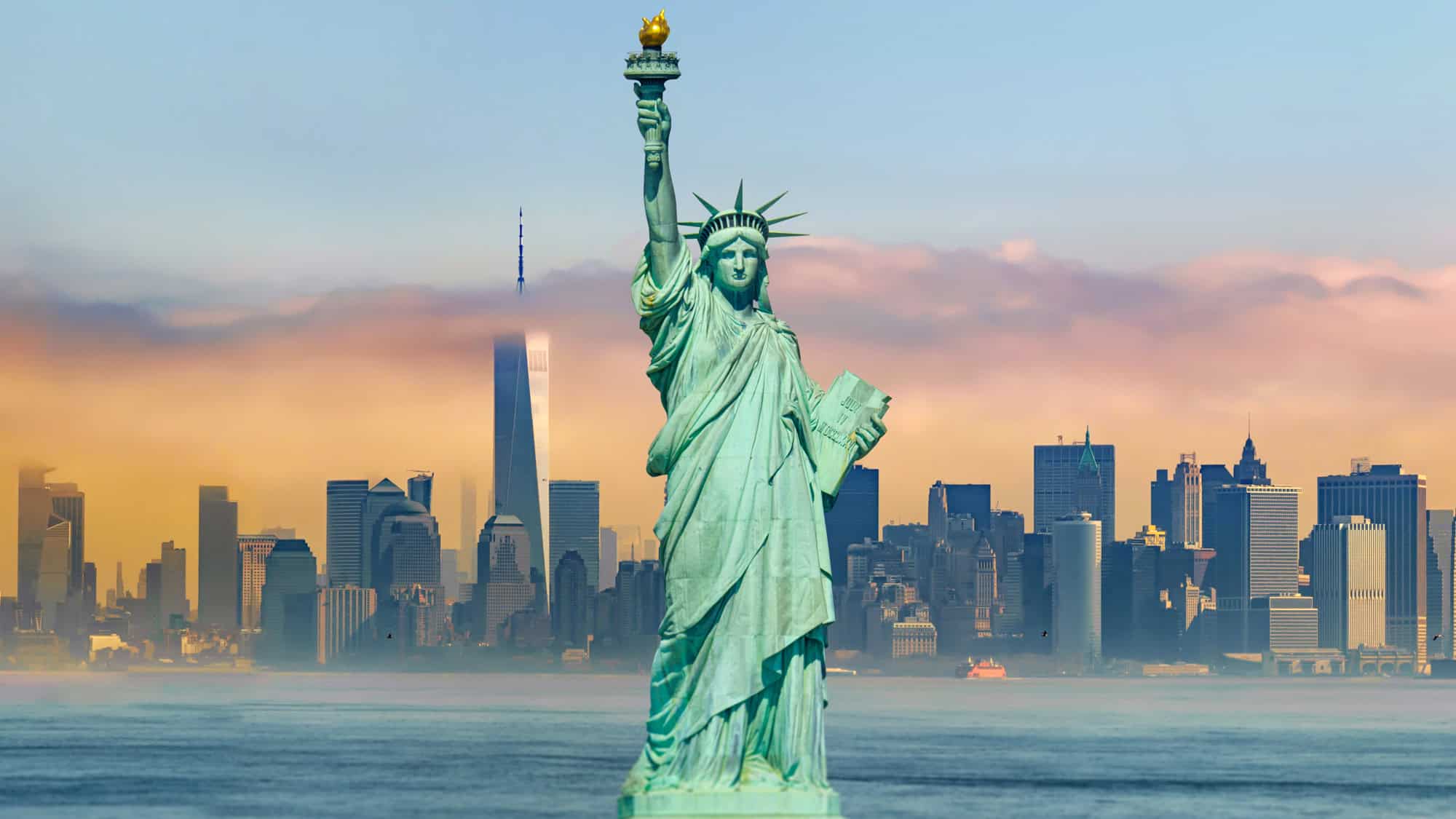
The Statue of Liberty was not always green. When she was first assembled, she was the color of a shiny new penny. She is made of copper, which is naturally a dull reddish-brown.
The green color is the result of a chemical reaction known as oxidation.
Over the first few decades, the copper reacted with the oxygen in the air and the spray of the saltwater to form a layer called patina. This layer is actually a form of copper carbonate. It is about the thickness of two pennies.
Far from being damage, this patina actually seals the copper and protects it from further corrosion. It is the reason the statue has survived so long in such a harsh marine environment.
Surprising Facts
The Statue of Liberty is more than a symbol; it’s a treasure trove of interesting facts that continue to amaze visitors.

Secret Room In The Torch
There is a room inside her torch that offers the most spectacular view of the harbor. Unfortunately, you cannot visit it. The arm and torch have been closed to the public since July 30, 1916.
This closure was caused by an act of sabotage known as the Black Tom explosion. German agents detonated a massive cache of munitions on a nearby island during World War I. The shockwave was so powerful that it popped rivets in the statue’s arm and compromised the structure.
While the rest of the statue reopened, the narrow ladder to the torch remains off-limits to everyone except maintenance staff.
Hidden Maintenance Doors
Maintaining a colossal metal structure requires access to areas the public never sees. The National Park Service staff must perform regular inspections of the copper skin and the internal framework.
To do this, they use access points that are cleverly hidden in the design. There are discreet doors located in the statue that allow workers to exit onto the exterior for repairs.
While tourists are restricted to the pedestal and crown, workers climb narrow ladders to reach the very top of the flame to change the floodlights. These brave individuals have to navigate the 40-foot ladder inside the arm that has been closed to the public for over a century.
Lightning Magnet
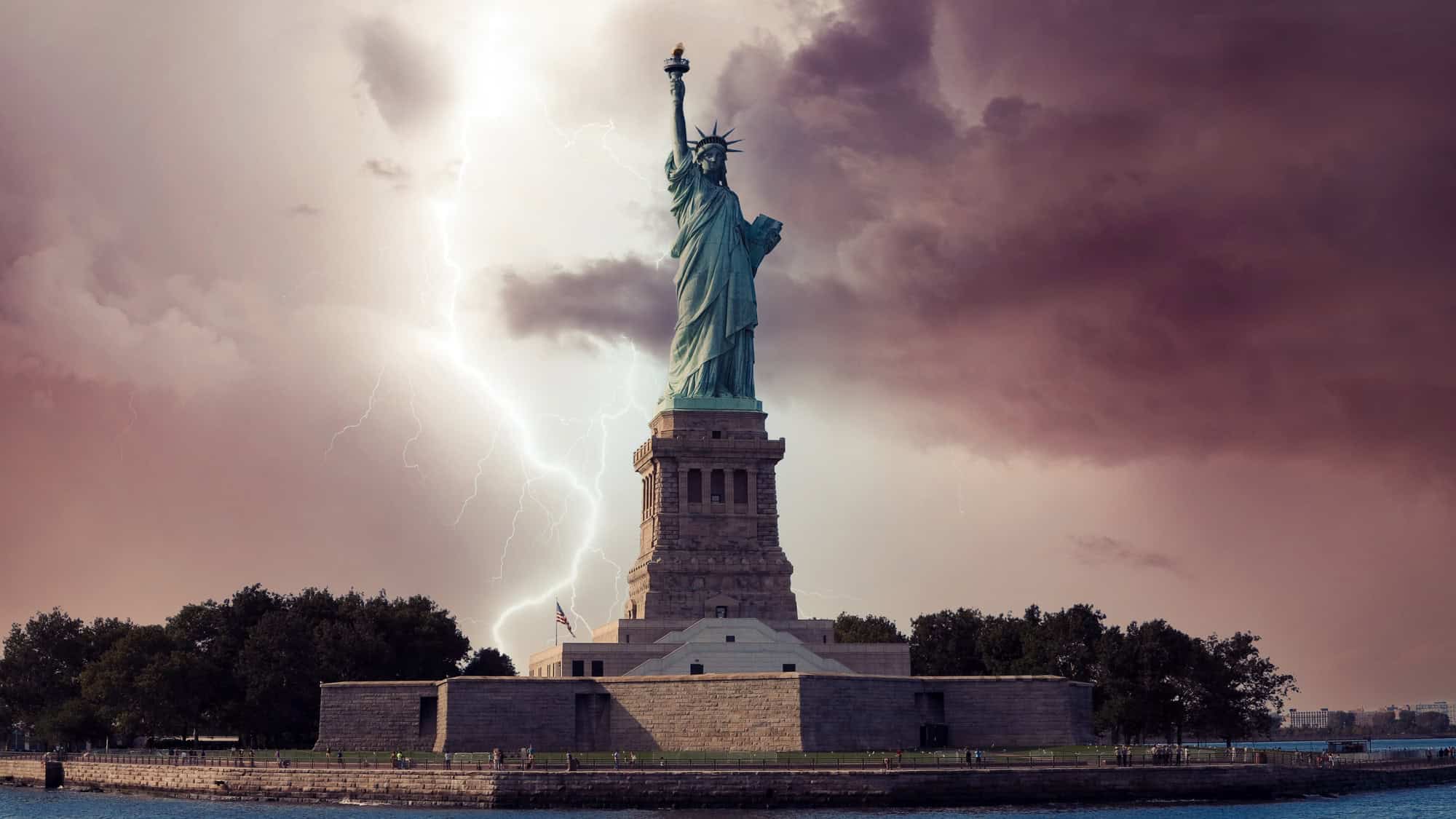
A 305-foot metal conductor standing in open water is the perfect target for lightning. The statue is struck by lightning many times every year. The exact number is unknown, but it happens frequently during summer storms.
The copper skin conducts the electricity safely into the ground through the massive concrete and granite base. If you ever see a photo of the statue being struck, it looks terrifying.
But the engineering is designed to handle it. The statue acts as a giant lightning rod that protects the island and the people inside.
Earliest Known Selfie Spot
Since the rise of photography, the Statue of Liberty has been one of the most documented structures on Earth. While the term “selfie” is modern, the compulsion to capture oneself with the icon is not.
The statue was one of the first global landmarks to be mass-photographed by tourists in the early 20th century.
Today, technology allows for a new kind of photo. The “TorchCam” mounted on the torch looks down at the crown and the visitors on the pedestal.
It captures a continuous stream of images that arguably constitute the statue’s own feed. It allows people from around the world to see the view that has been hidden since 1916, when the torch was closed.

More Than Metal And Meaning
The Statue of Liberty is a testament to what humans can achieve when they combine art with engineering. It is a structure that breathes and moves with the wind. It is a symbol that has evolved from a gift between nations to a global icon of human rights.
And understanding the hidden chains, the star fort foundation, and the genius of Eiffel’s iron skeleton adds a new layer of appreciation to the experience.
So next time you see a picture of Lady Liberty, you will know that the green skin protects a skeleton of iron and that her frozen stride is actually a permanent march towards a freer world.
The details are there for anyone willing to look closer.
Like Our Content? Follow Us on MSN (or click the Follow Button above) for more from Discover Parks & Wildlife.