Discover Parks & Wildlife contains affiliate links and is a member of the Amazon Services LLC Associates Program. If you make a purchase using one of the Amazon links, we may receive compensation at no extra cost to you. We may also use select AI tools to support our creative process, but all content is reviewed, refined, and finalized by our human team. See our disclosure policy and our AI use policy for more information.
14 Surprisingly Fun Park Activities That Kids Remember Long After the Trip
Let’s be honest: most parents envision a national park vacation as a majestic, peaceful communion with nature where the children frolic like Von Trapps in a meadow. You expect moments of profound silence as everyone gazes upon ancient geology, perhaps shedding a tear or two at the sheer beauty of it all.
But in reality, the experience is usually about 10% majestic views and 90% mitigating arguments over who touched whom in the backseat and frantically searching for snacks that aren’t pulverized into dust.
Nature is beautiful, yes, but it’s also dirty, buggy, and surprisingly lacking in reliable WiFi, which can be a real shock to the system for anyone under the age of eighteen. But here is the secret sauce to actually enjoying these trips: you have to trick them.
Okay, maybe “trick” is a strong word, but you definitely need to reframe the experience. If you just ask kids to walk and look at rocks, they will rebel. But if you give them a mission, a tool, or a slightly dangerous-sounding activity, they transform into enthusiastic explorers.
Suddenly, they aren’t dragging their feet; they are hunting for treasure or solving a mystery.
The best memories for them aren’t usually the scenic overlooks where you forced them to smile for a photo (which likely ended in tears). Instead, they remember the weird, active, and interactive stuff. They remember sliding down sand dunes until sand was permanently embedded in their ears, or holding a flashlight while a ranger told ghost stories.
The following are moments that turn a standard family trip into legendary lore.
Geocaching Adventures

Try telling your kids you’re going for a “nice nature walk” and watch their eyes glaze over faster than a donut. But tell them you are going on a high-tech treasure hunt using military-grade satellites to find hidden boxes in the woods? Suddenly, shoes are on, and they are practically vibrating with excitement.
Geocaching turns the entire planet into a giant game board, and national parks have embraced this craze with open arms (and strict rules).
While traditional geocaching involves swapping trinkets in a physical box, many parks now utilize “EarthCaching” or virtual caches to protect fragile ecosystems. This means you navigate to specific GPS coordinates to answer questions about the landscape rather than digging around in the dirt like a confused badger.
At Petrified Forest National Park in Arizona, for example, the Historic Route 66 Geocaching Project guides visitors to specific locations along the famous “Mother Road.” You might find yourself searching for an old telephone pole alignment or a specific geological feature to earn a digital smiley face.
It forces everyone to slow down and actually look at the details instead of just rushing to the gift shop for another plush bison.
Just remember: physical caches are generally banned in national parks to prevent litter and habitat destruction (because nothing ruins a view like a Tupperware container). Always check the official geocaching app or the park visitor center for approved virtual caches so you don’t accidentally become an outlaw over a plastic toy.
Junior Ranger Programs

There is a precise age window where children will do absolutely anything for a badge and a sense of authority, and the National Park Service has ruthlessly capitalized on this.
The Junior Ranger program is the absolute gold standard for family engagement (and parental sanity). It’s an educational curriculum disguised as a game, available at nearly every site in the NPS system, from the massive Yellowstone to the tiny historical sites you didn’t know existed.
When you arrive, march directly to the visitor center and demand (ok, politely ask for) the activity booklet. These books are tailored by age, usually for kids 5 to 13, though I have seen grown adults shamefully filling them out in the corner.
Completing the booklet requires actual work. Kids might have to interview a ranger, identify three types of scat (always a crowd-pleaser), or attend a ranger-led program. It forces them to engage with the park rather than just passively existing in it.
Once they finish, the swearing-in ceremony is the pièce de résistance. A ranger will have them raise their right hand and repeat an oath to “Explore, Learn, and Protect.” It is often conducted with the solemnity of a Supreme Court induction.
They receive an official badge (sometimes wood, sometimes plastic), which instantly becomes their most prized possession.
But be warned: collecting these badges is addictive. You may find yourself driving four hours out of the way just so your child can add a wooden patch from a monument dedicated to a type of fossilized clam.
Night Sky Programs

We spend our modern lives bathed in so much artificial light that true darkness is a foreign concept, kind of like a phone booth or a balanced diet. So for many kids, the night sky is just a black ceiling with three or four bright dots (one of which is usually an airplane).
National parks offer a remedy to this light pollution, treating natural darkness as a protected resource just like the wildlife or the water. The National Park Service even has a dedicated Night Skies division, which sounds like a superhero team but is actually a group of scientists measuring light levels.
Parks like Great Basin in Nevada and Death Valley in California are designated International Dark Sky Parks, meaning they have some of the darkest skies and brightest stars in the country.
Ranger-led astronomy programs are common here, often involving massive telescopes set up in parking lots. And seeing the rings of Saturn or the craters of the moon with your own eyeballs is infinitely cooler than seeing them on an iPad.
Just remember the etiquette: use red lights only (cover your flashlight with red cellophane) to preserve everyone’s night vision. It takes about 20 to 30 minutes for human eyes to fully adapt to the dark, and one blast of white light resets the clock (and makes everyone hate you).
Wildlife Photography Safaris

Handing a child a camera is like giving them a superpower: the power of focus. Without it, a hike is just walking, which is boring. With it, a hike is a hunt.
You don’t need a fancy DSLR with a lens the size of a bazooka; a durable kid-friendly digital camera or an old smartphone works perfectly. The goal isn’t National Geographic quality; it’s to shift their attention from “my legs are tired” to “I need to find a squirrel.”
It turns passive observation into an active mission. Plus, looking at the world through a viewfinder forces them to notice details they would otherwise stomp right past while complaining about the half-mile hike.
In parks like Everglades National Park, the wildlife is shockingly cooperative. Anhingas pose on branches like runway models, and alligators float in the water with menacing stillness, allowing for great shots from a safe distance.
In Yellowstone, massive bison herds often graze near the roads, providing excellent photo ops (from inside the car, please). So it’s also a sneaky way to teach safety and respect. It’s a great time to discuss how visitors are required to stay at least 100 yards away from bears and wolves, and 25 yards from other wildlife like bison and elk.
One way to make it even more entertaining is to create a “photo bingo” card. Just be prepared to delete 400 blurry photos of the ground later.
Historical Reenactments And Tours

Face it, history textbooks can be drier than a piece of overcooked toast. But watching a blacksmith forge a glowing piece of iron or seeing a soldier fire a musket? That is the kind of loud, slightly dangerous education kids love.
Many national parks preserve human history alongside nature, offering a window into the past that smells like woodsmoke and gunpowder.
These programs help children understand that the park wasn’t always a vacation spot; it was someone’s home, a battlefield, or a frontier where people had to survive without Wi-Fi or indoor plumbing (the horror!).
At Gettysburg National Military Park or Colonial National Historical Park, costumed interpreters stay in character with impressive dedication. They explain the daily hardships of life in previous centuries, usually focusing on the gross stuff kids find fascinating (like what people ate, how they treated wounds, and exactly how chamber pots worked). It provides a stark contrast to modern life and might even make them appreciate their microwave.
Meanwhile, at Mesa Verde National Park, families can take ranger-guided tours into cliff dwellings where Ancestral Pueblo people lived for over 700 years. Climbing the wooden ladders to reach Balcony House is a physical adventure that doubles as a history lesson.
At some point, it stops being a story about “ancient people” and becomes a realization that families just like yours lived on a sheer cliff face, which certainly puts your own housing complaints into perspective.
Park-Specific Art Workshops

We always tell kids to “look at the view,” but we rarely ask them to actually see it. But several national parks have realized that nature is the ultimate muse and have created programs to help visitors tap into their inner Monet (or at least their inner finger-painter).
Instead of snapping a quick, blurry photo and sprinting to the next viewpoint, art workshops invite families to sit down and really study the landscape. It is basically mindfulness disguised as arts and crafts, which is a parenting win-win.
Yosemite National Park is famous for its art center, which offers classes from spring through fall. You can sign up for outdoor painting or sketching workshops led by professional artists who provide all the materials. This means you don’t have to haul an easel up a mountain, which is a blessing for your back.
Sitting in a meadow sketching Half Dome forces you to notice how the light hits the granite and how the shadows move.
Other parks host Artist-in-Residence programs where painters, photographers, and writers live in the park and interact with the public. It validates the idea that you don’t have to be a rugged mountaineer to enjoy the outdoors; you can just sit there and paint it.
Plus, you get a handmade souvenir you created by hand that is significantly better than a plastic keychain that will break in two days.
Canoeing And Paddleboarding Excursions

Seeing a national park from the water is a total game-changer. It removes the barrier of the car window and the noise of the road, placing you directly in the ecosystem where you are now part of the food chain (kidding, mostly).
For families, canoeing or paddleboarding is a team-building exercise that requires communication, coordination, and a lot of patience to keep the boat moving in a straight line rather than spinning in circles like a confused duck.
It turns the landscape into a navigable maze and forces everyone to work together, or at least argue constructively.
Congaree National Park in South Carolina protects the largest intact expanse of old-growth bottomland hardwood forest in the southeast. Paddling through Cedar Creek here feels like entering a prehistoric world. You drift past massive bald cypress trees with their knobby “knees” sticking out of the dark water, while turtles slip off logs with a splash.
Grand Teton National Park offers a different vibe on Jenny Lake, where you can paddle with jagged peaks reflecting in the water right next to you.
Safety is non-negotiable: everyone wears a life jacket, even if your teenager claims it ruins their “aesthetic.”
Many parks offer ranger-led canoe tours as well, which are fantastic because the rangers provide the gear, the instruction, and point out wildlife you’d definitely miss (like that baby alligator pretending to be a stick).
Caves And Cavern Exploration
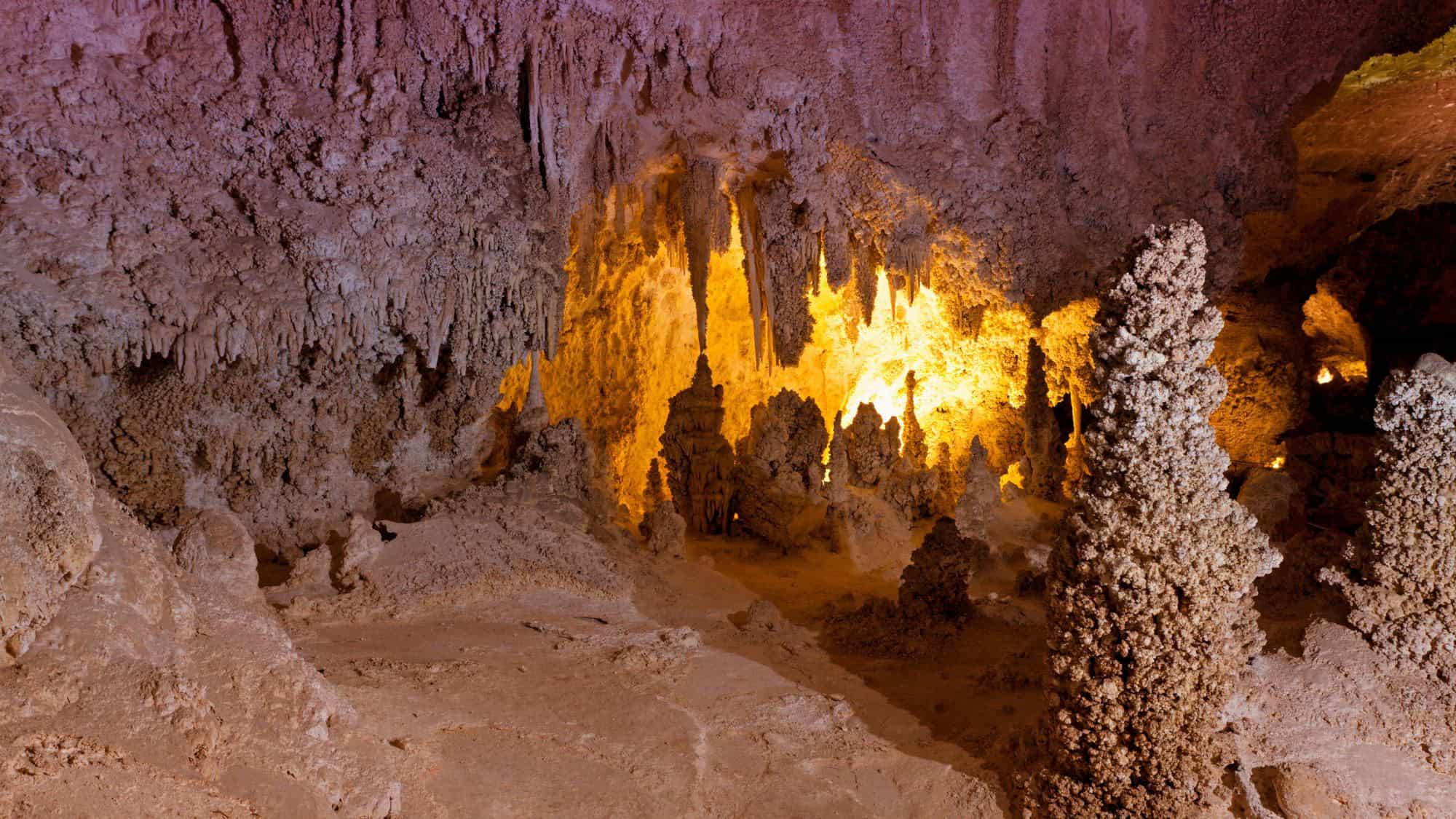
There is something inherently thrilling about going underground, tapping into that primal curiosity about what lies beneath our feet (and possibly finding Batman’s lair).
Cave exploration allows families to enter an alien world of dripping rocks, absolute darkness, and strange formations. It is also the only outdoor activity that is completely weather-proof.
It could be hailing, snowing, or a scorching 100°F outside, but the cave remains a constant, cool temperature, usually around 54°F. This makes it the perfect escape when nature is having a mood swing on the surface.
Mammoth Cave National Park in Kentucky is the undisputed king of the underworld, with over 400 miles of explored passageways. Turns out, it’s the longest known cave system in the world.
The park offers tours for all ability levels, including the Historic Tour, which is a family favorite. You walk through massive chambers and narrow canyons while learning about saltpeter miners and early tuberculosis patients who were treated underground (it didn’t work).
The rangers love to turn off the lights to demonstrate “total darkness,” which usually results in nervous giggles and someone grabbing your arm.
Carlsbad Caverns in New Mexico features the massive Big Room, where you can walk down a natural entrance that switches back and forth into the abyss. And kids love learning the difference between stalactites (hold “tight” to the ceiling) and stalagmites (which “might” reach the roof).
Wilderness Survival Skills

Kids are weirdly obsessed with survival scenarios. They want to know what to do if they get lost, how to build a shelter out of sticks, and which berries will kill them instantly (the answer is usually “don’t eat any of them”).
Many national parks offer programs that scratch this itch, teaching practical outdoor skills that empower children and significantly lower parental anxiety. It turns the boring “don’t wander off” lecture into a cool lesson on self-reliance and being a baddy in the woods.
Rangers often lead demonstrations on the “ten essentials” (the items every hiker should carry, like a map, compass, and extra food). It is hands-on learning with real-world application.
In some parks, you might find programs specifically focused on wildlife safety, teaching kids what to do if they encounter a bear or a mountain lion. The delivery is usually geared toward children, focusing on “looking big” and making noise rather than terrifying them into never leaving the house again.
This is a great chance to give them responsibility. Let them carry a small daypack with a whistle and a map. Let them try to navigate a trail junction. And watching your child earnestly practice their “bear scare” roar is objectively hilarious and adorable.
Tide Pool Exploration

The intertidal zone is nature’s chaotic aquarium. It’s a strip of land that is underwater half the day and exposed to the air the other half, creating a harsh environment filled with creatures that look like they were designed by a sci-fi artist.
For kids, tide pools are treasure chests. It is a full sensory experience: the smell of salt spray, the slippery kelp that feels like slime, and the cold water nipping at your ankles. It invites close inspection, forcing you to crouch down and stare at a puddle until it reveals its secrets.
Olympic National Park and Acadia National Park are the premier destinations for this wet and wild adventure. At low tide, rocky depressions fill with seawater and trap marine life.
You can find sea stars in neon shades of orange and purple clinging to rocks, and green anemones that look like flowers but are actually predatory animals waiting for a snack.
The golden rule here is “gentle observation.” You typically want to look with your eyes, not your hands. If a park allows touching, it is usually a “two-finger touch” on non-sensitive creatures. Never pry a sea star off a rock; it can tear its tube feet, which is just plain rude.
Checking tide tables is essential; arrive about an hour before low tide to maximize your exploration time before the ocean comes back to reclaim its turf.
Firefly Synchronization Viewing

Bioluminescence is magical, no matter how cynical or old you are, but the synchronized fireflies of Great Smoky Mountains National Park are a phenomenon that borders on the miraculous.
For a few weeks each year, typically in late May or early June, a specific species of firefly (Photinus carolinus) puts on a mating display where the males flash their lights in unison.
It isn’t random twinkling; it is a coordinated burst of light followed by several seconds of darkness, repeated over and over. It looks like a wave of fairy lights moving through the forest, or a very slow, silent rave for bugs.
Because this spectacle has become so popular, the park runs a strict lottery system for parking passes at the Elkmont viewing area to manage the crowds and protect the beetles’ mood. If you are lucky enough to win a spot, you bring chairs and sit in the dark forest, waiting.
It forces a rare kind of patience on children who are used to on-demand everything. The atmosphere is reverent; hundreds of people sit in silence (mostly) in the pitch black.
Remember that the red-light rule applies here too. Flashlights and phone screens can disrupt the beetles’ communication, so keep it dark.
It’s one of the few times you will see a group of children sit completely still, mesmerized by insects trying to find a girlfriend.
Tracking Animal Prints

You might not always see the bear or the mountain lion (which is probably for the best), but you can almost always see where they have been.
Tracking is a way of reading the landscape that turns a hike into a detective story. It shifts the focus from “what can we see right now” to “what happened here last night while we were sleeping?” It engages a child’s imagination, asking them to reconstruct a scene based on evidence left in the dirt.
It’s like CSI: Wilderness Edition.
White Sands National Park is exceptional for this because the white gypsum sand captures footprints perfectly. You can find the tiny, skittering tracks of a darkling beetle, the hop-pattern of a pocket mouse, or the distinct paw prints of a coyote. In snowy parks like Rocky Mountain or Yellowstone, the snow tells similar stories.
Kids love trying to identify the animal based on the size and shape of the print. And yes, this inevitably leads to a conversation about scat. Animal droppings are a goldmine of information, revealing what the animal ate and how long ago it was there.
Most visitor centers sell small tracking guides. Identifying a pile of elk scat might not be your idea of a highlight, but for a ten-year-old, it is peak comedy and science rolled into one brown package.
Floating Trails And Boardwalk Adventures

Sometimes the coolest ecosystems are the ones you can’t technically walk on because you would sink, get bitten, or boil. Swamps, marshes, and fragile thermal basins require a different approach.
The National Park Service has built extensive boardwalk systems that allow families to float above these environments like hovercrafts. These trails are generally flat, accessible, and perfect for strollers or tired legs, but they offer front-row seats to intense biological action (without the mud).
The Anhinga Trail in Everglades National Park is a prime example. It winds through a sawgrass marsh where you are safely separated from the water, but the wildlife is right there.
You can look down and see an alligator cruising underneath your feet or a turtle basking on a log a few feet away. It feels adventurous without being physically strenuous.
In Yellowstone, boardwalks protect visitors from boiling thermal features. Walking through the steam of a geyser basin feels like walking on another planet. These trails are great because the railing provides a clear boundary, which is relaxing for parents who don’t want to constantly shout, “Stay on the trail!”
It is an immersive way to experience a wetland or a geothermal area without getting your feet wet or risking a third-degree burn.
Sledding On Sand Dunes

If you tell your kids to pack a sled for a summer trip to Colorado, they will look at you like you have finally lost your marbles. But at Great Sand Dunes National Park, sledding is a year-round activity, provided you have the right gear.
The park features the tallest dunes in North America, rising 750 feet from the valley floor against a backdrop of rugged mountain peaks. And it is a surreal landscape that basically begs to be climbed and slid down (like a giant sandbox for giants).
You cannot use a standard plastic saucer or a cardboard box; the sand creates too much friction, and you will just sit there looking sad (which also happened to us at White Sands when we used the wrong sled). Instead, you need a specialized sandboard or sand sled with a slick, laminated bottom and specific wax, which you can rent at retailers just outside the park.
The experience is a massive physical workout. For every thrilling, fast-paced slide down, there is a grueling, calf-burning hike back up the loose sand.
The sand can get incredibly hot (up to 150°F in the summer), so this is strictly an early morning or evening activity. And it is messy, chaotic fun.
Sand will get in your ears, your shoes, and your car, and you will likely find grains of it in your luggage six months later. But the sound of your kids shrieking with laughter as they race down a massive dune is worth the vacuuming.
Like Our Content? Follow Us on MSN (or click the Follow Button above) for more from Discover Parks & Wildlife.


