Discover Parks & Wildlife contains affiliate links and is a member of the Amazon Services LLC Associates Program. If you make a purchase using one of the Amazon links, we may receive compensation at no extra cost to you. We may also use select AI tools to support our creative process, but all content is reviewed, refined, and finalized by our human team. See our disclosure policy and our AI use policy for more information.
12 Forgotten Ghost Towns Near National Parks Where Time Stopped Long Ago
Ghost towns tell the story of boom, bust, and what gets left behind when the gold runs out or the rails move on. Pair them with nearby National Parks and you get a road trip that mixes epic scenery with real American history.
Boarded storefronts. Tilted stamp mills. Sun-bleached cemeteries with views that stop you cold. Some sites are true open-air museums with walking paths and rangers. Others are lonely ruins tucked into desert basins or high alpine passes where marmots outnumber people.
A few sites sit inside park boundaries, like special prizes you win for getting out and exploring. Others are on BLM or Forest Service land, and some have pockets of private property. And roads to get there can be rough, seasonal, or closed after storms.
Carry extra water, fuel, and a paper map. Respect closures, do not enter unstable buildings, and leave artifacts where you find them. Do that right and these places deliver something rare. Silence, scale, and a direct line to the past.
Rhyolite, Nevada – Near Death Valley National Park
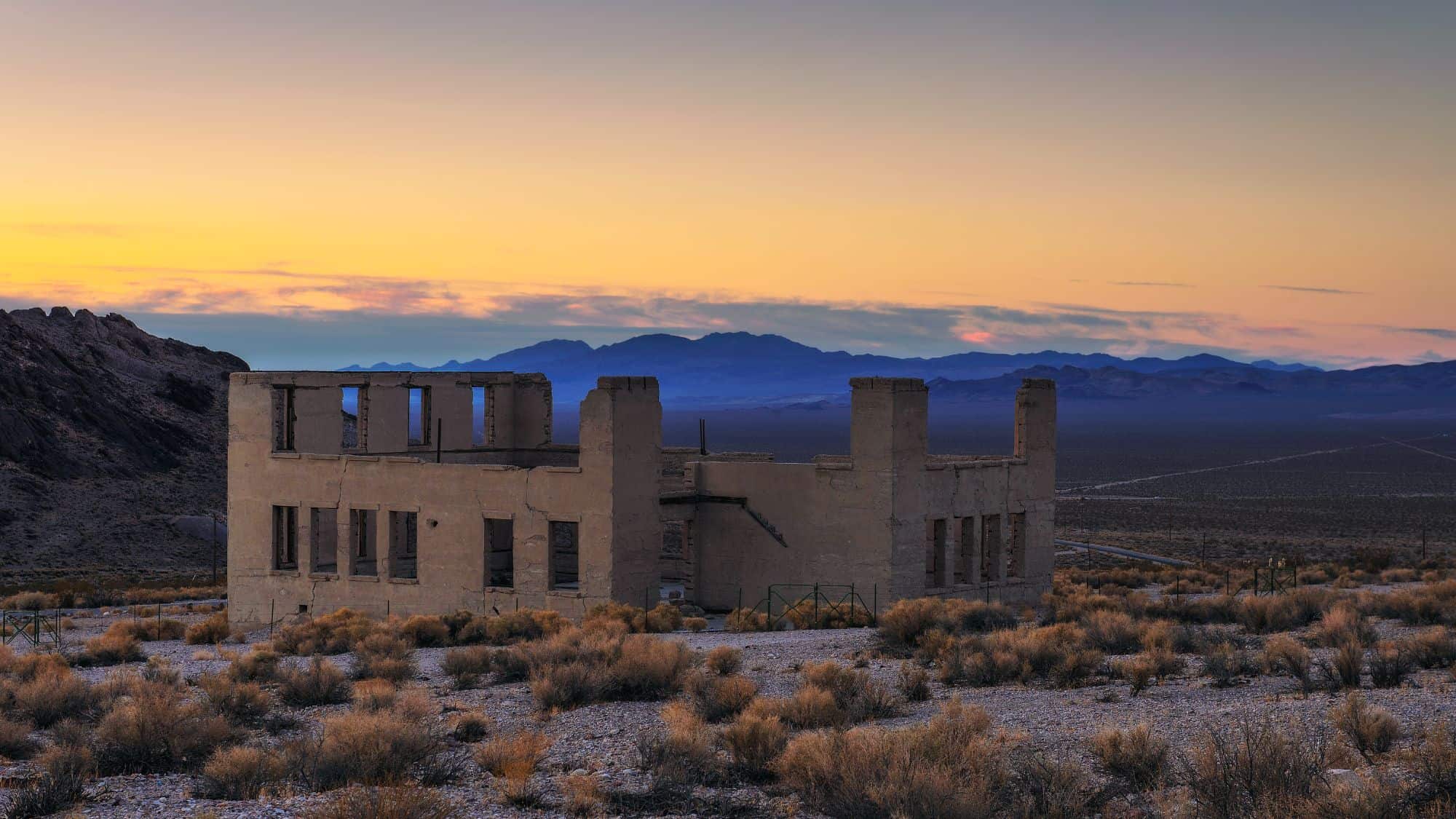
Born from a 1904 gold strike, Rhyolite ballooned into a full-blown city with electric lights, a three-story bank, and a railroad depot. But the bust came fast. Today you’ll wander through roofless masonry, around the jail walls, and see the famous Bottle House. The Bottle House was restored in 1925 for a film crew, and it still steals attention alongside the depot and Cook Bank ruins.
Rhyolite sits just outside the park near Beatty on NV-374, which keeps access simple for anyone road-tripping through Death Valley. And the site spans a mix of BLM and private parcels about 35 miles from Furnace Creek on a paved route. Wayfinding is easy, but do keep an eye out for open shafts off the side roads.
If you want the classic photo light, late afternoon drops warm color across the Bullfrog Hills and frames the empty windows like stage sets. Tip: shade is rare, and the wind can feel like a hair dryer on high.
Bannack, Montana – Near Yellowstone National Park
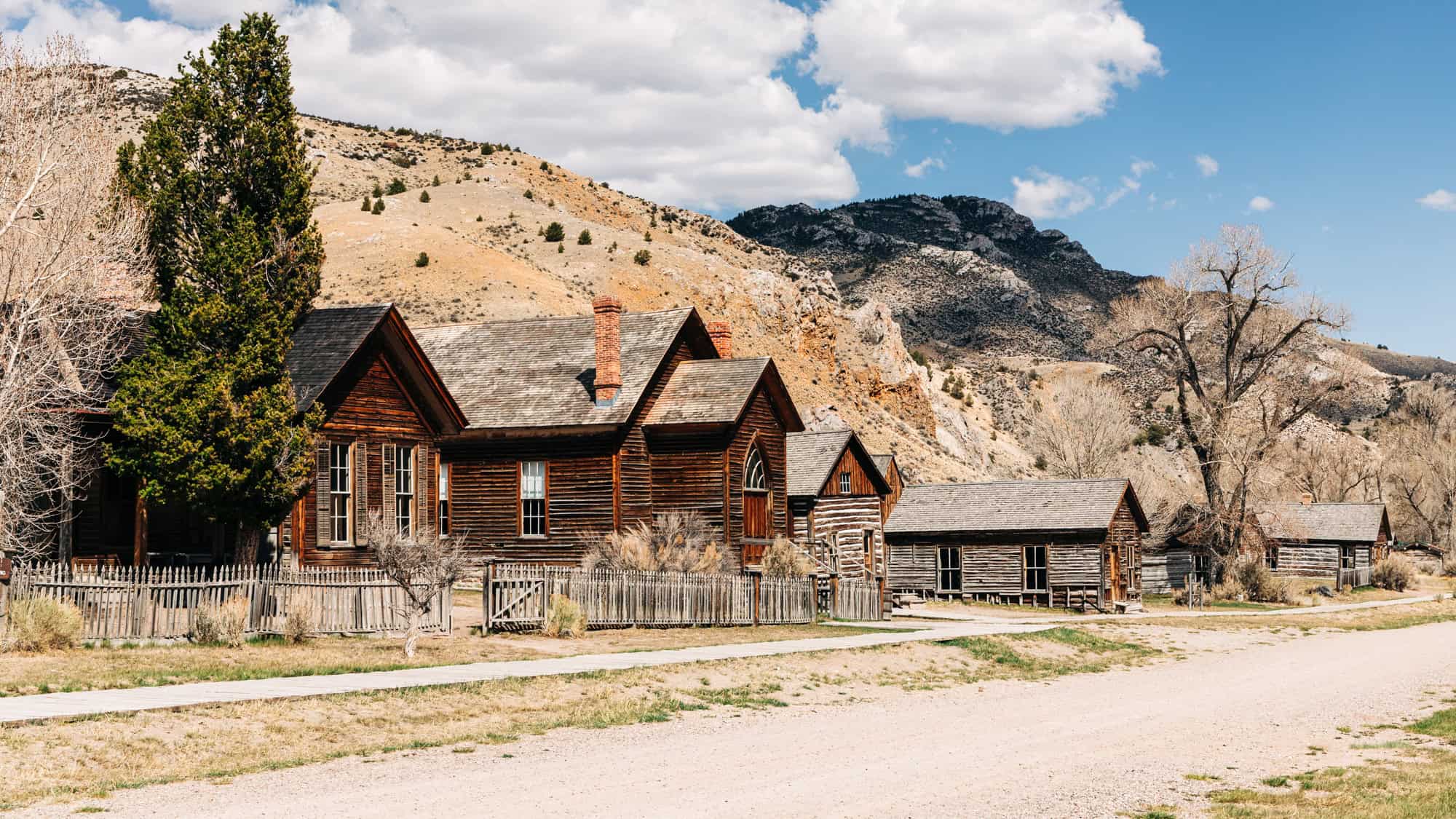
If you want a ghost town that feels intact, Bannack delivers. Gold popped here on July 28, 1862. Within a year, the population swelled past 3,000. And Bannack briefly became the capital of Montana Territory in 1864 before fortunes shifted and the town slid toward quiet.
Today, it’s protected as Bannack State Park and a National Historic Landmark. More than 50 buildings line dusty Main Street. Peer into the hotel, the brick courthouse, and weathered log cabins. As you explore, you’ll notice that park staff keep the place in “arrested decay,” so the interiors still look raw and real.
Winter brings ice and silence. Summer brings school groups and history buffs. Either way, this one earns a full hour, and then some. Plus, it’s easy to navigate, with interpretive signs and a seasonal visitor center. Bannack sits about 25 miles southwest of Dillon, making it a clean add-on if you’re driving the Yellowstone corridor across southern Montana.
Kennicott, Alaska – Within Wrangell-St. Elias National Park
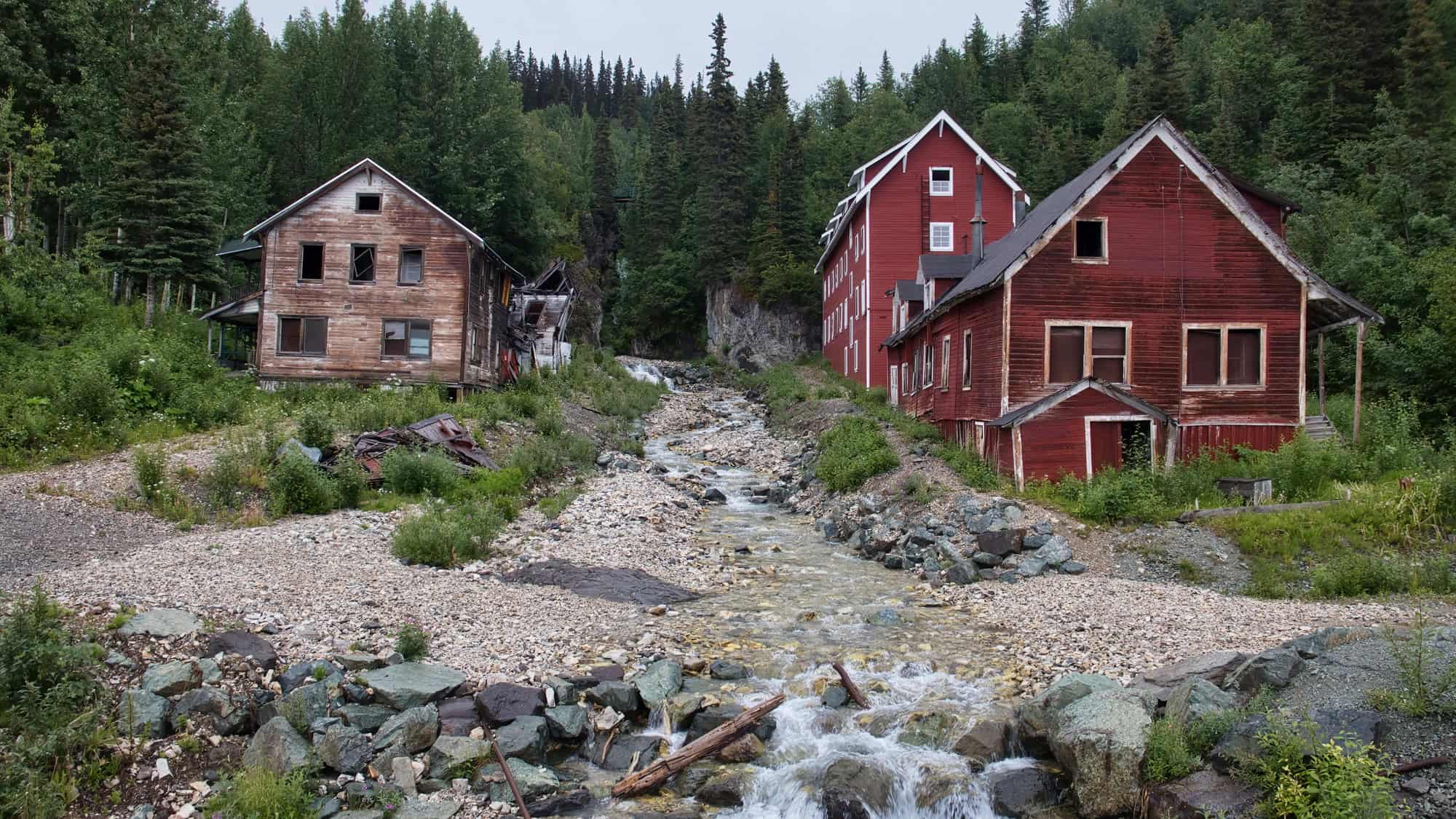
You’ll see it spelled Kennicott or Kennecott, and both work. But no matter how you spell it, this old mill town has a 14-story red mill building rising above Root Glacier that is the showstopper. Copper built this company town in the early 1900s. When the ore ran out, the railroad left, and the place froze in time.
The NPS now owns many of the structures, stabilizes the big mill, and runs tours in summer. And getting there is half the fun. Drive the McCarthy Road to the Kennicott River footbridge, park, then walk across.
Private shuttles connect the footbridge to McCarthy and Kennicott. No public vehicle access continues past the bridge, which keeps the core quiet enough to hear the creek water under the boards. If you have some extra time, add a half-day for Root Glacier if you can. Guided treks put your boots on blue ice with views back to the mill.
Bodie, California – Near Yosemite National Park
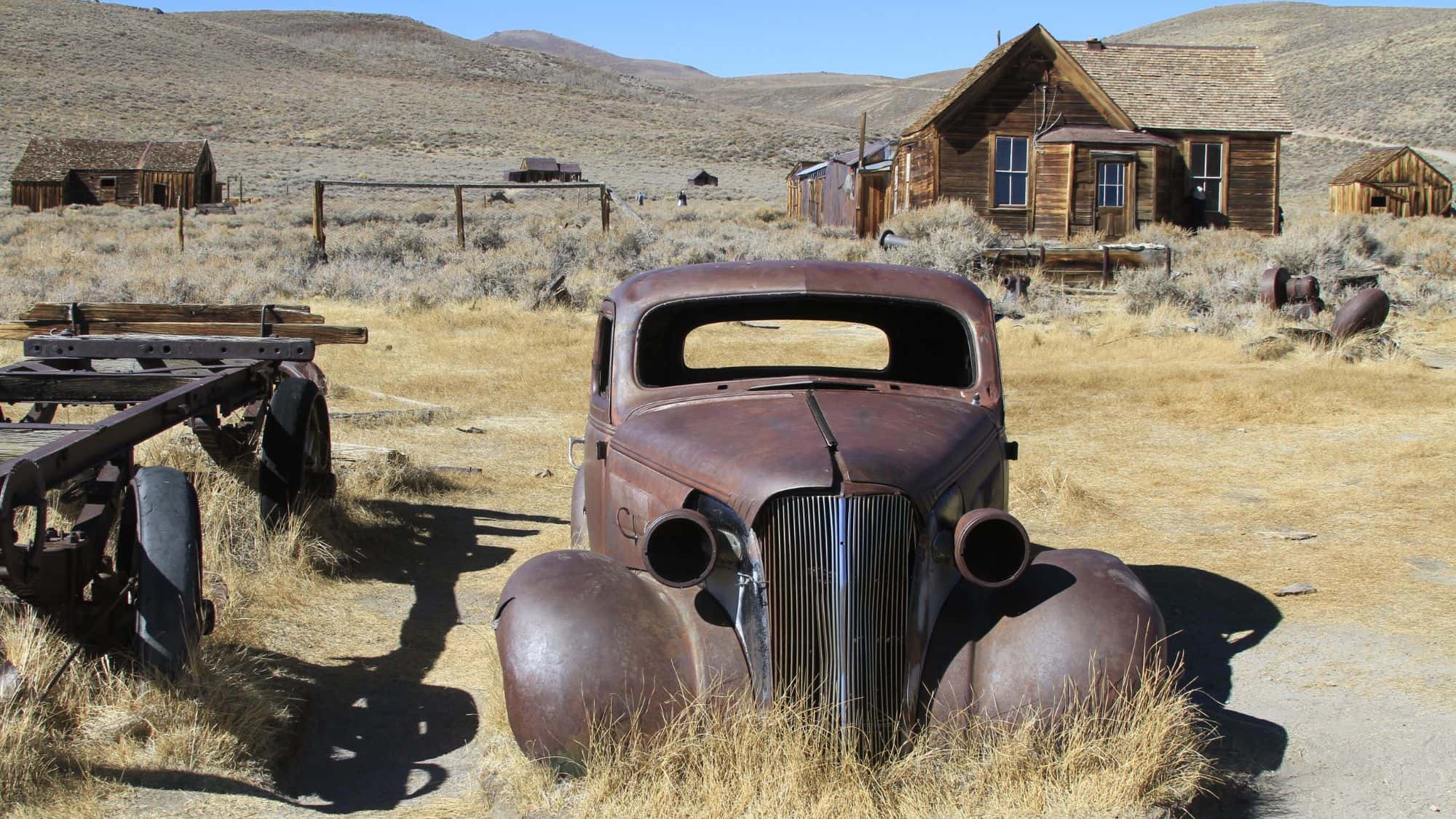
Bodie is the West’s benchmark for a “maintained ruin.” Why? Because California State Parks maintains dozens of structures without turning the place into a set piece and renovating. Roofs get patched, windows stabilized, but nothing is prettied up.
At 8,375 feet, the air is thin and the weather swings hard, which only ups the drama as you wander past the schoolhouse, stamp mill exterior, and glass-filled storefronts. Winds can howl across this high basin even on a bluebird day. It also pairs well with a Yosemite trip when Tioga Pass is open, but it stands on its own as a time capsule of the 1879 boom if you’d rather.
The last three miles to get there on State Route 270 are often rough dirt, so take it slow. Summer hours typically run 9 am to 6 pm, with shorter days in winter. Park at the main lot and let your feet do the work along Main Street and back lanes. And remember to bring layers for that wind I mentioned. A small fee applies at the gate, so keep some cash handy.
Independence, Colorado – Near Rocky Mountain National Park
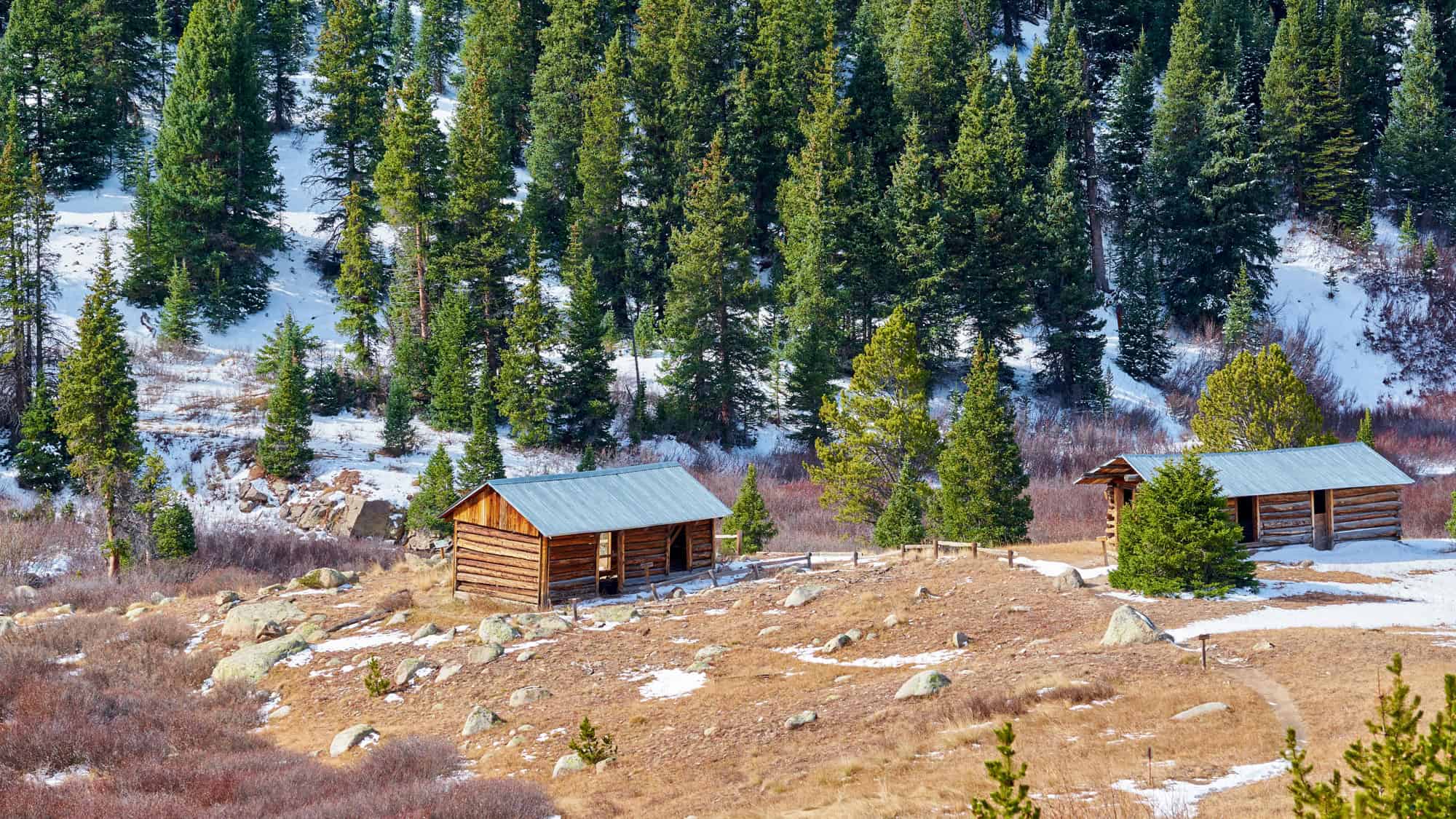
Set high above timberline country on the road to Independence Pass, Independence tells the Roaring Fork Valley’s origin story. Prospectors struck gold here on July 4, 1879. Cabins, a boarding house, and the stamp mill site still anchor the alpine meadow, and short paths thread the ruins with interpretive signs that keep the narrative tight.
You reach the townsite on CO-82 between Aspen and the pass summit. The pullout is obvious, but the air is thin. So take your time and drink water. In midsummer, tundra flowers fleck the hillsides, and the old log corners feel like they’re exhaling resin in the sun.
Pair a stop with a picnic by the creek, then continue to the pass for Sawatch Range views. Just know that snow closes this road seasonally, so check conditions before you aim for the high country. Independence is small, honest, and worth the detour when you’re exploring central Colorado’s big peaks.
Paria, Utah – Near Bryce Canyon National Park
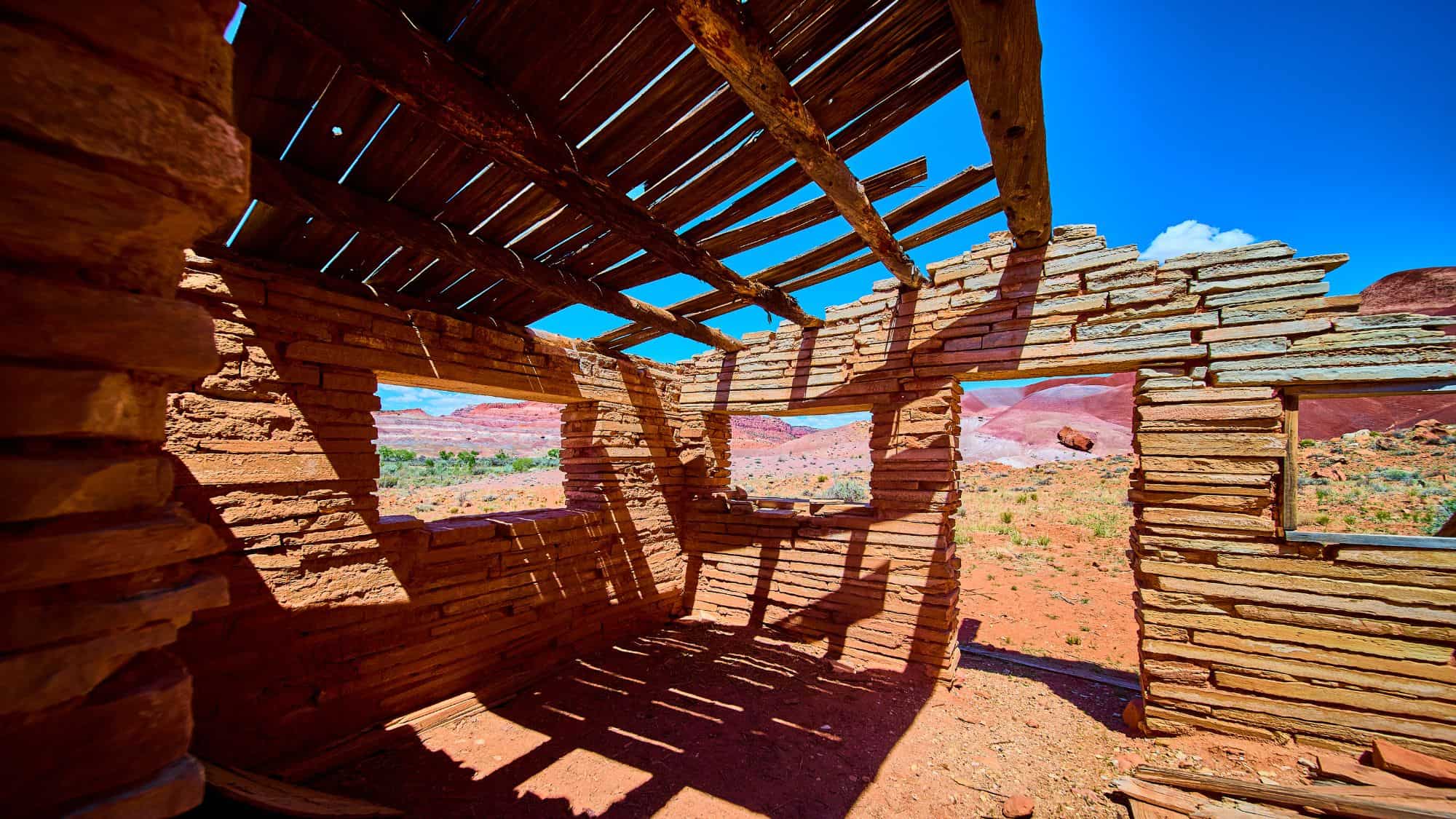
Paria’s pioneer town washed away long ago, but the setting remains unforgettable. The BLM manages a day-use area off US-89 where rainbow-striped badlands meet a quiet bend of the Paria River. The famous western movie set that stood nearby was rebuilt in the late 1990s, then destroyed by fire in 2006. Only foundations and signs tell that story now.
The access road crosses the wash several times. After storms, it may be rutted or impassable for low-clearance cars, so check recent conditions in Kanab. And many travelers combine Paria with Bryce Canyon or one of the area’s slot canyons in a single day.
If you have high clearance, you can push farther toward Buckskin Gulch when the wash is firm. Otherwise, park near the movie-set site and roam on foot. Into photography? The light here goes neon at golden hour as clay bands glow red, purple, and cream.
Terlingua, Texas – Near Big Bend National Park
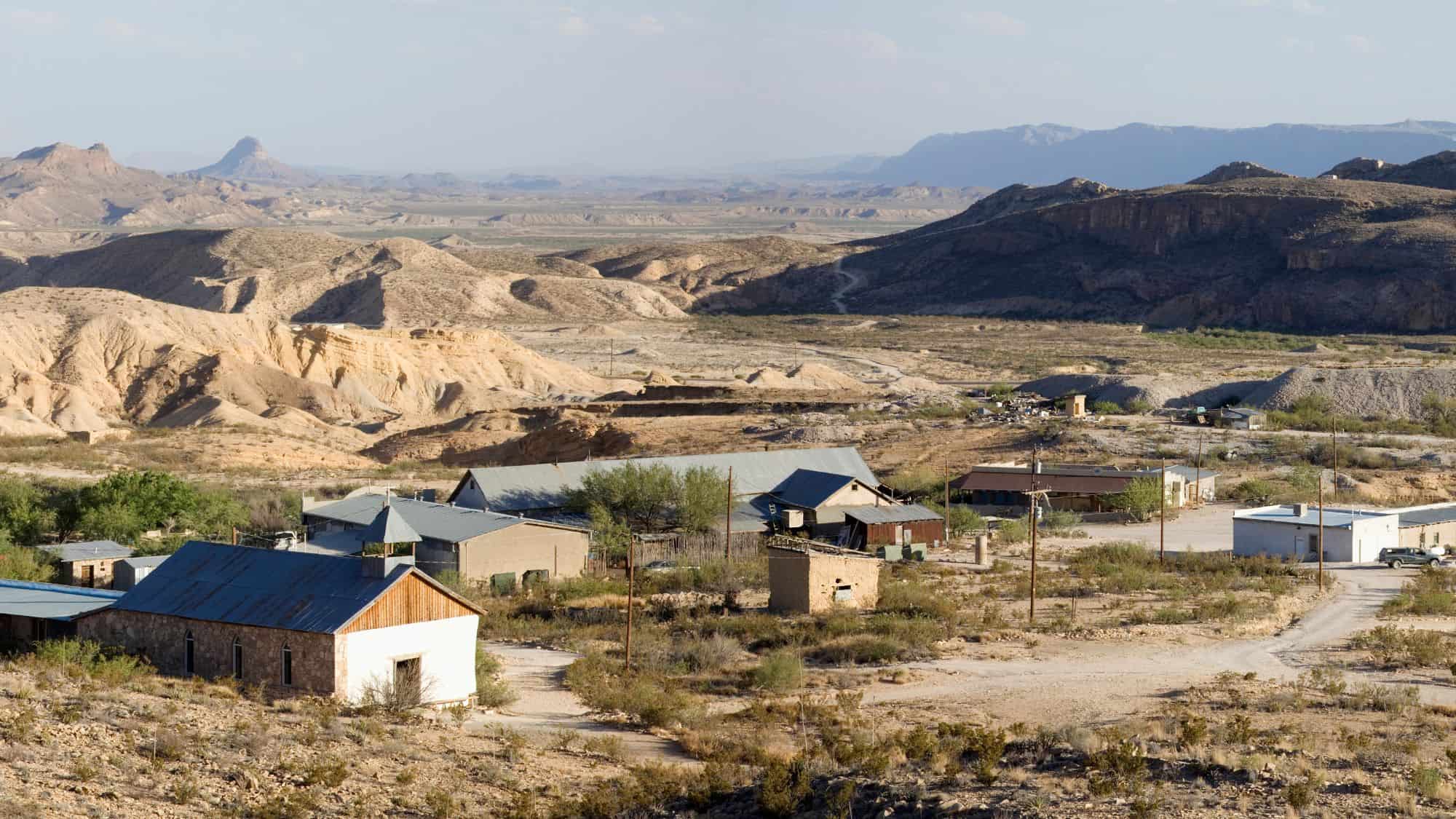
Terlingua wears its mining scars proudly. Cinnabar ore made this a boomtown around 1900, then the market collapsed, and the desert took over. Today, the ruins of the Chisos Mining Company frame a lively outpost outside the park’s western entrance.
You’ll find cold drinks on the porch, live music on many nights, and a cemetery of hand-built crosses that glows at sunset. The town also hosts a legendary chili cook-off each November that draws thousands. And Big Bend’s Chisos Mountains and river canyons sit right down the road, so Terlingua makes a natural base if you want both history and trails in one stop.
Just know that services are spaced out, and the desert is real here. So, fall through spring offers the most comfortable temperatures. And the stargazing never disappoints.
Thurmond, West Virginia – Within New River Gorge National Park

Coal and the railroad built Thurmond, and those rails still sing. The town sits inside New River Gorge National Park, preserved as a streetscape of brick storefronts, a coal-boom hotel, and a handsome depot that operates as a seasonal visitor center.
A 0.5-mile walking tour leads past the bank, the Mankin-Cox Building, and down to the riverfront. And trains still thunder through on an active CSX mainline, so heed crossings and stay off the tracks. If you crave a full day, pair Thurmond with the Canyon Rim area for bridge views or paddle sections of the New River when levels cooperate.
Summer is lush. Fall turns the slopes into a patchwork quilt. But in any season, the brickwork and river light make for moody photos that tell the story of Appalachia’s industrial heart. Tip: the access road to get here is narrow and winding, so large RVs are highly discouraged.
Garnet, Montana – Near Glacier National Park
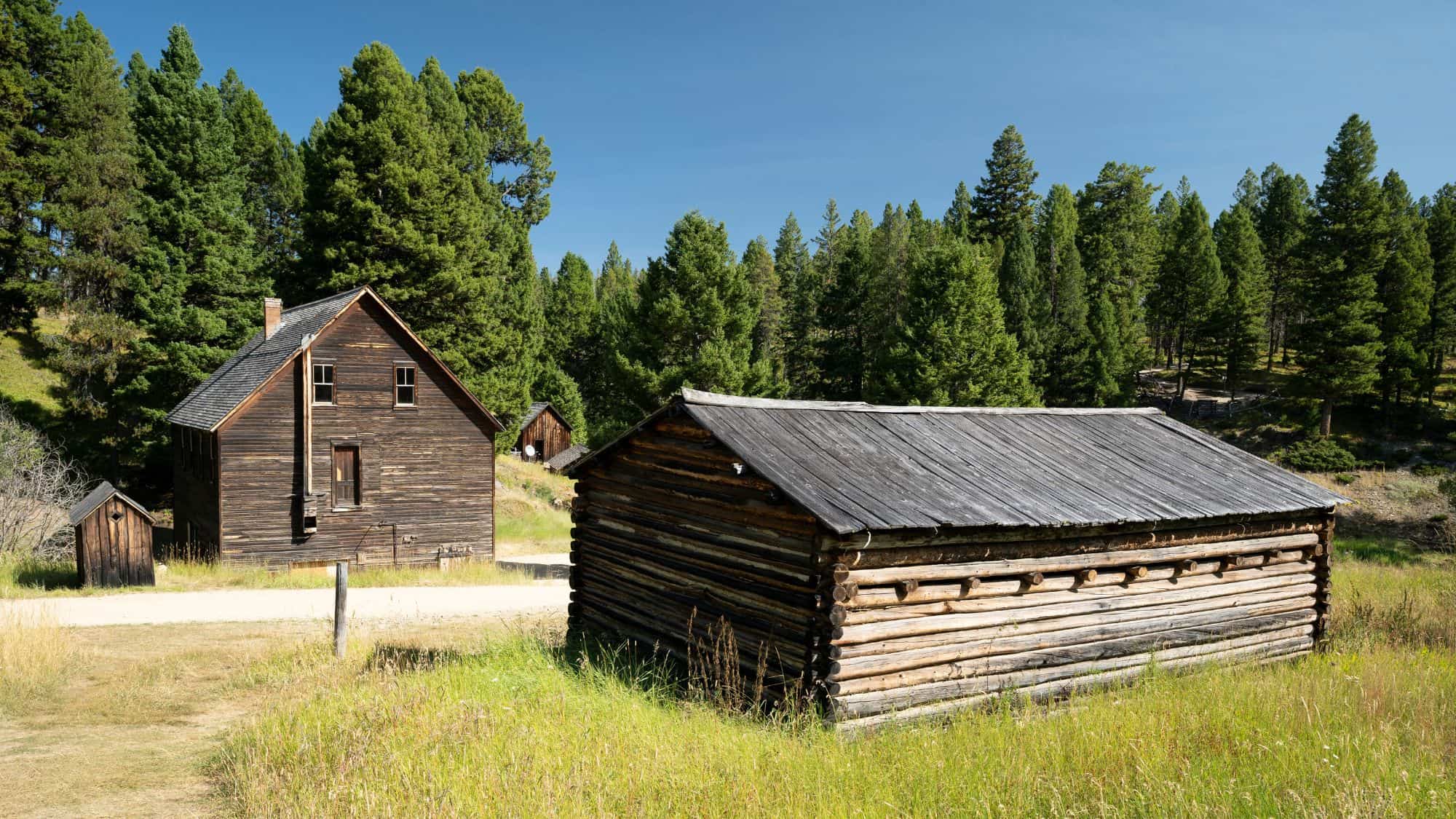
Garnet is one of the best-preserved gold towns in the Rockies, and it comes with a twist. In winter, cars cannot reach it. From December through April, you can ski or snowmobile in, and two rustic cabins are available by advance reservation.
Summer access is straightforward from MT-200, though the Bear Gulch approach is steep and rough. The BLM manages Garnet, and there is an entrance fee to help fund preservation and improvements. Inside the town, you’ll find artifacts in place, creaking floors, and trails that dip to old claims. Rangers and volunteers sometimes lead tours.
If you’re running a Glacier loop, this makes a worthy Missoula-area detour that trades crowds for quiet. Bring exact cash for fees, as credit card machines can never be fully trusted. And when a thunderstorm rolls over the Garnet Range, the town feels like it’s holding its breath. That’s the magic.
St. Elmo, Colorado – Near Great Sand Dunes National Park
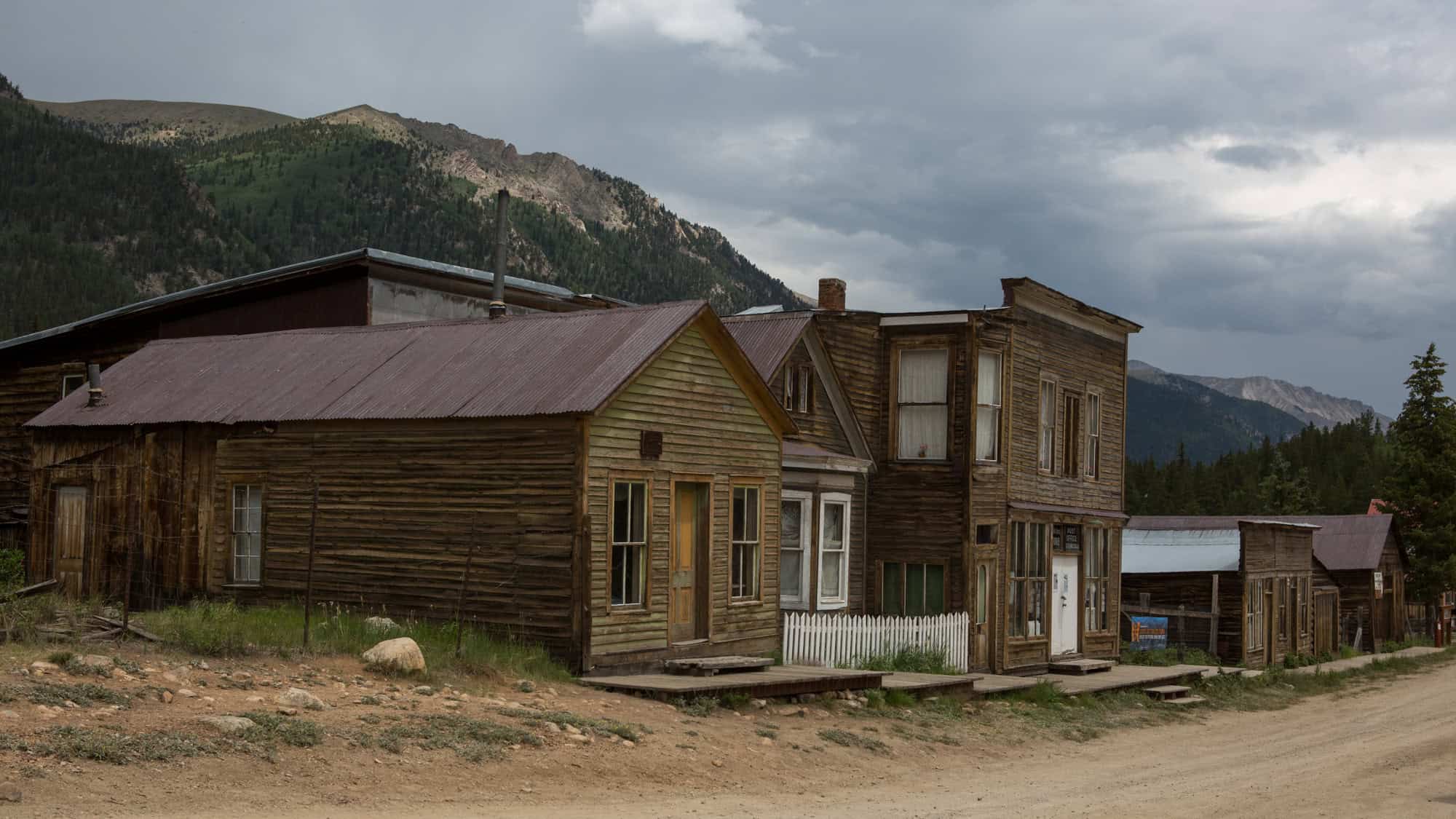
St. Elmo sits at 9,961 feet above sea level in Colorado’s Sawatch Range, a sturdy remnant of an 1880 boom that once supported hotels, a newspaper, and the Mary Murphy Mine. Today, it’s an easy drive west from Nathrop on County Road 162, with parking right at the edge of town.
The wooden storefronts and cabins photograph beautifully against aspen hillsides in September. And in the summer, the small general store opens with snacks and souvenirs, and nearby trails open to climb to alpine passes like Tincup. Please remember to not enter closed buildings, and to tread lightly around fragile foundations.
This town makes for a smart add-on for travelers linking central Colorado hot springs, Collegiate Peaks trailheads, and long scenic byways across the Arkansas Valley. Just be aware that evenings can get cool, even in July. And be ready for afternoon storms.
Panamint City, California – Within Death Valley National Park

This is the big one for hikers. Panamint City sits inside Death Valley National Park at roughly 6,200 feet, reachable only by a strenuous climb up Surprise Canyon from near Ballarat. But on the bright side, the route follows a rare perennial desert stream with waterfalls and boulder scrambles.
The NPS notes five miles from Chris Wicht’s Camp to the townsite, but many hikers log 10 to 14 miles round trip with nearly 4,000 feet of gain, thanks to start points and side detours. Either way, plan for a full day or a backpacking overnight trip.
Ruins include a brick smokestack, scattered machinery, and cabins that make for stark photos under Telescope Peak’s ridge. Water flows much of the way, but filter it. And heat and flash floods are real risks, so take all necessary precautions.
Grafton, Utah – Near Zion National Park

Grafton sits just south of Zion in cottonwood shade along the Virgin River. Mormon settlers founded it in 1859, fought floods and hardship, then left a handful of homes, a tidy schoolhouse-church, and a cemetery where pioneers rest under simple markers.
The non-profit Grafton Heritage Partnership stewards the site, and it shows. Buildings are stabilized, fences kept up, and interpretive panels tell the story without glossing over the hardships. Movie watchers may know Grafton from the old Butch Cassidy and the Sundance Kid, which was filmed here in 1969. The bicycle sequence gives this site a bit of Hollywood sparkle, but the mood on a quiet morning is all its own.
Reach it from Rockville on graded dirt. But remember to respect private parcels, as you will find many along the drive. My suggestion? Combine Grafton with Zion’s west-side trails for a day that balances walls of sandstone with human history etched into the valley floor.
14 National Parks That Will Ignite Your Love for Stargazing
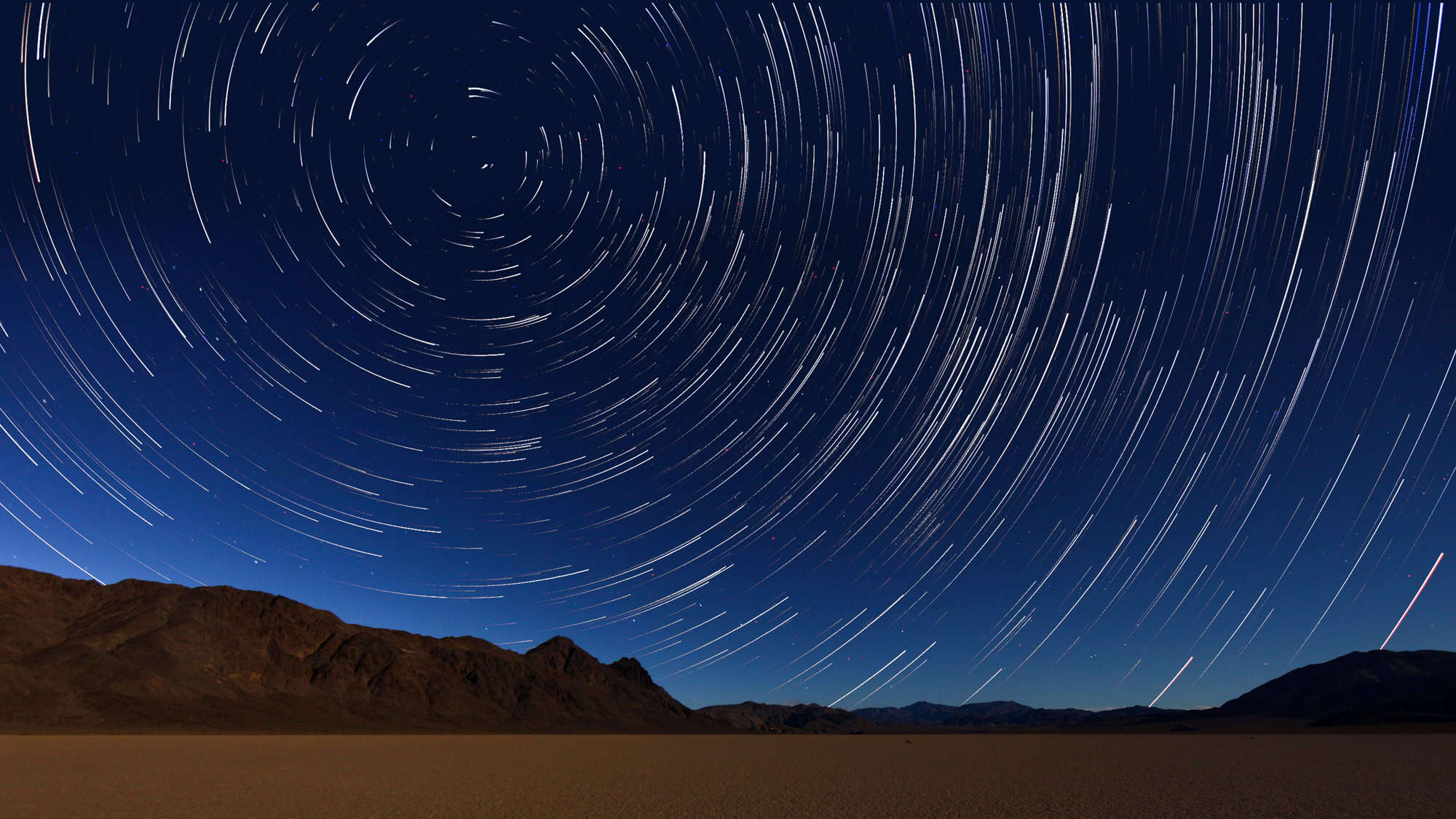
Leap into this celestial journey and find out which national parks will have you contemplating life among the stars. Who knew gazing at the night sky could be this mesmerizing?
12 National Parks You Can Easily Explore Over A Weekend

Think you’re too busy to soak up some nature? Think again, these National Parks are perfect for a quick weekend escape.
12 Stunning National Treasures That Welcome Cyclists

Feeling the need to pedal your way through some breathtaking scenery? Check out these stunning spots that roll out the red carpet for cyclists. Who needs a gym when you’ve got National Parks?