Discover Parks & Wildlife contains affiliate links and is a member of the Amazon Services LLC Associates Program. If you make a purchase using one of the Amazon links, we may receive compensation at no extra cost to you. We may also use select AI tools to support our creative process, but all content is reviewed, refined, and finalized by our human team. See our disclosure policy and our AI use policy for more information.
10 High-Altitude Alpine Experiences That Separate Daring Explorers From Everyone Else
Elevation changes everything. As you leave the valley floor behind, the familiar sounds of civilization fade, replaced by the rush of wind through rock corridors and the crunch of snow underfoot. The air grows thin and sharp, carrying a clarity that seems to sharpen the mind as much as the lungs.
This is a landscape defined by verticality, where gravity pulls harder, and every step upwards feels earned. It is an environment that commands respect, stripping away the unnecessary and leaving only the essential elements of survival and awe.
The mountains have always acted as a filter. They test endurance, patience, and the ability to adapt to rapid shifts in weather and terrain.
Sunlight here is more intense, casting stark shadows that reveal the geological violence of the past. Wildlife moves with purpose, and plants cling to existence in ways that seem impossible.
But for those who venture into these heights, the reward is a perspective that few ever see: a view of the world from above the clouds, where the scale of the earth feels both massive and fragile. Let’s take a look at some of the alpine experiences that define the boundary between casual tourists and true exploration.
Seeing The Vertical Rise Of Grand Tetons – Wyoming
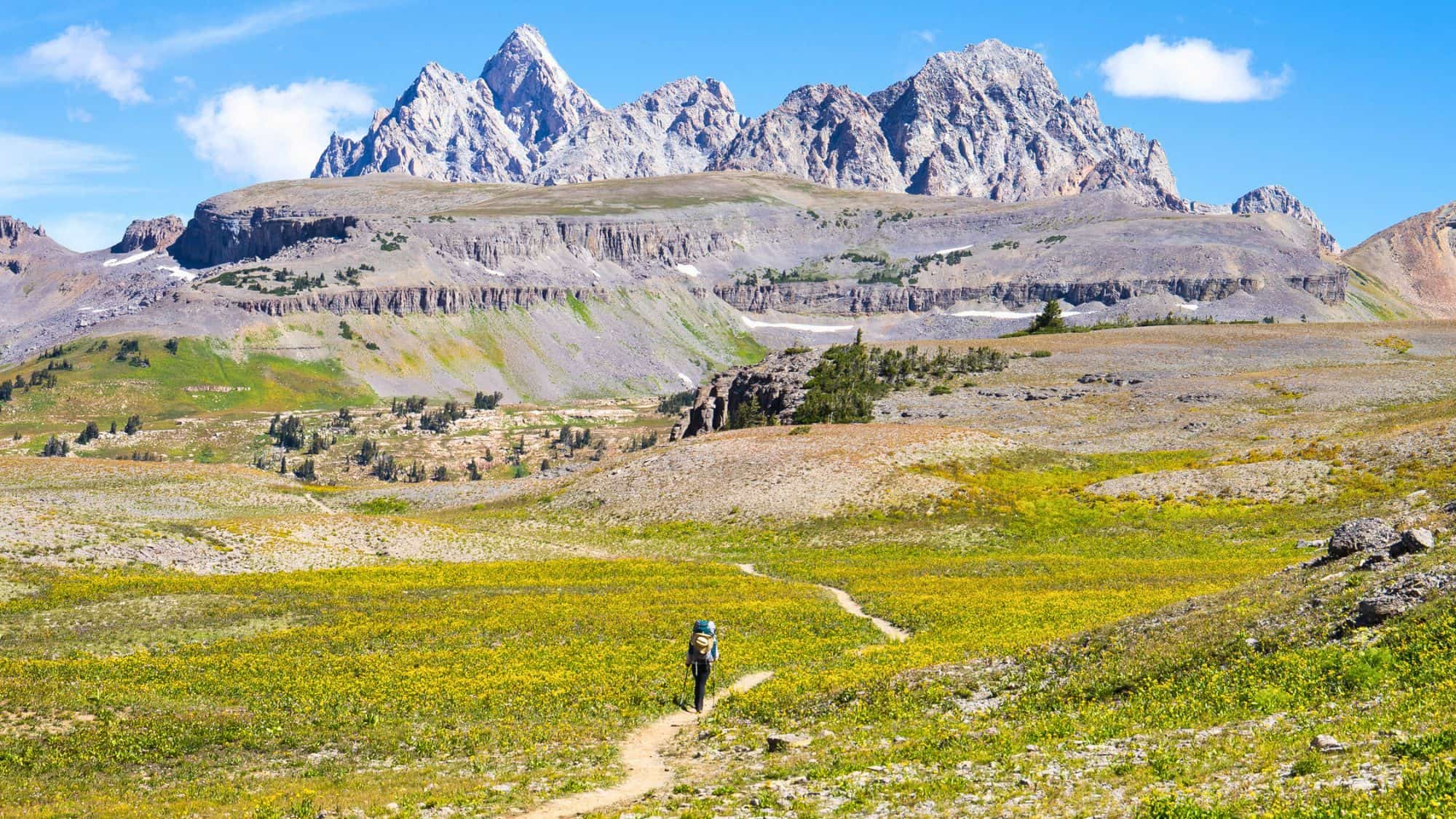
Many mountain ranges build up slowly, rolling through gentle foothills before reaching their granite crescendos. The Teton Range in Wyoming skips the introduction entirely.
Here, the peaks shoot abruptly from the flat sagebrush valley of Jackson Hole, creating one of the most dramatic geological profiles in North America. The Grand Teton itself rises more than 7,000 feet straight from the valley floor, reaching an elevation of 13,779 feet.
This sudden vertical relief is the result of movement along the Teton Fault. As the valley floor dropped, the mountains were thrust upward, leaving behind a jagged skyline that captures the imagination of climbers and photographers alike.
Seeing this fault-block mountain range from the valley offers a lesson in scale. The lack of foothills means there is no gradual transition; the wall of rock simply commands the horizon. Light plays across the eastern face at sunrise, turning the grey granite into shades of pink and gold.
You can appreciate the magnitude of this geological event from the Teton Park Road or by floating down the Snake River. The visual impact is immediate and serves as a reminder of the restless tectonic forces that shape our planet.
Spotting Denali’s Massive Stature – Alaska
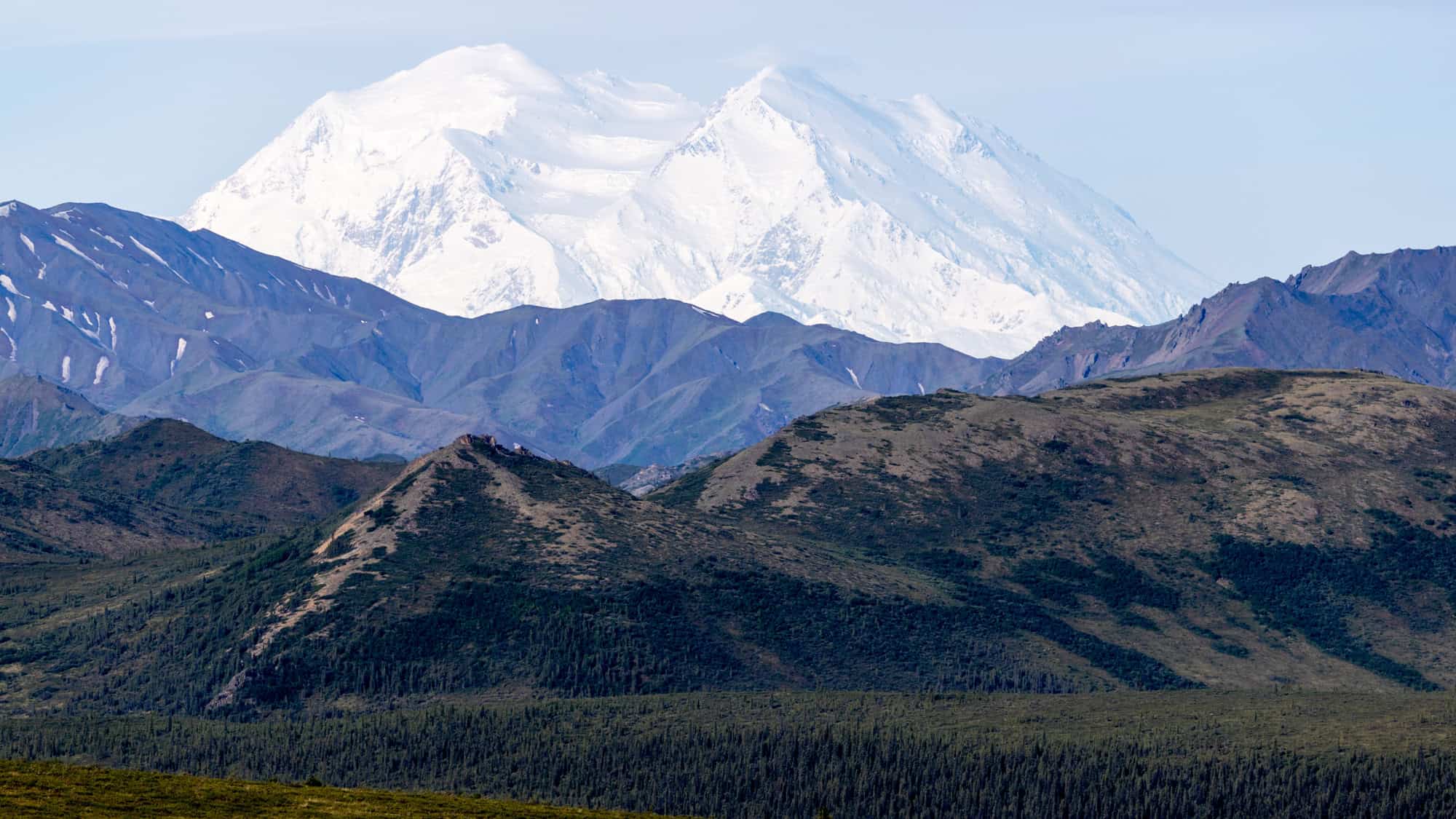
In the interior of Alaska, one mountain stands alone in its magnitude. Denali, federally designated as Mount McKinley, is not just the highest peak in North America at 20,310 feet; it is a massif that dominates the landscape for hundreds of miles.
While Mount Everest sits on a high plateau, Denali rises from a base of just 2,000 feet, giving it a vertical rise that rivals the tallest mountains on Earth.
The Athabascan people named it “The High One,” a title that feels entirely appropriate when you see the snow-covered giant looming over the taiga forests and tundra.
The scale of Denali creates its own weather systems. So it is often shrouded in clouds, making a clear view of the summit a rare and prized event for visitors to Denali National Park. When the clouds do part, the mountain reveals two distinct summits and a sprawling complex of glaciers that carve their way down the slopes.
Experiencing this peak does not strictly require a climbing expedition. Flightseeing tours offer a perspective of the vast Kahiltna Glacier and the sheer granite walls, while bus tours into the farther reaches of park provide chances to see the peak reflecting in Wonder Lake.
Exploring The Alpine Tundra Of Rocky Mountain National Park – Colorado

Life changes drastically above 11,000 feet. And in Rocky Mountain National Park, the trees twist into krummholz shapes before disappearing entirely, giving way to the alpine tundra.
This ecosystem covers fully one-third of the park and resembles the harsh environments found in the Arctic. It is a land of extremes, where high winds, intense ultraviolet radiation, and a short growing season dictate the rules of survival.
Yet, this landscape is far from barren. It is carpeted with resilient life forms that have adapted to endure the long winters and thrive in the brief, explosive summers.
You can witness this delicate world by traveling Trail Ridge Road, which tops out at over 12,000 feet. Then take a walk along the Tundra Communities Trail, which introduces you to cushion plants like moss campion and alpine avens.
These plants hug the ground to escape the wind, growing slowly over decades. Their deep taproots anchor them in the rocky soil, allowing them to bloom with vibrant colors for just a few weeks each July.
Please be aware that walking through this environment requires extra care, as the soil and plants are fragile and take years to recover from human footprints.
Moose Watching In The Teton Wetlands – Wyoming
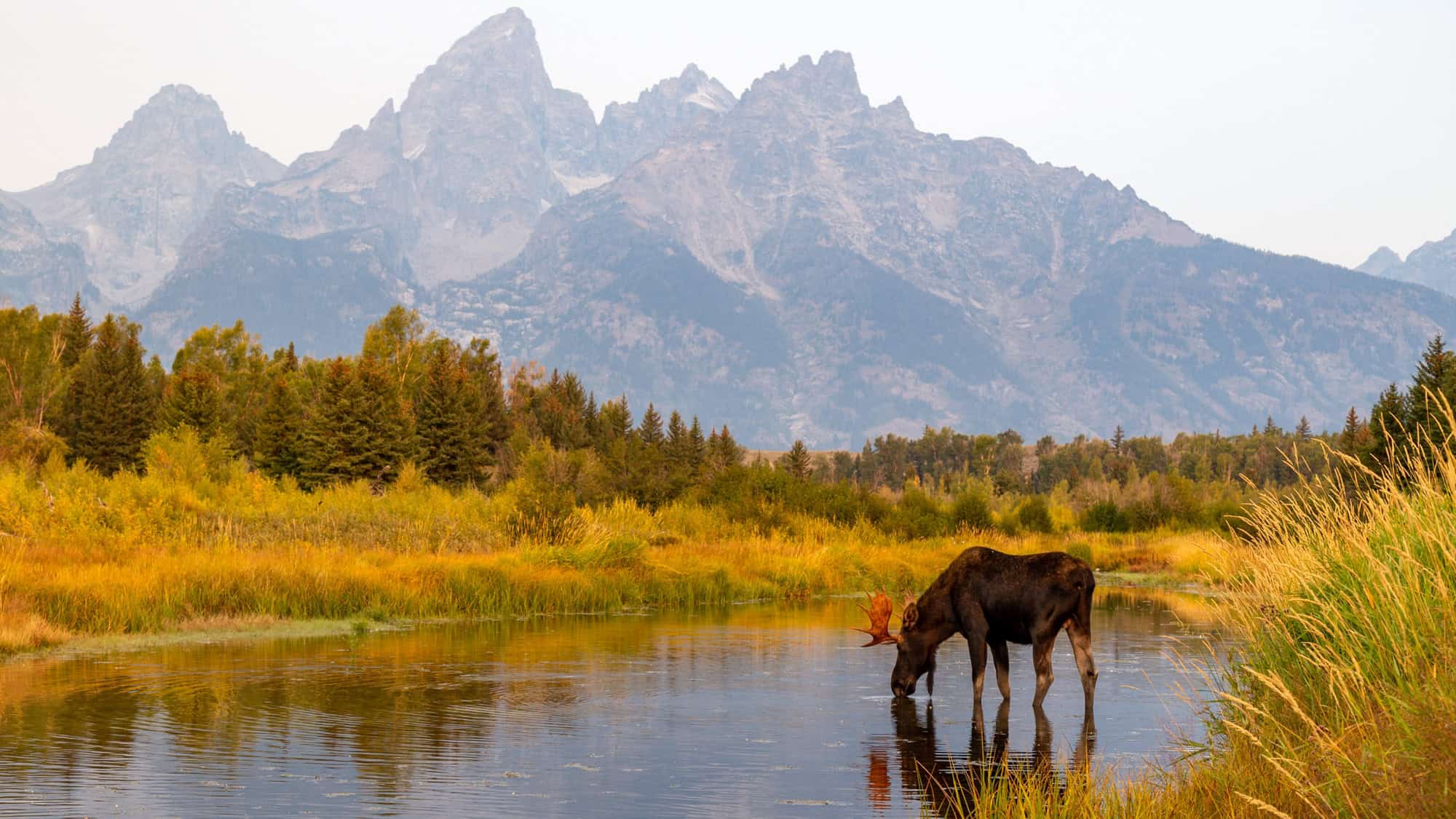
While the granite peaks of the Tetons draw your eyes upward, the wetland valleys at their base teem with life. The willow flats and oxbow bends of the Snake River provide the perfect habitat for the largest member of the deer family.
Moose thrive in these riparian zones, feeding on the aquatic vegetation and the dense thickets of willows that line the water. And Grand Teton National Park is one of the premier places in the lower 48 states to observe these solitary giants in their natural environment.
Early morning and late evening offer the best chances for a sighting. A visit to Oxbow Bend or the Moose-Wilson Road often reveals a bull moose wading through calm water or a cow and calf browsing in the brush.
Observing them requires patience and respect for their space. Don’t forget that NPS regulations require maintaining a distance of at least 25 yards to ensure safety for both you and the animal.
But watching a 1,000-pound animal move silently through the water offers a serene counterpoint to the rugged, static stone of the mountains above.
Timing The Weather On Mount Kilimanjaro – Tanzania

Standing on the roof of Africa requires more than just physical endurance; it requires impeccable timing.
Mount Kilimanjaro rises 19,341 feet above sea level, a dormant volcano that creates a stark silhouette against the Tanzanian plains. While it is a “walk-up” mountain that requires no technical mountaineering skills, the weather determines the success and enjoyment of the trek.
Equatorial mountains are subject to wet and dry seasons that drastically alter the experience on the trail and the visibility from the summit.
The best windows for climbing are during the dry months. January through early March offers warmer temperatures and generally clear skies, though visibility can be hazy later in the day.
The second window, from June to October, is the busiest season. It coincides with summer holidays in the northern hemisphere and offers drier days, though the nights can be significantly colder. Avoiding the wet rainforest mud and summit blizzards of the rainy season increases your chances of reaching Uhuru Peak.
Planning your trek during these optimal windows ensures that your memories are of the sunrise over the glaciers, rather than days spent looking at the inside of a rain cloud.
Hiring Guides In The High Atlas – Morocco
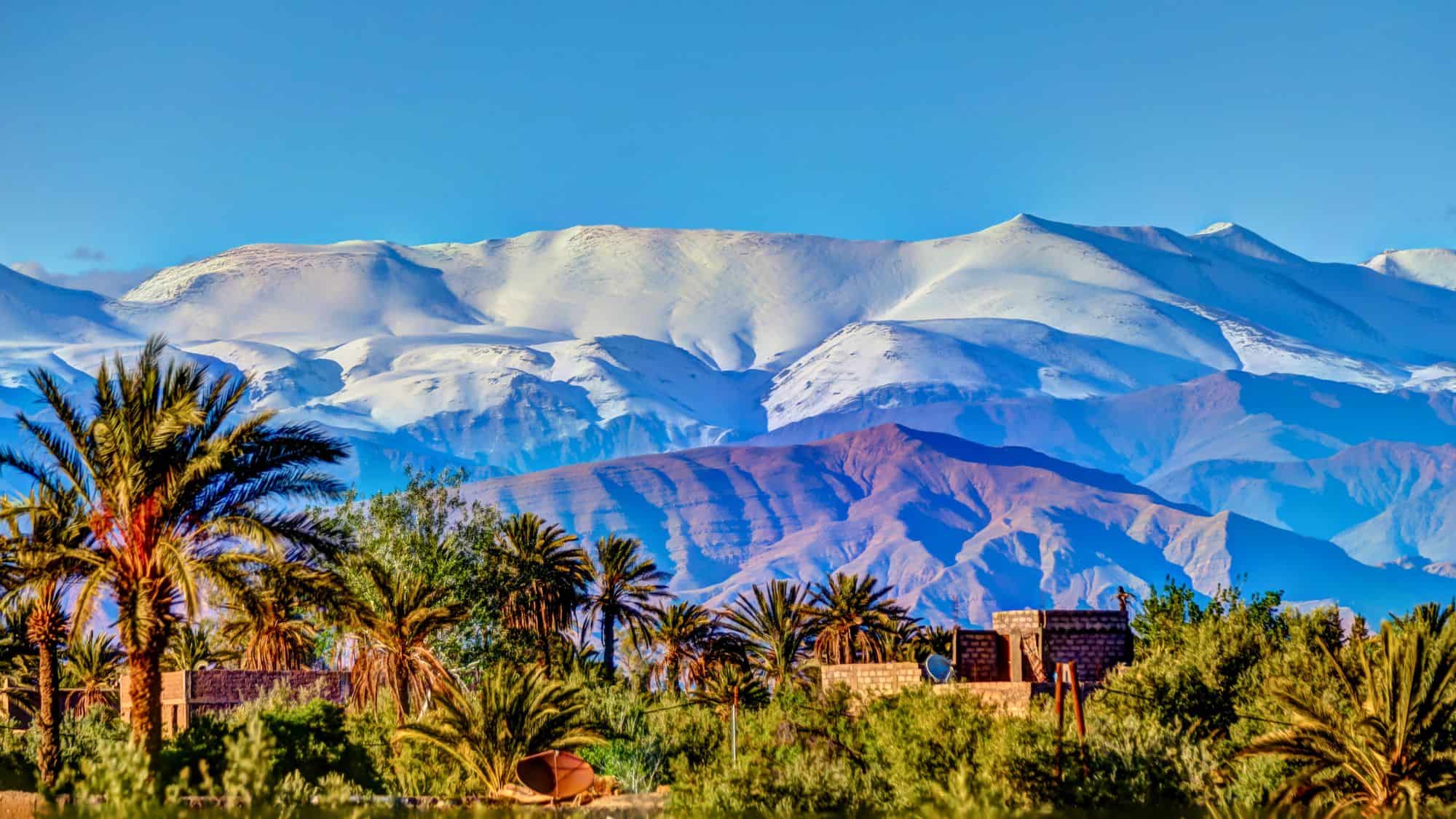
The High Atlas Mountains of Morocco offer a rugged, accessible alpine experience just a short drive from Marrakech. The highest point, Mount Toubkal, stands at 13,671 feet and serves as a beacon for trekkers looking to summit North Africa’s tallest peak.
In recent years, the regulations for accessing this mountain have changed to prioritize safety and the local economy. So it is now mandatory for all hikers attempting the summit to hire a local guide.
This regulation ensures that every person on the mountain has professional support and navigational aid in terrain that can be deceptive.
Checkpoints exist along the trail to Imlil and the refuge to verify that trekkers are accompanied by a licensed guide. This system has professionalized the trekking industry in the region, supporting the Berber communities that live in the valleys.
Your guide provides more than just security; they offer insight into the local culture, geology, and history of the region. And they manage the logistics of mules and refuge bookings, allowing you to focus solely on the steep, rocky ascent.
Exploring The Glacial Fjords Of Milford Sound – New Zealand
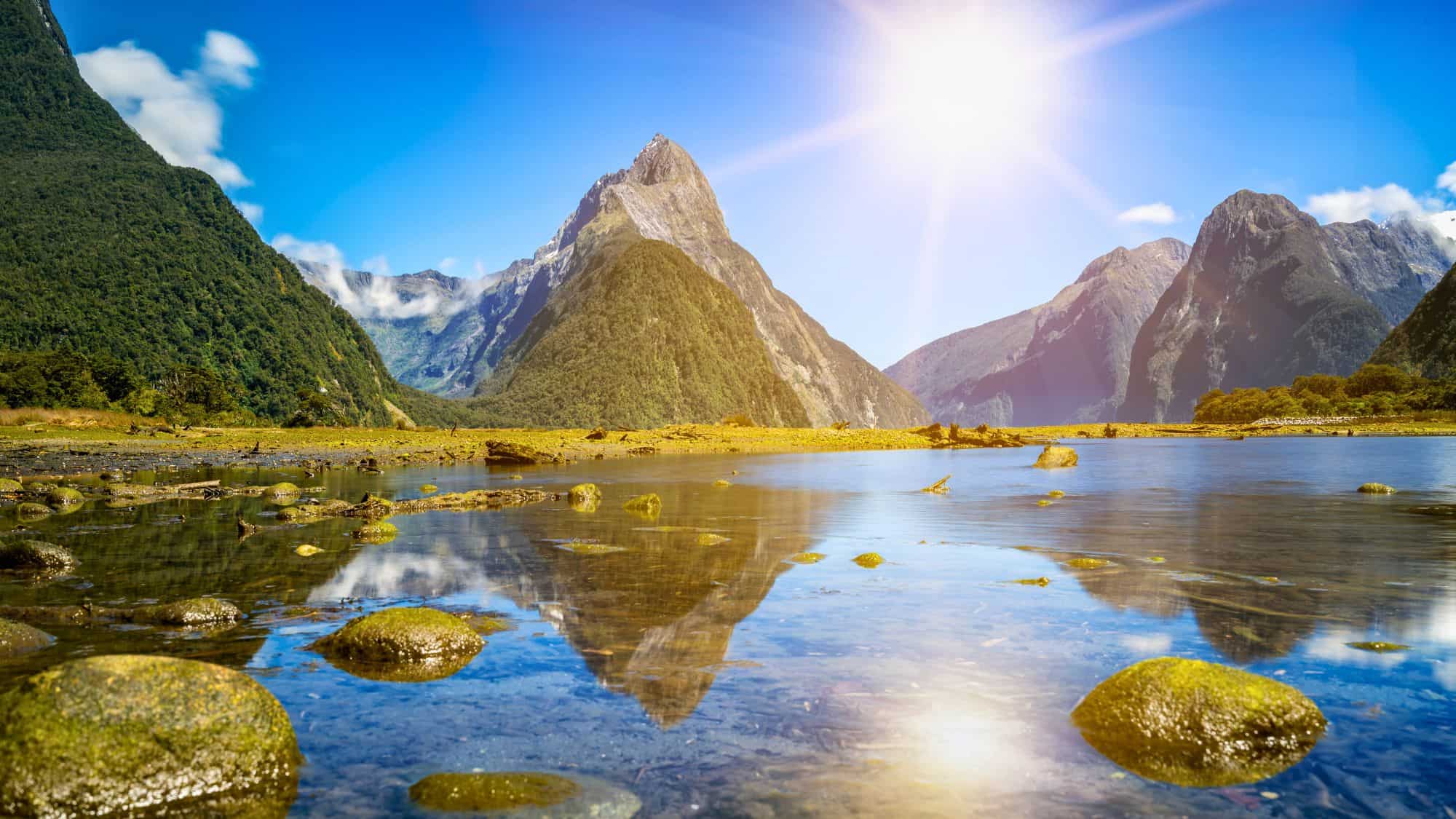
In the southwest corner of New Zealand, the Southern Alps meet the Tasman Sea in a dramatic display of past geological movement. Milford Sound, or Piopiotahi, is a fjord carved by massive glaciers during the ice ages.
As the ice retreated, the sea rushed in to fill the deep valley, creating a landscape of sheer rock walls that rise thousands of feet straight out of the dark water.
Mitre Peak, the most iconic of these formations, stands 5,560 feet tall, dominating the skyline and serving as a testament to the grinding power of the ancient ice.
Exploring this environment offers a look at a landscape in constant flux. The region receives immense rainfall, which creates hundreds of temporary waterfalls that cascade down the cliff faces, some dissipating into mist before they reach the water. And rainforest clings precariously to the steep slopes, sustained by the moisture.
A boat cruise through the fjord is your best bet to see the area. It takes you past seals basking on rocks and, occasionally, dolphins navigating the deep channel. Plus, the scale of the cliffs makes large vessels look like toys.
Finding The Floating Villages Of Halong Bay – Vietnam
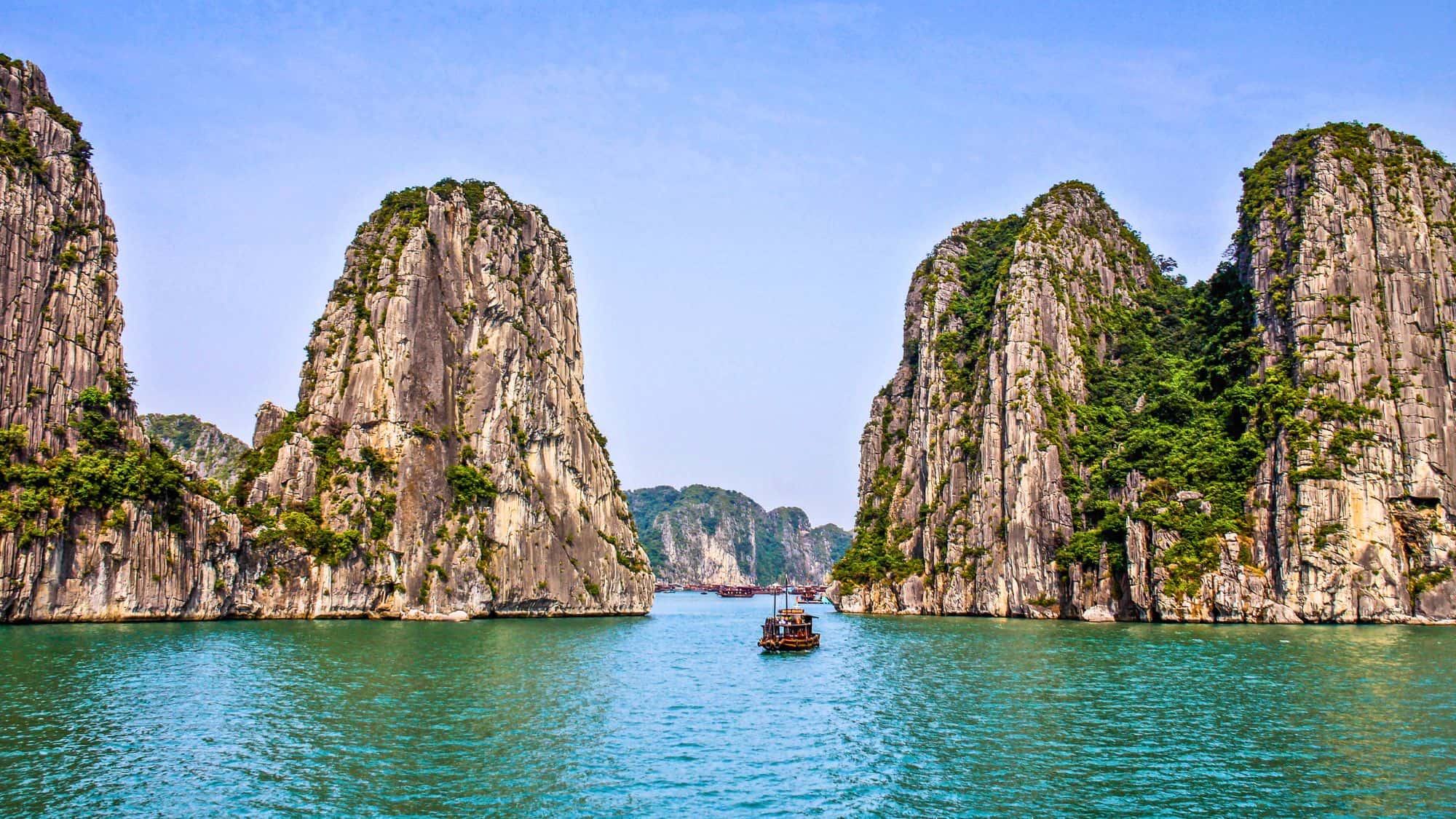
The peaks in Halong Bay do not form a single mountain range but rather a seascape of thousands of limestone pillars. Located in the Gulf of Tonkin in Vietnam, this UNESCO World Heritage site features approximately 1,600 islands and islets.
These karsts were formed over 500 million years, shaped by the rise and fall of the sea and the erosion of the limestone. The result is a maze of green-topped towers rising from emerald waters, creating a scenery that feels completely unique.
Beyond the geology, Halong Bay is defined by the human culture that has adapted to this water-bound geography. For generations, fishing communities have lived in floating villages, with houses, schools, and shops built on rafts anchored among the protected coves.
Life here moves with the tides. Residents rely on the sea for their livelihood, navigating the maze of islands in bamboo boats. And visiting these villages offers a glimpse into a traditional way of life that is intimately connected to the limestone peaks.
Trekking Windows For The Annapurna Circuit – Nepal
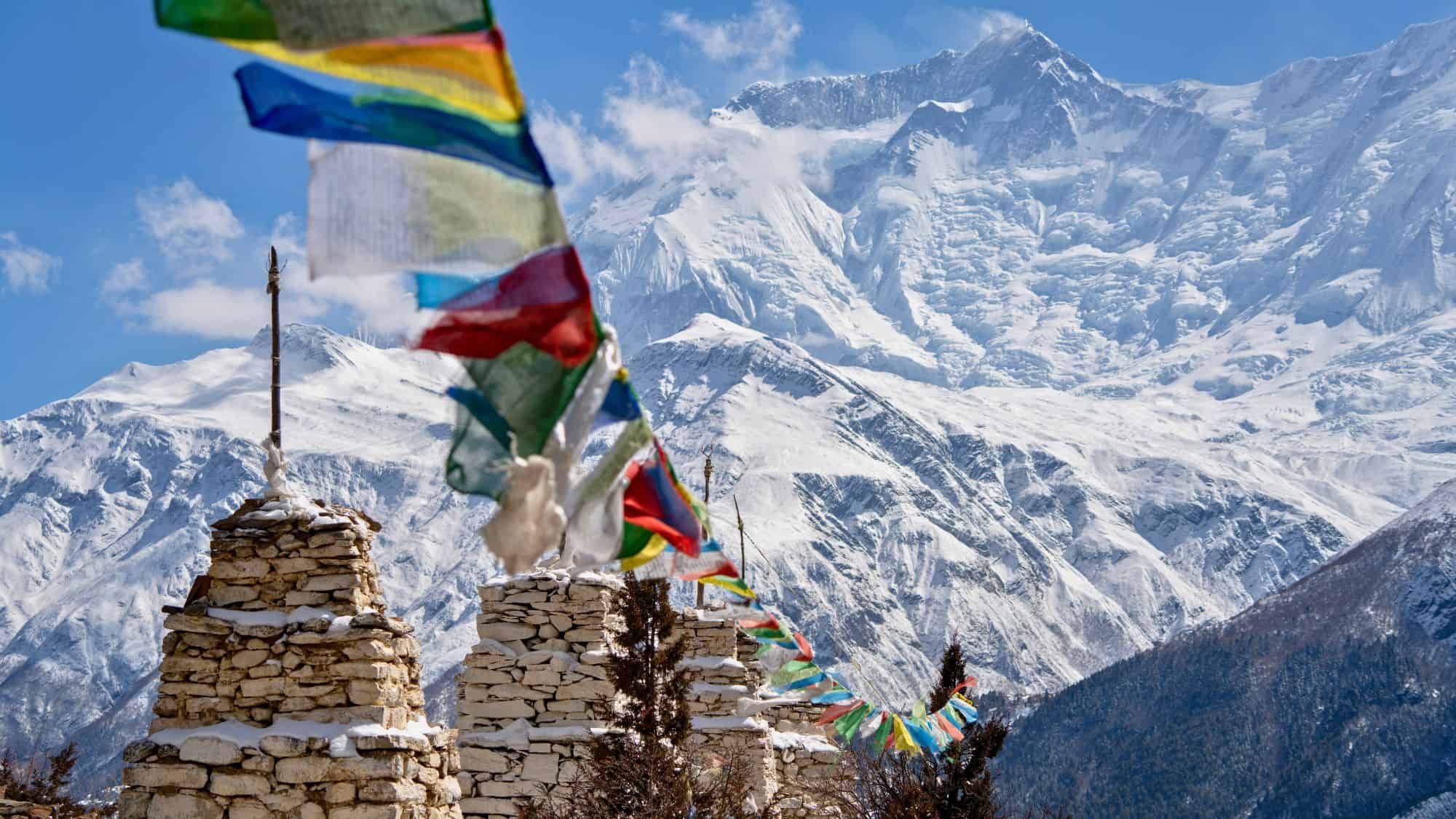
The Himalayas define the ultimate alpine experience for many travelers, and the Annapurna Circuit in Nepal is one of the world’s most revered long-distance treks.
Encircling the Annapurna massif, the trail crosses the Thorong La Pass at 17,769 feet. And success on this route is largely dictated by the seasons.
The weather in Nepal is driven by the monsoon, creating two distinct shoulder seasons that offer the best conditions for trekking: pre-monsoon (spring) and post-monsoon (fall).
March through May brings the spring season, where warmer temperatures melt the winter snow, and rhododendrons bloom in the lower forests. The air can be slightly hazy, but the temperatures are forgiving.
The most popular window is October through November, immediately following the monsoon rains. The dust has been washed from the air, offering crystal-clear views of the 26,000-foot peaks. The air is crisp, and the trails are lively with hikers from around the globe.
Navigating the circuit during these windows ensures teahouses are open and passes are passable, allowing you to focus on the physical challenge and the cultural immersion of the mountain villages.
Glimpsing The Tropical Glaciers Of The Cordillera Blanca – Peru
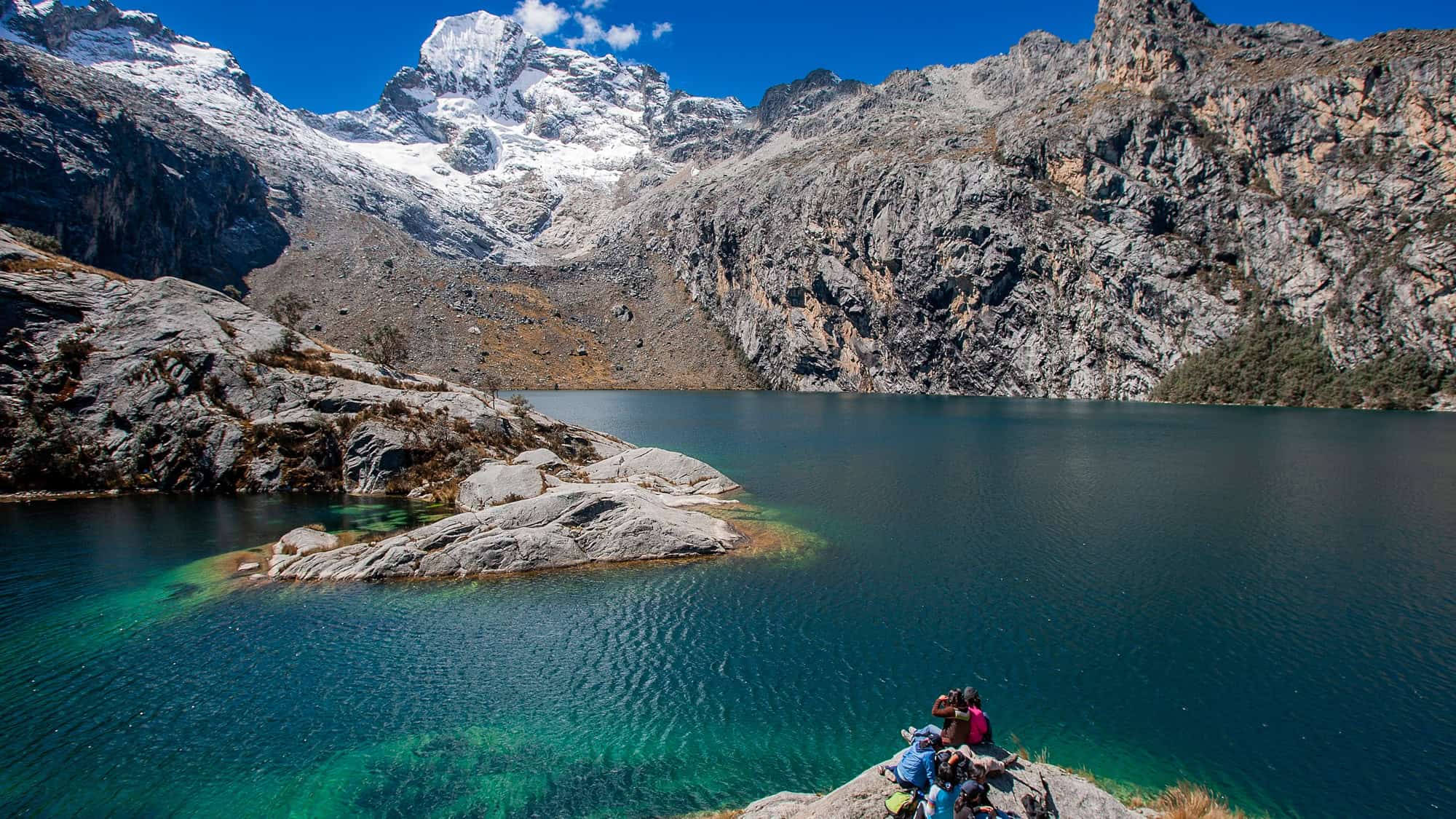
The Andes cut a jagged line through South America, but in northern Peru, the Cordillera Blanca offers a concentration of peaks that is unmatched in the tropics.
This range serves as the continental divide and is home to Huascaran. At 22,205 feet, it is the highest point in Peru and the fourth-highest peak in the Western Hemisphere.
But unlike the dry, rocky slopes found further south, this region is defined by a stark contrast between lush, green valleys and massive walls of white glacial ice. The proximity to the equator keeps the snow line high, but the sheer vertical relief ensures that glaciers cling to the summits year-round.
Altitude here is a constant physical presence rather than just a statistic. Even the main towns like Huaraz sit at nearly 10,000 feet, and popular trailheads push much higher.
Your lungs work harder from the very first step. But the reward for this exertion is often the sudden reveal of high-altitude lakes like Laguna 69. Fed directly by glacial melt, these waters hold a turquoise color so bright it looks unnatural.
Like Our Content? Follow Us on MSN (or click the Follow Button above) for more from Discover Parks & Wildlife.