Discover Parks & Wildlife contains affiliate links and is a member of the Amazon Services LLC Associates Program. If you make a purchase using one of the Amazon links, we may receive compensation at no extra cost to you. We may also use select AI tools to support our creative process, but all content is reviewed, refined, and finalized by our human team. See our disclosure policy and our AI use policy for more information.
10 Hiking Areas That Dominated Google Map Search In 2025
The way we search for outdoor adventures has shifted dramatically over the last few years. While major national parks often grab the headlines, search data on Google reveals a fascinating trend where hikers are increasingly turning their attention toward state parks and reserves that offer spectacular scenery without the cross-country flight and crowded trails.
In fact, Google Maps data this last year highlighted a surge in interest for specific regional destinations that pack a massive visual punch. It seems that finding incredible landscapes closer to home has become a priority for travelers who want accessibility paired with world-class views.
These locations dominated the algorithms because they offer distinct geological features that rival more famous counterparts. From the mossy, waterfall-filled gorges of the Pacific Northwest to the red rock canyons of the Texas Panhandle, these spots prove you do not need to leave the country to find unique terrain.
We are seeing a move toward places that are photogenic yet rugged, offering trails that range from accessible boardwalks to strenuous climbs up ancient rock formations. And whether you are looking for a weekend road trip or a new hiking challenge, these are the destinations that captured the curiosity of hikers this past year.
Watkins Glen State Park

It comes as no surprise that this Finger Lakes destination topped search trends. Watkins Glen offers a sensory experience that feels almost cinematic.
The main draw here is the Gorge Trail, which winds for two miles through a deep, water-sculpted canyon. As you walk the stone path, you pass 19 distinct waterfalls that cascade down the shale cliffs.
The atmosphere is perpetually misty and cool, making it a refreshing hike even during the height of New York summers. And the trail actually takes you behind the curtain of Cavern Cascade, where you can feel the spray on your face while standing safely on a rock ledge.
While the hike is relatively short in distance, it is not a casual stroll. You will navigate 832 stone steps that connect the various levels of the gorge. It can get crowded, so planning your visit for early morning or a weekday is a smart move if you want to enjoy the sound of rushing water without the chatter of large groups.
You should also be aware that the Gorge Trail closes in winter due to ice, usually reopening in late May, so checking trail status before you drive is essential. But for those who want a different perspective, the Rim Trail offers a look down into the gorge and is open year-round.
Devil’s Lake State Park
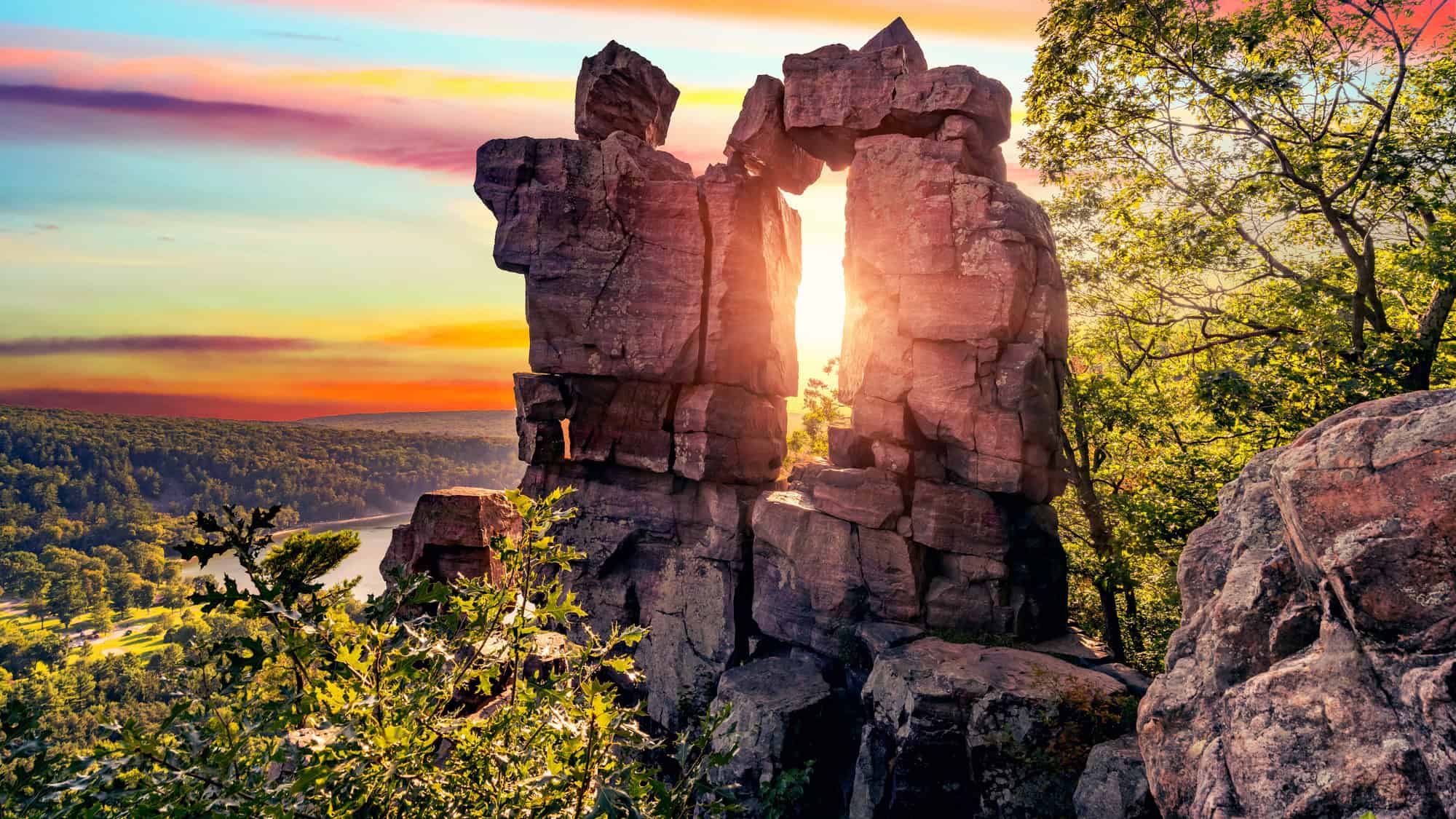
Hikers in the Midwest know that Devil’s Lake is something special. Located in Wisconsin, this park is defined by its dramatic 500-foot quartzite bluffs that loom over a 360-acre lake. It is a striking contrast to the surrounding farmland and rolling hills.
The geology here is ancient, with rock formations that date back 1.6 billion years. This durability is what makes the hiking so rugged and rewarding. And trails like the East Bluff Trail challenge you with steep ascents over rocky terrain, but the payoff is a panoramic view of the lake that feels expansive and wild.
The park sees heavy visitation because it offers such a variety of experiences. You can spend the morning scrambling up the Balanced Rock Trail, which requires careful footing and a bit of physical exertion, and then spend the afternoon paddling on the water. The Ice Age National Scenic Trail also winds through the park, connecting you to a larger network of glacial history.
Please note that it is important to wear sturdy shoes here. The quartzite is incredibly slippery when wet, and the trails are often uneven.
Parking fills up quickly on summer weekends, often by mid-morning, so arriving early is the best way to secure a spot and hit the trails before the heat of the day sets in.
Palo Duro Canyon State Park
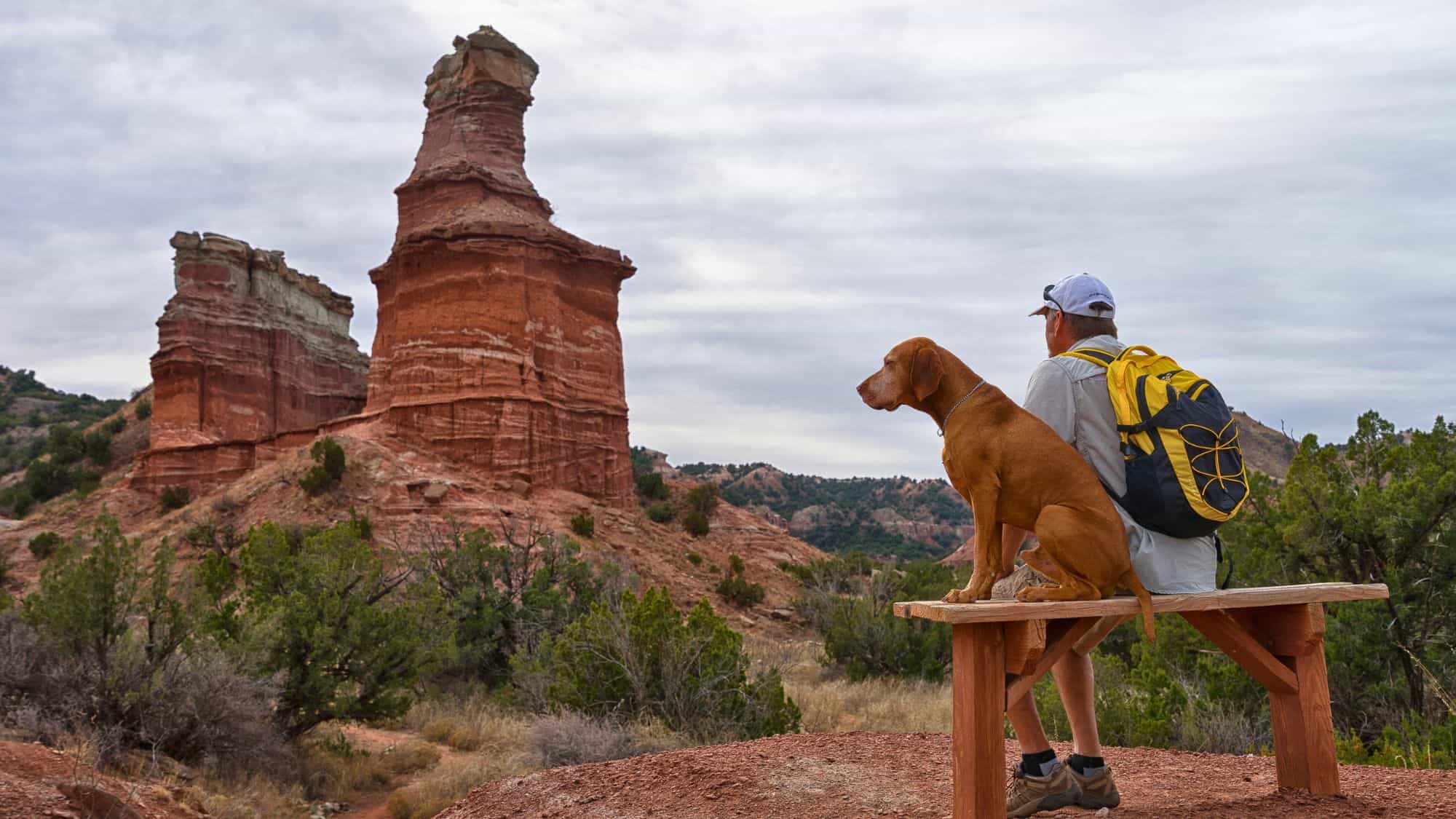
Often called the Grand Canyon of Texas, Palo Duro Canyon lives up to the nickname with its immense scale and vibrant colors. It is the second-largest canyon in the United States, stretching roughly 120 miles long and up to 20 miles wide. The landscape is a stark, beautiful mix of red clay, white gypsum, and green mesquite.
The most famous destination for hikers is Lighthouse Trail. This path is a roughly six-mile round trip that leads you to a towering rock formation that resembles a lighthouse. The trail is mostly flat with a few steep sections near the end, making it accessible for many skill levels, but the heat is a serious factor.
Temperatures on the canyon floor can be significantly higher than at the rim. During the summer, the heat becomes dangerous quickly, and the park often advises hikers to be off the trails by late morning. Also, bring more water than you think you need, as the dry air evaporates sweat instantly.
Beyond the Lighthouse, the park offers over 30 miles of hiking, biking, and equestrian trails that explore the rugged terrain.
For a longer stay, the park offers glamping sites and historic cabins built by the Civilian Conservation Corps.
Starved Rock State Park
Illinois is typically associated with flat prairies, which is exactly why Starved Rock creates such a stir on search maps.
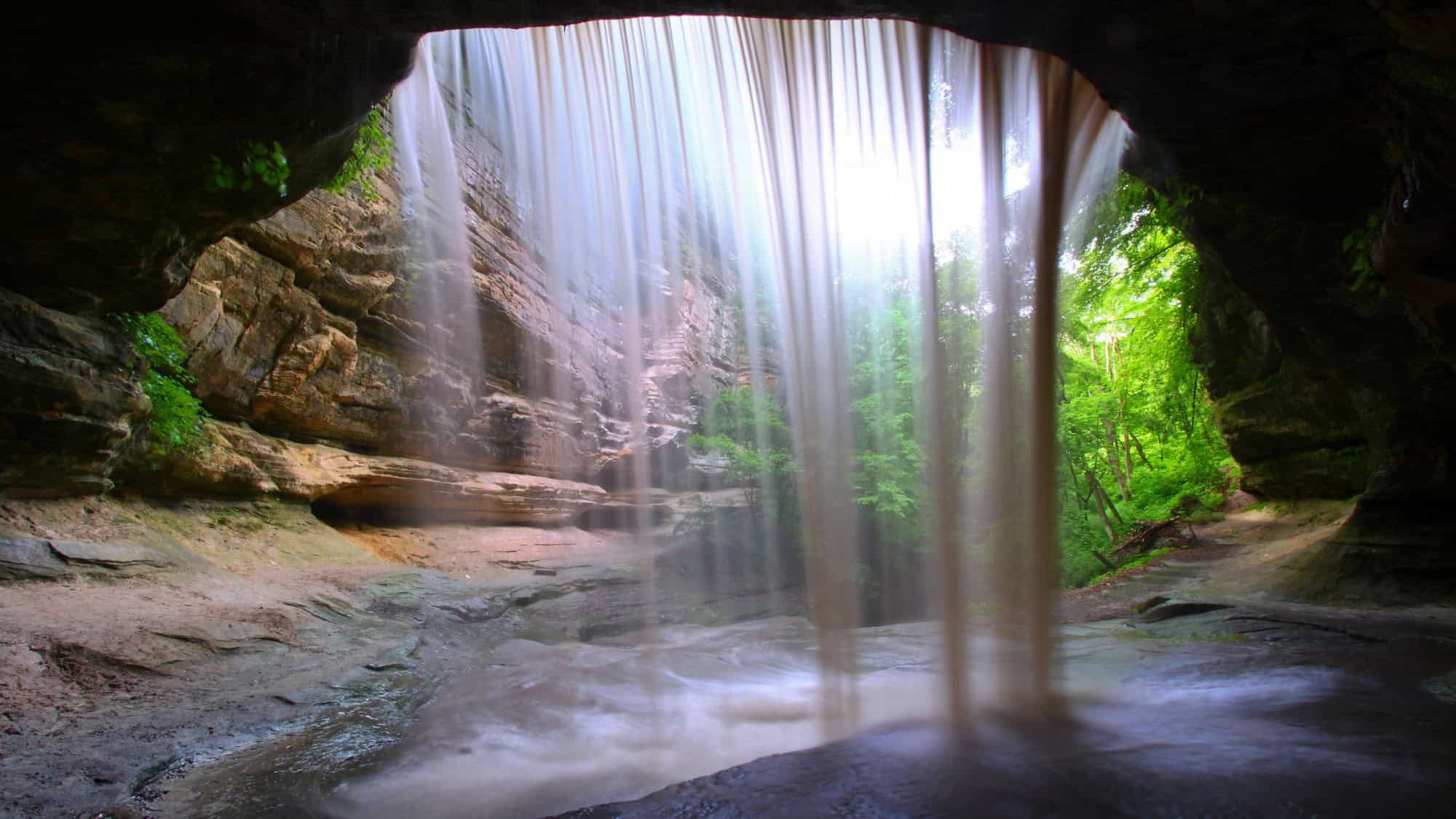
This park along the Illinois River features 18 distinct canyons carved into St. Peter sandstone. These canyons were formed by glacial meltwater and stream erosion, creating vertical walls that feel completely out of place in the Midwest.
The hiking here involves navigating wooden boardwalks and staircases that lead you into the cool, shaded canyon floors. It is a popular spot for families and casual hikers because the trail system connects many of the canyons within a reasonable distance.
The best time to visit depends entirely on what you want to see. In the spring or after heavy rains, waterfalls cascade at the heads of the canyons. French Canyon and Wildcat Canyon are particularly known for their seasonal falls.
In the winter, these waterfalls freeze into massive ice sculptures, attracting ice climbers and winter hikers looking for a unique spectacle. You might spot bald eagles soaring over the river during the colder months as well.
Because the sandstone is fragile, you must stay on marked trails to protect the ecosystem. It is a busy park, especially when the waterfalls are flowing, but the unique topography makes it a necessary stop for anyone in the region.
Valley of Fire State Park

Nevada’s Valley of Fire creates a landscape that looks like it belongs on Mars. And the park is famous for its 40,000 acres of bright red Aztec sandstone nestled in gray and tan limestone. These formations date back to the Jurassic period and have been sculpted by wind and rain into fantastical shapes.
The Fire Wave is one of the most photographed spots, featuring striped rock that swirls in patterns of red and white. The hike to get there is short but exposes you to the intense desert environment. So you will want to time your visit for the cooler months or very early morning, as summer temperatures often exceed 100°F.
The park also holds deep human history. You can hike to Atlatl Rock to see ancient petroglyphs carved into the stone by Ancestral Puebloans thousands of years ago. The White Domes Trail is another highlight, taking you through a slot canyon and past the remains of an old film set.
The colors of the rock shift throughout the day, becoming incredibly vivid at sunset. We suspect this visual drama is what drove so many people to search for it in recent years.
There is limited cell service in the park, so downloading your maps ahead of time is a practical step to ensure you can navigate the loop roads and trailheads without stress.
Turkey Run State Park
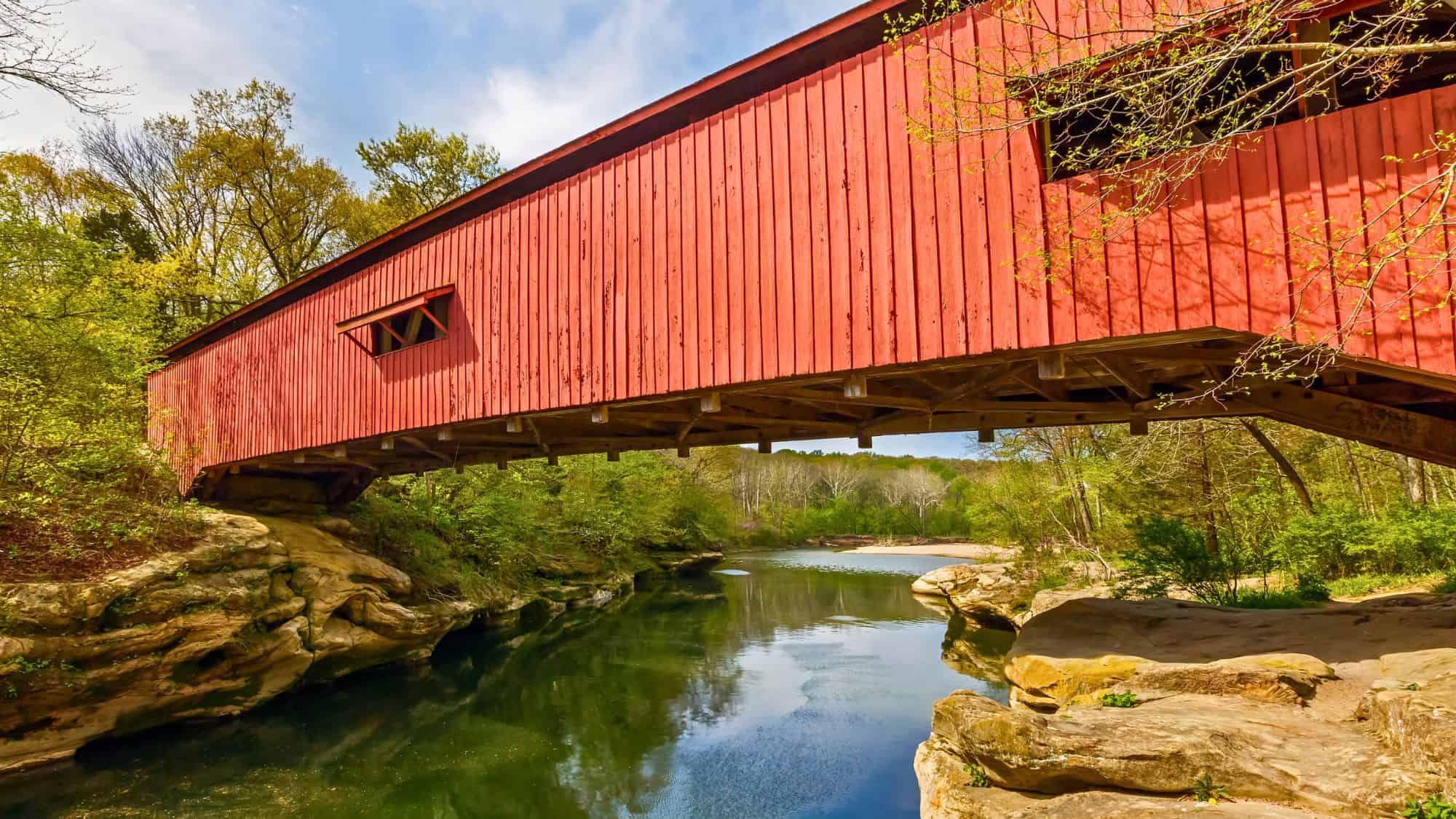
Turkey Run offers a hiking experience that is surprisingly rugged for Indiana. The park is defined by deep sandstone ravines and old-growth forests that have survived for centuries. That geology was shaped by glacial meltwater, which cut through the bedrock to create the dramatic canyons you see today.
Trail 3 is the most famous route in the park and for good reason. It is not a standard dirt path. You will find yourself traversing the streambed of Rocky Hollow, flanked by towering stone walls. The trail eventually requires you to climb wooden ladders to exit the canyon, adding an element of adventure that few state parks in the region can match.
This park is a place where you will likely get your feet wet. The trails often run directly through the water, so waterproof boots or shoes that you do not mind soaking are necessary. You also get to cross Sugar Creek on a suspension bridge, which offers a great vantage point of the water below.
It is important to note that the ravines can flash flood during heavy rain, making some trails impassable. So always check the weather before you head into the hollows.
The park creates a feeling of isolation and wilderness, despite being fairly accessible, which is definitely part of the draw. It is a favorite for those looking for an active and engaging day in the woods.
Silver Falls State Park
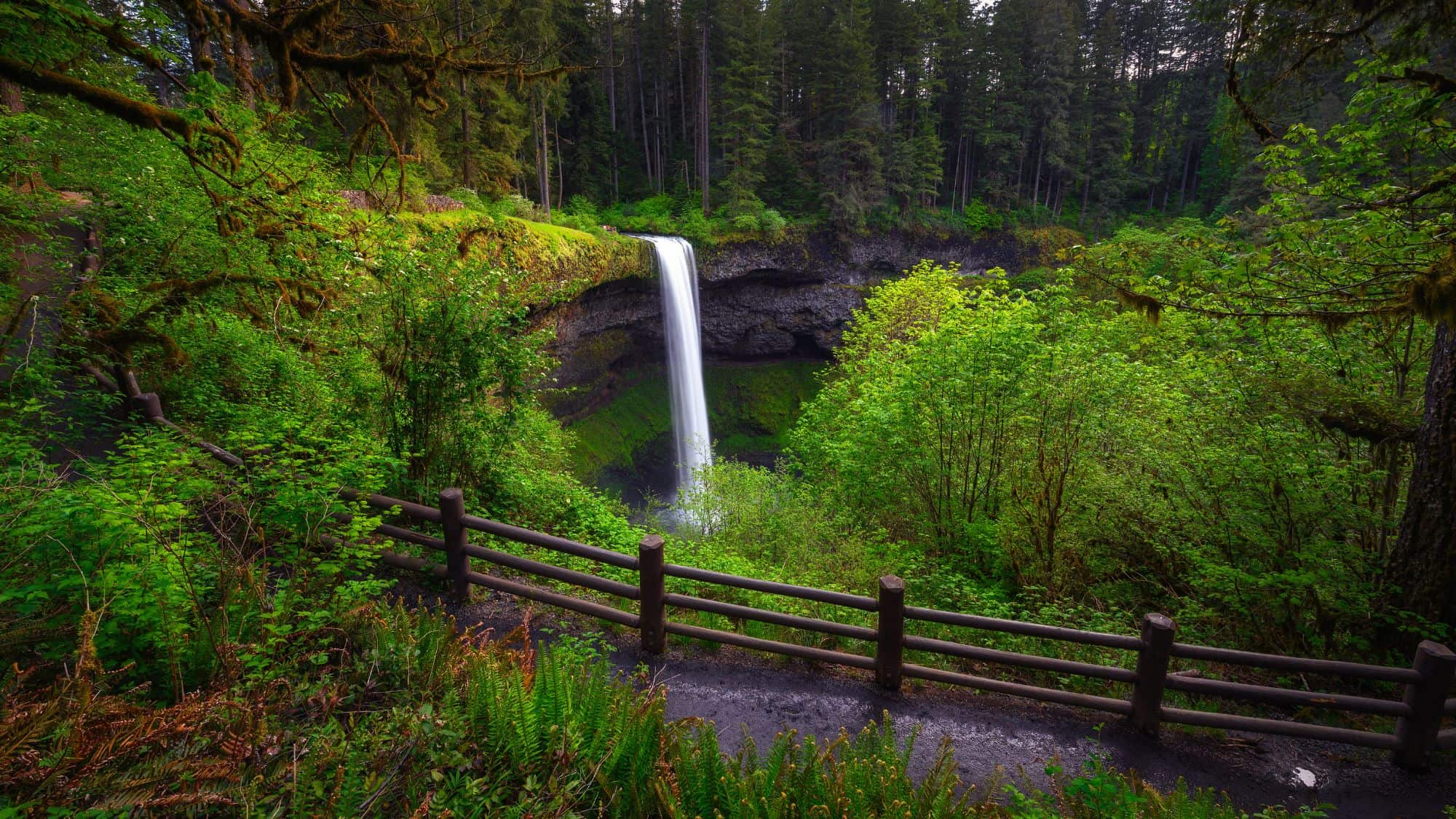
Known as the crown jewel of the Oregon State Parks system, Silver Falls is a temperate rainforest paradise.
The main attraction here is the Trail of Ten Falls, a loop of roughly 7.2 miles that delivers exactly what the name promises. You pass ten majestic waterfalls along the route, which winds through a lush canyon filled with ferns, moss, and towering Douglas fir trees. The most famous of these is South Falls, a 177-foot curtain of water.
What makes this trail unique is that it allows you to walk behind four of the waterfalls. Standing in the cavernous undercut behind a roaring falls offers a visceral connection to the power of nature.
The trail is moderate, with some elevation gain, but it is well-maintained. You can choose shorter loops if you do not want to commit to the full seven miles.
Winter and spring are fantastic times to visit because the water flow is at its peak, though you should be prepared for mud and rain. The mist from the falls keeps the trail wet year-round.
It is a popular destination, but the length of the trail helps disperse the crowds. Dogs are not allowed on the Canyon Trail loop to protect the sensitive environment, so plan accordingly if you travel with pets.
Letchworth State Park
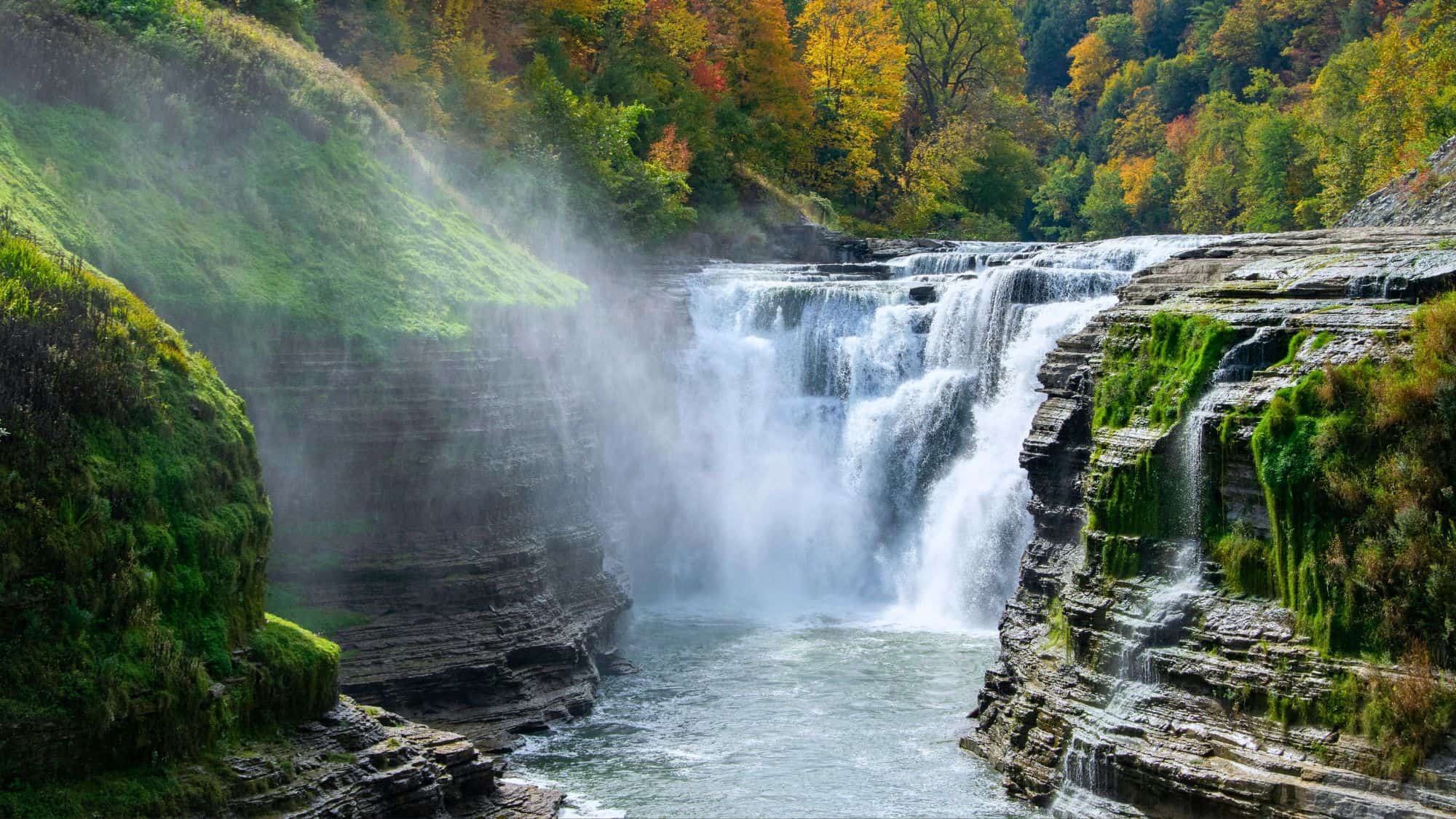
Letchworth is widely known as the Grand Canyon of the East. The Genesee River roars through a gorge that is as deep as 600 feet in some places, creating a dramatic visual that rivals famous canyons out West.
The park features three major waterfalls (the Upper, Middle, and Lower Falls), which are the primary targets for most visitors. The Middle Falls is particularly impressive, with a vertical drop of over 100 feet. You can view these massive cascades from various overlooks along the Gorge Trail, which stretches along the rim and down into the canyon.
The scale of Letchworth is immense. With 66 miles of hiking trails available, you have plenty of room to explore beyond the main overlooks. And the park is a favorite during the fall months when the hardwood forests surrounding the gorge turn brilliant shades of red, orange, and gold. This foliage frames the river and cliffs perfectly for photography.
You will find stone walls and Civilian Conservation Corps-era structures throughout the park, adding a historic touch to the landscape. While the main areas are accessible and well-developed, there are plenty of quieter trails in the Highbanks area if you want to escape the main flow of traffic.
Point Lobos State Natural Reserve
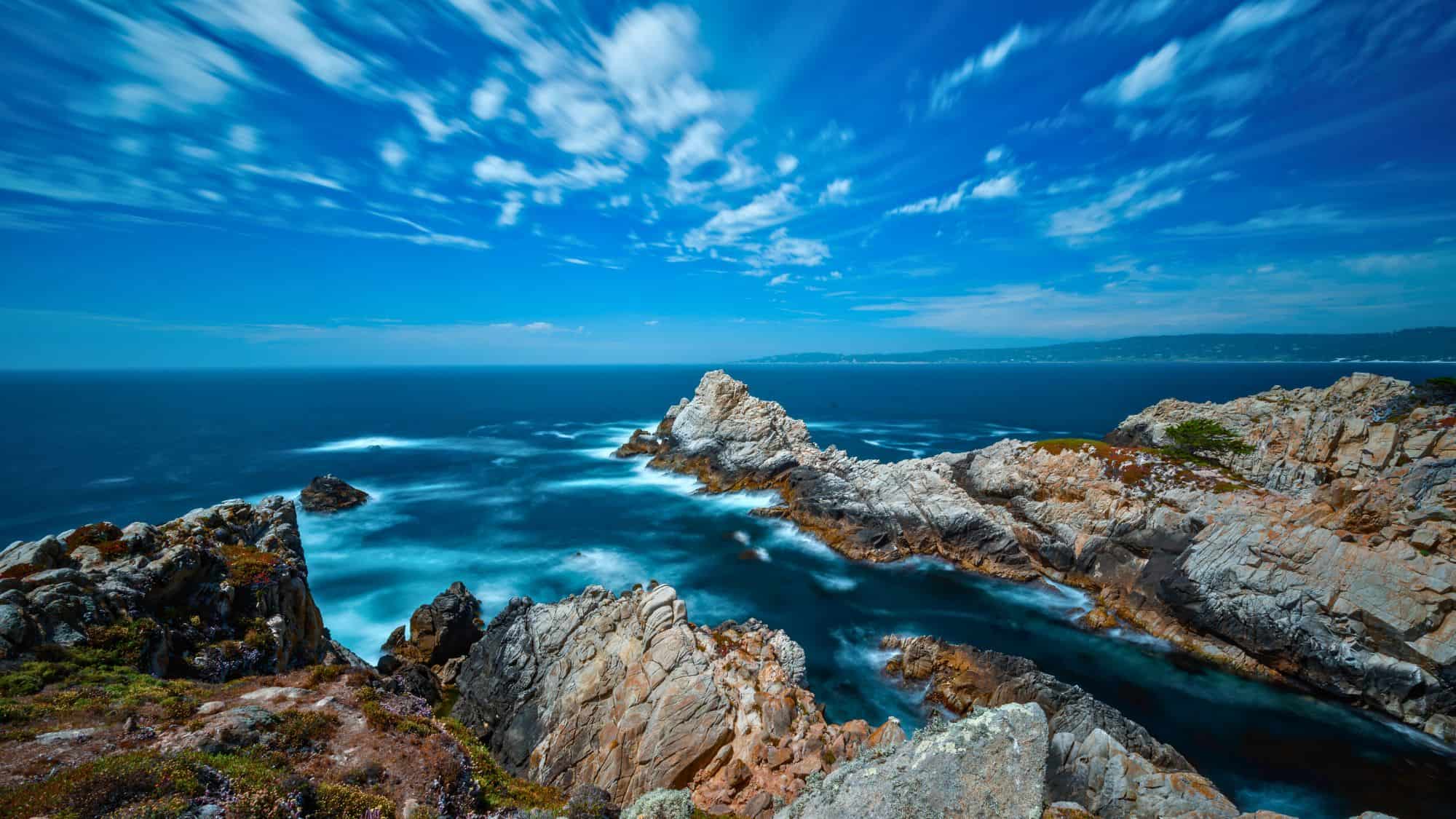
Point Lobos offers a hiking experience where the land meets the sea in dramatic fashion. It is located on the central coast of California.
The hiking here is not about gaining elevation or covering long distances, but rather about intimate encounters with nature. The trails weave through Monterey cypress groves and along rocky headlands that drop sharply into the Pacific Ocean. You can look down into protected coves to see sea otters floating in the kelp beds and harbor seals resting on the rocks.
During migration season, it is a prime spot for watching gray whales pass by offshore.
Because this is a reserve, the rules are stricter than in typical state parks. You cannot bring dogs, and you must stay on the marked trails to protect the fragile coastal scrub. Parking is also extremely limited and often fills up immediately upon opening, so arriving early is practically a requirement.
The Cypress Grove Trail is a standout, leading you through one of the two naturally growing stands of Monterey cypress left on Earth. The trees are twisted and sculpted by the ocean wind, creating a hauntingly beautiful landscape. And the air is often thick with salt spray and the sound of crashing waves.
This place invites you to slow down and observe the rich marine life and unique botany that thrives on this rugged edge of the continent.
Bear Mountain State Park
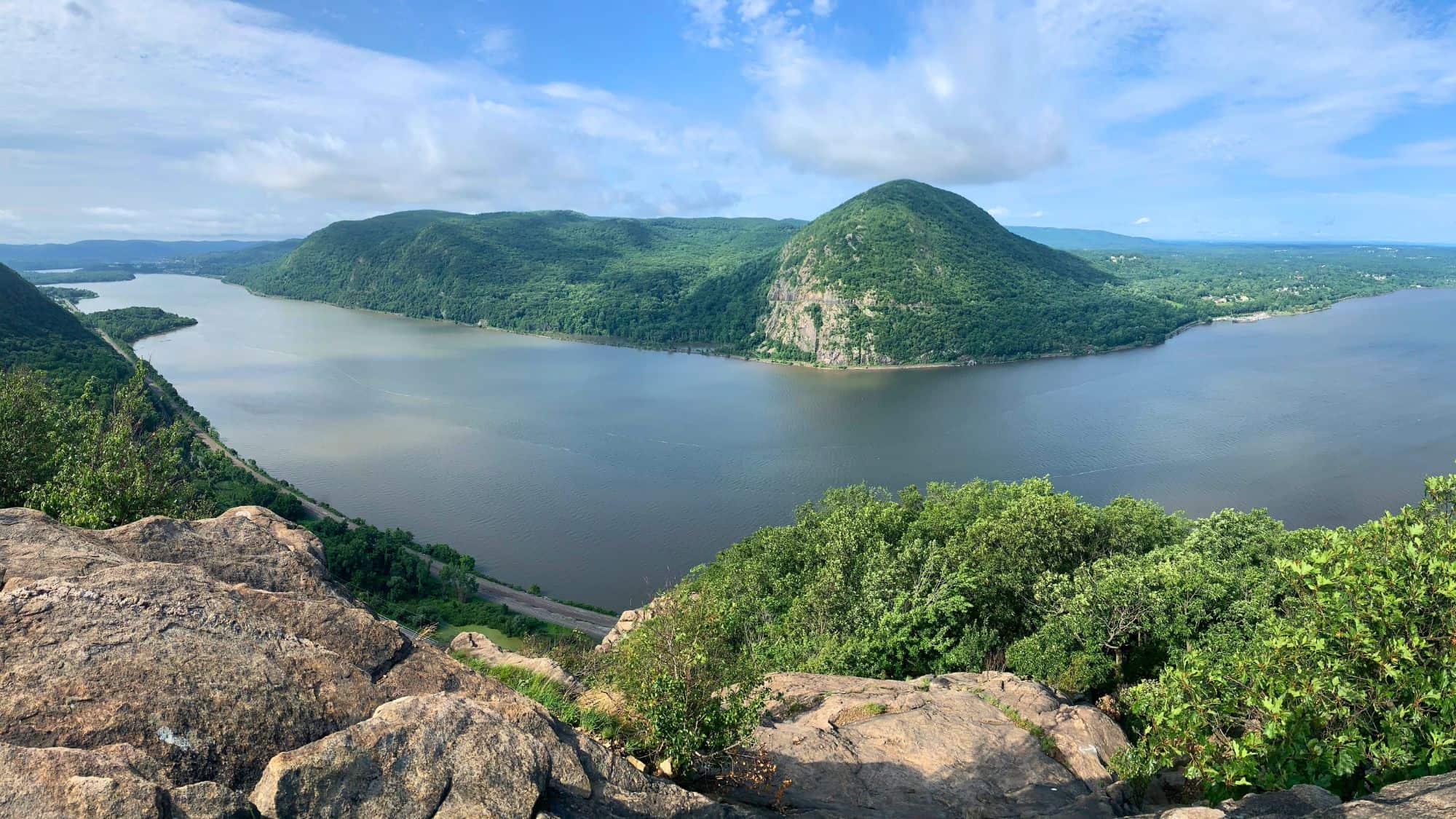
Bear Mountain has long been a favorite escape for New York City residents, and its popularity continues to grow. The park sits on the west bank of the Hudson River and offers a rugged, mountainous terrain that feels surprisingly wild given its proximity to the metropolis.
A significant feature here is that the Appalachian Trail crosses through the park. You can hike a section of this famous long-distance trail, which takes you over the Bear Mountain Bridge and up toward the summit.
The hike to the top is steep and involves many stone steps, but the view from the Perkins Memorial Tower is worth the effort. From the summit, you get a 360-degree view that encompasses the Hudson Highlands, the city skyline on a clear day, and four different states.
The park is centered around Hessian Lake, which offers a paved walking path for a gentler experience. However, the real draw for hikers is the network of trails that climb the ridges.
The park also features a zoo and a historic inn, making it a destination that appeals to a wide range of visitors. The combination of history, challenge, and views keeps it at the top of the list for hikers in the region.
Like Our Content? Follow Us on MSN (or click the Follow Button above) for more from Discover Parks & Wildlife.