Discover Parks & Wildlife contains affiliate links and is a member of the Amazon Services LLC Associates Program. If you make a purchase using one of the Amazon links, we may receive compensation at no extra cost to you. We may also use select AI tools to support our creative process, but all content is reviewed, refined, and finalized by our human team. See our disclosure policy and our AI use policy for more information.
12 Incredible Volcanic Wonders That Put You Face To Face With Earth’s Raw Power
Standing on a volcano feels a bit like walking across Earth’s temper tantrum in slow motion. It’s that perfect mix of beauty and danger, the sort of place that makes you think, “Am I brave or just easily persuaded by good scenery?”
It is shocking to know that the ground beneath your boots once melted, erupted, and reformed into something solid enough for you to stroll across. From quiet craters dusted in ash to lava fields that still radiate warmth, volcano walks are a reminder that the planet’s heartbeat isn’t quite steady. It’s more of a rumble.
You don’t need to be a mountaineer or a thrill-seeker to experience them either. Around the world, there are safe, marked trails where you can actually walk on volcanic terrain without risking a dramatic headline. Some routes offer peaceful forest paths; others take you straight into the heart of smoldering landscapes that look like a movie set for “The End of the World.”
So lace up those sturdy shoes, pack your curiosity, and maybe leave the white sneakers at home… volcano dust doesn’t forgive easily.
Mount Vesuvius, Italy

Mount Vesuvius looms above the Bay of Naples like a stern history teacher with a dramatic past. Its eruption in 79 AD buried Pompeii and Herculaneum, and yet today, you can walk right up to its crater. The Grand Cono trail leads you roughly two miles up a gravel path that feels more like walking on crushed moon rock than soil.
You’ll reach the rim at about 3,800 feet, where steam sometimes escapes through cracks in the rock (a reminder that this old giant is only sleeping, not gone). And the view stretches from the Tyrrhenian Sea to the rooftops of Naples, which look oddly peaceful given what happened here centuries ago.
Pack a light jacket; it gets windy near the top, and fine volcanic dust clings to everything. The climb takes about 30–40 minutes each way, manageable for most walkers, though your calves may file a mild complaint. For a dash of drama, peer into the wide crater and imagine the power that once blasted rock miles into the sky.
Mauna Loa, Hawaii

When you walk on Mauna Loa, you’re technically strolling across one of the largest volcanoes on Earth. So large, in fact, that it makes up about half of Hawaii’s Big Island. Its name means “Long Mountain,” and the summit trail lives up to it.
You’ll pass hardened lava fields that stretch for miles, so quiet you can almost hear your footsteps echo. And the terrain looks like another planet: dark, uneven, and shimmering under the Hawaiian sun. Most visitors explore the more accessible lower slopes near the Mauna Loa Observatory, where short trails give you a taste of the lava landscape without the high-altitude struggle.
Those who attempt the summit trek need stamina, good lungs, and respect for thin air; the top sits at over 13,000 feet. Even if you don’t go all the way, the feeling of walking on cooled lava flows from eruptions as recent as 2022 is surreal. But remember that there is no shade and no snack bar. Just the quiet reminder that the ground you’re on once flowed like liquid fire.
Pacaya, Guatemala

Pacaya is the adventurous traveler’s sweet spot. It’s close enough to civilization for comfort, yet fiery enough to make your heart race. Just an hour from Antigua, this active volcano lets you hike across solidified lava flows that still puff out warm air in places.
The round-trip hike takes about three hours, but it’s not the time you’ll remember; it’s the landscape. Black rock crunches underfoot while wisps of steam curl from crevices. Local guides often bring marshmallows to toast over the heat (yes, lava-roasted marshmallows are a thing, and yes, they taste slightly of bragging rights).
On clear days, you can see neighboring volcanoes Agua and Fuego in the distance, both adding their own plumes to the skyline. The path winds from forested lower slopes to open rock fields, where the ground feels strangely alive beneath your boots.
There’s something deeply humbling about standing on Earth’s freshest ground, still warm from the planet’s kitchen. Just don’t linger too close to the vents… souvenir photos are fun, melted soles are not.
Mount Fuji, Japan

Climbing Mount Fuji is both a spiritual act and an endurance test wrapped in a volcano. Rising 12,388 feet, it’s Japan’s tallest peak and one of its most sacred sites. During the official climbing season (July to early September), thousands make the trek to watch sunrise from the summit. It’s a scene so iconic it’s printed on postcards, coins, and countless travelers’ memories.
The ascent can take 6–8 hours, but don’t panic; most hikers stop overnight at a mountain hut halfway up, catching a few hours of sleep before continuing. Trails like the Yoshida Route are well‑maintained and dotted with rest stations selling everything from noodles to oxygen canisters. And as you climb, the lush green base gives way to loose volcanic gravel and ash.
It’s not easy walking, but it’s steady, and every step upward feels symbolic. The sunrise at the top, if clouds behave, turns the horizon orange and gold. When you descend, your shoes will collect fine gray dust as proof you walked on a living volcano.
Krakatoa, Indonesia

Krakatoa’s name alone sounds explosive, and rightly so. It’s the volcano that shook the world in 1883 with an eruption so massive it altered global sunsets for years. Today, its successor, Anak Krakatau (Child of Krakatoa), rises from the sea in the same spot.
While you can take a boat trip to view it from nearby waters, landing on the island itself is currently restricted for safety reasons. But that doesn’t make it any less thrilling. From the boat, you can watch steam vents hissing and see dark, fresh rock rolling into the sea where new land is still forming. It’s a surreal sight: part science fiction, part slow-motion rebirth.
The surrounding small islands, like Rakata, offer safe beaches to stretch your legs while gazing at the volcano from a respectful distance. In this instance, the experience is less about conquering a climb and more about witnessing creation in progress.
Mount Teide, Spain

Mount Teide rises above Tenerife like a monument sculpted by fire and time. At 12,198 feet, it’s Spain’s highest point and a still-active volcano that last erupted in the early 20th century. And the national park surrounding it is a UNESCO World Heritage Site, filled with trails that wind through ancient lava flows and jagged rock formations.
You can take the cable car up to about 11,660 feet, then hike the final 600-foot stretch to the summit (permit required). On clear days, the views stretch across the Atlantic to neighboring islands that seem to float in the haze. The landscape feels rugged, colorful, and eerily quiet. And the resemblance to Martian terrain is so uncanny that it’s been used for film sets and geology studies.
Every crunch of lava rock underfoot reminds you that this island was built from fire, yet today, it’s calm enough for a good picnic at the top. Just don’t forget your sunscreen and layers; the high-altitude chill sneaks up fast, even under that bright island sun.
Mount Kilimanjaro, Tanzania
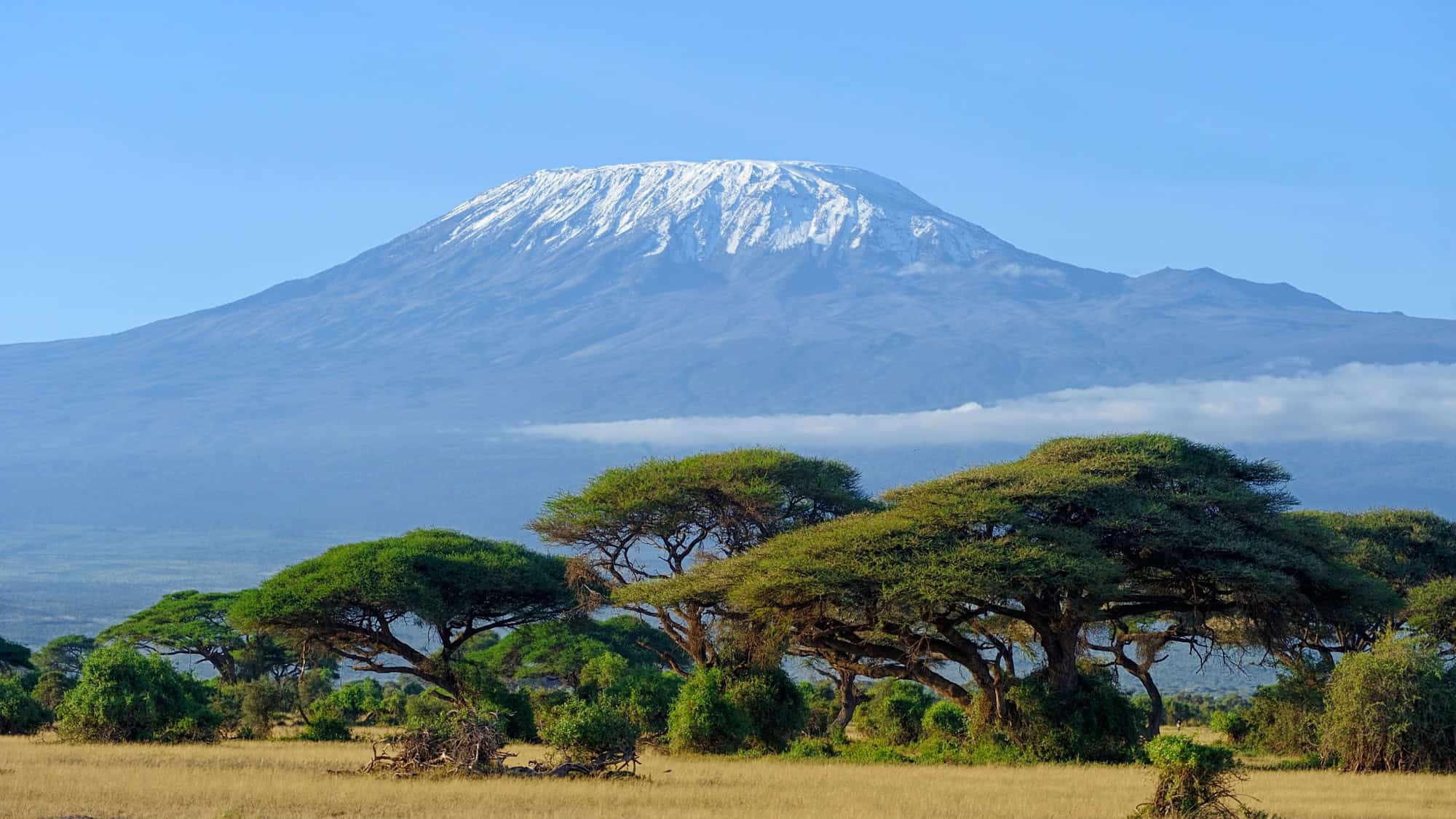
Mount Kilimanjaro is less a hike and more a statement. Africa’s tallest peak stands at 19,341 feet, made up of three volcanic cones, and though it’s dormant now, the reminder of its fiery origins is everywhere.
Trekking Kilimanjaro takes several days, and while that sounds daunting, the routes are surprisingly accessible to anyone with determination and decent stamina. You’ll pass through rainforest, alpine desert, and glacier zones, all stacked neatly on one massive volcanic structure.
The terrain changes like chapters in a novel: lush and green below, stark and icy above. And most climbers tackle it with guides and porters, turning the climb into a shared adventure. Nights are cold, days can be brutally sunny, and the summit attempt at Uhuru Peak begins before dawn.
But when you finally stand at the top, staring across the African plains, it hits you: this mountain once erupted from the same earth now holding your feet. You’re walking on cooled lava so old it’s collected glaciers. Kilimanjaro may be sleeping, but its presence humbles even the boldest traveler.
Mount St. Helens, Washington

In 1980, Mount St. Helens redefined what “explosive personality” meant when its eruption reshaped the mountain and flattened miles of forest. Today, it’s still one of the most fascinating volcano walks in the United States, though access has changed in recent years.
The Johnston Ridge Observatory remains closed due to a landslide in 2023, but several nearby trails and viewpoints remain open, including the Hummocks Trail and the Harry’s Ridge route. These paths wind through the blast zone, where wildflowers now bloom amid gray ash and regrowing forest. Walking here feels like stepping through a time-lapse of recovery, with each blade of grass reclaiming ground once scorched.
For more adventurous hikers, climbing to the rim via the Monitor Ridge route is still possible with a permit, offering that unbeatable crater view. Expect volcanic dust in your shoes and a good story for later.
El Misti, Peru

El Misti watches over the city of Arequipa like a silent guardian, its symmetrical cone a daily reminder that power can sleep just beyond your skyline. Rising over 19,000 feet, it’s a demanding climb for summit seekers but offers plenty of walkable terrain on its lower slopes for those who prefer to keep things friendly.
The path begins in dry Andean scrubland, dotted with hardy shrubs and the occasional llama giving you a judgmental side‑eye. The ground is dusty and soft, made of centuries of volcanic ash, which means each step feels like two, so be prepared. Still, the views of Arequipa sprawling below make it worth the effort.
The higher you go, the quieter it gets. There will be no sound but your breathing and the crunch of gravel. Many hikers camp overnight before pushing for the top, though simply walking partway up gives a sense of the mountain’s personality: grand, remote, and oddly calming.
Whether you reach the crater or just a viewpoint, El Misti delivers that humbling moment of realizing you’re standing on a sleeping volcano that could, one day, wake up again.
Arenal Volcano, Costa Rica

Arenal stands like a perfect cone in northern Costa Rica, the kind of volcano children draw when told to “make it look real.” Though its eruptions quieted after 2010, the landscape around it still buzzes with reminders of past activity.
You can’t hike to the very top for safety reasons, but the trails around Arenal Volcano National Park take you right across old lava fields. The Las Coladas Trail, for example, cuts through forest before opening onto black rock rivers frozen mid‑flow. Walking here feels like flipping through a geology textbook brought to life: dense jungle on one side, rough lava on the other.
Keep an eye out for howler monkeys and bright‑feathered birds, who seem unfazed by the volcano looming above. The walk takes about two hours if you take it slow, which you will, because stopping for photos is irresistible. Don’t forget to bring insect repellent, waterproof shoes, and your patience for humidity… this is rainforest territory, after all.
When you finish, reward yourself with a soak in the nearby natural hot springs heated by geothermal energy.
Whakaari/White Island, New Zealand

Whakaari, or White Island, once offered one of the world’s most thrilling guided walks, right across the steaming crater of an active volcano. But since the 2019 eruption, on-land tours have been suspended indefinitely for safety. Hopefully, they will come back one day.
In the meantime, visitors can experience the volcano from the air or sea instead, with scenic flights and boat tours circling the island’s smoking profile. Even from a distance, it’s mesmerizing: white plumes rise from the crater, turning the island into a ghostly silhouette against the blue Pacific. The air smells faintly of sulphur, and seabirds wheel through the mist.
The experience may be less hands-on than before, but it’s no less dramatic. Watching an active volcano puff and hiss while you float safely offshore feels like front-row seats to Earth’s most unpredictable performance.
Thrihnukagigur, Iceland

Iceland’s Thrihnukagigur is the only place in the world where you can walk inside a volcano’s magma chamber. And yes, that’s as wild as it sounds. The adventure begins with a two‑mile hike over mossy lava fields before you descend 400 feet into the dormant volcano via a metal lift.
The cavern opens into a vast cathedral of color, with reds, purples, and golds streaking the walls (leftovers from molten minerals that once flowed here). It’s spacious enough to fit the Statue of Liberty inside, though you’ll be too busy gawking at the walls to measure.
The volcano last erupted about 4,000 years ago, so it’s quite polite now. But temperatures inside hover around 40°F, so bring those layers. Tours are guided, limited, and unforgettable. Few places let you literally step into the planet’s interior and live to tell the tale over coffee later.
As you rise back to the surface, sunlight spilling across the lava fields, it’s hard not to grin. You just walked into a volcano. Not on it. Into it. Try topping that at your next dinner party.
Like Our Content? Make sure to join our newsletter for all the latest on outdoor adventures (and a FREE STARGAZING GUIDE). Click here to sign up!