
Discover Parks & Wildlife contains affiliate links and is a member of the Amazon Services LLC Associates Program. If you make a purchase using one of the Amazon links, we may receive compensation at no extra cost to you. We may also use select AI tools to support our creative process, but all content is reviewed, refined, and finalized by our human team. See our disclosure policy and our AI use policy for more information.
D.C.’s Place Of Reflection Where America’s Toughest Losses Are Etched Forever
Judiciary Square holds a heavy stillness that feels distinct from the rest of Washington, D.C. While the nearby National Mall bustles with tourists snapping photos of marble monuments and towering obelisks, this three-acre park offers a different kind of gravity.
It is a space defined not by height or grandeur but by intimacy and the sheer, overwhelming volume of loss. As you step off the busy city sidewalks and into the tree-lined plaza, the noise of the capital seems to fade, replaced by a quietude that demands attention.
It is here that visitors encounter a sobering physical representation of sacrifice, a place where the cost of public safety is measured in individual names carved into stone. This is the National Law Enforcement Officers Memorial. And it honors a specific group of men and women who stepped into the line of duty and never returned home, tracing a lineage of service that dates all the way back to the earliest days of the nation.
For families, colleagues, and curious visitors alike, the grounds provide a sanctuary for grief and gratitude. It stands as a permanent reminder that behind every badge is a human life, and behind every line of duty death is a story that deserves to be remembered.
Understanding The Memorial’s Purpose And History
While the concept of honoring fallen officers seems essential today, there was no centralized federal monument for law enforcement until relatively recently. Legislation to authorize the memorial was enacted in 1984, but it wasn’t until October 15, 1991, that the site was officially dedicated.

The driving force behind its creation was the law enforcement community itself, which sought a dignified place to mourn and remember their own. The design, crafted by Davis Buckley Architects & Planners, was chosen for its ability to integrate the park’s natural beauty with the solemnity required for such a tribute.
Today, the memorial contains the names of over 24,000 officers. These inscriptions honor federal, state, local, tribal, and territorial officers who have died in the line of duty throughout United States history. This scope is vast, reaching back to the first known officer death in 1791.
Unlike many other static monuments in the capital, this site is ever-changing. Each spring, new names are added to the walls, ensuring that recent sacrifices are recorded alongside those from centuries past.
The memorial sits adjacent to the National Law Enforcement Museum, which opened later to tell the broader story of American law enforcement.
While the museum provides context and education through exhibits and artifacts, the memorial remains the emotional heart of the complex. It serves as the primary gathering place for the profession, a physical anchor for a community that spans the entire continent.
It is a federal monument, yet it feels intensely personal to the thousands of agencies it represents.
What You’ll Experience When You Visit
The design of the memorial creates an immersive environment that guides you through a narrative of service and sacrifice.

The Memorial Walls And Name Inscriptions
The core of the visitor experience is the pathway itself. Two curving, blue-gray limestone walls flank the tree-lined walkways, stretching 304 feet each.
As you walk along the “Pathways of Remembrance,” the walls rise gently from the ground, eventually surrounding you with rows of names. The sheer number of inscriptions is the first thing that strikes most visitors. It is a visual representation of loss that is difficult to comprehend until you are standing right next to it, seeing the density of the engravings.
The names are not arranged alphabetically. Instead, they are organized chronologically by the year of death. This arrangement allows visitors to walk through time, seeing the toll of law enforcement work unfold from the 18th century to the present day.
On any given panel, you might see a federal agent listed next to a small-town deputy, reinforcing the shared risks of the profession regardless of jurisdiction.
Finding a specific name can be a challenge due to this layout, but the directory kiosks located at the site help you locate the exact panel and line number for any officer.
Once found, many visitors partake in the tradition of making a rubbing. Using paper and a pencil, often available at the directory stands, you can trace the name from the stone. This simple act of transferring the name onto paper serves as a tangible connection to the fallen, a memento that carries deep significance for surviving family members and fellow officers.
The Lion Statues And Symbolism
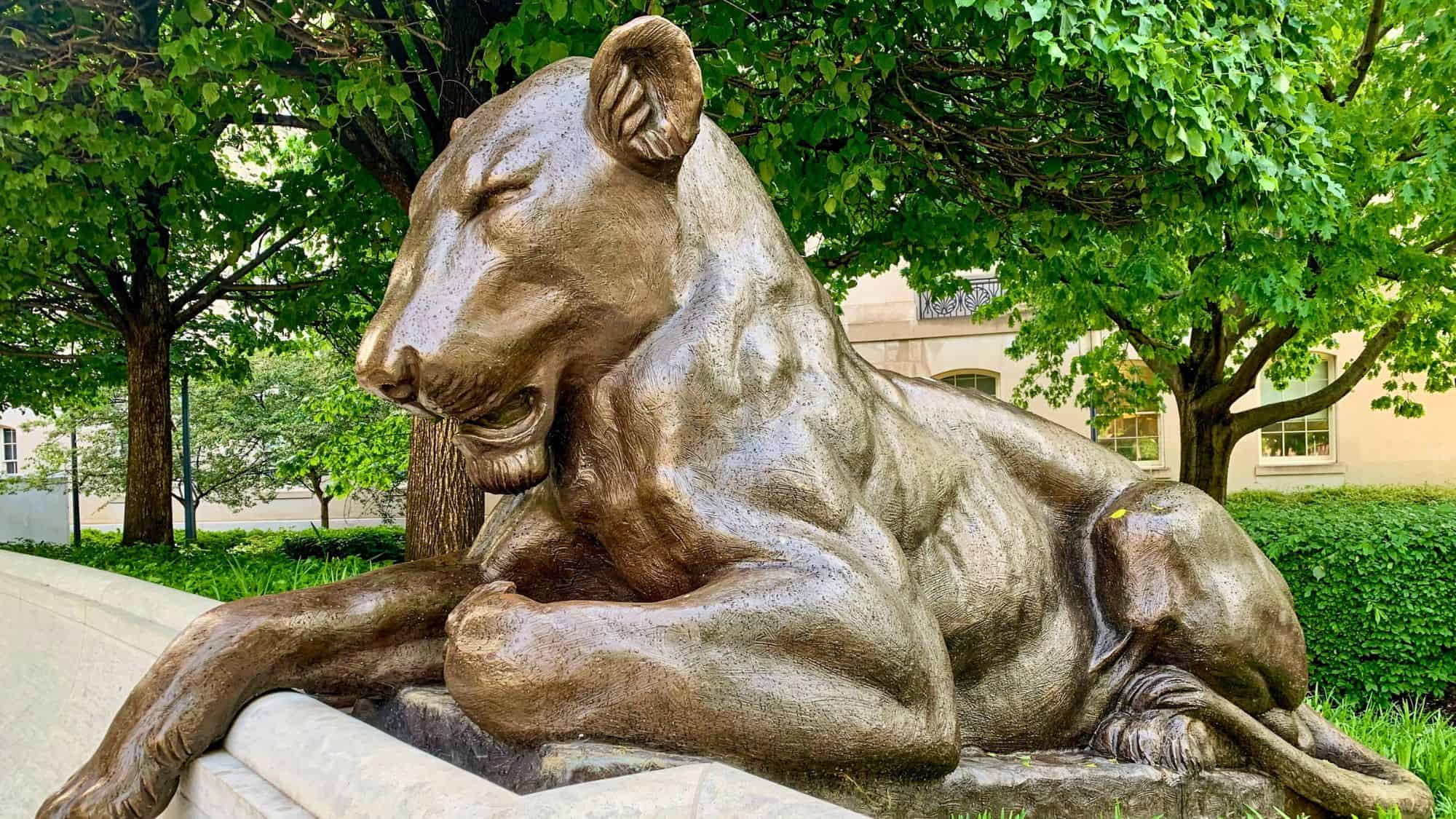
Guarding the entrances to the memorial’s pathways are four massive bronze statues. These aren’t just decorative figures; they are integral to the memorial’s symbolism.
Sculpted by Raymond Kaskey, each grouping features an adult lion protecting its cubs. There are two male and two female lions, representing the strength and protective nature of law enforcement officers. The statues convey a sense of vigilance, watching over the names of the fallen just as officers watch over their communities.
Below each statue is a carved quotation that reflects the values of the profession, such as courage, justice, and valor.
These statues are popular spots for reflection and photography, serving as the stoic guardians of the sacred ground.
Planning Your Visit: Practical Information
A visit to the memorial is straightforward, but knowing a few logistics can make your experience smoother.
The memorial is located at Judiciary Square, occupying the 400 block of E Street NW. It sits specifically between 4th and 5th Streets NW. There is no admission fee; the grounds are a public park and open to all.
Parking in this part of DC can be difficult. Street parking is available but often limited and metered. There are several commercial parking garages in the surrounding blocks, but availability varies by time of day.
An alternative would be to take public transportation. It’s easily accessible due to its central location. The Judiciary Square Metro station (on the Red Line) has an exit that deposits you almost directly at the site, making the subway the most convenient option for most travelers.
One of the most accessible aspects of this memorial is that it never closes. It is open 24 hours a day, 365 days a year. And the site is fully wheelchair accessible, with wide, paved pathways that accommodate mobility devices.
If you plan to make a rubbing of a name, you can find paper and pencils at the directory stands near the entrances, though during busy times, supplies may run low.
Most visitors spend between 30 and 45 minutes walking the pathways and reading the inscriptions. If you are looking for a moment of true reflection, early mornings or evenings are often the best times to visit, as the surrounding city noise is quieter and the crowds are thinner.

Experiencing National Police Week
For a truly profound experience, consider visiting during the annual commemorative events in May. National Police Week draws tens of thousands of law enforcement officers, survivors, and supporters to Washington, D.C. every year. The memorial becomes the focal point of this week-long observance.
The atmosphere during Police Week is unlike any other time. The plaza is filled with uniforms from every corner of the country and around the world. Pipe and drum corps often perform, their music echoing off the nearby buildings.
Wreaths line the walls, and personal mementos, like patches, photos, and flowers, are left at the panels of fallen colleagues.
The biggest event of the week is the annual Candlelight Vigil, typically scheduled for mid-May. During this ceremony, the names of the officers added to the wall that year are read aloud.
Be aware that visiting during this week means navigating large crowds. And the emotional intensity is palpable, as many visitors are there to mourn a recent loss or honor a specific anniversary. Access to the walls may also be restricted during specific ceremonies to allow families of the fallen to have private moments.
Despite the crowds, it is arguably the most meaningful time to witness the memorial’s impact. Seeing the law enforcement community gather in such numbers reinforces the bond that this site represents.
Like Our Content? Follow Us on MSN (or click the Follow Button above) for more from Discover Parks & Wildlife.


