Discover Parks & Wildlife contains affiliate links and is a member of the Amazon Services LLC Associates Program. If you make a purchase using one of the Amazon links, we may receive compensation at no extra cost to you. We may also use select AI tools to support our creative process, but all content is reviewed, refined, and finalized by our human team. See our disclosure policy and our AI use policy for more information.
12 National Parks That Prove You Don’t Need a Long Trip for an Epic Escape
We all have those weeks where the calendar feels like it is mocking us and the laundry pile has developed its own gravitational pull. You stare at your computer screen, daydreaming about quitting everything to live in a yurt, but then you remember you actually like air conditioning and consistent WiFi.
The urge to flee is strong, yet the idea of planning a massive two-week expedition feels just as exhausting as the work you are trying to avoid.
That is the beauty of the weekend getaway. It is the travel equivalent of a power nap: short, sweet, and surprisingly effective at making you feel like a human being again.
You do not need to burn through all your vacation days or sell your car to fund a ticket to halfway across the globe just to find a little peace. Sometimes, the best adventures are the ones that fit neatly between Friday afternoon and Monday morning.
These quick trips are low stakes but offer high rewards, allowing you to swap spreadsheets for sunsets without the massive logistical headache. And even better? Most of these parks are on the smaller side. Plenty can be seen with just a couple of days’ exploration.
White Sands National Park, New Mexico

Walking out onto the dunes here feels a bit like stepping onto another planet (or perhaps into a very confusing snow globe where the thermostat is stuck on high).
White Sands National Park preserves the world’s largest gypsum dunefield, covering an impressive 275 square miles of desert landscape. The bright white sand is actually made of gypsum crystals, which is rare because gypsum usually dissolves in water (nature loves to keep us guessing).
Since this basin has no outlet to the sea, the rain dissolves gypsum from the mountains and leaves behind these sparkling crystals when it evaporates.
You can cruise along the eight-mile Dunes Drive in about forty-five minutes, which is perfect if you want to see the sights without breaking a sweat or getting sand in places you didn’t know existed.
For those who want to stretch their legs, there are five established trails ranging from an easy boardwalk stroll to more strenuous treks across the dunes.
Sledding is also a huge draw here. You can buy plastic saucers at the gift shop to slide down the slip faces. It is basically a snow day without the frostbite or the need for five layers of wool. Just remember to pack plenty of water and sunscreen because the sun reflects off that white sand with fierce intensity.
Congaree National Park, South Carolina

If you are hunting for massive trees and a swampy adventure that does not involve a grumpy ogre, Congaree National Park is your destination. This park protects the largest intact expanse of old-growth bottomland hardwood forest remaining in the southeastern United States.
It is a floodplain forest, meaning the landscape is shaped by the nutrient-rich waters of the Congaree and Wateree Rivers. And the trees here are absolutely massive, creating a canopy that feels ancient and just a little bit mysterious (in a cool, atmospheric way, not a haunted house way).
One of the most relaxing ways to explore is the boardwalk loop, an easy walk that takes you right into the heart of the forest without forcing you to get your feet muddy. You will see bald cypress trees with their famous “knees” poking out of the water, looking like little wooden stalagmites trying to escape the swamp.
For a different perspective, you can paddle Cedar Creek by canoe or kayak. Drifting under the towering trees while listening to the sounds of the forest is incredibly peaceful, provided you manage to stay in the boat.
The park is free to enter, which is a rare treat these days, leaving you more budget for post-hike snacks. Remember to check water levels before you go, since flooding is a natural part of the ecosystem here and can turn trails into swimming lanes.
Petrified Forest National Park, Arizona

The name might make it sound like the trees are scared stiff, but Petrified Forest National Park is actually named for its large deposits of petrified wood. These are not just old logs rotting away; they are fossils from the Late Triassic Period, dating back about 225 million years.
Over eons, the wood was replaced by silica, which eventually crystallized into quartz, creating colorful logs that look like they were painted by a very enthusiastic artist with a love for rainbows.
The park is situated in the Painted Desert, so the landscape itself is a vibrant mix of badlands in hues of red, orange, and purple. One of the best things to do is drive through the park and stop at overlooks to see the colorful hills and the fossilized logs scattered across the ground.
The Crystal Forest trail is a short, paved loop that gets you up close to some particularly beautiful specimens (no taking them home, though, as bad karma and big federal fines await you). And history buffs will love that a section of the original Route 66 runs through the park, marked by an old Studebaker that makes for a fantastic photo opportunity.
You can also visit the Agate House, a pueblo built entirely of petrified wood by Ancestral Puebloan people hundreds of years ago.
Mesa Verde National Park, Colorado

This park is less about nature walks and more about stepping directly into a history book that has suddenly come to life.
Mesa Verde National Park protects nearly 5,000 known archeological sites, including 600 cliff dwellings of the Ancestral Pueblo people who lived here for over 700 years. The most famous of these is Cliff Palace, a massive structure built into a cliff alcove that looks like an ancient apartment complex (minus the exorbitant rent and the neighbors who practice drums at midnight).
Seeing these dwellings perched precariously on the canyon walls is mind-boggling and gives you a serious appreciation for modern engineering.
To really experience the park, you will want to book a ranger-guided tour of the cliff dwellings. Climbing wooden ladders and squeezing through tunnels to stand inside Balcony House is an adventure that makes you feel a bit like an explorer, just with better shoes and fewer booby traps.
The park is also a certified International Dark Sky Park, so sticking around after sunset offers a spectacular view of the stars that you just can’t get in the city.
Keep in mind that the park sits at a high elevation, so bring plenty of water and take it easy if you are not used to the thin air.
Wind Cave National Park, South Dakota

Underneath the rolling prairie grasslands lies one of the longest and most complex caves in the world.
Wind Cave National Park gets its name from barometric winds at its entrance; the cave essentially breathes as the air pressure changes outside (which is both cool and slightly unsettling).
It is famous for a unique formation called boxwork, which looks like a delicate honeycomb made of calcite fins. In fact, ninety-five percent of the world’s discovered boxwork is found right here, making it a geological celebrity that keeps a low profile underground.
Above ground, the park is teeming with wildlife that seems perfectly happy to pose for your camera from a safe distance. You can spot bison roaming the prairie, prairie dogs popping out of their holes like living whack-a-moles, and elk grazing in the distance.
Cave tours are the main event here, but elevator issues have suspended them recently, so check the current status before you count on going underground (virtual tours are a decent backup plan if the lift is out of order).
But even without the cave, the surface hiking is fantastic, with over thirty miles of trails winding through ponderosa pine forests and mixed-grass prairie. It is a great place to see the American West as it used to be, vast and wild.
Lassen Volcanic National Park, California

If you like your nature with a side of boiling mud and sulfur smells that clear your sinuses instantly, Lassen Volcanic National Park is the place for you. It is one of the few places in the world where you can find all four types of volcanoes: plug dome, shield, cinder cone, and composite.
In fact, the park is a hotbed of hydrothermal activity, with roaring fumaroles (steam vents), thumping mud pots, and boiling springs that look like a science experiment gone wrong.
Sulphur Works is the easiest place to see these features right from the road, bubbling and steaming like a witch’s cauldron. And the park road is a scenic drive that takes you past the major highlights, reaching an elevation of 8,512 feet.
In the winter, the snowpack here is legendary (we are talking about thirty feet of snow), making it a playground for snowshoeing and skiing enthusiasts who don’t mind the cold. During the warmer months, you can hike up Lassen Peak if you are feeling ambitious, or take a gentle stroll around Manzanita Lake for postcard-perfect views of the volcano reflecting in the water.
And the main benefit? It is generally less crowded than other California parks, giving you plenty of space to enjoy the explosive geology without rubbing elbows with thousands of other tourists.
Acadia National Park, Maine

Acadia creates a stunning collision of mountains and sea that feels distinctively New England, like a landscape painting that you can walk through. Located primarily on Mount Desert Island, the park protects the highest rocky headlands along the Atlantic coastline of the United States.
It is a place where you can watch the sunrise from the top of Cadillac Mountain before anyone else in the country (literally, it is the first place the sun hits in the U.S. for half the year). And the views of the ocean dotted with islands and lobster boats are quintessential Maine, making early wake-up calls totally worth the grogginess.
One of the best features of Acadia is the network of carriage roads. These forty-five miles of broken-stone roads were financed by John D. Rockefeller Jr. so he could travel by horse and carriage without dealing with those pesky automobiles.
Today, they are perfect for biking and walking, free from car traffic and offering beautiful stone bridges and waterfalls along the way.
Hiking trails range from easy coastal walks to the thrilling Precipice Trail, which involves iron rungs and ladders up sheer cliffs (definitely not for the faint of heart or those who get dizzy standing on a chair).
The park does get busy, but the Island Explorer bus system is a lifesaver for getting around without the headache of parking. Plus, ending your day with a lobster roll in Bar Harbor is practically mandatory.
Cuyahoga Valley National Park, Ohio

You do not usually expect a national park to be tucked between two major cities, but Cuyahoga Valley National Park is the exception, sitting right between Cleveland and Akron.
The park preserves the rural landscape along the Cuyahoga River and feels miles away from the urban hustle, even though you are just a short drive from civilization.
One of its most famous features is Brandywine Falls, a sixty-five-foot waterfall that cascades over layers of shale and looks lovely in any season. It is accessible via a boardwalk, so you don’t need to be a mountain goat to enjoy the view (which is great news for your knees).
A unique way to see the park is aboard the Cuyahoga Valley Scenic Railroad. You can hop on the train and ride through the valley, watching the scenery roll by. Or even hike or bike one way and take the train back (a genius program called “Hike Aboard” or “Bike Aboard”).
Alternatively, the Towpath Trail follows the route of the historic Ohio & Erie Canal, offering a flat, crushed limestone path perfect for cycling or long walks where you can solve all the world’s problems in your head.
The park also features the Ledges Trail, which winds through dramatic sandstone cliffs and mossy crevices that look like something out of a fantasy novel. Plus, since it is so close to the city, it is incredibly easy to visit for a quick weekend reset.
Great Sand Dunes National Park, Colorado
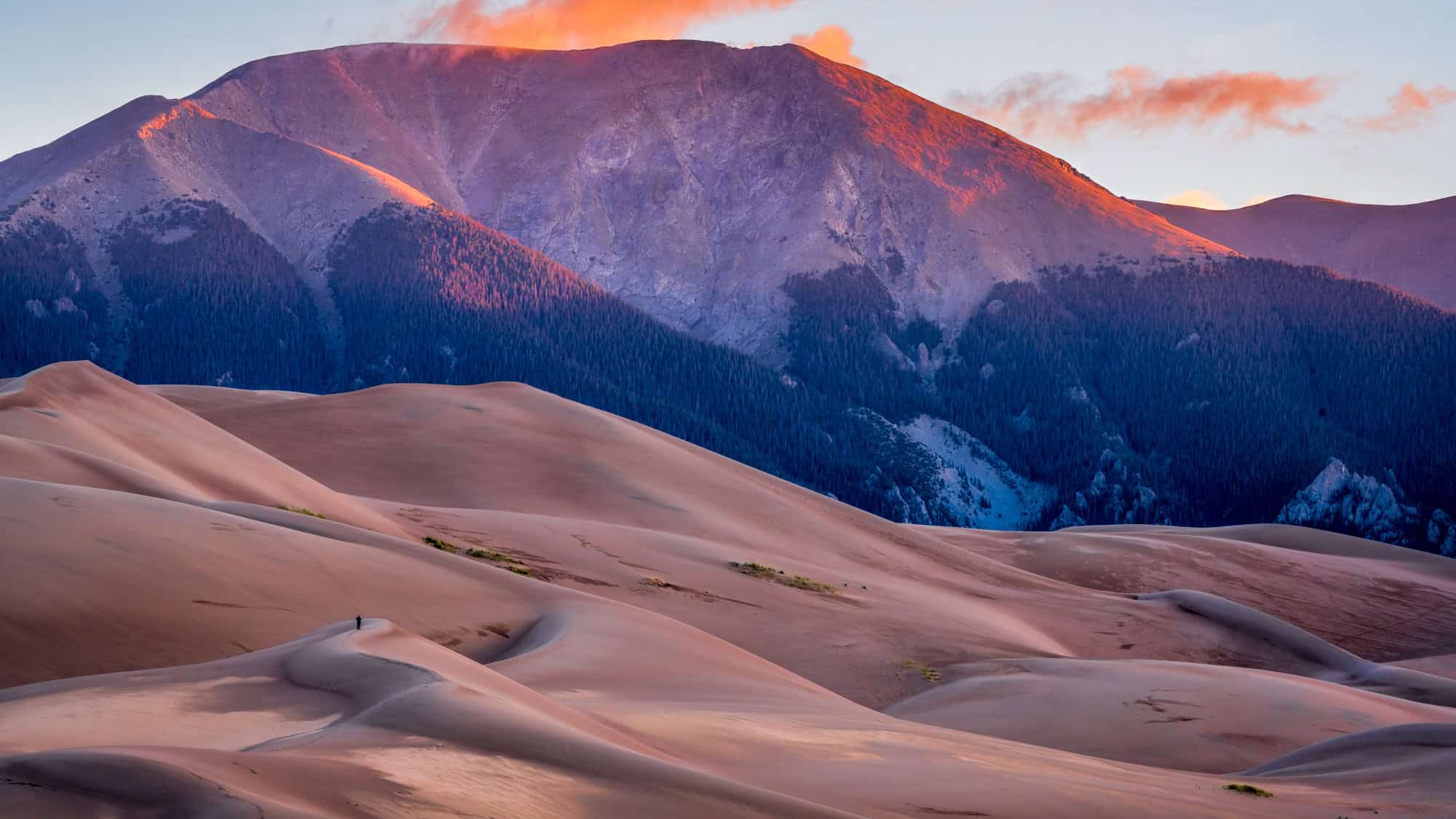
Great Sand Dunes National Park is a landscape of contradictions, featuring the tallest dunes in North America set against the rugged backdrop of the Sangre de Cristo Mountains.
The dunes cover about thirty square miles and can reach heights of 750 feet, which is tall enough to make your calves scream just looking at them. And seeing these massive piles of sand sitting at the base of snow-capped peaks is surreal and confusing to your brain in the best way possible.
It is a sandbox on a gigantic scale, inviting you to play like a kid again (and inevitably find sand in your laundry for the next three years).
Sand sledding and sandboarding are the main activities here. You can rent special gear just outside the park and spend hours hiking up the dunes and sliding down. In late spring and early summer, Medano Creek flows at the base of the dunes, creating a unique beach experience in the high desert where visitors splash and tube in the surge flow.
If you have a 4WD vehicle, you can drive the Medano Pass Primitive Road for a backcountry adventure that takes you through soft sand and creek crossings.
The park is also a designated International Dark Sky Park, making it a prime spot for stargazing once the sun goes down.
Badlands National Park, South Dakota
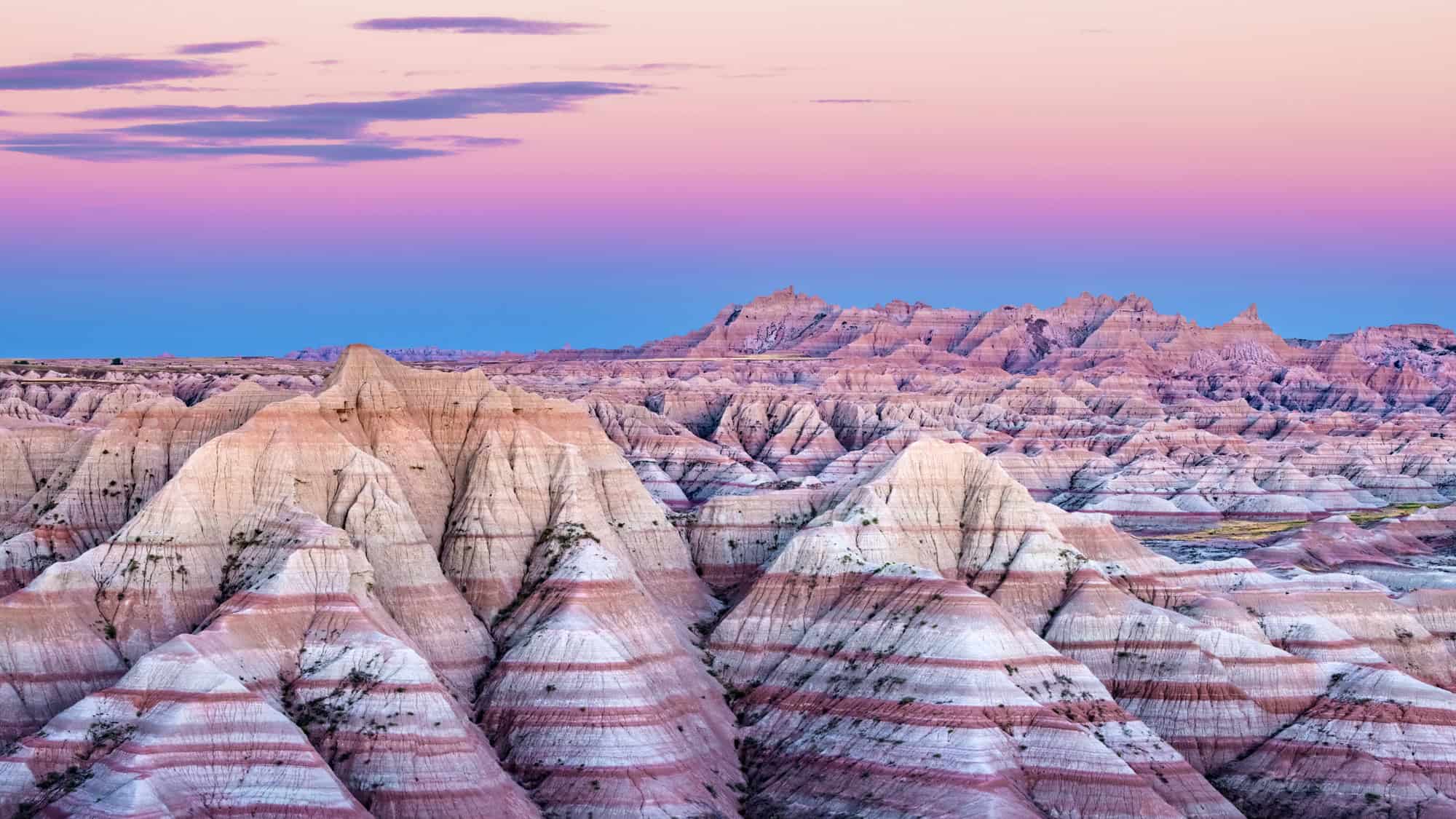
The scenery here looks like it was ripped straight out of a sci-fi movie about a desolate alien planet where the hero gets stranded. Why? Because Badlands National Park protects 244,000 acres of sharply eroded buttes, pinnacles, and spires blended with the largest undisturbed mixed grass prairie in the United States.
The geologic deposits contain one of the world’s richest fossil beds, preserving ancient mammals like the saber-toothed cat and rhino (yes, rhinos once roamed South Dakota, which is a fun mental image).
Driving Badlands Loop Road gives you easy access to numerous overlooks where you can gawk at the rugged terrain and spot bighorn sheep scaling the cliffs like they have gravity-defying hooves.
The Notch Trail is a fun, short hike that involves climbing a log ladder and walking along a ledge to a dramatic view of the White River Valley. You will almost certainly see prairie dogs and bison here, so keep your camera ready but your distance respectable (bison look fluffy, but they are essentially tanks with horns and bad attitudes).
The Ben Reifel Visitor Center also has a working fossil lab where you can watch paleontologists prepare fossils found in the park.
Best of all? The striking bands of color in the rock formations change with the light, turning vibrant reds and oranges at sunrise and sunset.
Saguaro National Park, Arizona

Saguaro National Park is a love letter to the symbol of the American West: the giant saguaro cactus. These majestic plants only grow in the Sonoran Desert and can live to be 200 years old, growing arms as they age that make them look like they are waving hello (or surrendering, depending on how optimistic you are feeling).
Late May to July is blooming season, when the cacti sprout creamy white flowers that attract bats and bees. This is a popular time to visit, but timing can be a bit tricky.
The park is split into two districts separated by the city of Tucson: the Tucson Mountain District (west) and the Rincon Mountain District (east). It takes about thirty to sixty minutes to drive between them, but your entrance pass is good for both for seven days, so you can take your time.
The west district is lower in elevation and has a denser saguaro forest, making it great for shorter visits and iconic sunset photos that will make your friends jealous. The east district is higher and more mountainous, offering diverse hiking trails that lead into the pine forests of the Rincon Mountains.
Even if you just do the scenic drives and short nature trails, standing next to a fifty-foot cactus really puts things in perspective.
Just remember that everything here pokes, stings, or bites, so look with your eyes and not your hands (a lesson many learn the hard way).
Hot Springs National Park, Arkansas

Hot Springs National Park is unique because it is located right in the middle of a city and focuses on relaxation rather than rugged exploration (finally, a park that understands my need to be pampered).
The park protects forty-seven hot springs that flow from the western slope of Hot Springs Mountain. The water comes out of the ground at a toasty 143°F, which is way too hot for a casual dip but perfect for the historic bathhouses.
Bathhouse Row preserves eight magnificent bathhouses from the early 20th century, creating a grand architectural promenade that feels like stepping back in time to the Gilded Age. You cannot soak in the outdoor springs (safety first!), but two of the bathhouses, the Buckstaff and the Quapaw, still operate as spas where you can take a traditional bath in the thermal waters.
It is the ultimate self-care weekend: hike the twenty-six miles of trails in the morning to earn your relaxation, then spend the afternoon soaking your weary muscles.
The park even has a brewery located inside a converted bathhouse (Superior Bathhouse Brewery), which uses the thermal water to brew its beer.
Drinking beer made from hot spring water after a spa treatment? That is a level of multitasking we can all get behind (and the perfect day to spend a hot afternoon).
Like Our Content? Follow Us on MSN (or click the Follow Button above) for more from Discover Parks & Wildlife.