Discover Parks & Wildlife contains affiliate links and is a member of the Amazon Services LLC Associates Program. If you make a purchase using one of the Amazon links, we may receive compensation at no extra cost to you. We may also use select AI tools to support our creative process, but all content is reviewed, refined, and finalized by our human team. See our disclosure policy and our AI use policy for more information.
13 Jaw-Dropping National Parks For Unforgettable Winter Wildlife Encounters
Winter in national parks is when peace and spectacle collide. Quiet trails replace shoulder-to-shoulder crowds, and even the squirrels seem to whisper. The air turns frigid enough to make even your eyelashes rethink their life choices, and crunchy snow records the stories of every passing paw and hoof.
This is the offbeat season, when the bold (and possibly underdressed) catch secret scenes rarely gifted to summer visitors. Bare branches transform trees into accidental observation platforms, so yes, the wildlife will see you coming a mile away, though they’re too busy starring in survival reality shows to mind.
Out here, athletic bison refuse to sign up for gym memberships, wolves clock more miles than your last road trip, and antlers get big enough to double as avant-garde umbrella stands. And you’ll find each encounter in this whitewashed world feels like a spontaneous secret handshake between you and nature. It’s the kind that leaves your toes numb, but your memory jar full.
So, grab your warmest mittens, give your winter hat a heroic tilt, and set out to spy on the untamed, the unflappable, and occasionally, the undeniably fluffy.
Yellowstone National Park, Wyoming

Yellowstone in winter is a frosty stage where all the dramatic types come out: some in fur coats, some just in their birthday suits with steam as coverage.
The park’s bison don’t do subtle. Weighing up to 2,000 pounds, they transform into walking snowplows, using their massive heads to bulldoze through deep drifts for buried snacks. You can often find them soaking up the warmth near geysers and thermal basins, grumbling about the lack of hot cocoa while their fur collects a delicate layer of frost.
If you spot wolves patrolling the stark Lamar or Hayden Valleys, count yourself incredibly lucky. A single pack might roam a territory up to 300 square miles, which means your chances of seeing one rival your odds of finding a matching sock after laundry day. These apex predators are most active during the colder months, their dark coats standing out against the snow as they hunt elk and bison.
Coyotes, looking like they’ve just come from a spa retreat, prance between thermal features, their coats thick and luxurious. Red foxes add a splash of color to the monochrome landscape, performing acrobatic leaps to dive headfirst into the snow after unsuspecting rodents. And overhead, bald eagles serve as moody weathervanes, watching all the action from their frosty perches.
Grand Teton National Park, Wyoming
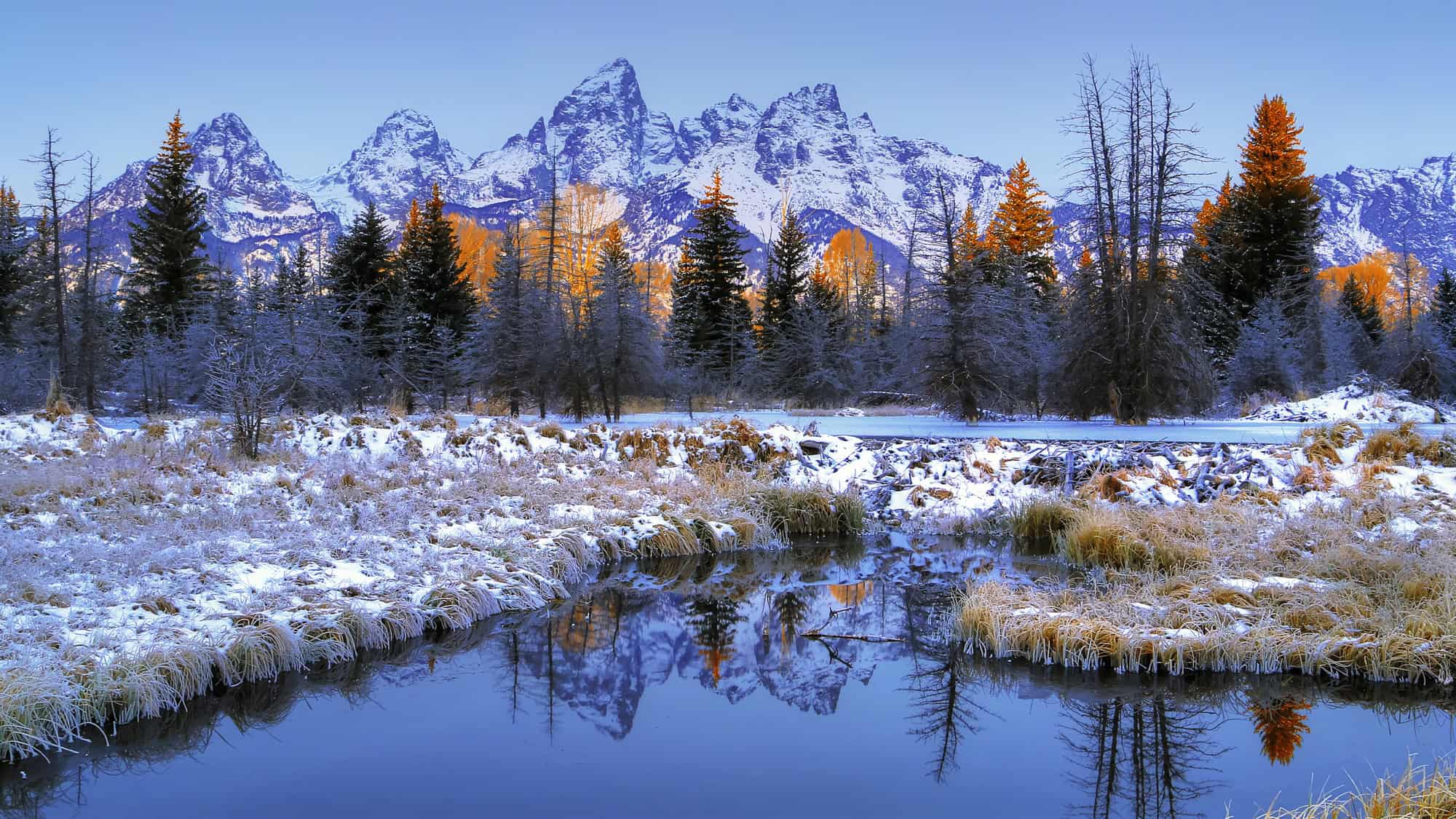
Grand Teton trades the summer sparkle for raw, snow-dusted drama in winter. But the elk here must have missed the memo about subtlety. Instead, thousands migrate down to the National Elk Refuge… forming herds so vast they could rival Black Friday checkout lines.
A mature bull’s antlers can weigh up to 40 pounds, heavy enough to make any hat rack jealous, and you can get a front-row seat to the spectacle on a sleigh ride that takes you right into the herds. Don’t worry, they’re more interested in snacking on willows than interacting with tourists.
Speaking of willows, moose take center stage along the Gros Ventre River, nibbling on brunch with all the grace of gangly teenagers. These solitary giants, with their long legs and distinctive snouts, are perfectly adapted to navigating deep snow.
Keep an eye out for bighorn sheep as well, nimbly hopping about on rocky cliffs near Miller Butte as though gravity simply doesn’t apply to them. Their balance is extraordinary, allowing them to find forage on steep, windswept slopes. Each horn on a ram is a spiraled work of art that can weigh up to 30 pounds, representing a year-by-year record of its life.
Denali National Park, Alaska
Denali in winter isn’t just cold; it’s “turn your eyelashes into icicles” cold. Daylight is more “blink, and you’ll miss it” than a leisurely stroll, but those bold enough to venture out get rewarded with some of Alaska’s most rugged wildlife.
While grizzlies are buried deep in a dreamy, months-long sleep, caribou are showing off their snowshoe skills. Their broad, crescent-shaped hooves are perfect for floating on deep powder, an evolutionary advantage that would make any cross-country skier jealous.
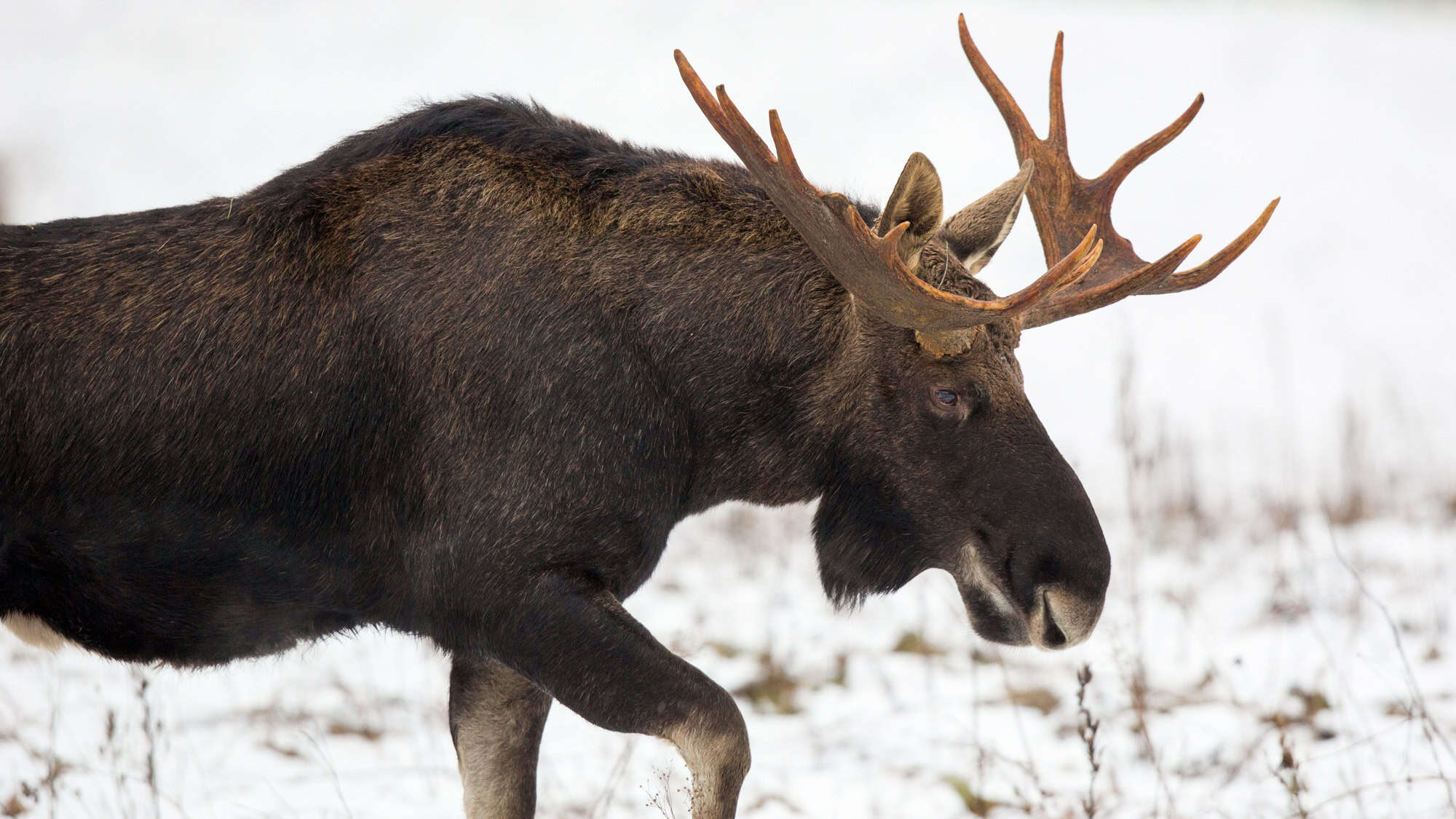
Moose, easily clearing six feet at the shoulder, strut across snowy valleys like refrigerator-sized runway models. For once, you’ll feel short. And these giants are surprisingly agile, using their long legs to move through snow that would stop most other creatures in their tracks.
If you get lucky, you might spot the stealthy lynx, whose giant, snowshoe-like paws and snow-camouflaged fur make “hide and seek” a professional sport.
Don’t forget to look up at night. With so few daylight hours, Denali’s dark skies regularly explode with the aurora borealis, as if someone switched the park lights to “kaleidoscopic disco.” This celestial light show, combined with the profound silence of the wilderness, makes for an unforgettable experience.
Rocky Mountain National Park, Colorado
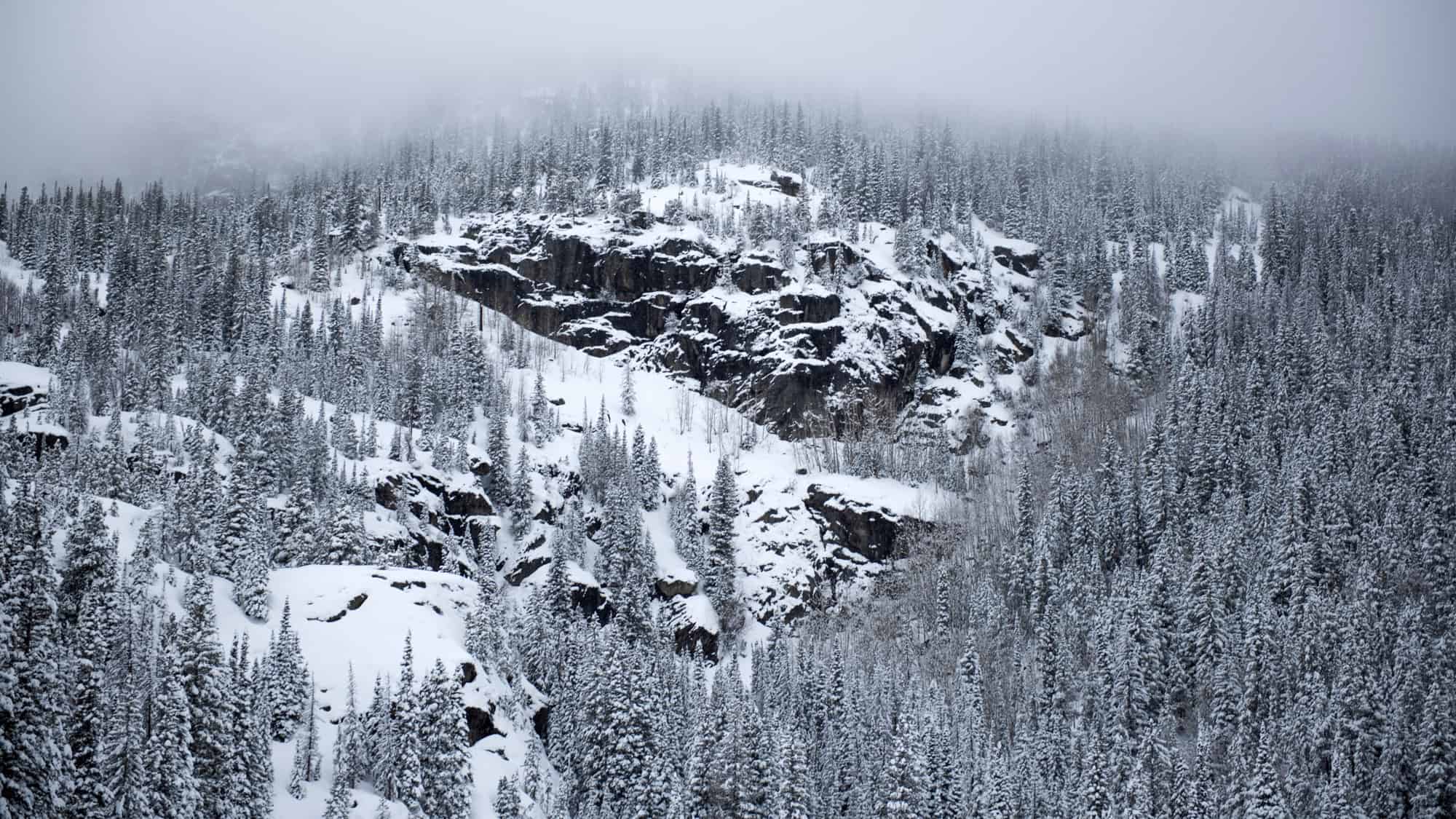
Rocky Mountain National Park is so picturesque in winter that you’ll want to frame your frostbitten selfie. With high-country roads like Trail Ridge Road closed to everything but the bravest snowplows, wildlife escapes the summer traffic and parades through the lower valleys.
Elk stroll right through the town of Estes Park like they’re searching for the best après-ski deal. A bull’s bugle echoing across the ice can sound downright haunting, or maybe like someone is attempting elk karaoke after one too many hot toddies.
Mule deer also become more visible, their giant, comically expressive ears swiveling to catch every sound in the quiet landscape. Bighorn sheep teeter gracefully along the cliffs of Highway 34, often coming down to lick minerals from the road.
Snowshoeing or cross-country skiing along trails like Bear Lake offers a chance to see smaller creatures, like the white-tailed ptarmigan, a bird that turns completely white in winter to blend in with the snow.
Olympic National Park, Washington
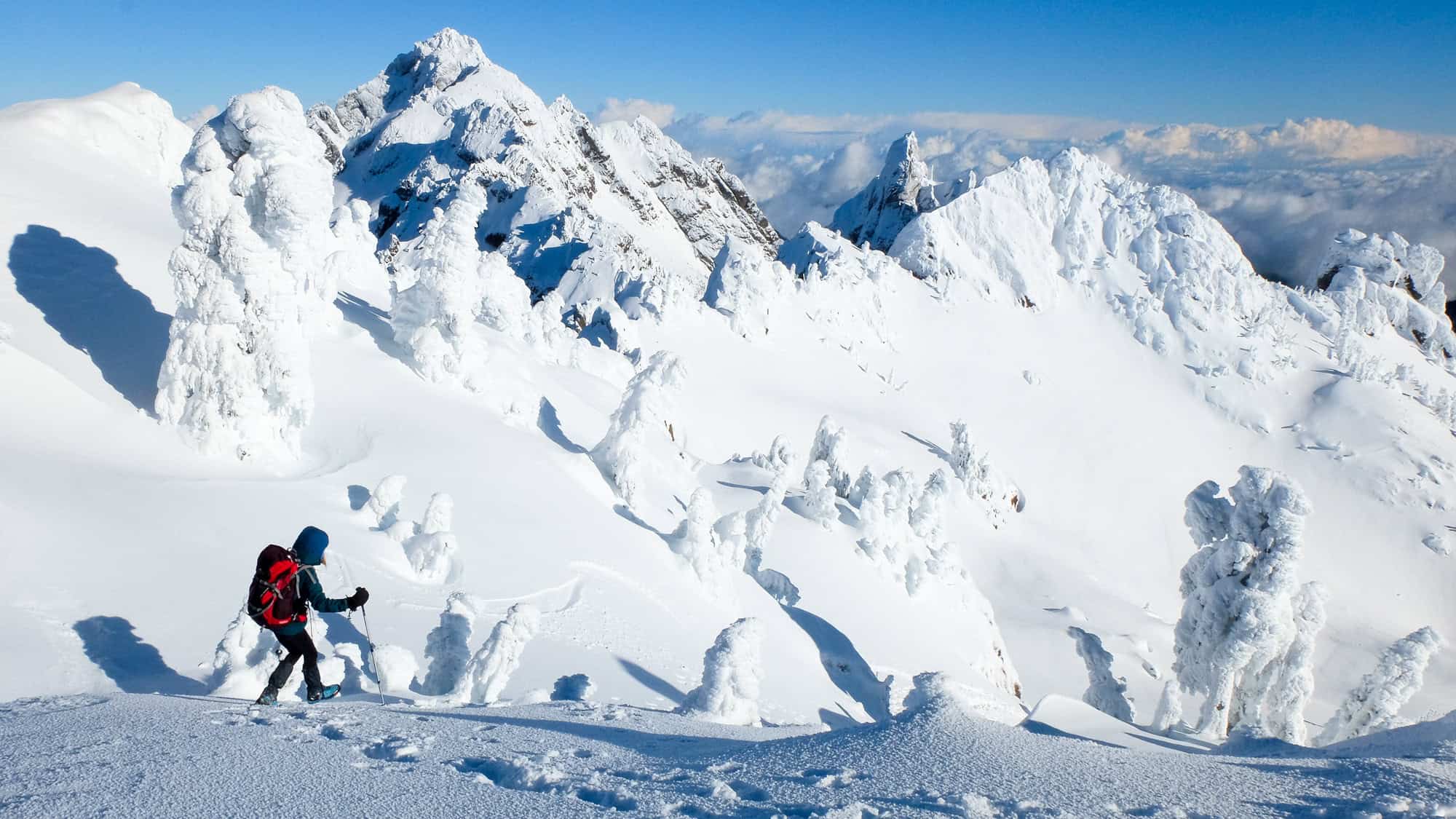
Fewer parks deliver a “choose your own adventure” winter quite like Olympic. One minute, you’re snowball-deep on Hurricane Ridge, spotting snowshoe hares decked out in their winter white (the local fashion trend, apparently), and the next you’re on the coast, dodging salt spray and watching sea lions crash the party.
In the Hoh Rainforest, Roosevelt elk, North America’s heavyweight champs at up to 1,000 pounds, graze beneath trees that look straight from a fantasy novel. These magnificent elk, the largest of their species, remind everyone that mossy, temperate rainforests aren’t just for fairy tales or exceptionally lost hikers.
On the park’s stormy beaches, you might spy harbor seals and the occasional gray whale giving dramatic performances just offshore during their migration. And back inland, if you’re lucky, you might spot a bobcat making short work of its camouflage against the muted winter backdrop. Their tufted ears and spotted coats provide excellent cover as they stalk prey.
It’s an all-terrain, all-attitude winter wildlife destination. Don’t be surprised if you end the day with three different types of mud on your boots, a testament to the park’s incredible ecological diversity.
Acadia National Park, Maine

Acadia feels like Maine’s best-kept secret in the wintertime: a frost-dusted stage where bracing ocean air meets quiet, snow-covered forests.
White-tailed deer are the main event, quietly weaving through the trees between granite cliffs and cobblestone beaches, never breaking a sweat. With the summer crowds gone, they become bolder, often seen browsing near the park’s famous carriage roads.
Head to the shore, and you might spot harbor seals hauled out on icy rocks, practicing their “I’m definitely not cold” faces while basking in the weak winter sun.
Are you more of a twitcher? The real action for birders is out on the water. Sea ducks such as common eiders and long-tailed ducks brave the frigid Atlantic. Eiders are particularly impressive, capable of diving up to 65 feet for a meal of mussels and other invertebrates, which beats any local seafood buffet. Patient birders might also be rewarded with bald eagles soaring overhead or, with a bit of luck, a guest appearance from a snowy owl, which sometimes ventures this far south in winter.
You can also cruise the partially open Park Loop Road for wild coastal views and a little solitude. It’s the kind where the only honking comes from migrating geese (not frustrated commuters).
Glacier National Park, Montana
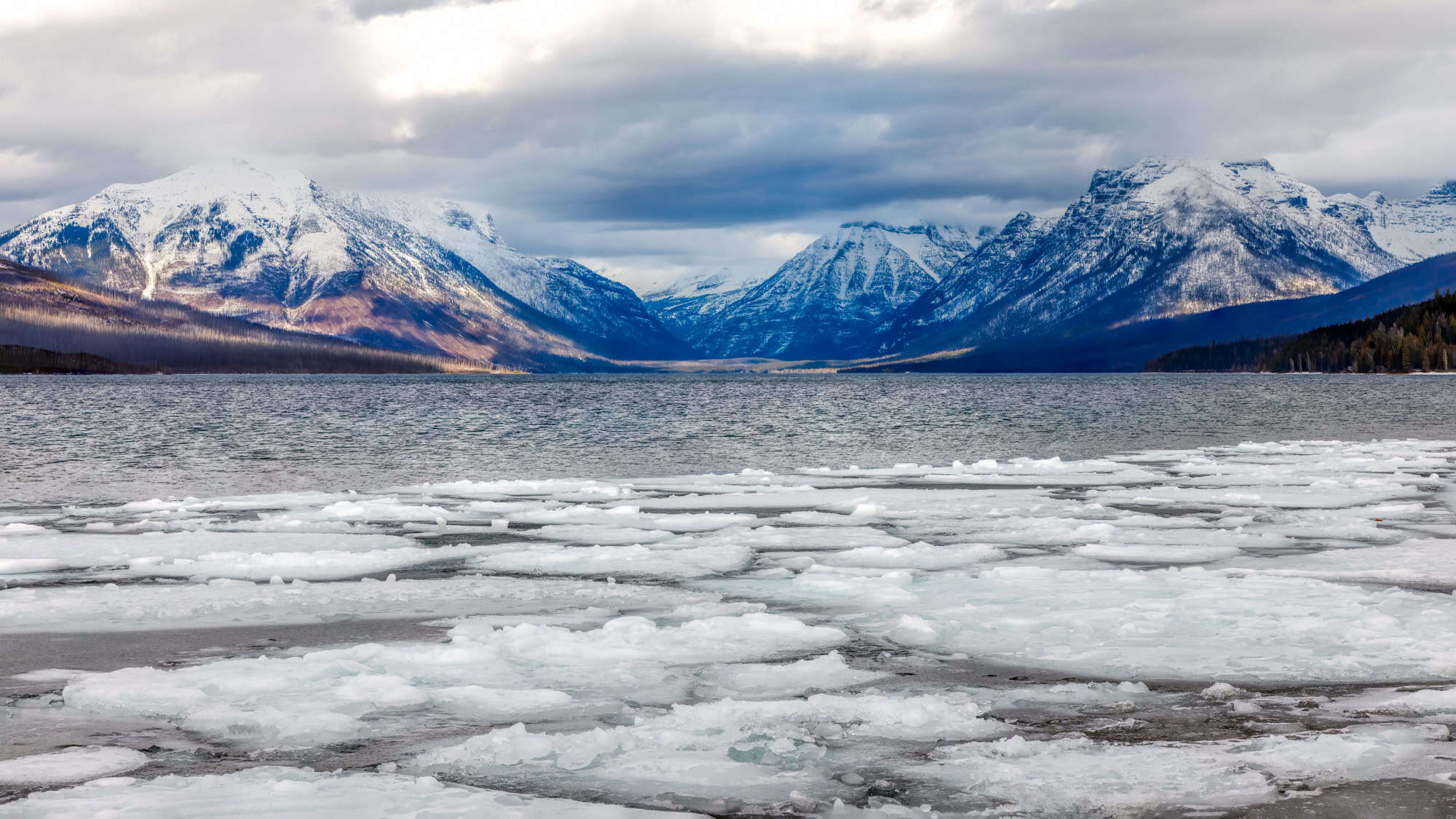
Glacier National Park in winter is where the drama of mountain country gets a fresh coat of sparkling snow and a whole lot more peace and quiet. Vast swaths of the park become a pristine playground for hardy wildlife and adventurous souls determined to see what happens when the crowds stay home, and the snow moves in.
The resident mountain goats pull off the fur-lined parka look better than anyone, navigating icy ledges and wind-whipped cliffs as if the weather’s just another Tuesday. They wear thick, shaggy coats and sport impressive beards. Some might even say they’re the trendsetters of the high country. Look for them around the park’s iconic peaks, like Mount Gould and the Garden Wall, where they often gather on sunny afternoons, defying gravity and common sense in equal measure.
With many roads closed by snow, even the famous Going-to-the-Sun Road turns into a corridor for skiers, snowshoers, and (if you have the legs for it) bike tires fat enough to cause a scene at any coffee shop.
Out in the valleys, elk and mule deer dig through the snow for wisps of grass, their silhouettes haunting against the firs. And if you catch a glimpse of a lone gray wolf padding silently across a frozen lake, you’ve got a story even your most outdoorsy friends will envy.
Voyageurs National Park, Minnesota

Forget highways. Winter at Voyageurs means you’re cruising literal ice roads across frozen lakes, trying to look cool while bundled up like a fashion-conscious marshmallow. These roads connect the park’s main areas, offering a unique driving experience over thick ice.
Wolf tracks often crisscross the snow, their paws reaching up to five inches in length, perfectly designed for distributing weight and making snow angels look easy. While wolf sightings are rare due to their elusive nature, spotting their tracks is a thrilling reminder of their presence.
Moose and white-tailed deer are much less shy, often stealing the spotlight for visitors who keep their eyes peeled near the forest edges. River otters deserve their own sitcom, as they can be seen sliding and wrestling on the ice as if winter is just another playground. They use icy slopes as natural slides, repeatedly climbing up just to slip back down.
The eagle-eyed (or just persistent) can also spot bald eagles perching near openings in the ice, ready to snatch up an unsuspecting fish.
In this deep freeze, the woods have a special silence. In fact, your own footsteps might be the loudest sound for miles… except maybe for that raven, who seems to always have something snarky to say from a treetop.
Shenandoah National Park, Virginia
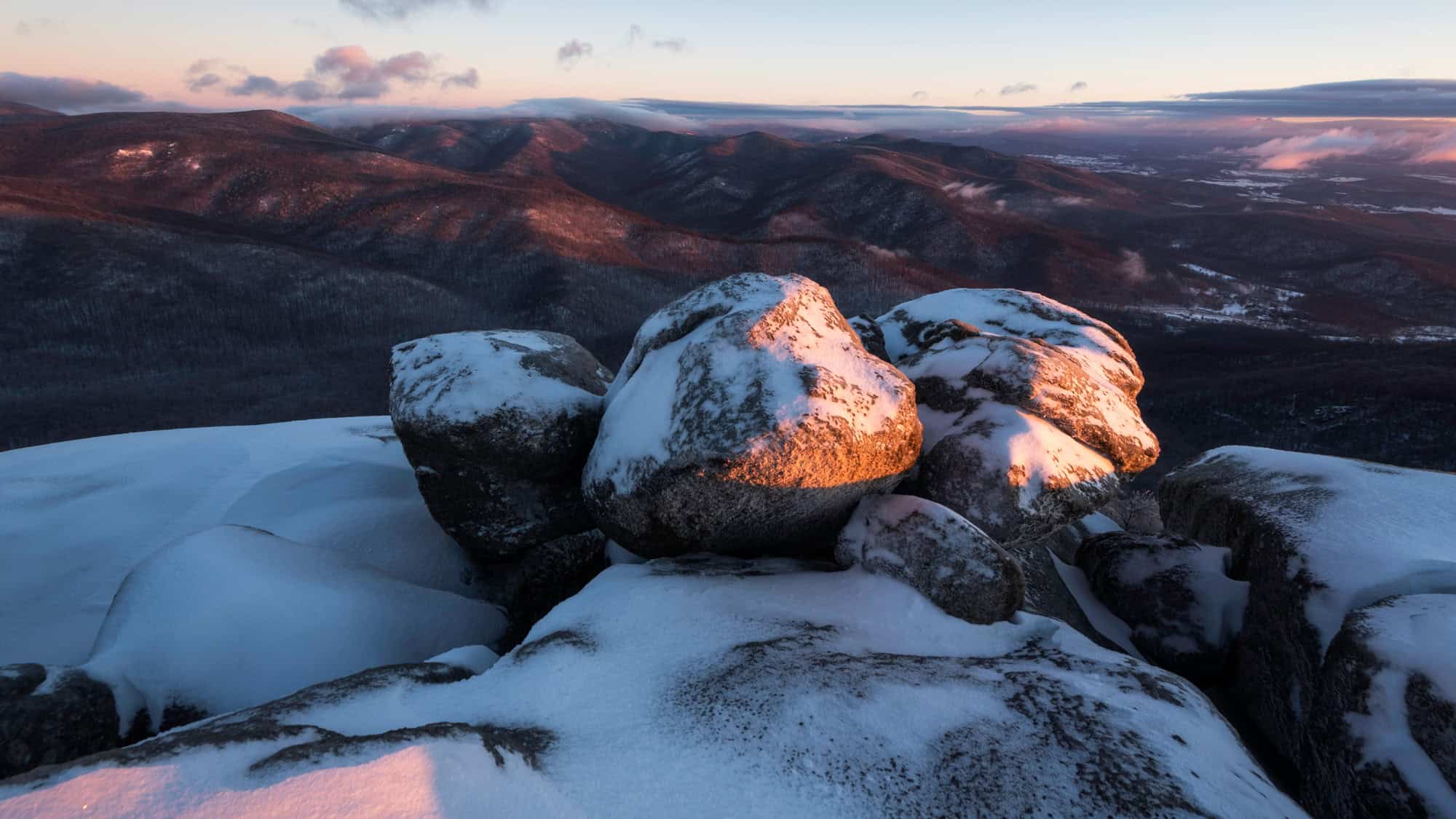
Shenandoah in winter is equal parts peace, scenery, and “Where did all these deer come from?” Take a drive along the accessible portions of Skyline Drive, and without the leafy green curtain of summer, you’ll see white-tailed deer, red foxes, and even the occasional bobcat strutting their stuff right out in the open.
The lack of foliage makes spotting wildlife significantly easier. So keep watch for black bears, who sometimes pop out of their dens during milder weeks. Not all of Virginia’s bears believe in a full winter sleep, perhaps because they lost track of the calendar or just couldn’t resist a sunny day.
Wild turkeys and barred owls also have supporting roles, sticking around for those who brave the frosty air. You can often hear the distinct “who cooks for you, who cooks for you all” call of the barred owl echoing through the silent, frozen woods.
The quiet that settles on the Blue Ridge Mountains is a thing of legend. It’s the sort that turns even the most hurried traveler into a contemplative, scarf-swaddled philosopher. It’s a serene and rewarding time to explore the mountains.
Theodore Roosevelt National Park, North Dakota
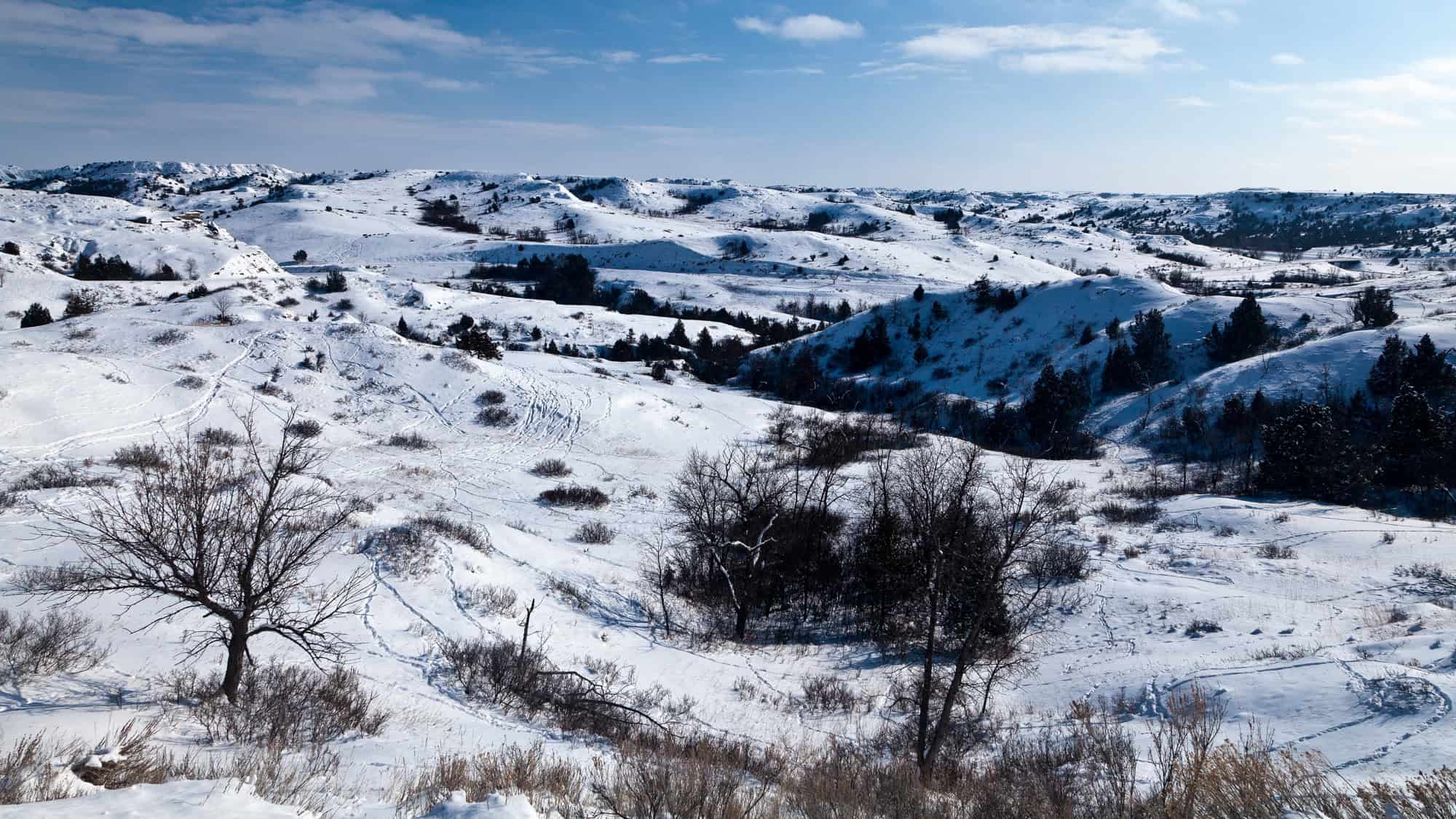
Winter at Theodore Roosevelt National Park comes with a “must love bison and bold landscapes” disclaimer. The herds here showcase their cold-weather talent by donning shaggy overcoats so well-insulated that snow stays put on their backs without melting. Take that, fancy thermal wear.
The park’s wild horses (proper mustangs) gallop across the snowy badlands, serving up equine drama at every crest. These resilient animals are descendants of horses that were once part of domestic herds and now roam free, their rugged beauty a perfect match for the harsh landscape.
Flashier still, pronghorn sprint through the landscape at speeds up to 55 miles per hour, making them the ultimate winter sprinters. Usain Bolt would be envious of their ability to maintain high speeds over long distances. And with the summer crowds gone, it’s just you, the wildlife, and some of North America’s most cinematic scenery.
Katmai National Park, Alaska

Katmai’s summer bear celebrity scene might sleep through winter, but that only makes room for the lesser-known, tougher stars to shine.
Meet the wolverine: rarely seen, undeniably fierce, and capable of running for miles over deep snow with a “bring it on” attitude worthy of any action movie. These tough critters, weighing up to 40 pounds, have dense, frost-resistant fur that laughs in the face of wind chill and allows them to travel vast distances in search of food.
Moose and caribou also rule these snowfields. A moose here is practically its own snowplow, using its long legs and bulk to munch through willows as if this were just another brunch hour. Along the coast, sea otters and sea lions bring a bit of comic relief, splashing through the icy surf with all the finesse of synchronized swimmers who missed rehearsal. These marine mammals thrive in the cold, nutrient-rich waters.
If all that’s not enough to draw you to this remote wilderness, the northern lights turn Katmai’s dark winter skies into visual symphonies, making each visitor feel like a celebrity at nature’s most exclusive winter gala. It’s a stark, challenging, and profoundly beautiful environment that showcases the resilience of arctic and subarctic wildlife.
Big Bend National Park, Texas
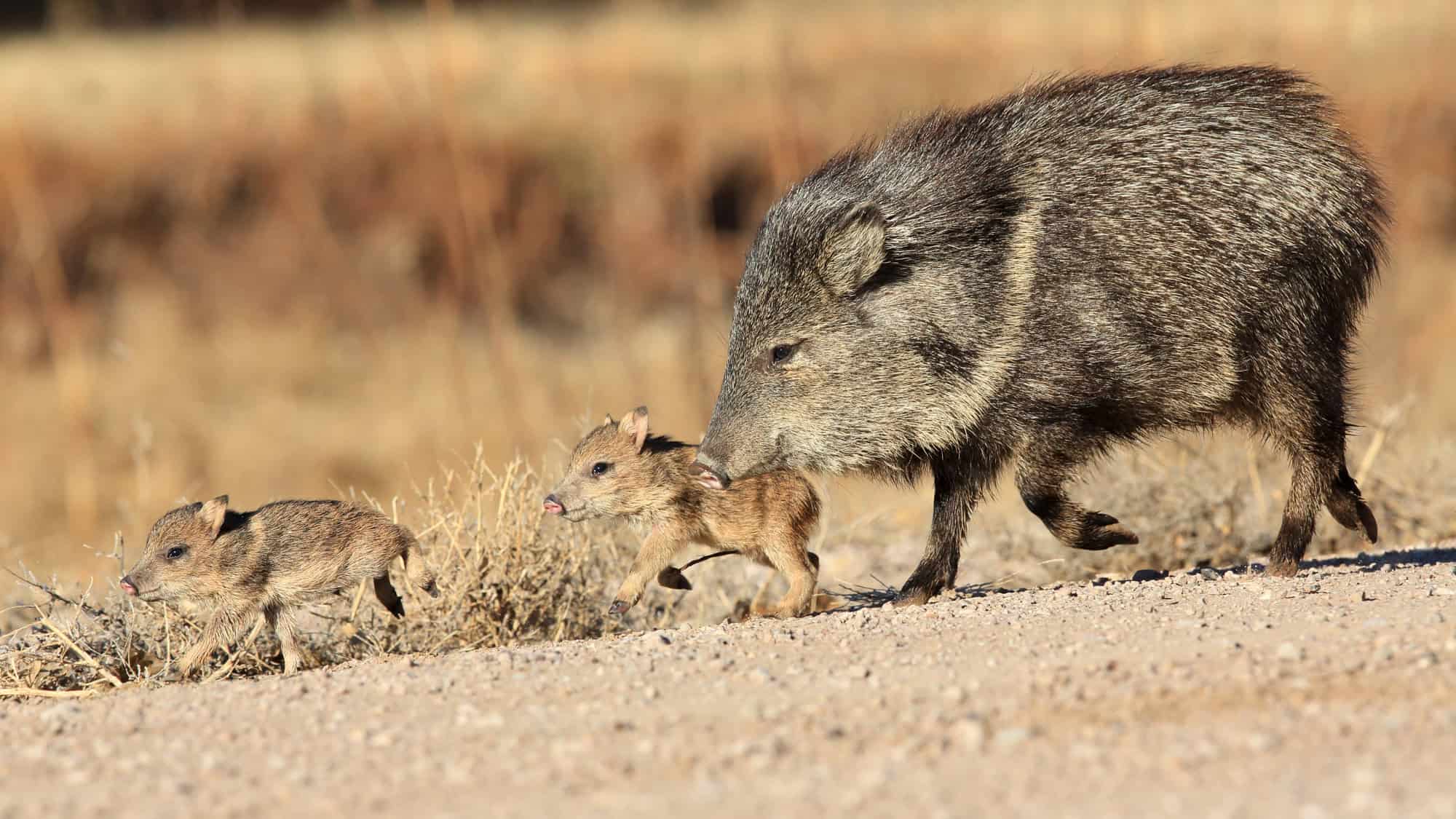
Looking for winter sunshine without sacrificing wildlife? Big Bend delivers. Here, mild winter days (generally in the 50s°F) tempt even the most committed couch potatoes out along desert trails… and trust me, the javelinas will judge your pace.
Resembling scruffy pigs but actually belonging to their own unique family of mammals, javelinas roam in social groups called squadrons. They often forage alongside mule deer and more than 450 species of birds.
Yes, birders, that’s your cue. Big Bend is a winter wonderland for rare feathered sightings. The Mexican jay, for instance, spends the colder months showing off its bright blue plumage, as if someone spilled a bit of the sky all over it. Colima warblers, which nest nowhere else in the United States, have already departed for Mexico, but plenty of other species stick around.
The Chihuahuan Desert and the Chisos Mountains provide a backdrop so sprawling you’ll wonder whether you hiked into a postcard, or simply the best-kept wildlife party in Texas. The park’s diverse elevations, from the Rio Grande floodplain to the high Chisos, create a variety of habitats that support this incredible biodiversity, making every winter hike a new discovery.
Isle Royale National Park, Michigan
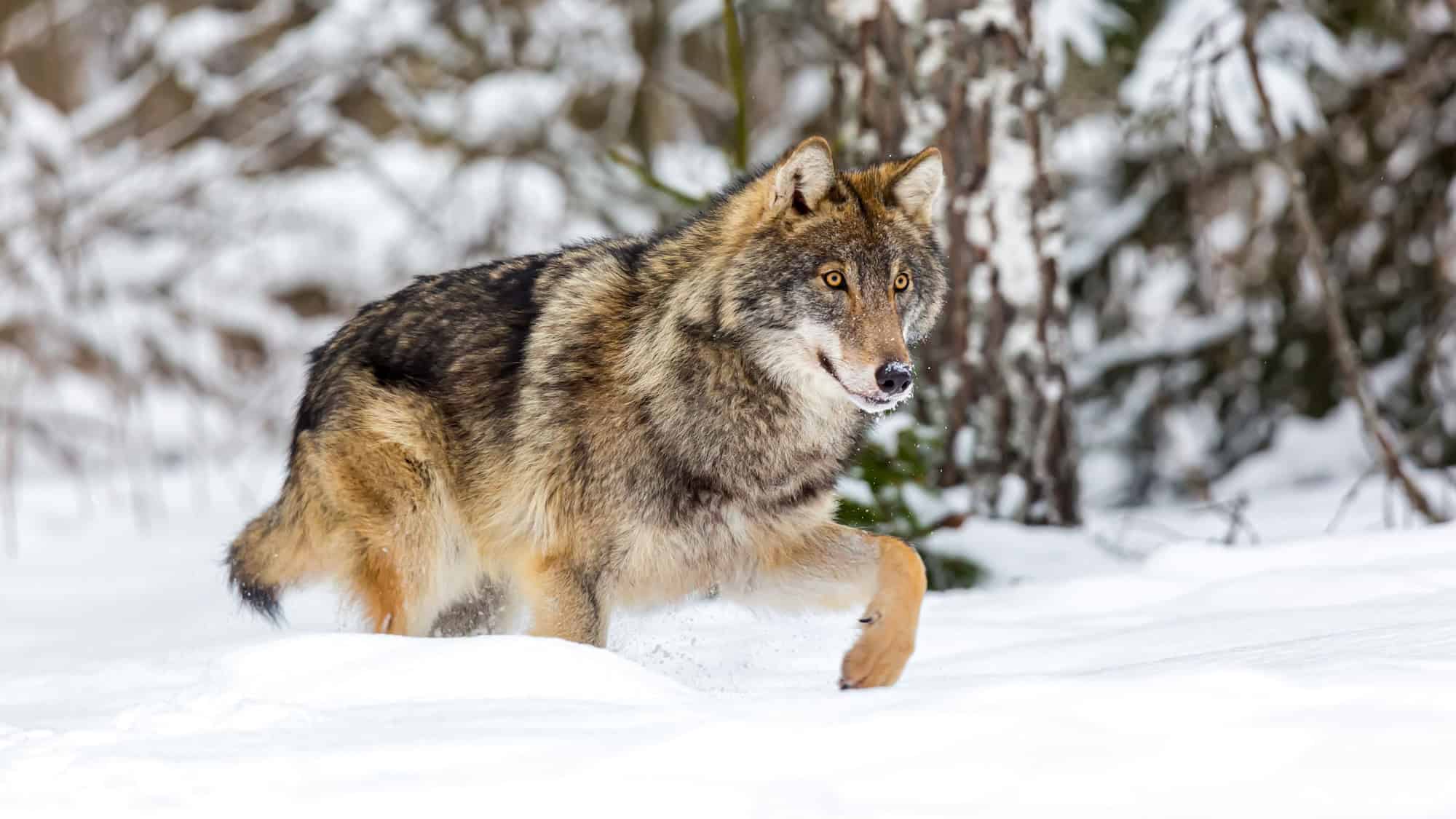
If you enjoy travel that also counts as bragging rights, Isle Royale is the wild winter story your friends won’t believe. This remote outpost in Lake Superior is technically closed from mid-fall to spring, but winter research teams (do you have a biology degree you can call on?) still get a peek at its world-famous wolf-moose standoff.
This is one of the planet’s longest-running predator-prey studies, and winter is when the action truly unfolds. Here, moose supply the food chain’s buffet table. A single adult can top 1,000 pounds, making them both the neighborhood block party and the main course.
The resident wolf packs rely on these massive animals to get them through the lean winter months. Finding their tracks intertwined in the snow is like walking into a suspense novel where you are looking for the whodunit.
While you can’t visit in the winter unless invited, the story unfolding here offers a master class in survival and underscores what true wilderness means. With no roads and limited human interference, the island’s ecosystem operates on its own terms.
And let’s face it, when nature’s biggest predators are also the neighborhood’s only year-round residents, you’re not just remote, you’re honorary wildlife.
Like Our Content? Follow Us on MSN (or click the Follow Button above) for more from Discover Parks & Wildlife.
11 National Parks With Breathtaking Frozen Waterfalls To See In Winter

Ever wondered what happens when gravity and ice team up for the ultimate winter spectacle? Spoiler alert: it’s epic, and you’ll want to see it for yourself.
14 National Parks Offering Top Bird Watching Experiences This Winter
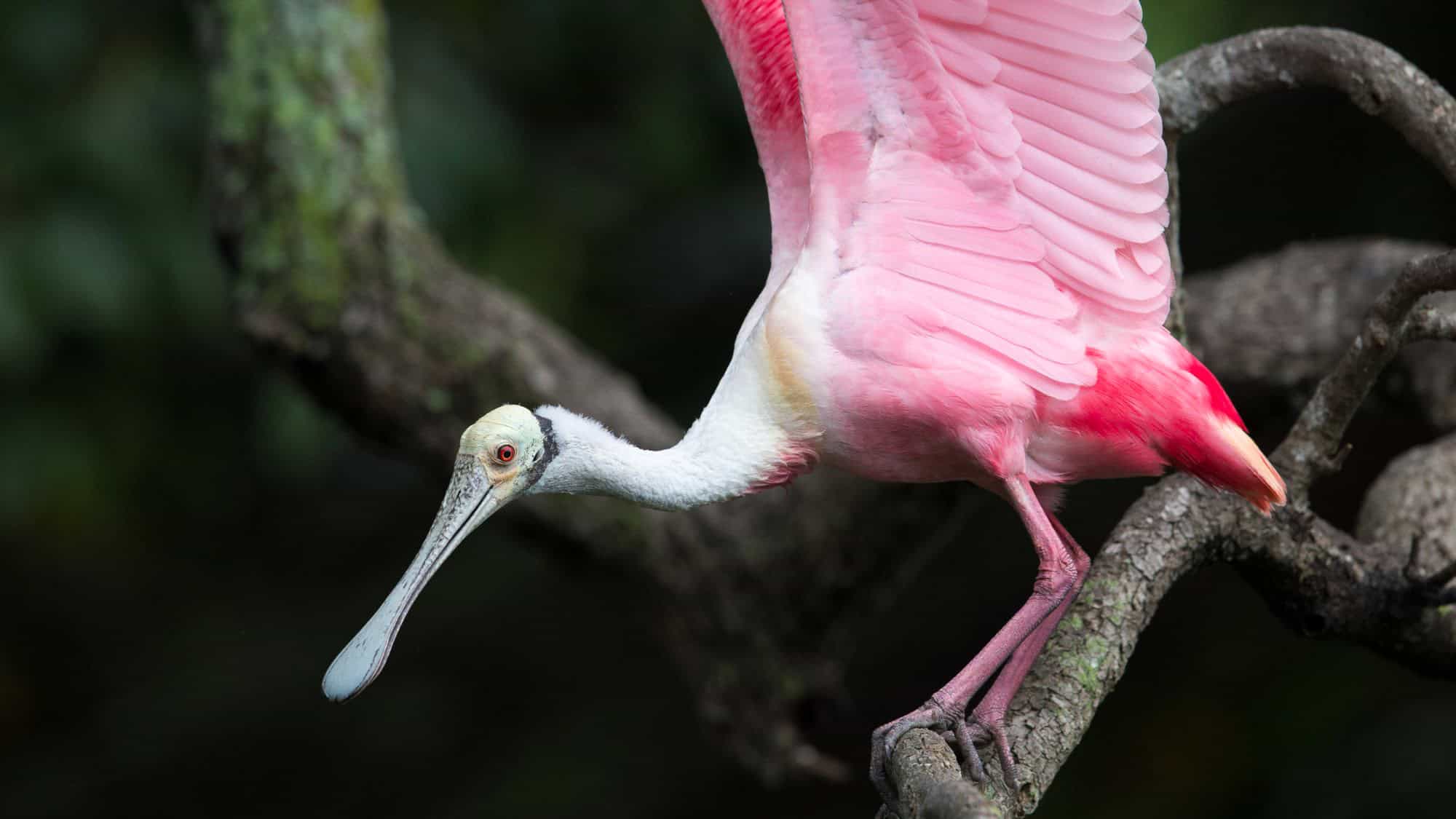
Think winter is just about snow and silence? Think again. It turns out, it’s also prime time for catching some feathered friends in action. You won’t believe who’s hanging out in the parks this season.
11 U.S. National Parks Where Snow Destroys Iconic Views
Thought you knew everything about breathtaking park views? Wait until you see what snow’s been up to. It’s flipping the script on iconic landscapes in ways you won’t believe.