Discover Parks & Wildlife contains affiliate links and is a member of the Amazon Services LLC Associates Program. If you make a purchase using one of the Amazon links, we may receive compensation at no extra cost to you. We may also use select AI tools to support our creative process, but all content is reviewed, refined, and finalized by our human team. See our disclosure policy and our AI use policy for more information.
14 U.S. Swimming Holes So Inviting Come Summer That You’ll Forget About the Time
There is a particular kind of seasonal heat that clings to you, the kind that makes you seriously consider moving into your walk-in freezer. It turns your car into a sauna on wheels and makes the simple act of checking the mail feel like a trek across the Sahara.
Air conditioning is a nice, civilized solution, but it can’t replicate the soul-scrubbing power of jumping into a natural body of water. We crave the primal shock of a mountain stream or the quiet embrace of a hidden lagoon.
Finding these spots feels like discovering a closely guarded secret, even if you’re sharing it with fifty other people who also saw it on the internet. Why? Because there’s something special about slipping into water that hasn’t been tamed by concrete or treated with enough chlorine to bleach your swimsuit.
Sure, it often requires a bit more effort than walking to the community pool, involving hikes, climbs, or navigating reservation systems that seem designed by a mischievous trickster. But that just makes the first glorious, freezing dip feel completely earned.
Hamilton Pool Preserve, Texas
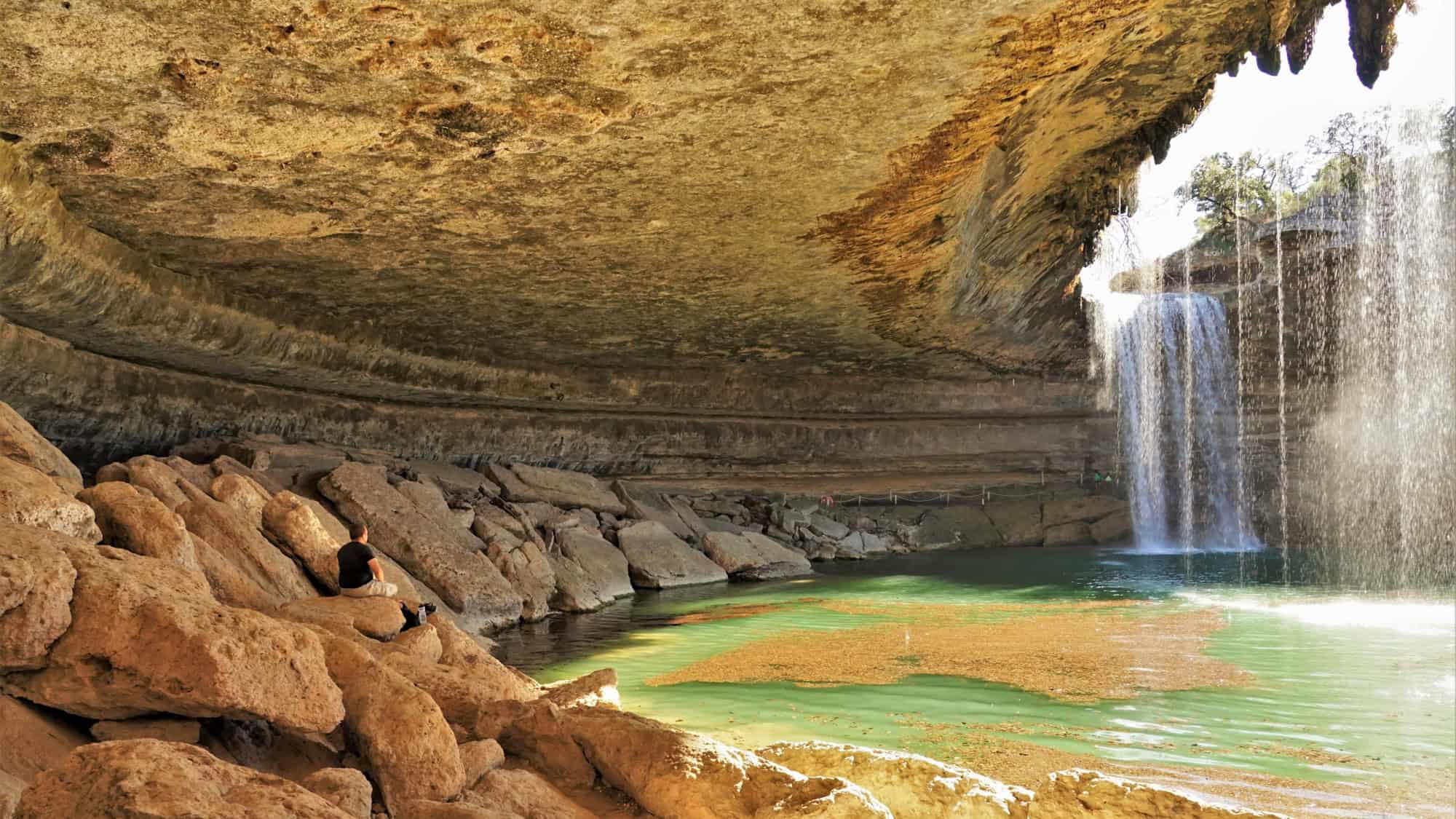
Texas isn’t exactly the first place that comes to mind when you think of a lush, watery oasis, which makes Hamilton Pool Preserve feel like a wonderful geological prank.
Located just outside Austin, this jaw-dropping swimming hole was created thousands of years ago when the ceiling of an underground river decided it was done holding up the world and collapsed. The result is a gorgeous jade-green pool tucked inside a limestone canyon, complete with a 50-foot waterfall that spills over the edge like a leaky faucet that just won’t quit.
It’s the kind of place that makes you want to float on your back and gaze at the stalactites, while trying very hard not to think about the sheer weight of rocks hanging over your head.
You can’t just show up with a towel and a dream, however. Reservations are mandatory and are often snatched up weeks in advance. And the hike down is a quarter-mile of rugged trail that will make you regret wearing your flimsiest flip-flops.
Just know that even with a reservation, swimming access depends on recent rainfall and bacteria levels, which can put a damper on things. It’s also a protected nature preserve, so there are no snack bars (meaning you’re entirely responsible for your own safety and your own sandwiches).
Sliding Rock, North Carolina
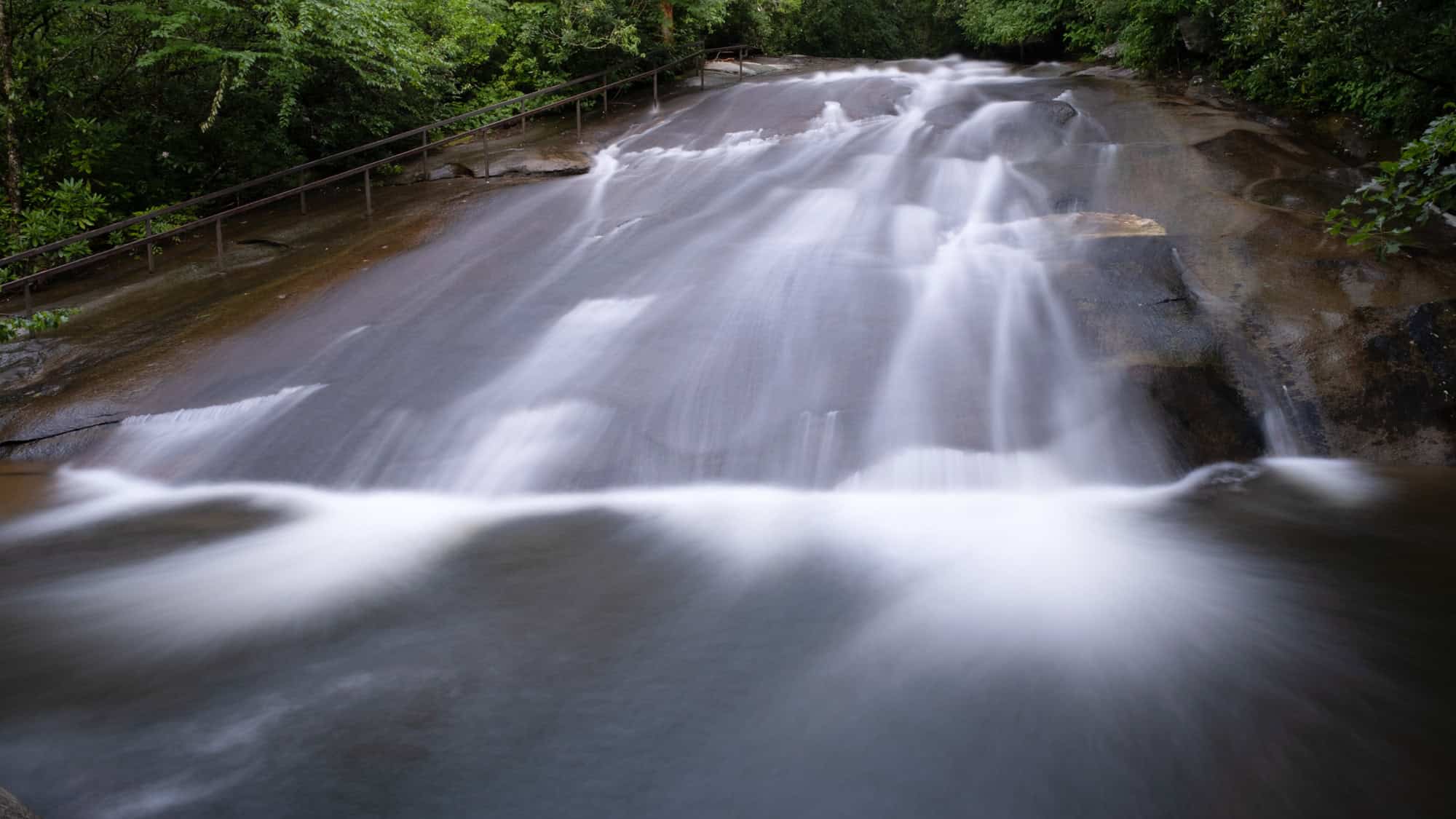
If you’ve ever wanted to visit a water park designed by nature with a questionable regard for safety, Sliding Rock in the Pisgah National Forest is your spot.
This is not a place for a lazy float or quiet reflection; it’s a 60-foot natural rock water slide. Every minute, 11,000 gallons of chilly water propel gleeful sliders down a sloped boulder and into an eight-foot-deep plunge pool. It is fast, it is loud, and the water hovers around 50 to 60°F. That is the kind of cold that steals your breath and makes you briefly reconsider every decision that led you to this moment.
Fed by Looking Glass Creek, the slide has been a beloved local attraction for generations, and half the fun is watching people of all ages slide down in a variety of awkward, flailing positions.
Unlike most wild swimming spots, this one sometimes comes with lifeguards on duty between May and September. The area gets incredibly packed in the summer, so patience is not just a virtue, it’s a requirement.
There’s also a small entrance fee for the recreation area, and the parking lot fills up faster than you can yell “cannonball,” so plan to arrive early or late unless you enjoy long-distance hiking from your car.
Havasu Falls, Arizona
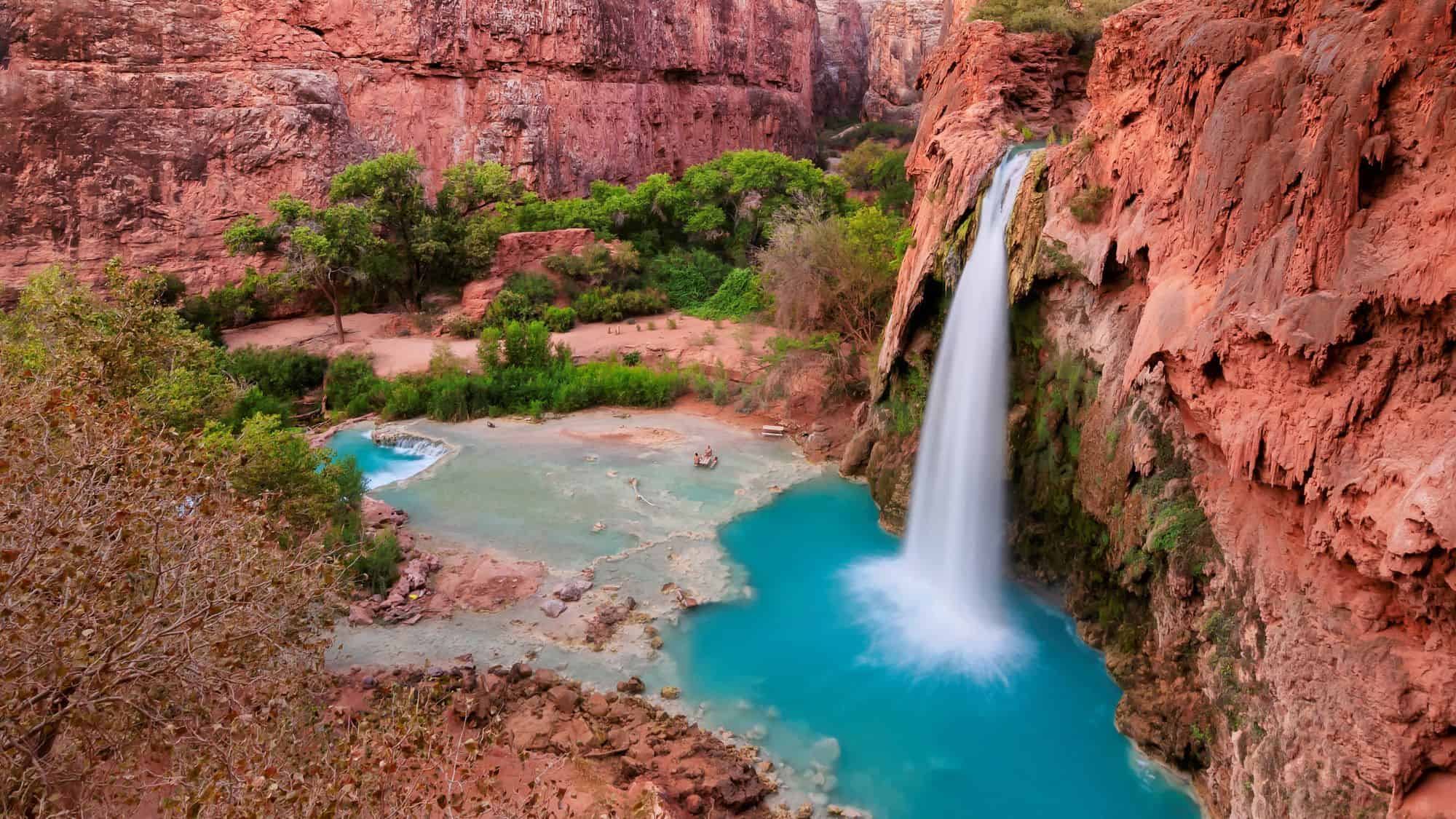
Havasu Falls is the undisputed supermodel of swimming holes, famous for its unique turquoise water cascading over vibrant red cliffs.
The striking blue-green color of the water is a result of high concentrations of calcium carbonate, which creates a stunning contrast against the canyon walls that looks too perfect to be real. It’s the kind of beautiful that will ruin all other swimming holes for you forever, leaving you disappointed by anything less spectacular.
Found within the Havasupai Indian Reservation, getting here is a serious undertaking that involves a strenuous 10-mile hike each way into the Grand Canyon. But the water temperature remains a pleasant 70°F year-round, which feels like a gift after a long trek through the desert.
Access is tightly controlled through a notoriously difficult permit system. You must have a reservation to enter, and these permits sell out almost instantly for the entire year. And the tribe requires a minimum stay of three nights, turning this into a full-blown backpacking expedition.
You’ll be hauling all your gear in and out, or you can hire pack mules to do the heavy lifting for you (a choice your shoulders will thank you for). And remember, you are a guest on tribal land, so respecting their rules is not optional.
Blue Hole, New Mexico

As you drive through the arid landscape of Santa Rosa, New Mexico, the last thing you expect to see is a sapphire-blue lake that looks like it was misplaced from the Caribbean.
The Blue Hole is an artesian spring that keeps a constant, brisk temperature of 61°F, which is invigorating in the summer and shockingly cold in the winter. And the water is so incredibly clear that visibility often reaches 100 feet, letting you see all the way to the bottom of the 81-foot-deep pool.
It is essentially a giant, bell-shaped underwater cavern that has become a major destination for scuba divers from all over the country. While it’s a hotbed for dive training, regular swimmers are also welcome to take the plunge.
The depth ensures the water stays chilly, so you probably won’t linger long without a wetsuit unless you genuinely enjoy shivering.
The city usually requires a permit for divers, but swimmers typically just pay a small entrance or parking fee. Stone steps lead right into the water, and there are rocky ledges perfect for those who need a moment to summon the courage to jump in.
Cummins Falls, Tennessee
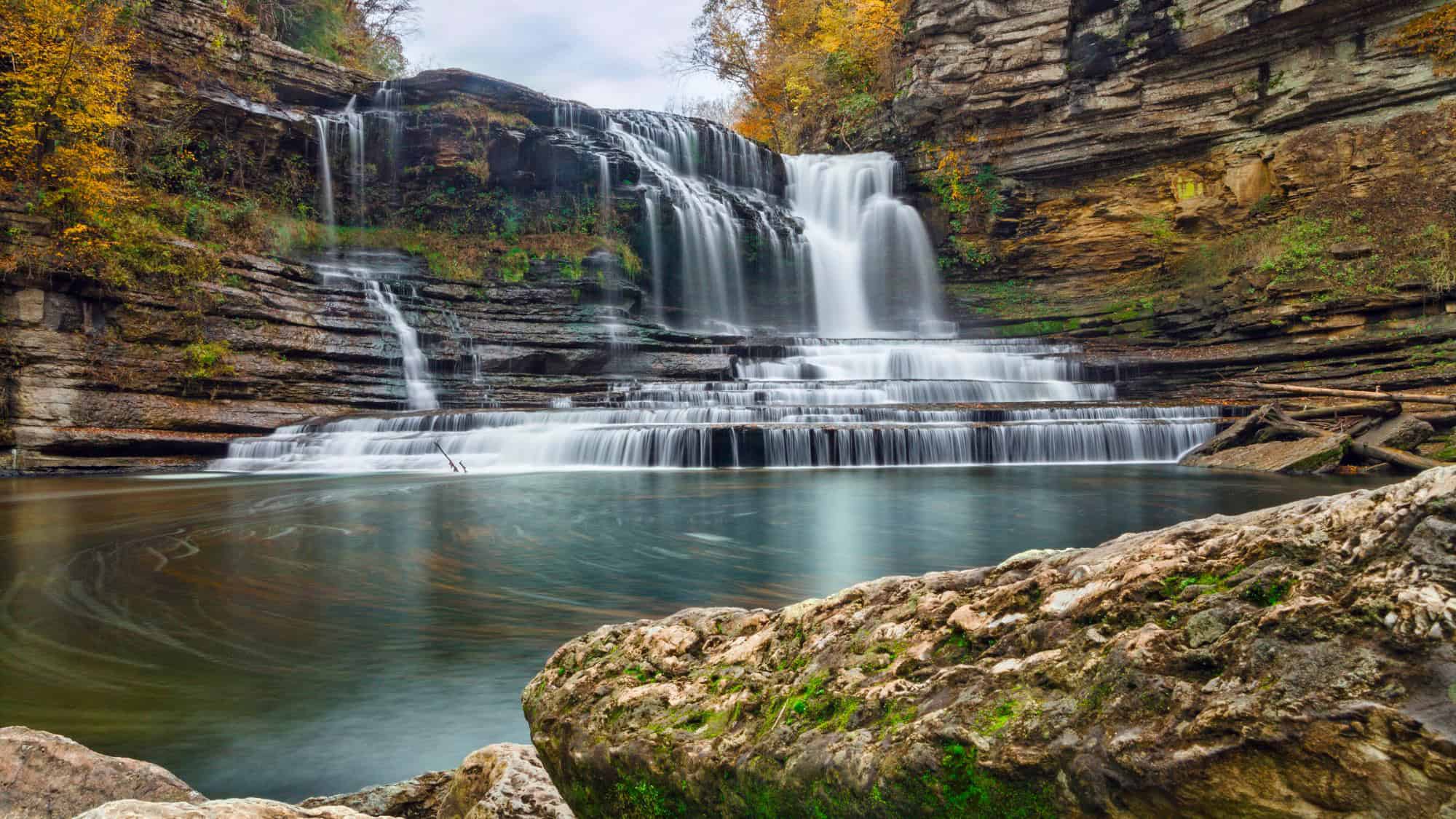
Cummins Falls State Park feels rugged and untamed, a place that makes you earn your reward. The main attraction is the magnificent 75-foot waterfall, which is Tennessee’s eighth largest by volume.
Water cascades down wide, tiered rock ledges into a deep, chilly pool below, looking like a wedding cake made of limestone and liquid. You can climb around the rock shelves or take a swim in the sprawling basin at the base, but getting there is half the adventure (and all of the work).
The hike into the gorge is not a leisurely stroll on a paved path. It involves steep terrain, slippery rocks, and stream crossings that can be waist-deep depending on recent weather. You’ll also need a Gorge Access Permit to get down to the waterfall area, a system put in place to manage crowds and improve safety. These permits are available online but are often sold out on nice days.
Because the trail enters a flood zone, the gorge is closed immediately if it rains upstream, as flash floods are a serious risk. And don’t forget sturdy shoes that you don’t mind getting soaked; attempting this in flimsy sandals is just asking for a twisted ankle.
Diana’s Baths, New Hampshire
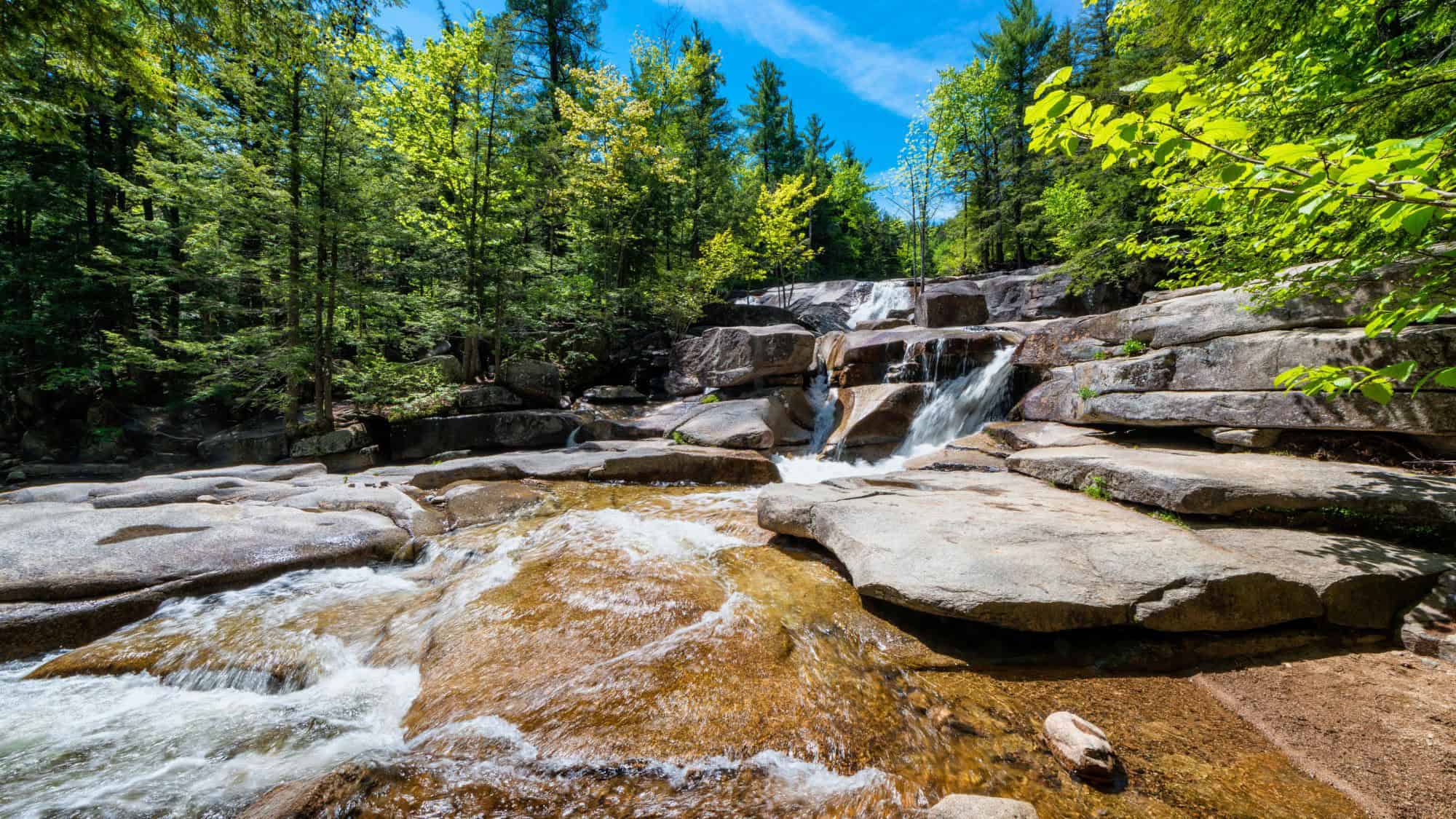
Tucked away in the White Mountains near North Conway, Diana’s Baths is less of a single swimming hole and more of a natural water playground. A series of small waterfalls, cascades, and potholes are fed by the cool waters of Lucy Brook.
The flowing water fills numerous granite basins, creating pools that range from shallow splash pads perfect for toddlers to deeper spots where you can get a full soak. On a sunny summer day, the flat rock ledges become prime real estate for sunbathers, drawing hundreds of visitors.
The hike to the baths is an easy, mostly flat gravel path that’s about three-quarters of a mile long, making it extremely accessible for families and anyone lugging a cooler. Because it’s so easy to get to, it becomes incredibly busy. So you should expect to share your personal granite pothole with several new acquaintances.
The water is mountain-fed, meaning it’s crisp enough to wake you up but not quite cold enough to induce full-body paralysis.
There’s a self-service pay station at the parking lot, and rangers are known to be quite diligent about checking for passes and ticketing cars parked illegally along the road. Visiting on a weekday or early in the morning is your best bet for finding a moment of peace.
Ginnie Springs, Florida
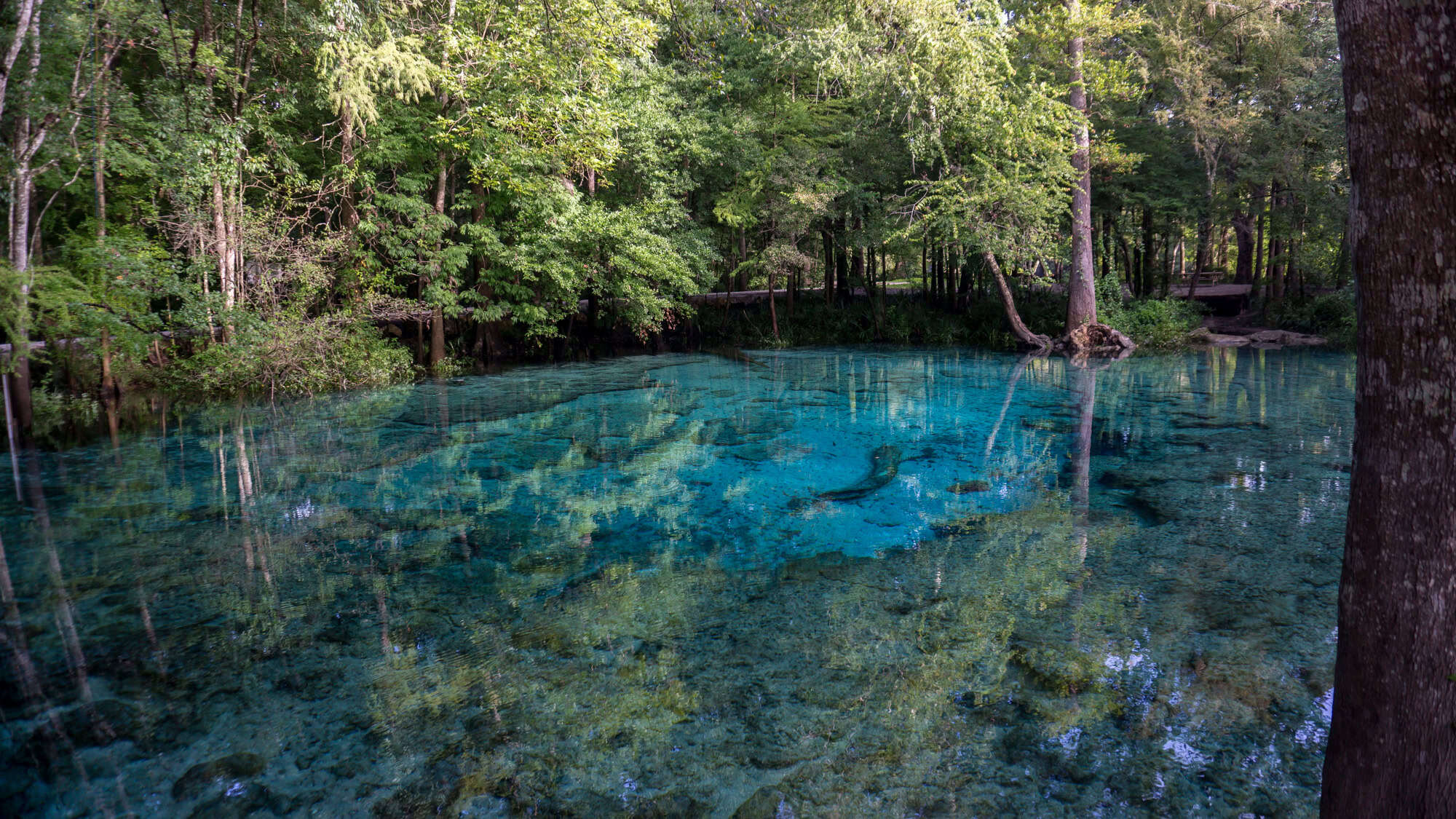
Florida is brimming with natural springs, but Ginnie Springs is legendary for having some of the clearest water in the state.
This privately owned park, located on the Santa Fe River, boasts seven distinct springs that all maintain a constant, inviting temperature of 72°F. And the water is so transparent that it’s said Jacques Cousteau once praised its remarkable visibility. You can see every single fish, turtle, and limestone crack beneath you as you float (which is both fascinating and a little unnerving if you prefer your underwater worlds to have some mystery).
The main activity here is tubing down the river; you can rent a tube and drift along, hopping out at various points to walk back and do it all again. Cavern divers also flock here to explore the extensive underwater cave systems.
It’s an extremely popular destination for college students and large groups, so on weekends, the atmosphere can feel more like a spring break party than a serene nature escape. The admission fees are steeper than at a typical state park, but the facilities are well-maintained.
Notably, alcohol is permitted, which certainly contributes to the lively (and sometimes rowdy) weekend crowds.
Falling Water Falls, Arkansas
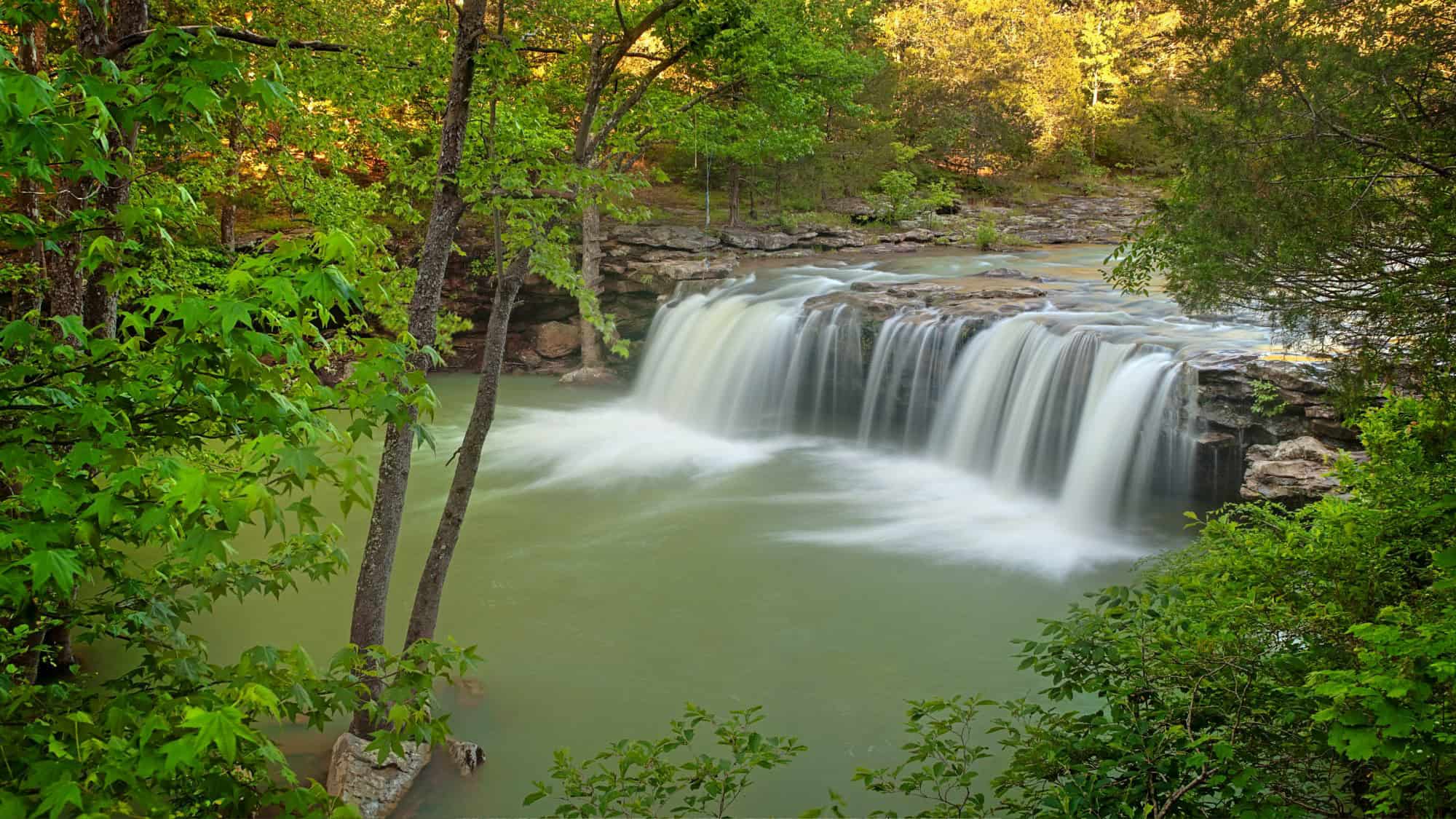
The Ozark National Forest is filled with hidden treasures, but Falling Water Falls is one of the easiest to enjoy. In fact, it’s so easy that you can almost see the waterfall right from your car window, located just off a gravel road.
A creek flows over a 10-foot rock ledge, spilling into a large, emerald-green pool that is deep enough for a proper swim but calm enough for a lazy float. The water has that classic mineral-green tint common in the Ozarks and is surrounded by a hardwood forest that becomes a canvas of vibrant oranges and reds in the fall.
Because there is absolutely zero hiking involved to reach it, this spot is incredibly popular with locals and travelers passing through. On a hot Saturday afternoon, the roadside will be lined with cars, and the pool will be dotted with floaties.
There are no official amenities to speak of, so no bathrooms, no trash cans, and certainly no cell service. You must pack out everything you pack in (and maybe earn some good karma by picking up any stray trash you see).
The best time to visit is after a good rain when the falls are flowing strong, though the pool itself remains a great swimming spot even when the flow slows to a trickle in late summer.
Jacob’s Well, Texas
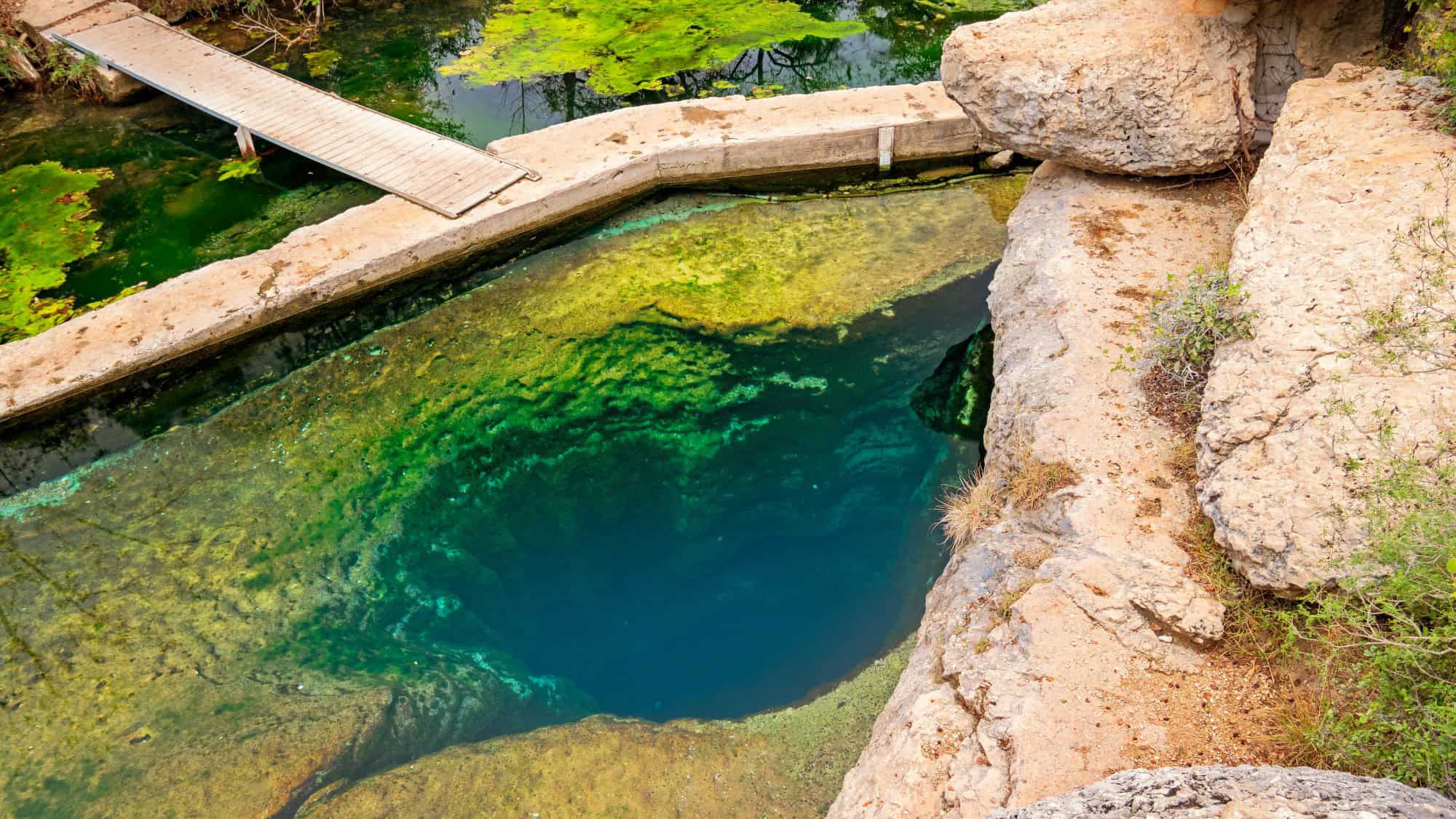
Jacob’s Well in Wimberley is a place of both mesmerizing beauty and geological significance. It’s a perennial artesian spring that pumps thousands of gallons of water a day from the Trinity Aquifer, acting as the headwaters for Cypress Creek.
The well’s opening is about 12 feet wide and descends vertically for around 30 feet before opening into a massive underwater cave system. Staring into it feels like looking directly into the earth’s mysterious eye.
The water is unbelievably clear and stays at a constant 68°F. Unfortunately, swimming here has become a rare treat due to persistent drought conditions.
In recent years, low water levels and flow rates have forced the county to suspend swimming for long periods to protect the fragile aquifer and ensure visitor safety. When it is open, reservations for two-hour swimming blocks are mandatory, so you can’t just show up and leap in.
You should always check the official county website for the current swimming status before you even think about packing your swimsuit, as closures have become increasingly common. But that just means if you catch it open, the reward is even sweeter.
Peekamoose Blue Hole, New York
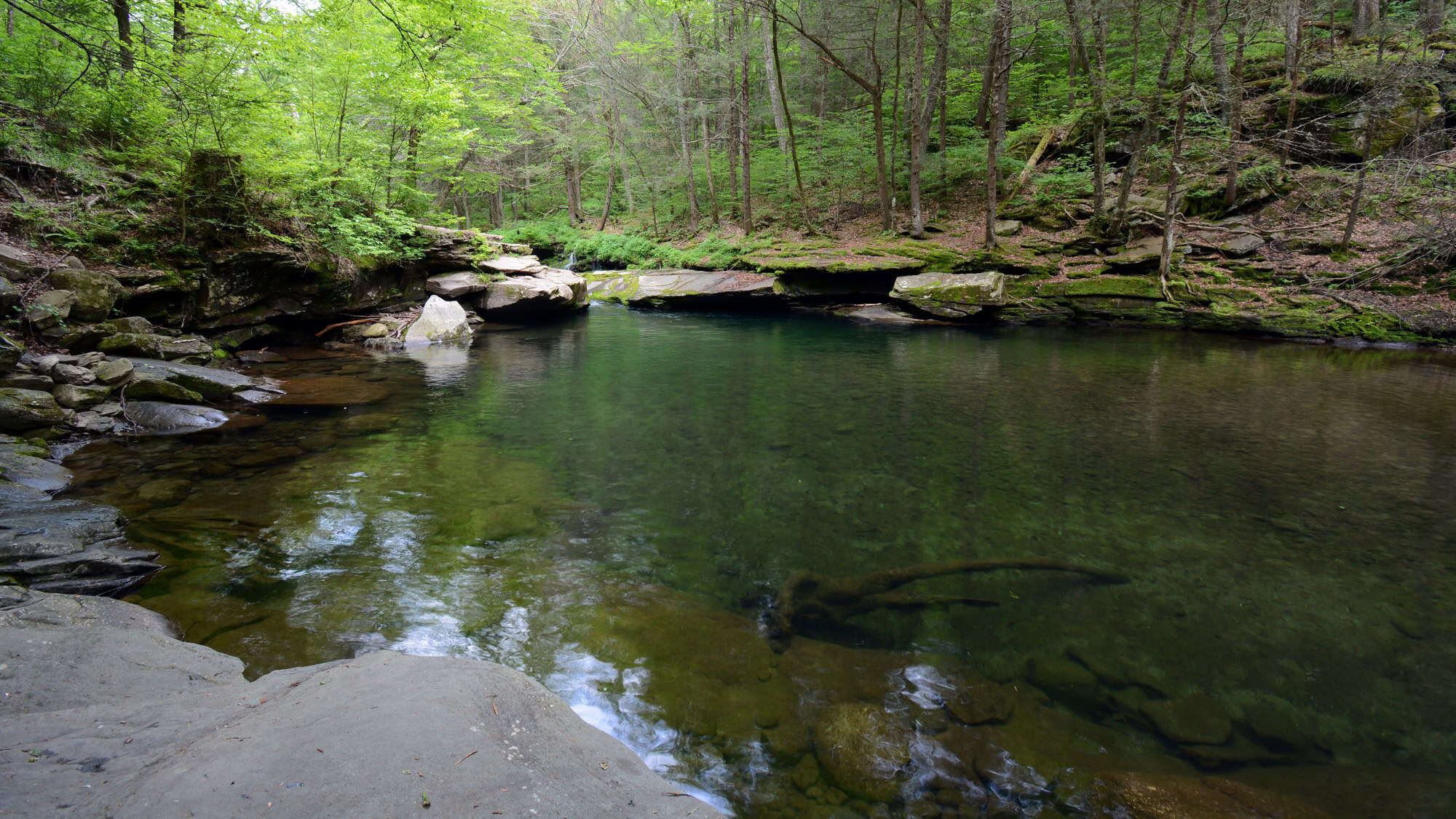
Deep within the Catskills, Peekamoose Blue Hole offers a little slice of swimming paradise that looks almost tropical, despite being in upstate New York.
A deep depression in the Rondout Creek bedrock has formed a crystal-clear pool with a stunning turquoise hue. Surrounded by maple and hemlock trees, the water is shockingly cold even in the heat of August; it’s the kind of cold that knocks the wind right out of you.
A few years ago, it became an internet sensation, which unfortunately led to major problems with overcrowding and trash. This prompted the state to implement some very strict regulations to protect the area from being “loved to death”.
To visit between May 15 and September 15, you now need a permit. The permits are not expensive, but they are limited to keep the crowds manageable. And rangers are serious about enforcing the rules: no large coolers, no glass, no portable speakers, and absolutely no fires. Parking is also restricted to designated lots, and towing is aggressively enforced.
But the strict management has thankfully helped restore a peaceful atmosphere, allowing you to enjoy the frigid water without tripping over someone’s discarded chip bag.
Devil’s Den, Florida

From the surface, Devil’s Den doesn’t look like much more than a hole in the ground with some ferns around it. But once you descend the wooden staircase, you enter a prehistoric underground spring inside a dry cave.
The roof of the cavern collapsed long ago, creating an opening that allows sunlight to stream down onto the 72°F water below, illuminating it in shades of electric blue. And the name comes from the steam that rises from the cave’s mouth on cold winter mornings, but the experience inside feels more heavenly than anything else.
This is a privately owned facility with one very important rule: there is no general swimming. You must be either snorkeling or scuba diving to enter the water, and you must have a mask, snorkel, and fins with you (or rent them there).
This rule is strictly enforced to manage crowds and maintain safety in the 50-foot-deep spring. You will generally need a reservation to snorkel, while divers have their own check-in procedures.
But the unique experience of floating inside an ancient underground cathedral as fish swim below you is definitely worth the equipment rental. Just don’t plan on doggy-paddling around; you have to be actively snorkeling to stay in the water.
Warren Falls, Vermont
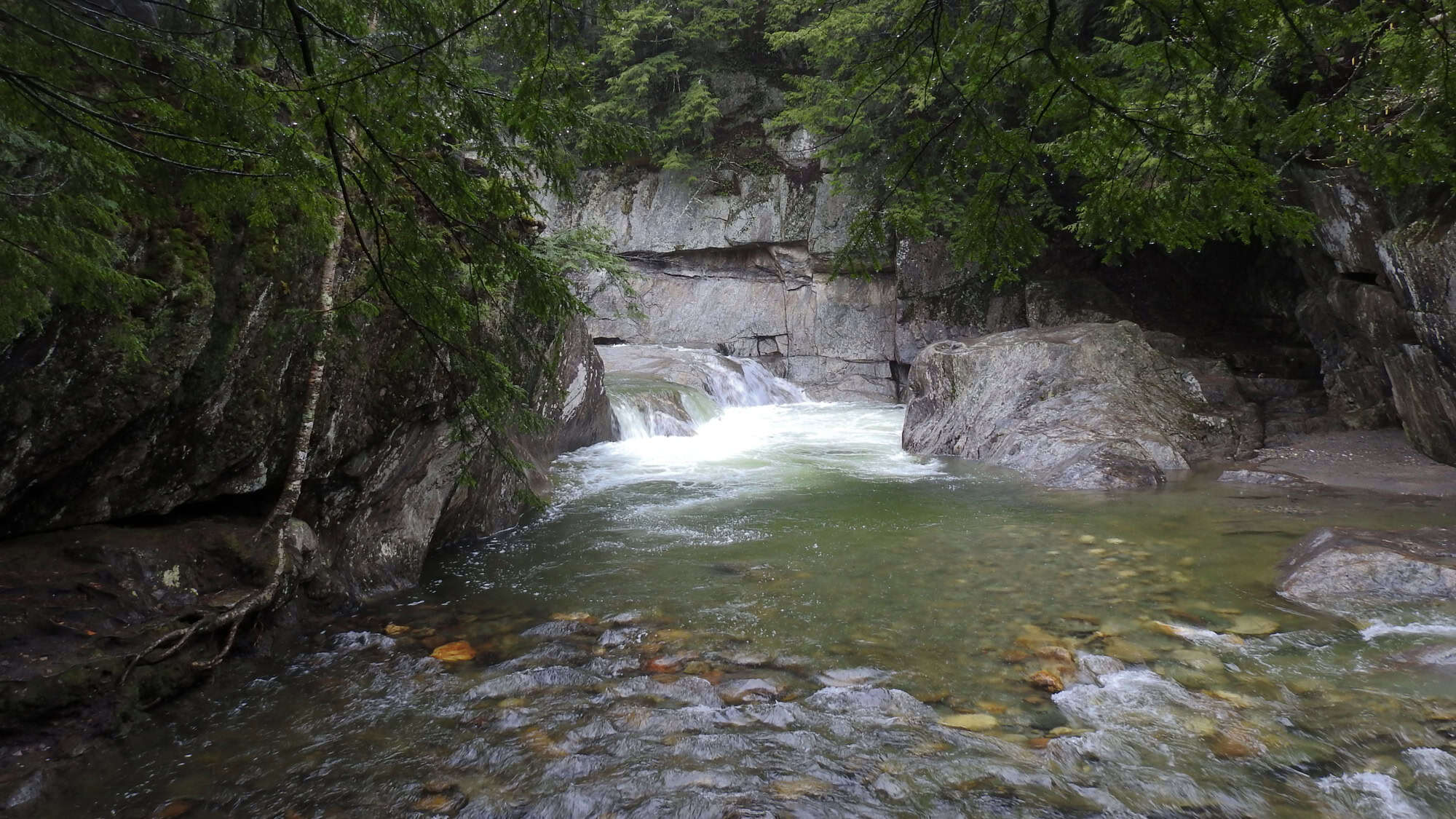
Warren Falls, located on the Mad River, is the quintessential Vermont swimming hole. It is made up of a series of waterfalls that cascade into deep, green-tinted pools carved out of ancient rock.
The geology here is spectacular, with smooth rock walls forming natural waterslides and cliffs of varying heights that brave locals love to jump from (though you should always check the depth first, of course). And the water is mountain-fresh, which is a polite way of saying it’s usually quite cold, but on a sticky July day, that’s exactly what you want.
The spot is conveniently located right off the main road, making it very easy to access. However, its accessibility and beauty have created major parking headaches. The designated lot is tiny, and parking along the road is strictly forbidden and dangerous. If the lot is full, you have to move on, as police frequently patrol the area to ticket illegally parked cars.
There are no restrooms or trash cans, so it’s a strict carry-in, carry-out situation.
Despite the crowds, the multiple pools and ledges allow people to spread out a bit, letting everyone find their own little nook to sunbathe or brave the icy plunge.
Cedar Creek Falls, California
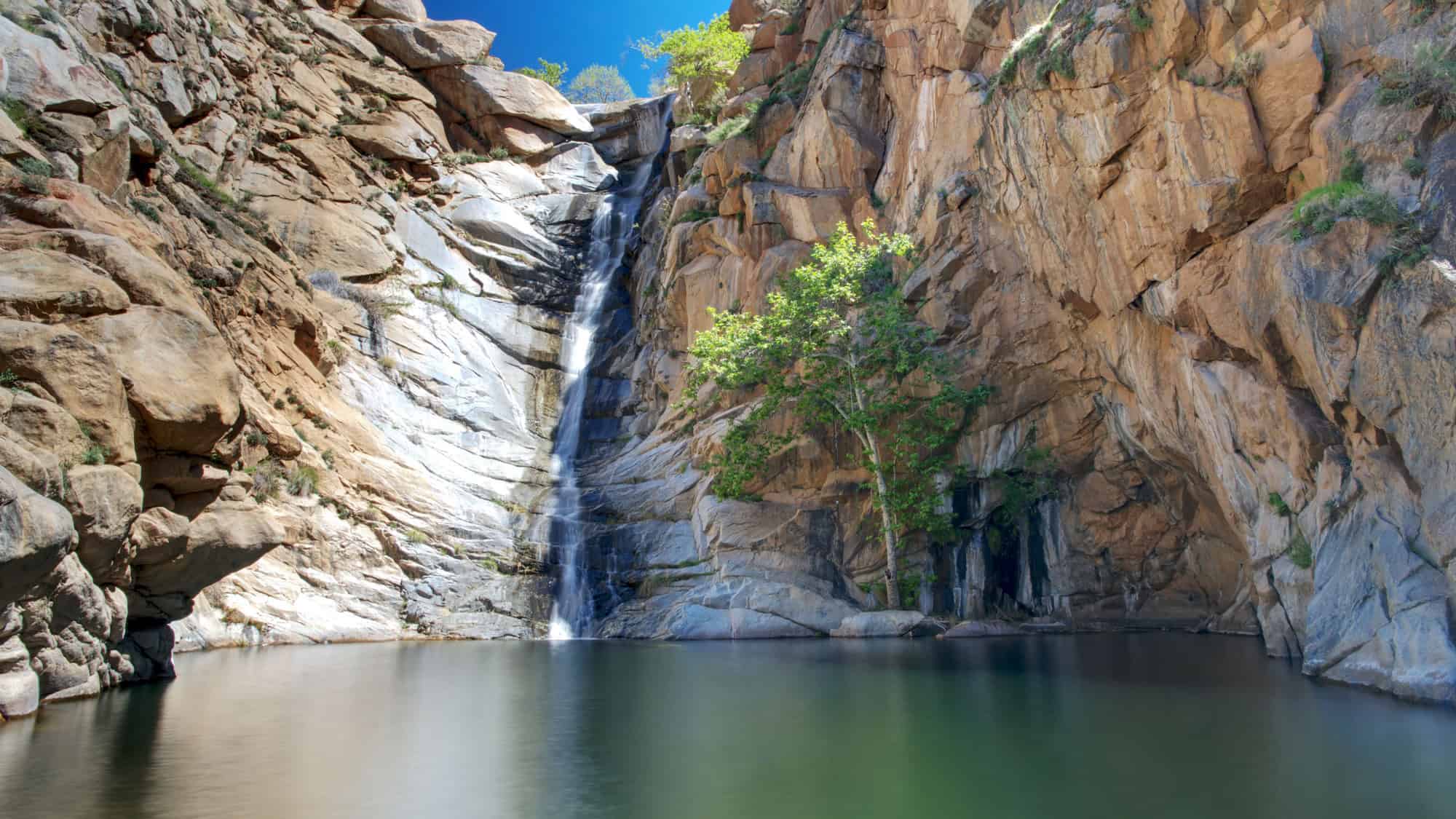
In the arid backcountry of San Diego County, Cedar Creek Falls offers a spectacular reward for anyone willing to put in the work.
The waterfall plunges 80 feet into a large, punchbowl-shaped pool, creating an oasis in the dry, scrubby landscape. It’s a popular destination for locals trying to escape the city, but the hike in is deceptively challenging.
The trail is about three miles each way with significant elevation changes, and the entire hike out is uphill under the relentless sun. Due to the high risk of heat-related emergencies, a visitor permit is required for every group, and alcohol is completely banned on the trail and at the falls. Rangers are known to check permits diligently, so don’t try to sneak in.
The water levels vary greatly with rainfall; during drought years, the waterfall can slow to a mere trickle, and the pool can become stagnant. The best time to visit is in the winter or early spring when the water is flowing, and the temperatures are safe for hiking.
During the summer, the trail is often closed entirely when it gets too hot because far too many hikers have needed to be rescued from heat exhaustion.
Punch Bowl Falls, Oregon
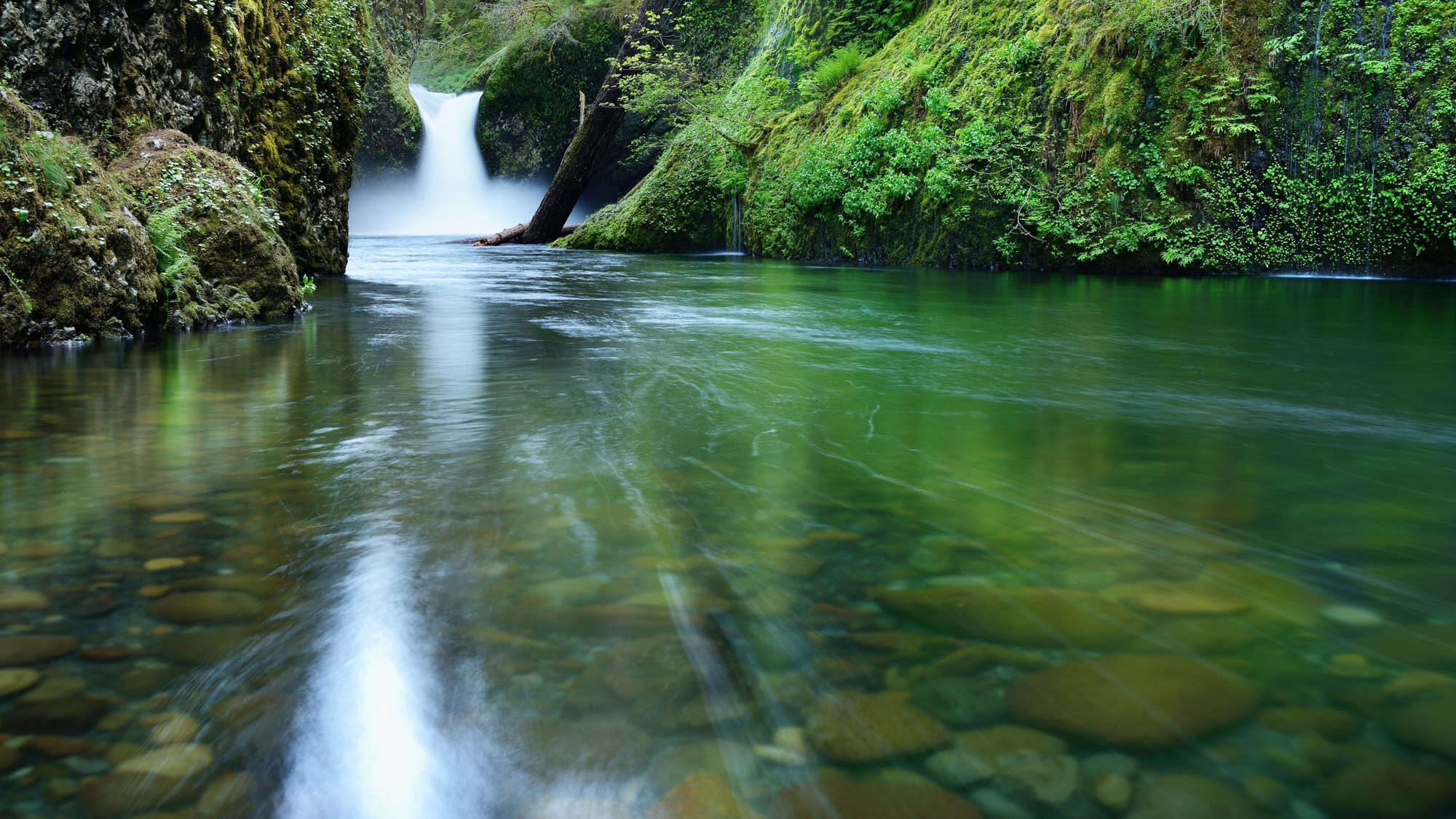
Located in the stunning Columbia River Gorge, Punch Bowl Falls is a true icon of the Pacific Northwest. Here, water shoots powerfully through a narrow chute into a massive, bowl-shaped amphitheater, creating a scene so picturesque it was once a default screensaver.
The hike along the Eagle Creek Trail is breathtaking, carved directly into cliff walls with dramatic drop-offs and surrounded by lush, green foliage. The water is pure glacial melt, so taking a swim here is a bone-chilling experience reserved for the truly brave or the extremely overheated.
Access to this spot has been complicated in recent years due to the 2017 Eagle Creek Fire and subsequent landslides, so the trail is often subject to closures for repairs and safety concerns. When it is open, the hike is about two miles to reach the falls.
The path to the lower falls, where you would actually swim, is not officially maintained and can be treacherous, requiring a scramble over very slick rocks. So many visitors are perfectly content to just view it from the overlook above.
If you do manage to make it down to the water, the sheer power of the falls and the mossy walls create an atmosphere that feels ancient and wild.
Like Our Content? Follow Us on MSN (or click the Follow Button above) for more from Discover Parks & Wildlife.