Discover Parks & Wildlife contains affiliate links and is a member of the Amazon Services LLC Associates Program. If you make a purchase using one of the Amazon links, we may receive compensation at no extra cost to you. We may also use select AI tools to support our creative process, but all content is reviewed, refined, and finalized by our human team. See our disclosure policy and our AI use policy for more information.
Waterfall Lovers Can’t Ignore These Jaw-Dropping Cascades At Watkins Glen
Waterfalls have a pull that’s hard to explain. Maybe it’s the sound, that low rumble that builds as you get closer. Maybe it’s the way light catches the mist and turns an ordinary afternoon into something that feels like a discovery.
Or maybe it’s simpler than that: waterfalls remind us that nature doesn’t need our permission to be spectacular. In New York’s Finger Lakes region, one place delivers that reminder over and over again.
Watkins Glen State Park sits at the southern tip of Seneca Lake, where Glen Creek carved a gorge so dramatic it feels almost unreal. Over the past 12,000 years, glaciers and flowing water have sculpted cliffs that rise 200 feet, shaped stone into tunnels and staircases, and created waterfalls that tumble, cascade, and plunge along a trail.
Photographers show up with tripods. Families arrive with packed lunches. Hikers come for the workout and stay for the views. Each twist in the trail reveals another waterfall, another angle, another reason to stop and stare.
The Gorge Trail That Winds Through 12,000 Years Of Glacial Artistry
Glen Creek Gorge Trail is the main attraction at Watkins Glen State Park. This 2.3-mile path follows Glen Creek as it descends 400 feet through the gorge, passing all 19 waterfalls along the way.
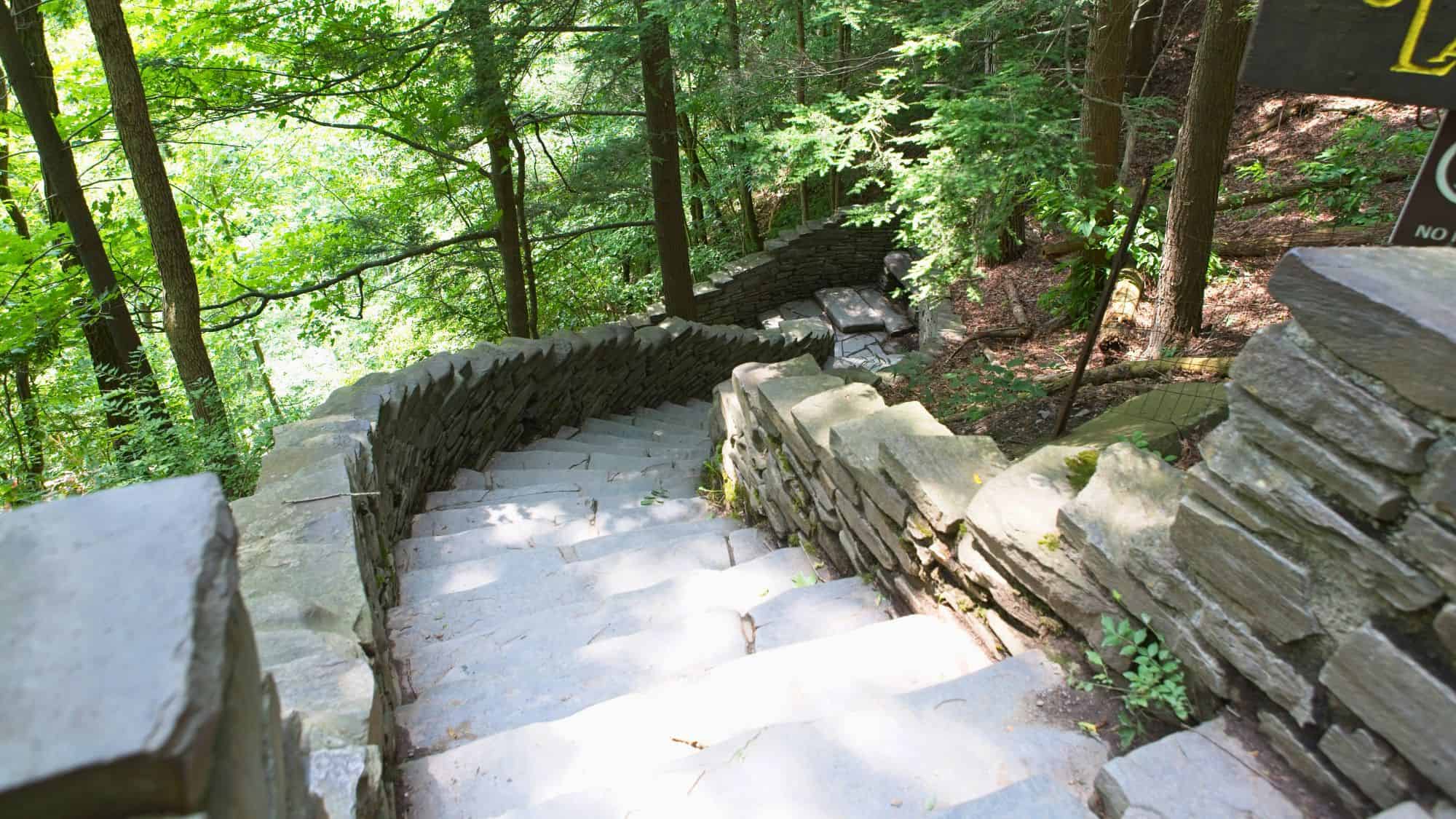
But the trail isn’t a flat stroll. You’ll climb more than 800 stone steps, cross narrow bridges, and walk under rock ledges where water drips overhead. Some sections even take you so close to the cliffs that you can trace the layers of sedimentary rock with your eyes, each one a chapter in the region’s geological story.

The gorge itself formed after the last Ice Age, when glaciers retreated and left behind steep-sided valleys. Glen Creek took over from there, carving through shale and sandstone to create the narrow chasm visitors walk through today.
The result is a trail that feels less like a hike and more like a journey through a natural sculpture garden. Rock walls curve and jut at unexpected angles. Ferns cling to damp stone, and sunlight filters through the canopy above, casting shifting patterns on the water below.
The trail is well-maintained, but it demands attention. Wet stone and moss-covered steps mean you’ll want sturdy shoes with a good grip. Handrails line the steeper sections, and wooden walkways span the narrowest parts of the gorge. The path even winds over and under waterfalls, offering views that change with every step.
Fall brings vibrant foliage that frames the waterfalls in reds and golds. Spring offers the most dramatic water flow, with swollen creeks turning every cascade into a roaring torrent. Summer is gentler, with lower water levels that make it easier to spot details in the rock and to photograph without a face full of mist.
Rainbow Falls Anchors The Collection With A Moss-Framed Plunge
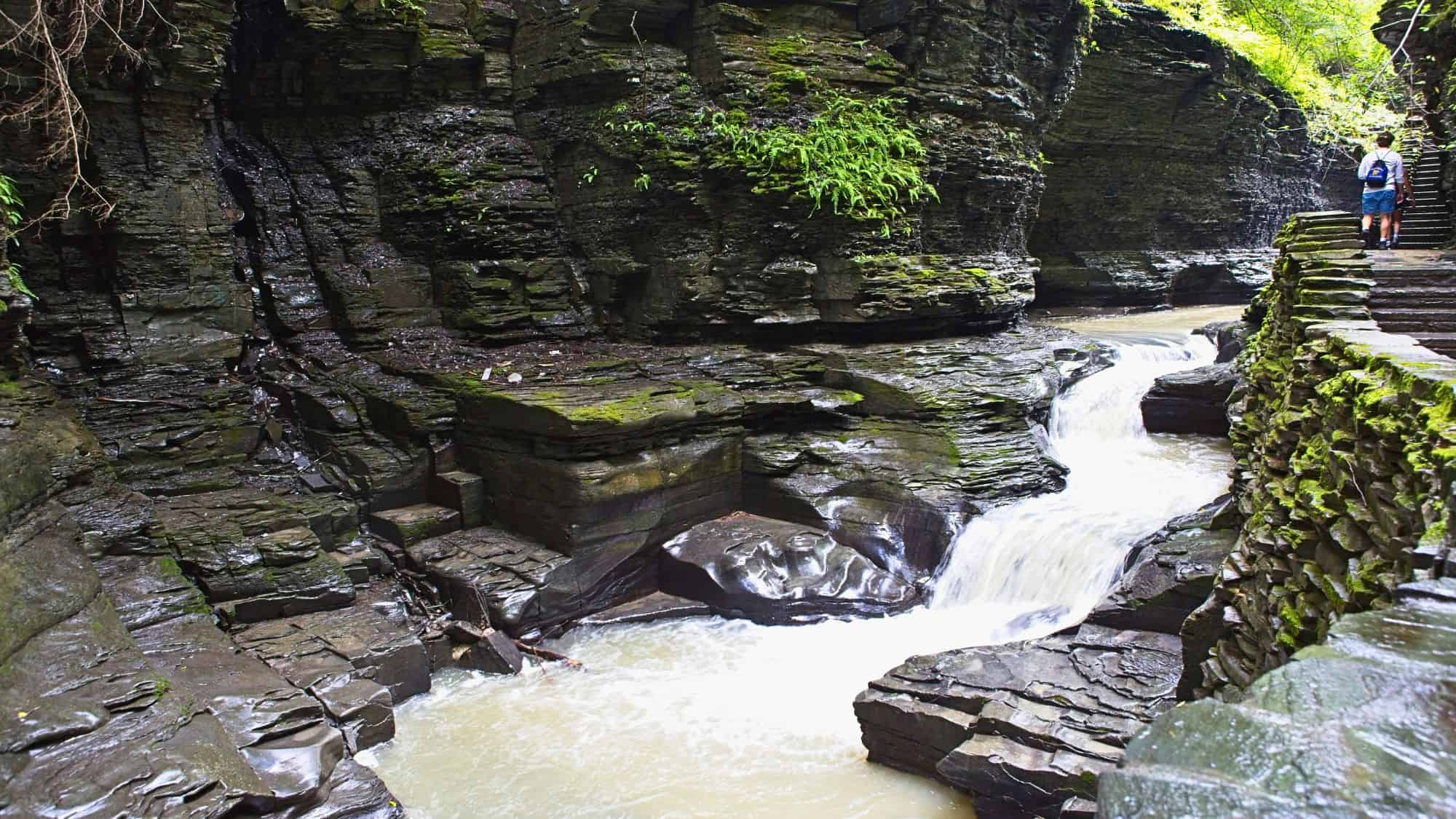
Rainbow Falls is the headliner, and it’s easy to see why. Water tumbles over a moss-covered ledge in a graceful arc, framed by a stone bridge that sits just above the falls. The combination of flowing water, green foliage, and weathered rock creates a scene that feels almost too perfect to be natural.
On sunny days, mist from the falls catches the light and creates the faint shimmer of a rainbow, giving the waterfall its name.
The stone bridge overhead is one of the park’s most photographed features, and it’s easy to understand the appeal. From the bridge, you can look down at the water as it crashes into the pool below, then follow its path as it continues downstream through the gorge.
From the trail below, the view shifts, and you can take in the full height of the falls with the bridge arching above like a natural frame.
The falls are accessible early in the trail, making them a popular stopping point for visitors. The area around Rainbow Falls is one of the most accessible sections of the trail, with relatively flat approaches and clear sightlines.
It’s a great spot for families with younger kids or for anyone who wants to experience the park’s highlights without committing to the full hike.

Cavern Cascade Lets You Walk Behind The Falling Water
Cavern Cascade offers something rare: the chance to step behind a waterfall and see it from the inside out.
A walkway carved into the rock takes you behind the cascade, where you can watch the water pour past in a translucent curtain. The sound is louder here, more immediate, and the air is cool and heavy with mist.
It’s one of the most immersive experiences in the park.
Cavern Cascade sits about halfway through the trail, making it a natural midpoint for hikers. The approach is steep, with stairs leading down into the gorge and then back up again on the far side. The elevation change adds to the drama, giving you a sense of how deep the gorge really is.
From the cavern, you can look out over the trail below and see other hikers making their way through the narrow passageway.
The walkway itself is narrow, with rock walls on one side and open space on the other. Handrails keep things safe, but you’ll still want to watch your step. The stone underfoot can be slippery, and the low light makes it harder to spot uneven surfaces.
Once you’re behind the falls, though, the effort pays off. Light filters through the falling water, casting wavering patterns on the rock. The sound of the cascade fills the space, drowning out everything else.
Spring is the best time to visit if you want to see the waterfall at full force. The increased flow creates a more dramatic curtain of water, though it also means more mist and wetter conditions on the walkway.

Spiral Gorge Channels Water Through Twisting Stone Tunnels
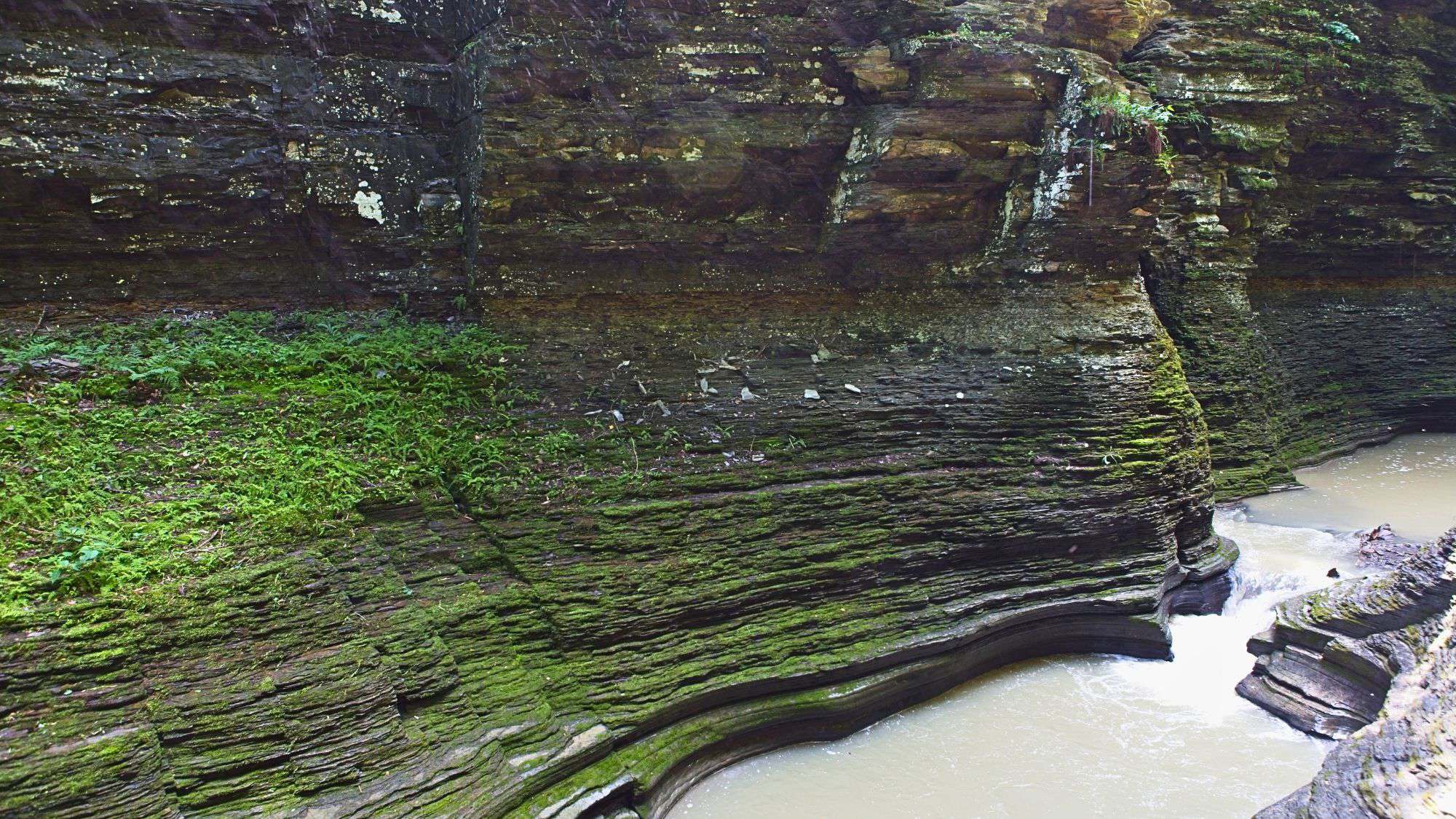
Spiral Gorge is where the trail gets surreal. Here, Glen Creek flows through a series of natural tunnels carved into the rock, twisting and turning in ways that feel almost intentional.
The water disappears into narrow slots, reappears in unexpected places, and creates a maze of stone and stream that’s unlike anything else in the park. It’s easy to lose track of where the creek is headed next, and that’s part of the appeal.
The tunnels formed over thousands of years as water exploited weaknesses in the rock, carving deeper and deeper into the stone. The result is a network of passages that spiral and curve, giving the area its name.
Some sections are wide enough to walk through comfortably, while others are so narrow that you can reach out and touch both walls at once. The light is dim, filtered through the canopy above and the narrow openings in the rock.
Moss and ferns cling to the damp surfaces, adding splashes of green to the gray rock. The air is cool and damp, a welcome relief on hot summer days and a reminder of the gorge’s constant humidity.
The trail through Spiral Gorge is one of the more challenging sections of the hike. Steps are uneven, and the path twists frequently, requiring careful attention. Handrails help, but you’ll still want to keep your eyes on your feet, especially in wet conditions.
It is best experienced at a slow pace. Rushing through means missing the details: the way the water catches the light as it flows through the tunnels, the patterns in the rock where different layers of sediment meet, the sound of the creek as it bounces off the stone walls.
Take your time here, and you’ll walk away with a deeper appreciation for the forces that shaped this landscape.
Sixteen More Cascades Create A Continuous Symphony Of Water
The remaining waterfalls at Watkins Glen don’t have individual names that appear on every map, but they don’t need them. Each one adds to the overall experience, creating a continuous flow of water and sound that defines the trail.
Some are small, barely more than a trickle over a ledge. Others are substantial, multi-tiered cascades that demand attention. Together, they create a rhythm that carries you through the gorge, from one waterfall to the next, each one slightly different from the last.
The variety is part of what makes Watkins Glen so engaging. You’re not walking to see one waterfall and then heading home. You’re moving through a landscape where water is the constant theme, expressed in dozens of variations.
Some waterfalls plunge straight down, creating deep pools at their base. Others flow over stepped ledges, creating a series of smaller drops that resemble a natural staircase. A few are tucked into side channels, where the creek splits and flows around rock formations before rejoining downstream.
The trail itself follows the contours of the gorge, dipping and climbing as it tracks the creek. This means you’re often at eye level with the waterfalls. Other times, you’re above them, looking down as the creek tumbles past below. The changing perspective keeps the hike from feeling repetitive.
You’re always seeing something new, even when you’re passing the tenth or twelfth waterfall.
Planning Your Visit Means Timing Your Trip And Packing Smart
Getting the details right (like when to go, what to bring, and where to stay) sets you up for a smooth and memorable experience.
Seasonal Hours And Park Access
Watkins Glen State Park is open year-round, but the Gorge Trail operates on a seasonal schedule. It typically opens in mid to late May and closes in mid to late October, depending on weather and trail conditions. The exact dates vary each year, so check the park’s official schedule before you go.
The North Rim and South Rim trails remain open through the winter, offering views of the gorge from above, but they don’t provide access to the waterfalls.
Fees, Parking, And Shuttle Service
Entrance to the park costs $10 per vehicle, which includes access to the Olympic-size swimming pool if you’re visiting during the summer season. If you’re planning multiple visits, consider purchasing an Empire Pass for $80, which provides unlimited day-use entry to most New York State Parks for the season.
Parking is available at three entrances: the Main Entrance at 1009 N. Franklin Street, the South Entrance at 3530 Route 419, and the Upper Entrance at 3310 Route 409.
The Main Entrance is the most popular and tends to fill up quickly on weekends and during peak foliage season. Arriving early, especially on weekends, gives you a better shot at finding a spot and avoiding the crowds on the trail.
A shuttle service runs between the three entrances, operating weekends only from mid-May through late June, daily from late June through early September, and weekends again from early September through mid-October.
The fare is $6 per person each way, with children 10 and under paying $1. The shuttle is useful if you want to hike the Gorge Trail in one direction and avoid the return climb. We choose to do it this way in the downhill direction. It is generally easier and the more popular option.
What To Bring And How to Prepare
What you bring matters. Sturdy shoes with good traction are essential. The trail is wet, and the stone steps can be slippery, especially after rain.
A camera or phone with a decent camera is worth carrying. The waterfalls and rock formations are photogenic from every angle, and you’ll want to capture at least a few of them.
Dress in layers, as temperatures can vary between the shaded sections of the gorge and the open areas near the entrances. A water bottle is also a good idea, especially in summer.
Safety Tips And Trail Rules
Safety rules are straightforward but important. No swimming or entering the gorge is allowed, with fines of $250 per person for violations.
Pets are not allowed on the Gorge Trail, though they are permitted in other areas of the park. Stay on designated trails and respect barriers and railings.
The gorge is a natural environment, and conditions can change quickly. So always watch your step, keep your hands free for balance, and take your time. The waterfalls will still be there if you slow down.
Where To Stay
Accommodation options range from campgrounds within the park to hotels in the nearby village of Watkins Glen.
The park’s campground offers tent and trailer sites, as well as rustic cabins. Reservations are recommended, especially during peak season.
The village of Watkins Glen has several hotels and bed-and-breakfasts, most within a short drive of the park. But booking ahead is a good idea if you’re visiting during the fall foliage season, when demand is highest.
Like Our Content? Follow Us on MSN (or click the Follow Button above) for more from Discover Parks & Wildlife.