Discover Parks & Wildlife contains affiliate links and is a member of the Amazon Services LLC Associates Program. If you make a purchase using one of the Amazon links, we may receive compensation at no extra cost to you. We may also use select AI tools to support our creative process, but all content is reviewed, refined, and finalized by our human team. See our disclosure policy and our AI use policy for more information.
15 Wild Animal Encounters In Yellowstone You’ll Be Telling Stories About For Years
Stepping into Yellowstone National Park feels like entering a different world, one where wildlife rules the landscape and humans are merely visitors passing through. Often called “America’s Serengeti,” particularly the expansive Lamar Valley, this protected reserve offers some of the most consistent and dramatic wildlife viewing opportunities on the continent.
Established in 1872 as the world’s first national park, its 2.2 million acres serve as a sanctuary for the largest concentration of mammals in the lower 48 states.
From the iconic, steam-filled geyser basins to the sweeping sagebrush flats, the park supports a complex ecosystem where predator and prey interact daily in ancient rhythms.
The sheer density of animals here means you might spot a herd of bison causing a traffic jam or catch a glimpse of a wolf pack patrolling a ridgeline at dawn. And each season brings different behaviors, from the violent clashes of the rut to the quiet struggle for survival in deep winter snow.
Whether you are visiting for the first time or possess years of experience in the field, the potential for a life-changing sighting exists around every bend in the road. So let’s take a look at some of the mammals you might catch a glimpse of on a visit to Yellowstone.
American Bison

The massive silhouette of the bison serves as the most recognizable symbol of the American West and conservation success in Yellowstone. These giants are the largest land mammals in North America, with mature bulls weighing up to 2,000 pounds and standing six feet tall at the shoulder.
Yet despite their lumbering appearance and immense size, they are surprisingly agile and fast, capable of reaching speeds up to 30 miles per hour.
You will often find them grazing in the Lamar and Hayden Valleys, sometimes congregating in herds that number in the thousands during the summer breeding season, known as the rut. During the rut, which peaks in August, the atmosphere changes as bulls display their dominance through bellowing, wallowing in dust, and engaging in head-to-head combat.
The ground literally shakes when these behemoths collide, creating a visceral experience that highlights the raw power of nature.
Winter presents a different but equally compelling scene, as bison use their massive heads like snowplows to sweep away deep drifts to reach the grass below. Their thick, shaggy coats and layers of fat allow them to survive temperatures that plummet far below zero.
Rocky Mountain Elk
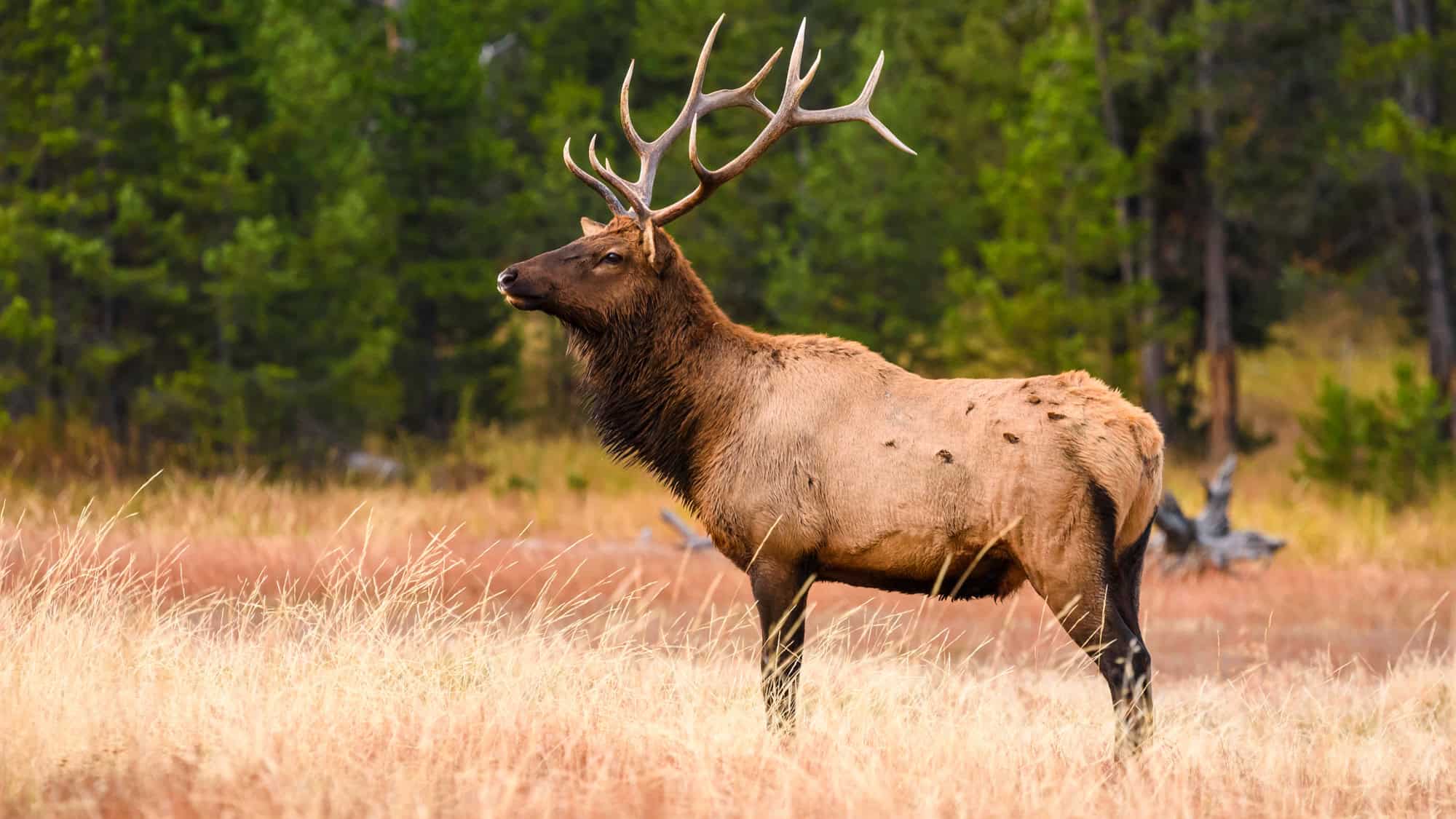
Rocky Mountain elk are the most abundant large mammal found within Yellowstone, with the summer population estimated at around 15,000 to 20,000 individuals.
They are a common sight near Mammoth Hot Springs, where they frequently graze on the manicured lawns of the historic district, appearing almost indifferent to the buildings and people around them.
Adult males, or bulls, grow impressive sets of antlers each spring and summer, which can weigh up to 40 pounds before being shed the following winter. These antlers are the fastest-growing bone known to science, elongating by up to one inch per day during peak growth.
The fall rut, occurring from early September to mid-October, is arguably the most exciting time to observe elk. During this period, the eerie, high-pitched bugle of the bulls echoes through the valleys as they challenge rivals and gather harems of females, known as cows. This vocalization is one of the most haunting sounds in the wild and carries for miles on crisp fall mornings.
While the bulls are the stars of the fall show, the spring calving season in May and June offers a chance to see spotted calves hiding in the tall grass or taking their first wobbly steps.
Mule Deer
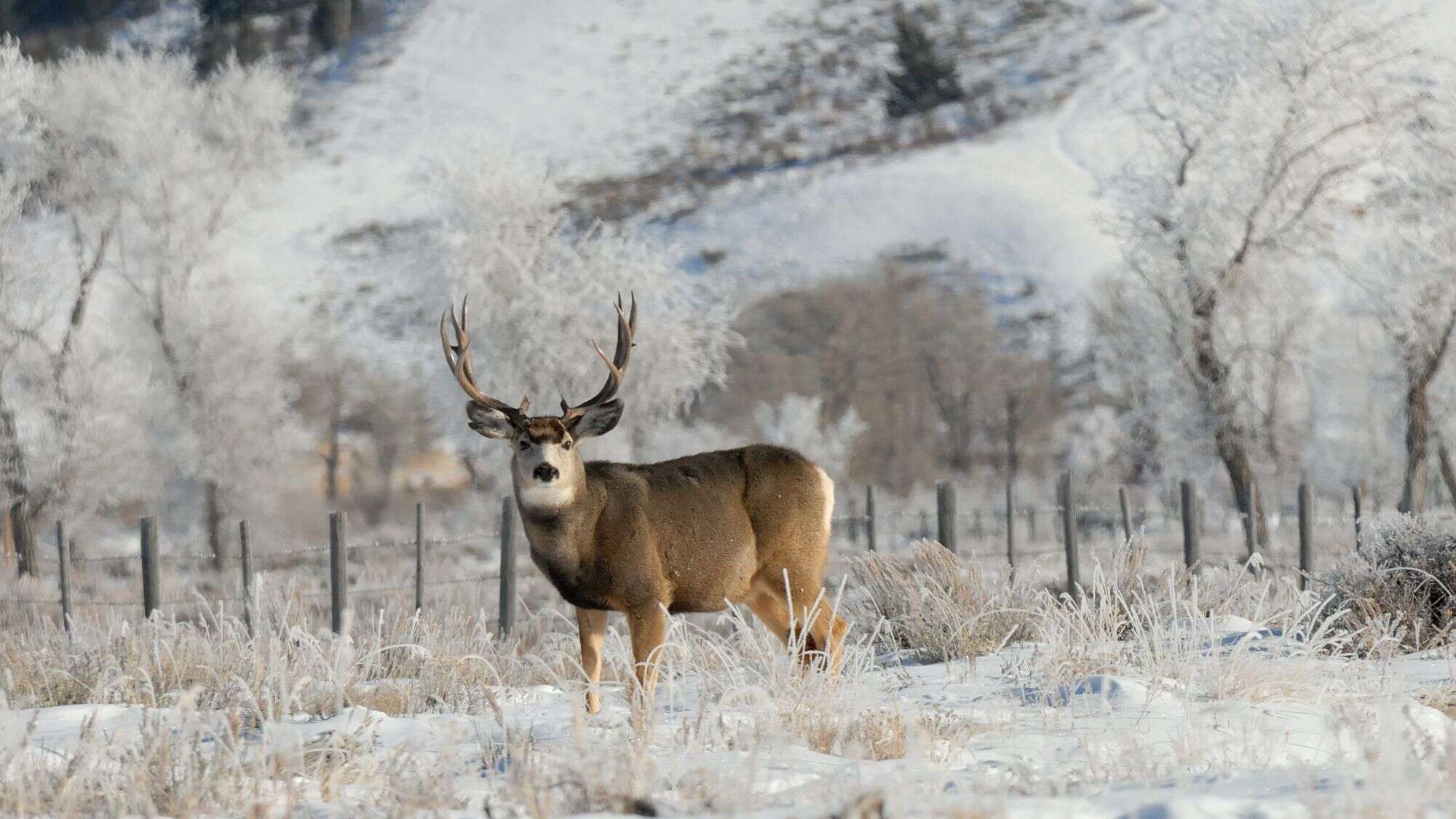
While often overshadowed by their larger elk cousins, mule deer are a graceful and ubiquitous presence throughout the park’s lower elevations. They get their name from their oversized, mule-like ears, which move independently to detect the faintest sounds of approaching predators.
You can distinguish them from white-tailed deer by their black-tipped tails and the way their antlers fork as they grow, rather than branching from a single main beam.
Mule deer are primarily browsers rather than grazers, meaning they prefer to eat leaves, twigs, and shrubs rather than grass, which influences where you might find them. The area around the Tower-Roosevelt junction and the Sagebrush flats near the North Entrance are excellent places to spot these agile animals.
Mule deer have a unique way of running called “stotting,” where they bound into the air with all four feet hitting the ground simultaneously. This behavior allows them to navigate rough, broken terrain and clear obstacles more efficiently than a standard gallop, giving them an advantage when evading wolves or mountain lions.
Plains Coyote
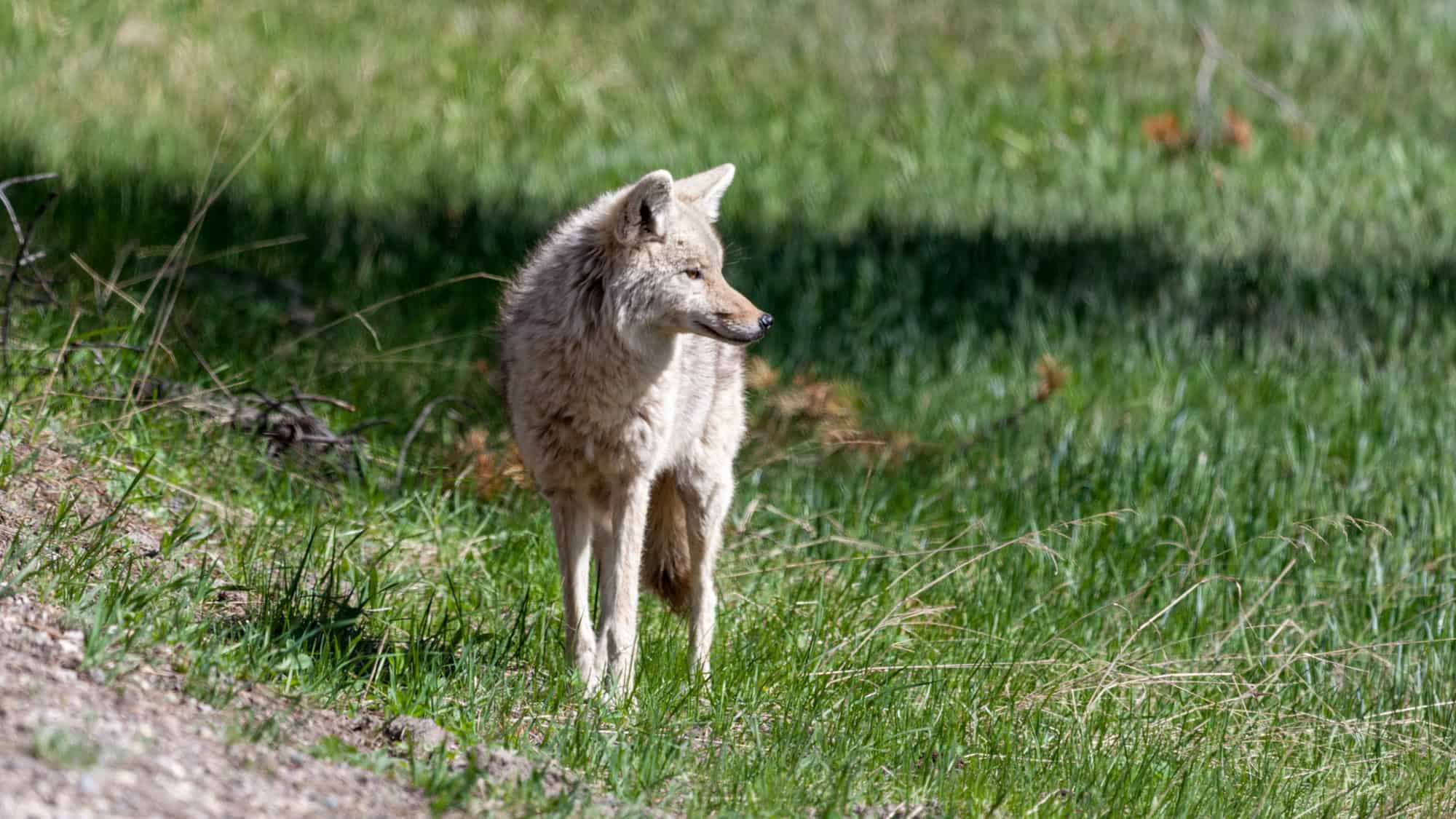
Coyotes are resourceful and adaptable predators often seen patrolling the wide-open spaces of the Lamar Valley and Blacktail Deer Plateau.
Slightly larger than their diverse counterparts elsewhere in the country, Yellowstone coyotes weigh between 25 and 35 pounds and sport a thick, grayish-brown coat that provides insulation against the harsh winters.
Known as the “song dog,” their complex vocalizations of yips, barks, and howls serve to communicate territory boundaries and coordinate pack movements. And unlike the shy, nocturnal coyotes found near urban areas, the coyotes in Yellowstone are often active during the day and are relatively tolerant of human observation from a distance.
You might even witness a coyote practicing its distinctive “mousing” hunting technique, where it listens intently to the movement of rodents under the snow or grass before leaping high into the air and pouncing with precision.
Before the reintroduction of wolves in 1995, coyotes were the apex canine predator in the park and lived in larger packs. Today, they have adjusted their behaviors to avoid direct conflict with wolves, often scavenging kill sites once the larger predators have moved on.
American Black Bear

Despite their name, black bears in Yellowstone come in a variety of colors, including brown, blond, and cinnamon, with only about 50 percent actually being black. They are generally smaller than grizzly bears, with males averaging between 210 to 315 pounds, and they lack the distinctive shoulder hump found on their larger cousins.
Black bears are excellent tree climbers, a skill they use to escape danger and to protect their cubs, so look up into the canopy if you spot a sow with young nearby. The forested areas around Tower-Roosevelt and the northern range are prime locations for spotting these solitary omnivores.
Black bears are most active during the early morning and late evening hours, spending much of their time foraging for berries, nuts, roots, and insects. In the spring, they emerge from hibernation and can often be seen grazing on fresh green vegetation along roadsides or in meadows.
While they are less aggressive than grizzly bears, they are still powerful wild animals that demand respect and space if you happen to spot one. Seeing a black bear forage peacefully in a meadow or deftly scale a lodgepole pine is a highlight for many park visitors.
Northwestern Wolf
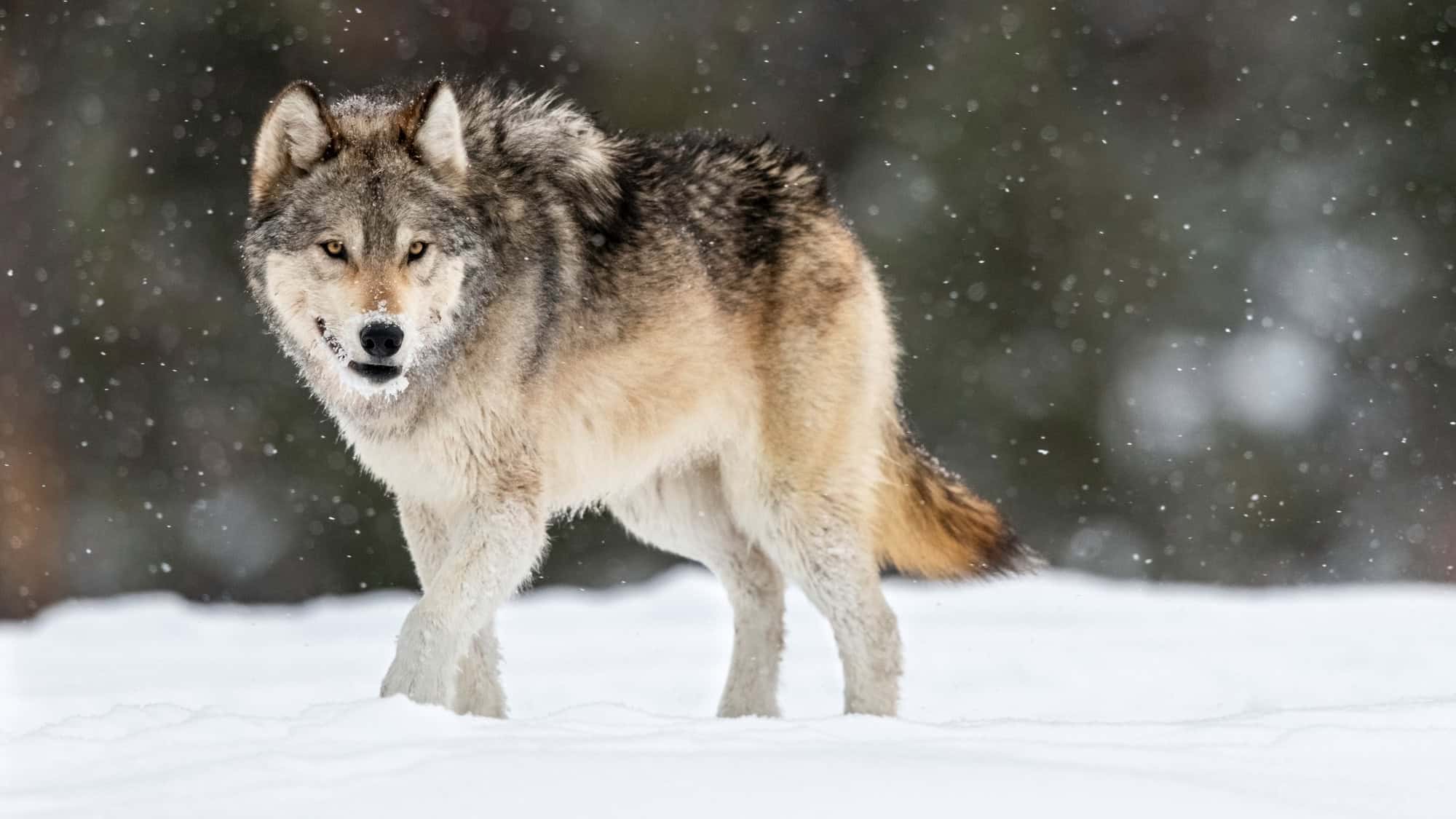
Few experiences rival the thrill of spotting a wolf in the wild, an animal that has become the premier draw for wildlife watchers in the Lamar Valley.
Since their controversial but biologically successful reintroduction in 1995, the wolf population in the Greater Yellowstone Ecosystem has stabilized. Their numbers typically fluctuate around 100 individuals within the park itself.
These apex predators live in packs with complex social structures led by an alpha pair, and they play a critical role in controlling the elk population. They are significantly larger than coyotes, with males weighing up to 130 pounds and standing roughly 30 inches at the shoulder.
Winter provides the best viewing opportunities, as their dark or gray coats stand out starkly against the white snow, and the herds of prey are concentrated in lower valleys. Watching a pack coordinate a hunt or interact socially (greeting, playing, and reinforcing hierarchy) offers a rare window into the dynamics of the wild.
Because wolves are elusive and range over vast territories, spotting them often requires high-quality spotting scopes and the patience to wait at known pullouts in the northern range.
Pronghorn
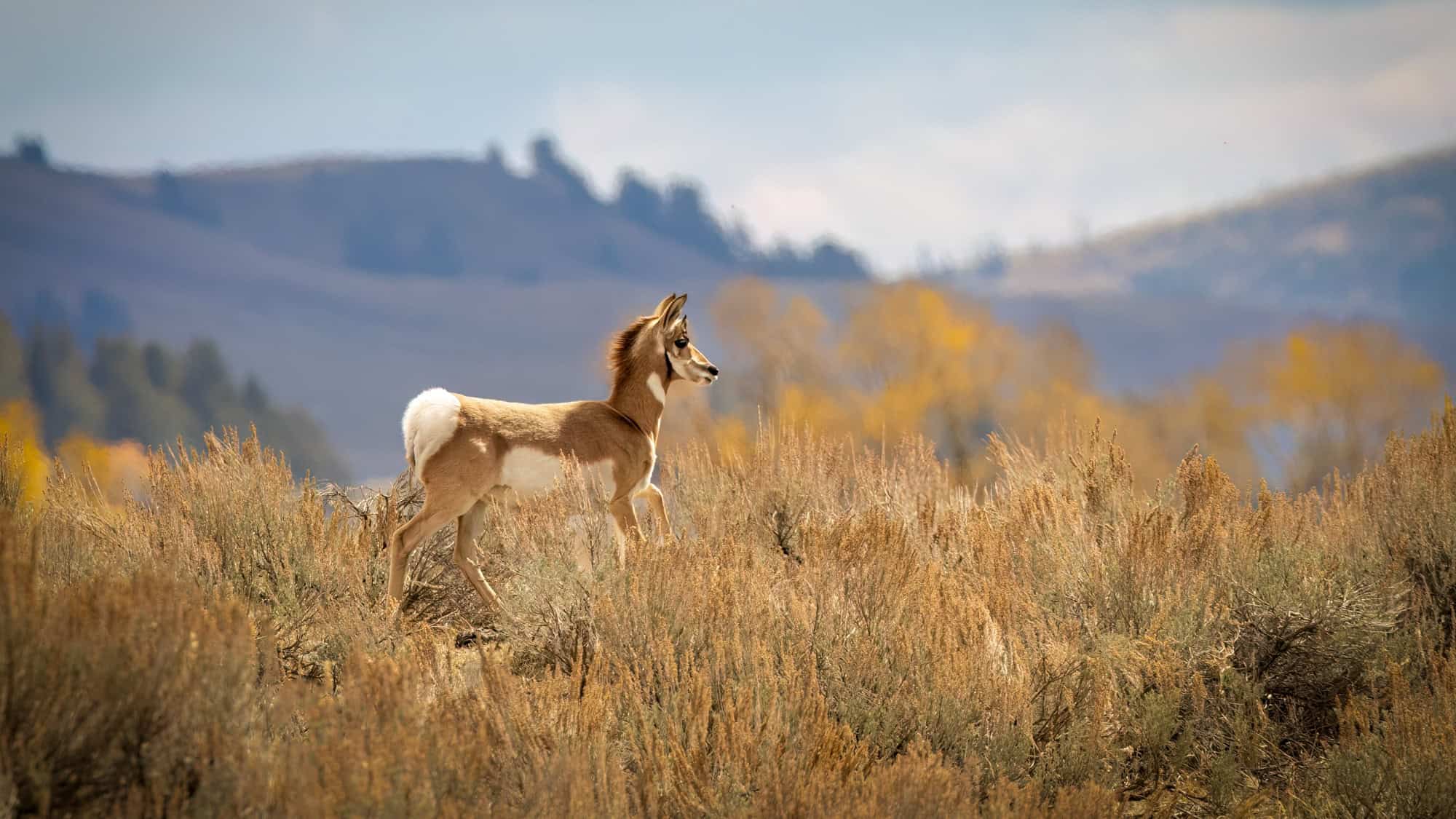
Often mistakenly called antelope, the pronghorn is actually the sole surviving member of an ancient family of mammals native to North America.
They are the fastest land animals in the Western Hemisphere, capable of sprinting at speeds up to 60 miles per hour to outrun predators. And you can easily identify them by their reddish-tan bodies, white distinct rumps, and black cheek patches on the males.
Their eyes are exceptionally large and positioned on the sides of their heads, granting them a 320-degree field of vision that helps them detect movement on the open sagebrush flats they inhabit.
The area between the North Entrance at Gardiner and the Northeast Entrance near Cooke City is prime pronghorn habitat. They rely on their speed for defense, so they avoid forests and areas with poor visibility, preferring the wide visibility of the high desert plains.
They also undertake one of the longest land migrations in the continental United States, moving massive distances to avoid deep snow.
Shiras Moose
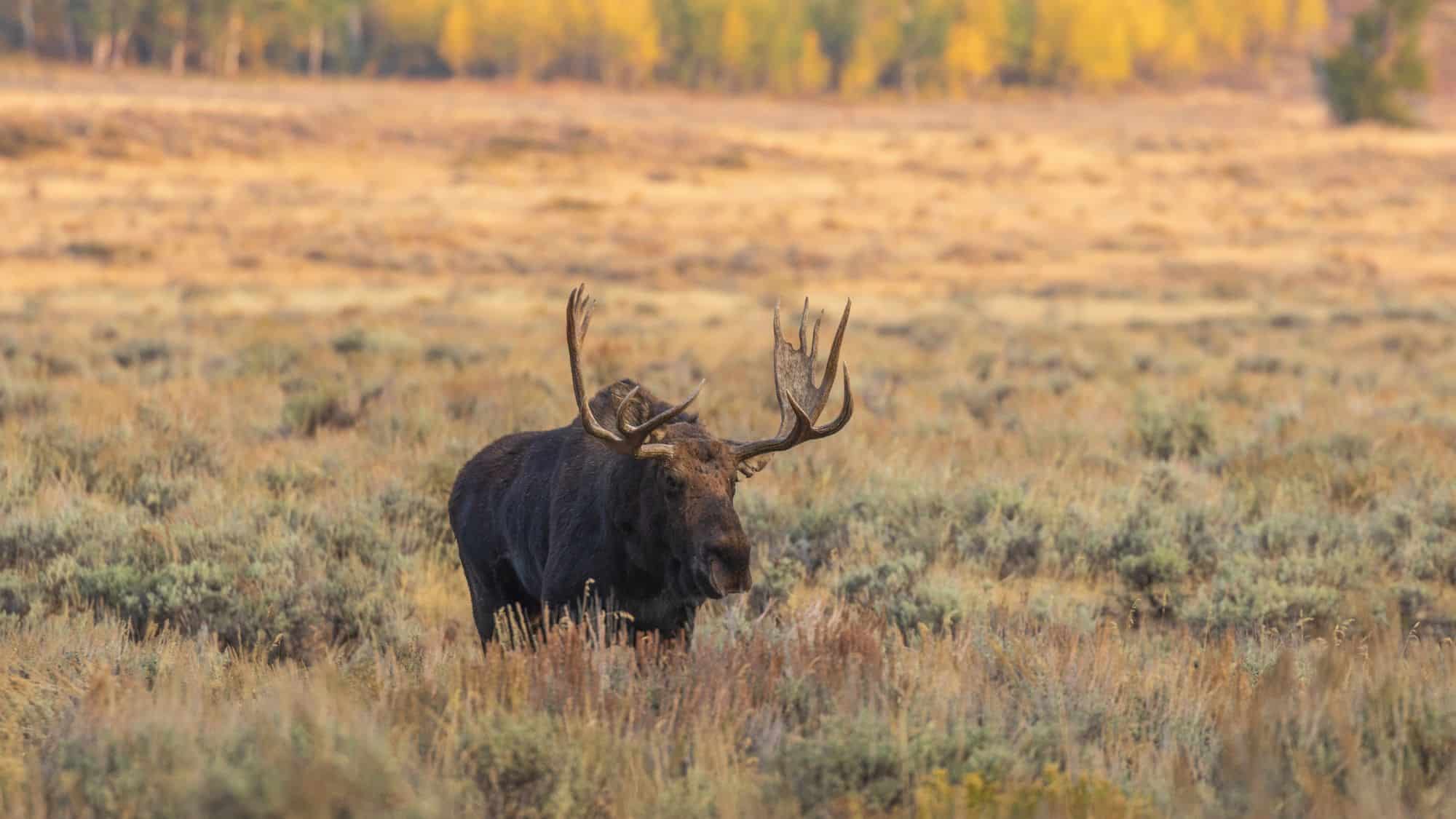
The Shiras moose is the smallest of the four moose subspecies in North America, but it is still a massive animal, with bulls weighing up to 1,000 pounds.
These solitary giants are most often found in marshy areas, willow flats, and along riverbanks, where they feed on aquatic vegetation and woody shrubs. Their long legs allow them to wade through deep water and heavy snow that would impede other animals.
You have the best chance of spotting them in the willow thickets near Soda Butte Creek in the northeast corner of the park or around the Yellowstone Lake area.
Bulls grow palmate antlers that are broad and flat, which they use during the rut in late September and October to fight for mates. During this time (or really anytime), moose can be quite unpredictable and are known to be aggressive if they feel threatened.
Their dark brown to black coat absorbs heat, which can cause them stress in the summer, so they often bed down in the shade or stand in water during the heat of the day. Spotting a moose lifting its head from a river with water dripping from its mouth is a classic Yellowstone image.
Rocky Mountain Red Fox

The Rocky Mountain red fox is a small, visually striking canid that adds a splash of color to the Yellowstone landscape. While they are named red foxes, they actually occur in several color phases, including the classic red, a “cross” phase with a dark band across the shoulders, and a silver or black phase.
They are distinct from the lowland red foxes found elsewhere in the U.S. and are genetically adapted to high-elevation environments. Weighing only 8 to 15 pounds, they are light on their feet and use their magnificent, bushy tails for balance and as a warm cover during cold naps.
Like coyotes, they hunt small mammals, but they have a distinct hunting style that involves listening for low-frequency sounds of rodents moving under the snow. When they pinpoint prey, they launch themselves high into the air in a steep arc to punch through the snow crust.
They are solitary hunters and are most active at dawn and dusk. And their ability to thrive in deep snow and high altitudes makes them a resilient resident of the park’s harshest environments.
You are most likely to see them in the meadows near Canyon Village or in the high country of Dunraven Pass.
North American River Otter

The river otter is perhaps the most playful and charismatic resident of Yellowstone’s waterways. These semi-aquatic mammals have long, streamlined bodies, webbed feet, and thick, water-repellent fur that keeps them warm even in icy waters.
They are excellent swimmers and can hold their breath for up to eight minutes while hunting for fish, crayfish, and amphibians. While they are active year-round, they are often easier to spot in winter when they slide across the ice and snow on their bellies, leaving distinctive troughs or “slides” along riverbanks.
They are highly social animals and are frequently seen in family groups, engaging in wrestling, chasing, and grooming behaviors.
Despite their playful demeanor, they are effective predators with sharp teeth and strong jaws.
Look for them along the Yellowstone River, in the Lamar Valley, and near the shores of Yellowstone Lake. Their presence is a good indicator of a healthy aquatic ecosystem, as they are sensitive to water pollution.
Rocky Mountain Goat

Rocky Mountain goats are a spectacular sight, clinging to sheer cliffs and rocky pinnacles that seem impossible to navigate. Interestingly, they are not considered native to the park but have migrated into the northern range from introduced populations in nearby Montana.
Their dazzling white coats, black horns, and beards make them stand out against the dark volcanic rock of the northeastern peaks.
They are specially adapted for climbing, with hooves that feature a hard outer edge and a soft, rubbery inner pad that grips stone like a climbing shoe.
The best place to scan for mountain goats is on the high cliffs of Barronette Peak near the Northeast Entrance. You will need binoculars or a spotting scope, as they often remain high above the valley floor to avoid predators.
Nannies (females) are fiercely protective of their kids, and the young are able to stand and climb within minutes of birth. And their thick, woolly double coats allow them to withstand high winds and temperatures as low as -50°F.
Yellow-Bellied Marmot
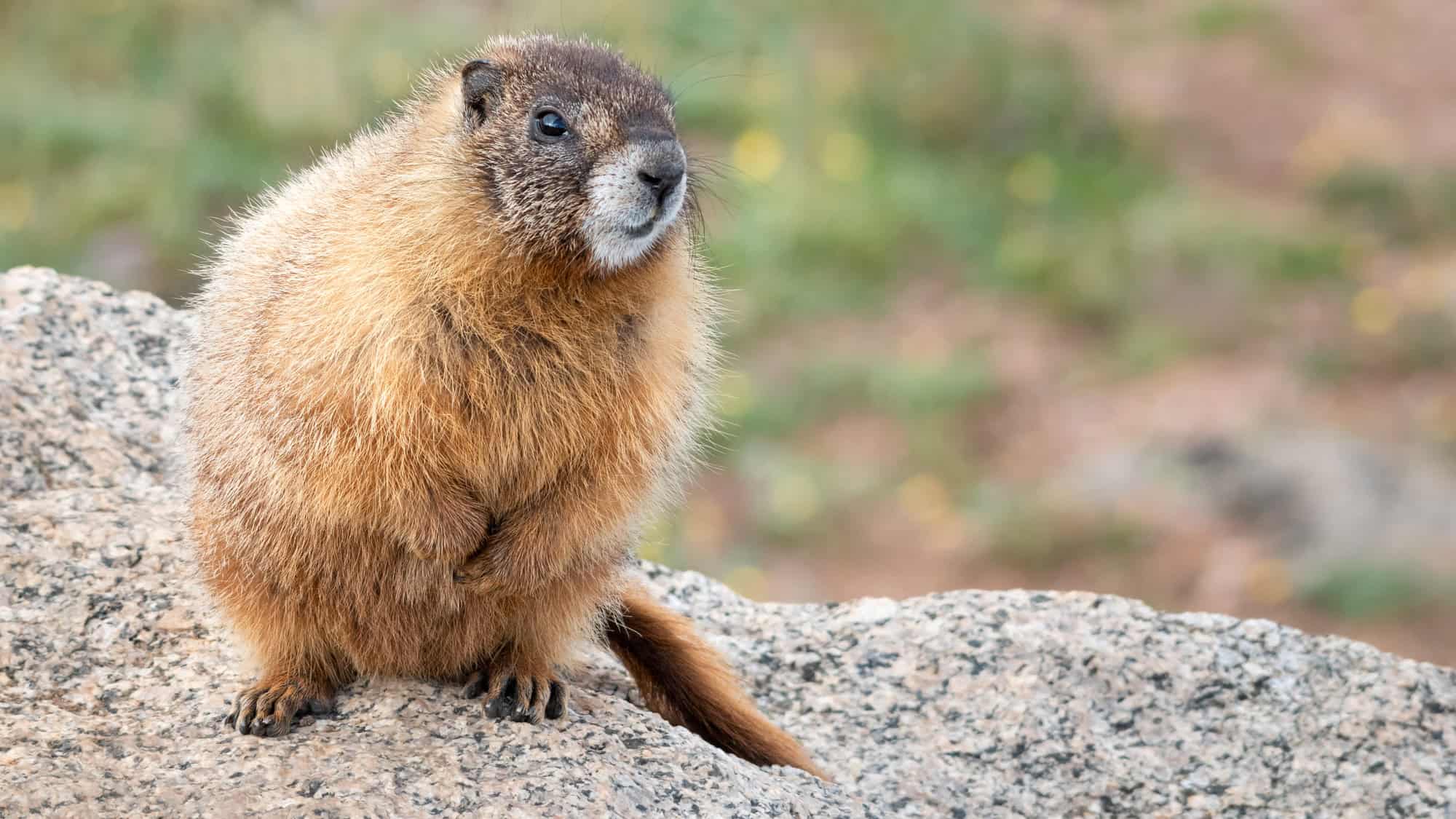
The yellow-bellied marmot, often affectionately called a “whistle pig” due to its piercing alarm call, is a large ground squirrel commonly found in rocky areas throughout the park. They have reddish-brown fur with a distinctive yellow belly and can weigh up to 11 pounds before hibernation.
Marmots are sun-lovers and spend a significant portion of their day basking on warm rocks, making them relatively easy to spot if you know where to look. They live in colonies and have a complex system of whistles to warn the group of approaching predators like eagles or coyotes.
They are true hibernators, disappearing into their burrows in September and not emerging until April or May, meaning they spend over half their lives asleep. During the short summer, they must eat voraciously to build up the fat reserves necessary to survive the long winter fast.
You can frequently see marmots around the rocky distinct piles near the Gardner River bridge or along the trails in the Mammoth Hot Springs area.
Their entertaining behavior and habit of posing on rocks make them a favorite subject for photographers looking for smaller wildlife within the park.
American Beaver

The American beaver is a keystone species and an ecosystem engineer whose activities profoundly shape the landscape of Yellowstone. By building dams, they create ponds and wetlands that provide critical habitat for waterfowl, fish, and amphibians.
Beavers are the largest rodents in North America, weighing up to 60 pounds, and are equipped with large, orange incisors that never stop growing, allowing them to chew through tough bark and wood. They are primarily nocturnal or crepuscular, meaning your best chance to see them is at dawn or dusk near willow-choked streams.
The waterproof coat of a beaver was once the primary driver of the fur trade that explored the West, but today, they are protected and valued for their ecological role.
And their populations fluctuate based on the availability of willow and aspen, their preferred food sources.
Willow Park, located between Mammoth and Norris, is a classic location to look for beaver activity, including lodges, dams, and chewed tree stumps.
North American Cougar

The cougar, also known as the mountain lion or puma, is the most elusive large predator in Yellowstone, earning it the nickname “Ghost of the Rockies.”
These powerful cats are strictly carnivorous and prefer rugged, rocky terrain with plenty of cover for stalking prey. Adult males can weigh upwards of 140 pounds and measure up to eight feet from nose to tail tip.
Because they are solitary and cryptic, spotting a cougar is extremely rare and is often a matter of pure luck rather than planning. While sightings are infrequent, cougars are present throughout the park, particularly in the northern range where their primary prey, elk and mule deer, are abundant.
They are ambush predators that rely on stealth and an explosive burst of speed to capture food.
Winter offers a slightly better chance of detecting their presence through tracks left in the snow. Most visitors will never see one, but knowing that these silent hunters are out there patrolling the ridges adds a layer of wild mystery to every hike.
Wolverine

The wolverine is the embodiment of true wilderness, a creature so rare and elusive that researchers often spend years without seeing one in the flesh. As the largest member of the weasel family, the wolverine resembles a small bear with a bushy tail and broad head.
They are legendary for their strength, ferocity, and endurance, capable of traveling up to 15 miles a day through deep snow and rugged mountains. Their scientific name, Gulo gulo, means “glutton,” referencing their voracious appetite and willingness to defend food against much larger predators.
They inhabit high-elevation alpine forests and tundra, far away from human development because they require deep, persistent snowpack for their dens, which they dig into snowdrifts to raise their young.
Current estimates suggest there are fewer than 10 wolverines residing within Yellowstone and the adjoining national forests, making them one of the rarest mammals in the ecosystem.
A sighting of a wolverine is the holy grail for wildlife watchers in Yellowstone, a once-in-a-lifetime event that signifies you are in one of the last truly wild places on earth.
Like Our Content? Make sure to join our newsletter for all the latest on outdoor adventures (and a FREE STARGAZING GUIDE). Click here to sign up!