Discover Parks & Wildlife contains affiliate links and is a member of the Amazon Services LLC Associates Program. If you make a purchase using one of the Amazon links, we may receive compensation at no extra cost to you. We may also use select AI tools to support our creative process, but all content is reviewed, refined, and finalized by our human team. See our disclosure policy and our AI use policy for more information.
American Treasures That Reveal The Man Behind The George Washington Legend
George Washington is perhaps the most recognizable figure in American history, yet he often feels more like a marble statue or a face on a dollar bill than a flesh-and-blood man. We see his name on street signs, schools, and mountains across the country, but few places offer a genuine sense of who he was as a person, a farmer, a commander, and a president.
To truly understand the trajectory of his life, you have to go to the soil he walked on and the buildings where he made the decisions that shaped a nation.
The National Park Service and its partners maintain a collection of sites that trace Washington’s arc from his ancestors’ arrival in Virginia to his final days overlooking the Potomac River. These locations are scattered across the East Coast, primarily in Virginia, Pennsylvania, and New York. And visiting them reveals the quieter moments of his biography alongside the thunderous public ones.
Let’s take a look at the collection of protected landmarks that provide a comprehensive view of the environments that shaped the first American president.
National Park Units Dedicated To George Washington
The preservation of Washington’s legacy involves a mix of reconstructed memories, preserved landscapes, and original structures. While some sites have been swallowed by modern cities, others remain startlingly similar to how they appeared three centuries ago.
Each of these units offers a distinct piece of the puzzle, allowing you to piece together the private and public lives of a man who was famously reluctant to step into the spotlight.
George Washington Birthplace National Monument, Virginia
The story begins in the quiet Northern Neck of Virginia, a peninsula defined by the Potomac and Rappahannock rivers. This is where George Washington was born in February 1732.

The specific house where he took his first breath burned down in 1779, long before preservation was a priority. So what you see today at the George Washington Birthplace National Monument is a memorial house constructed in the early 1930s.
It represents the style of a typical upper-class Virginia plantation home from that era rather than being an exact replica of the original birth home. The intent here is to evoke the atmosphere of his childhood rather than to provide architectural exactness.
The surrounding 551 acres offer a peaceful glimpse into the agricultural life that defined the Washington family. You can walk down to the white sands of Popes Creek and look out over the water much as he would have done as a boy.
The National Park Service maintains a Colonial Revival farm on the property as well, complete with heritage breeds of livestock and crops that would have been familiar to an eighteenth-century planter.
One of the most significant features on the grounds is the family burial ground. This small cemetery contains the remains of George’s father, grandfather, and great-grandfather. It establishes a deep sense of lineage and connection to this specific patch of Virginia soil.
George Washington Memorial Parkway, Virginia & Washington D.C.
Most people treat the George Washington Memorial Parkway as a commuter route, but it was designed as a recreational drive meant to connect the sites of Washington’s life.
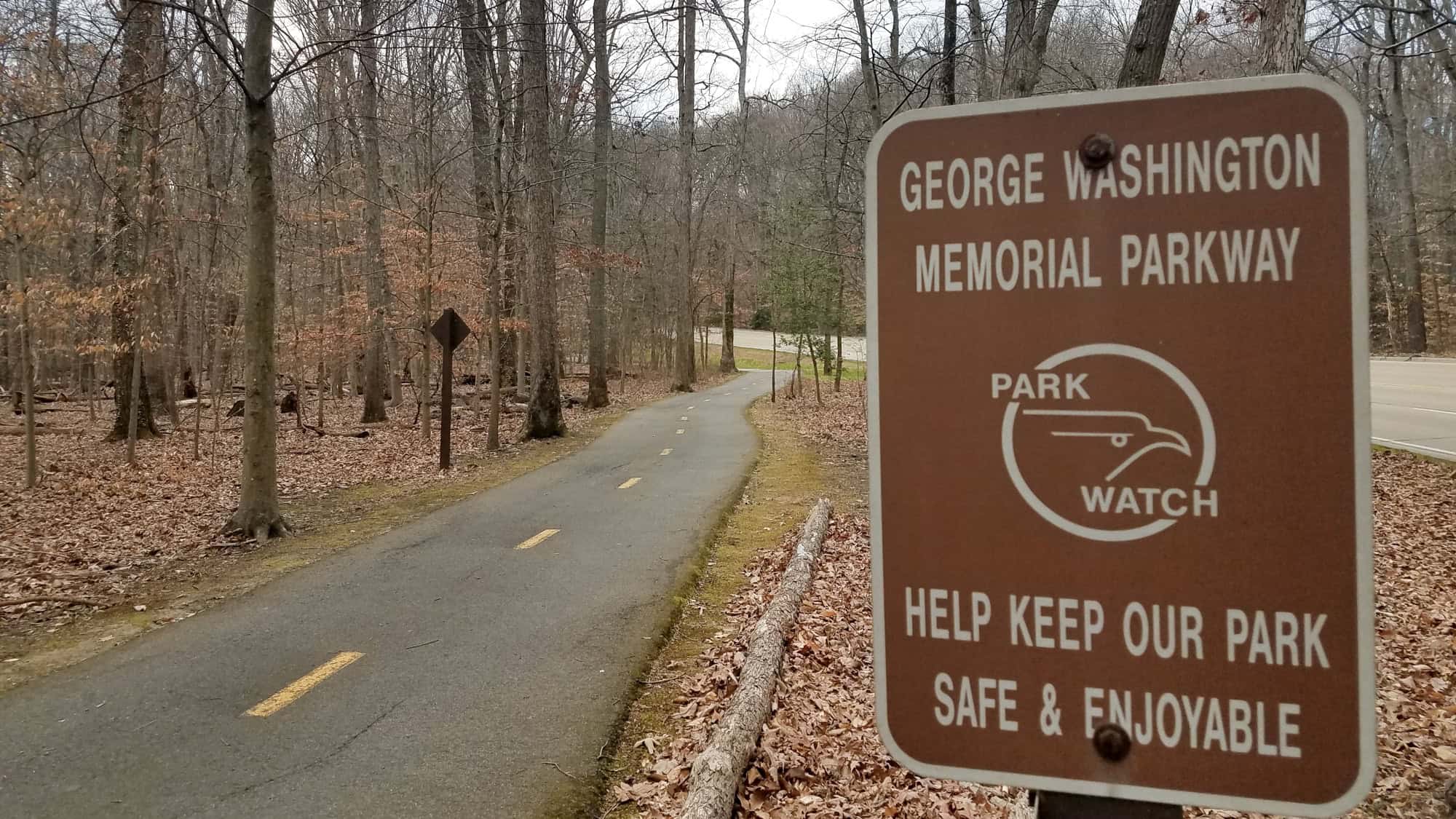
The parkway stretches for 25 miles along the Potomac River, preserving the scenic views that Washington himself cherished. It serves as a green ribbon linking the harsh reality of the Great Falls of the Potomac to the serenity of Mount Vernon. And the engineering of the road deliberately frames views of the river and the capital, encouraging you to slow down and appreciate the landscape.
Several stops along the parkway offer their own historical or natural value. Dyke Marsh Wildlife Preserve is one of the largest remaining freshwater tidal wetlands in the Washington, D.C. area. It gives you a sense of the wild, marshy environment that dominated the riverbanks before centuries of development.
You can spot ospreys, bald eagles, and herons hunting in the reeds just minutes away from the busy capital.
At the northern end of the parkway lies Great Falls Park. Here, the Potomac River gathers speed and drops over a series of jagged rocks and waterfalls.
This site is connected to Washington through his business ambitions rather than his military or political ones. He was a founding investor in the Patowmack Company, which attempted to build a canal around these falls to open up trade to the Ohio Valley. You can still see the remains of the canal system, a testament to his vision of a commercially connected nation.
Mount Vernon, Virginia
Mount Vernon is the site most intimately associated with George Washington. Although it is owned and operated by the Mount Vernon Ladies’ Association rather than the National Park Service, it remains an essential part of this historical network.

Washington acquired the estate in 1754 and spent the next 45 years expanding the mansion and refining the landscape. This was his sanctuary, the place he longed for during the dark days of the Revolutionary War and the exhausting years of his presidency.
The mansion sits on a high bluff overlooking the Potomac, and the view remains largely unchanged thanks to conservation efforts on the opposite bank.
The estate is vast, including the iconic twenty-one-room mansion, outbuildings, gardens, and a working farm. You can tour the house to see the bed where he died in 1799 and the study where he managed his business affairs.
The bright colors in the “New Room” and the practical design of the cupola for ventilation show his attention to detail and fashion.
Beyond the main house, the reconstructed distillery and gristmill located nearby demonstrate his entrepreneurial spirit. He was one of the largest whiskey producers in America by the time of his death.
A visit here must include the tomb where George and Martha Washington are buried. It is a solemn brick structure that Washington requested in his will to replace an older family vault. Daily wreath-laying ceremonies occur here, maintaining a tradition of respect that has lasted for centuries.
Federal Hall National Memorial, New York
New York City’s Financial District feels worlds away from the quiet Virginia countryside, yet it plays a pivotal role in Washington’s public life.
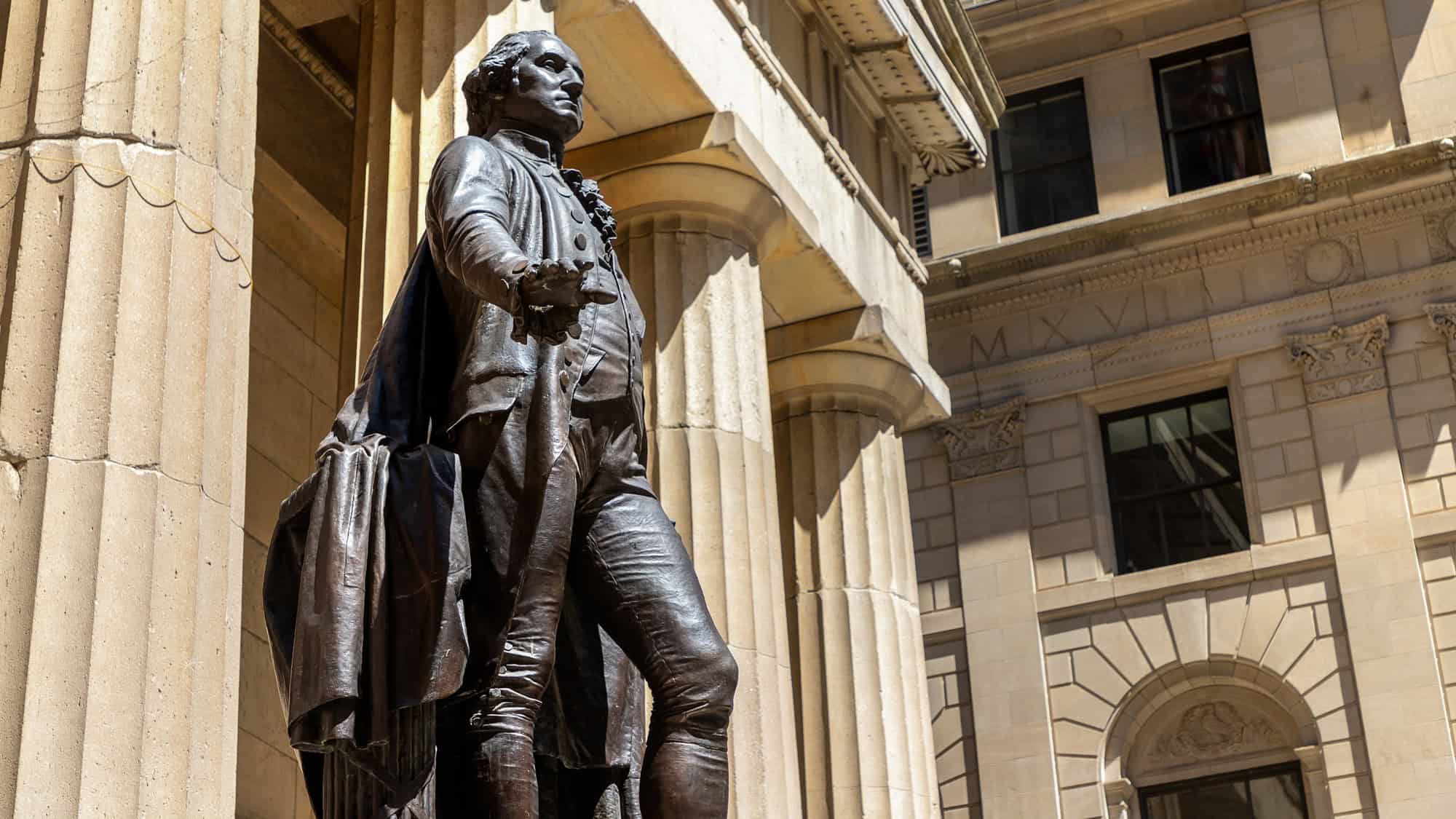
Federal Hall National Memorial on Wall Street marks the site where George Washington took the oath of office as the first President of the United States on April 30, 1789. The original building, which served as New York’s City Hall and later the first U.S. Capitol, was demolished in 1812.
The current structure is a grand Greek Revival building constructed in 1842 as a U.S. Customs House. Yet despite the change in architecture, the location retains its historical gravity.
A large bronze statue of Washington stands on the steps, marking the approximate spot where he stood on the balcony to swear his oath. And inside the building, you can see the Bible he used during the inauguration. This artifact connects you directly to the moment the American experiment in executive power officially began.
The museum exhibits inside also explain the formation of the federal government, the creation of the Bill of Rights, and the establishment of the federal court system, all of which happened on this site.
Independence National Historical Park, Pennsylvania
Philadelphia served as the temporary capital of the United States while Washington, D.C. was being built, making it the backdrop for much of Washington’s presidency.
Independence National Historical Park preserves several buildings where he cemented his legacy.
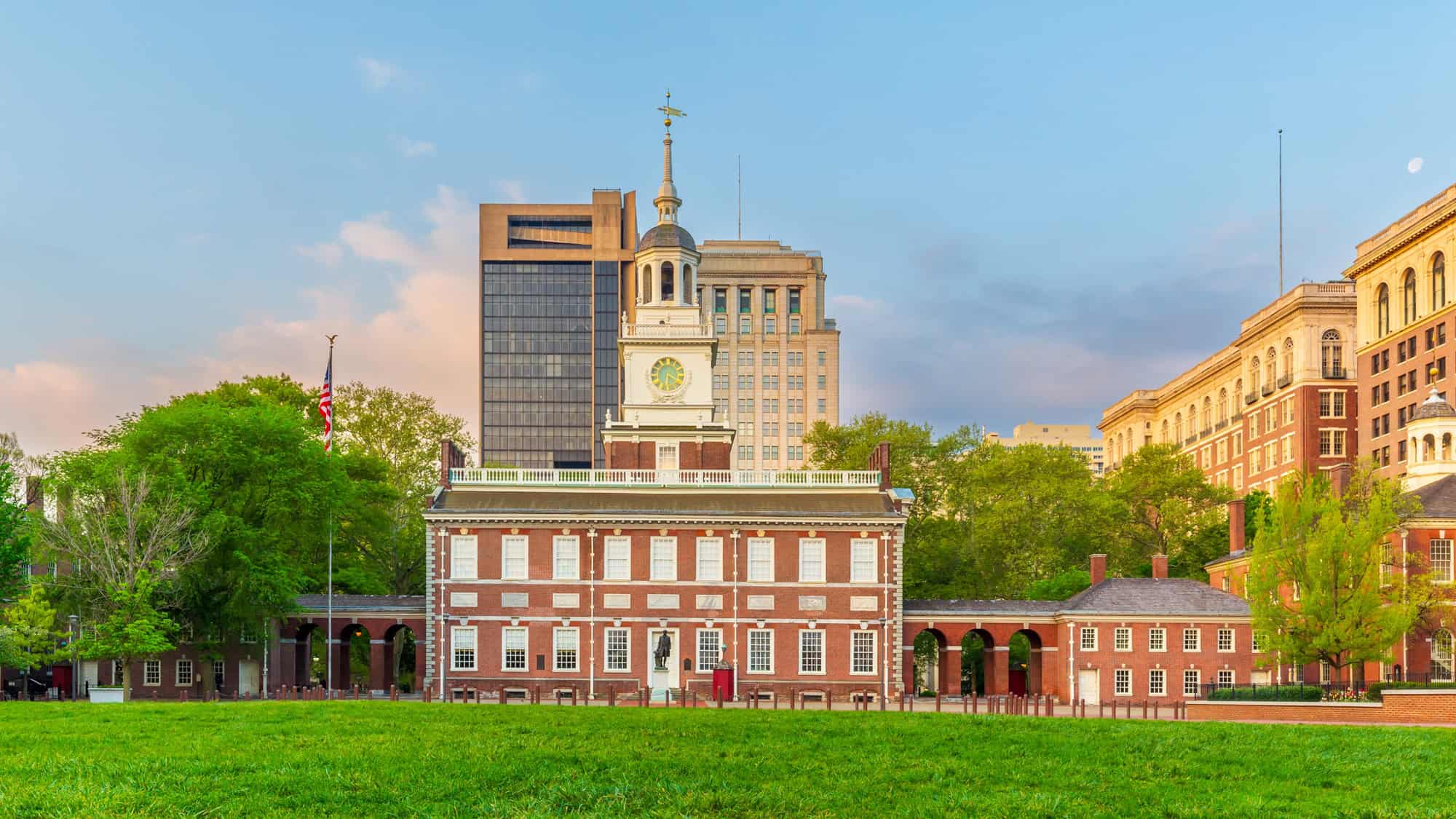
Independence Hall is the most famous, serving as the location where he was appointed Commander in Chief of the Continental Army in 1775 and where he presided over the Constitutional Convention in 1787. Seeing the “Rising Sun” chair where he sat during the convention brings those sweltering summer debates to life.
Just a block away lies the site of the President’s House, where Washington lived and worked from 1790 to 1797. The original house was demolished long ago, but an open-air commemoration now marks the footprint of the building.
This site is particularly powerful because it explicitly addresses the paradox of liberty and slavery. Washington brought nine enslaved individuals from Mount Vernon to live in this Philadelphia household. The exhibit focuses heavily on their stories, particularly that of Oney Judge, who escaped to freedom from this house.
Congress Hall, located right next to Independence Hall, is where he was inaugurated for his second term and where he delivered his farewell address to the House of Representatives.
Valley Forge National Historical Park, Pennsylvania
Valley Forge holds a mythic place in American memory as a site of suffering and cold. The winter encampment of 1777-1778 was indeed difficult, but it was also the transformative forge that turned a loose collection of militias into a professional army.

Valley Forge National Historical Park preserves the rolling hills and defensive plateaus where the Continental Army waited out the winter while the British occupied Philadelphia. The park is expansive, with miles of trails connecting key monuments, reconstructed log huts, and artillery parks.
The reconstructed huts give you a visceral sense of the cramped conditions soldiers endured. Twelve men would share a small, smoky log cabin, sleeping on straw and eating meager rations.
Disease was the true enemy here, claiming nearly two thousand lives over the winter. Yet this was also a place of learning. You can visit the parade grounds where Baron von Steuben, a Prussian military officer, drilled the troops in European marching and firing techniques. His training created the disciplined force that would eventually win the war.
Washington’s Headquarters, a small stone house known as the Isaac Potts House, is a focal point of the park. Washington rented this home and lived here with Martha, his staff, and his guards.
Walking through the tight rooms and seeing the simple office where he planned the army’s survival humanizes the general. He was not above the fray but right in the middle of it, dealing with supply shortages and political rivals.
Time To Celebrate Washington’s Birthday At National Sites Across The Northeast
February is a prime time to engage with Washington’s history, as sites across the country prepare for his birthday. While we commonly refer to the holiday as Presidents’ Day, the federal government officially designates the third Monday in February as “Washington’s Birthday.”
Interestingly, Washington himself would have said he was born on February 11, 1731, under the old Julian calendar. It was only after the British Empire adopted the Gregorian calendar in 1752 that his birth date shifted to February 22, 1732.
National sites host a variety of special events to mark the occasion. Valley Forge National Historical Park often throws a “birthday party” that is great for families.
You might find reenactors portraying George and Martha Washington, cutting a ceremonial cake, or sharing stories with visitors. And the park frequently organizes historical weapons demonstrations and specialized ranger programs that dive deeper into the winter encampment history during this weekend.
At the George Washington Birthplace National Monument, the atmosphere is often more traditional. The park celebrates with living history demonstrations on the colonial farm and wreath-laying ceremonies at the family cemetery. It is a quieter, more reflective way to honor the day.
Since the weather in February can be unpredictable at sites across the Northeast, checking the specific park websites for schedule changes is always smart.
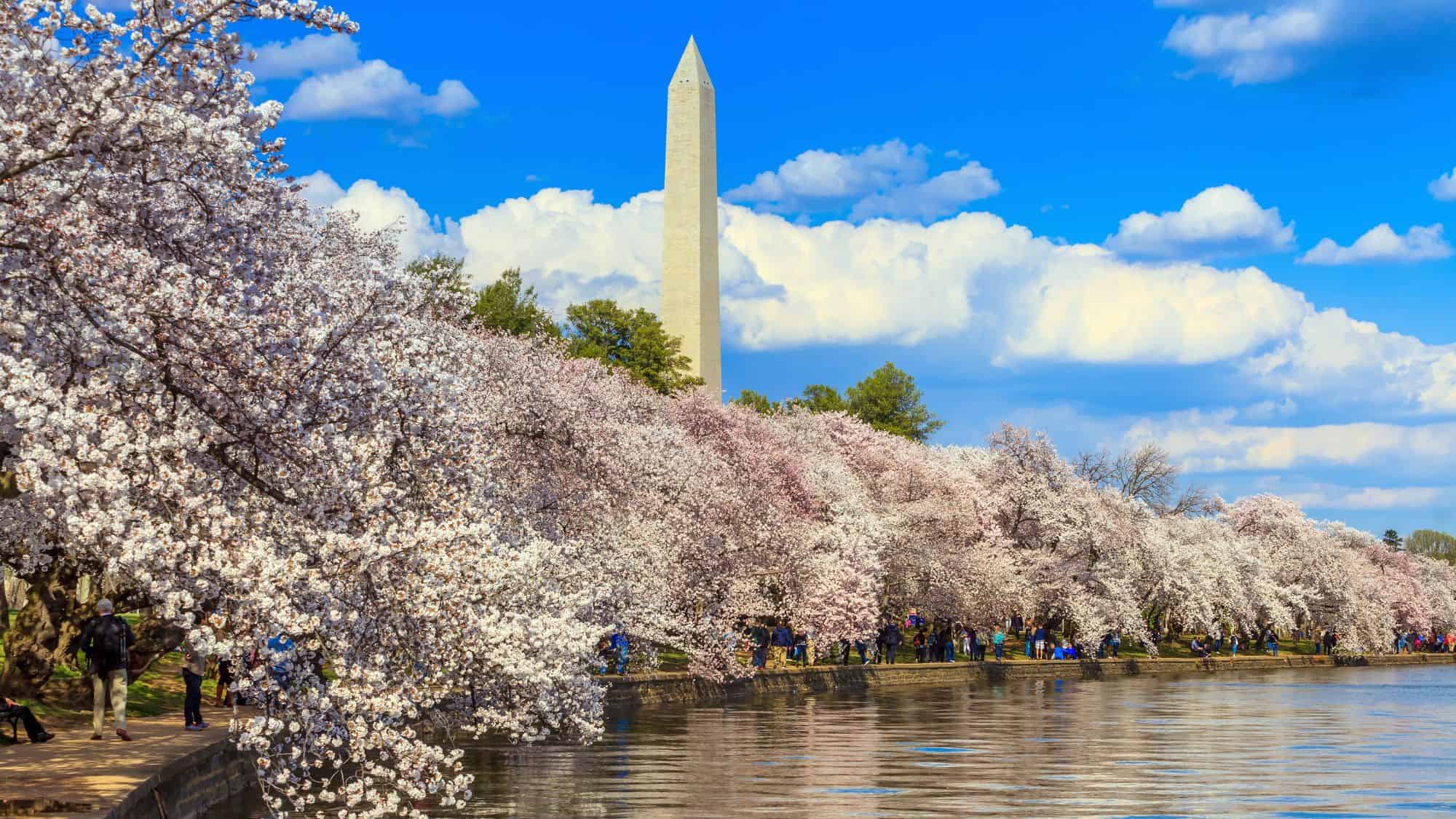
Note: We did not include every site that celebrates George Washington, like the famous Washington Monument. We instead chose to highlight sites across the Northeast where Washington himself spent time.
Like Our Content? Follow Us on MSN (or click the Follow Button above) for more from Discover Parks & Wildlife.