
Discover Parks & Wildlife contains affiliate links and is a member of the Amazon Services LLC Associates Program. If you make a purchase using one of the Amazon links, we may receive compensation at no extra cost to you. We may also use select AI tools to support our creative process, but all content is reviewed, refined, and finalized by our human team. See our disclosure policy and our AI use policy for more information.
These Astonishing Tiger Facts Explain Why They’ve Earned Their Legendary Status
Some creatures just seem to have won the genetic lottery. You know the ones. They’re effortlessly cool, impossibly beautiful, and carry themselves with an air of quiet confidence that makes everyone else look a bit clumsy.
In the animal kingdom, the tiger is that creature. It’s the straight-A student who is also captain of the football team and somehow finds time to volunteer on weekends.
Lions might get all the credit for being the “king,” but that’s mostly just loud PR and a great mane. The real power operates in silence, a flash of orange and black that is both a work of art and a finely tuned killing machine. It’s an animal built with such perfect, lethal intention that it almost feels unfair to everything else sharing its habitat.
This predator is a masterclass in evolutionary design, a silent ruler of its domain that doesn’t need a crown to prove it. But what exactly makes them the undisputed champions of the jungle? Let’s find out.
Tiger Appearance Facts
You might think you know what a tiger looks like, but the details of their design are far more intricate (and frankly, more impressive) than just orange fur and black lines.
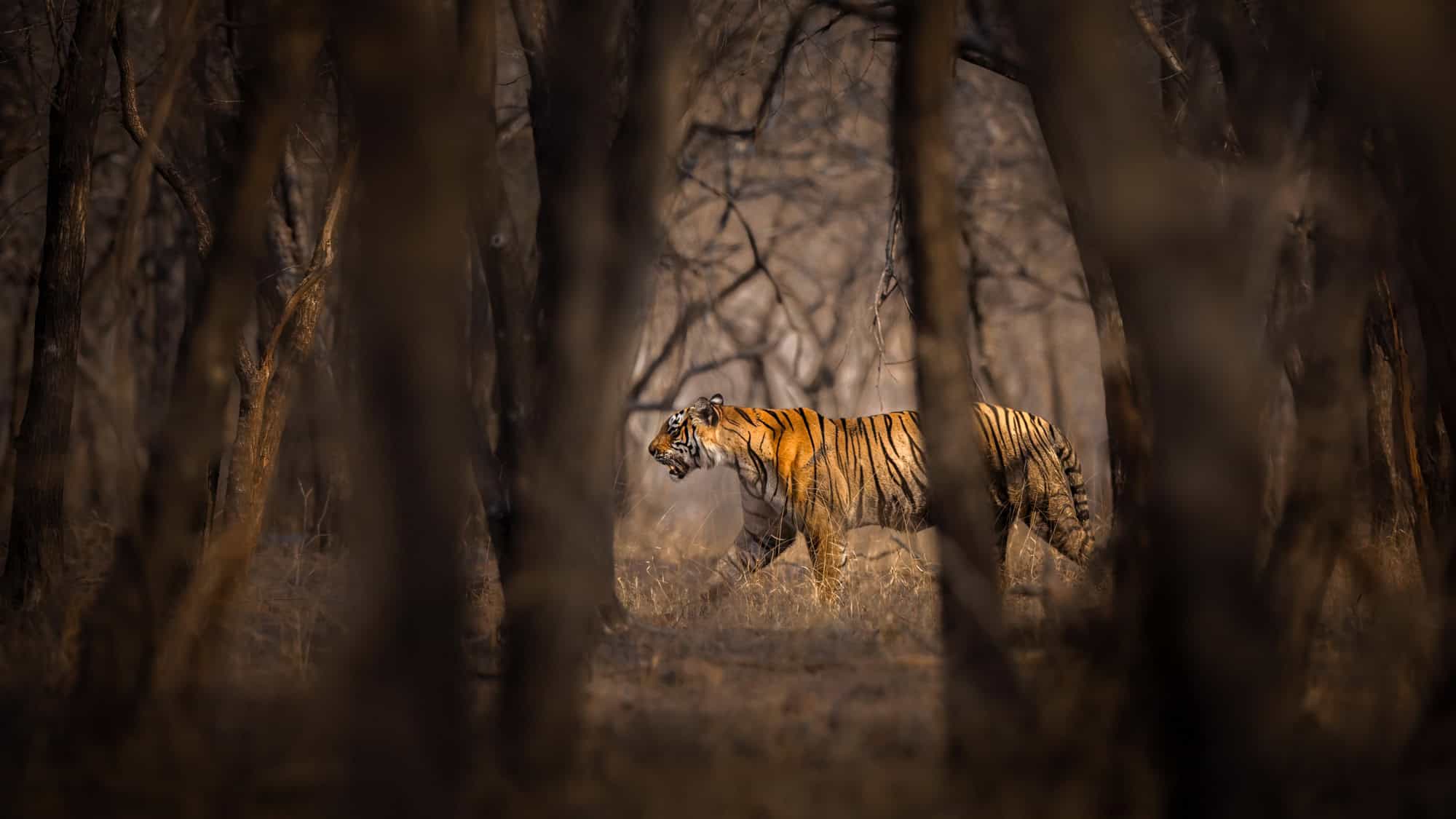
Stripes And Whisker Spots Are Unique
You have likely heard that a tiger’s stripes are unique, much like a human fingerprint, but the complexity goes deeper than surface level.
If you were to shave a tiger (which we strongly advise against for obvious health and safety reasons), you would find the pattern is tattooed directly onto their skin. No two tigers have the exact same arrangement, allowing researchers to identify individual cats in the wild just by looking at their flanks.
Beyond the stripes, the whisker spots (those dark dots on their muzzle) are also unique to each individual. Biologists often use these spots to tell tigers apart in camera trap footage when the body stripes are obscured by foliage or mud.
So it’s a dual-identification system that makes them one of the most distinct mammals on the planet.
Furry Soles
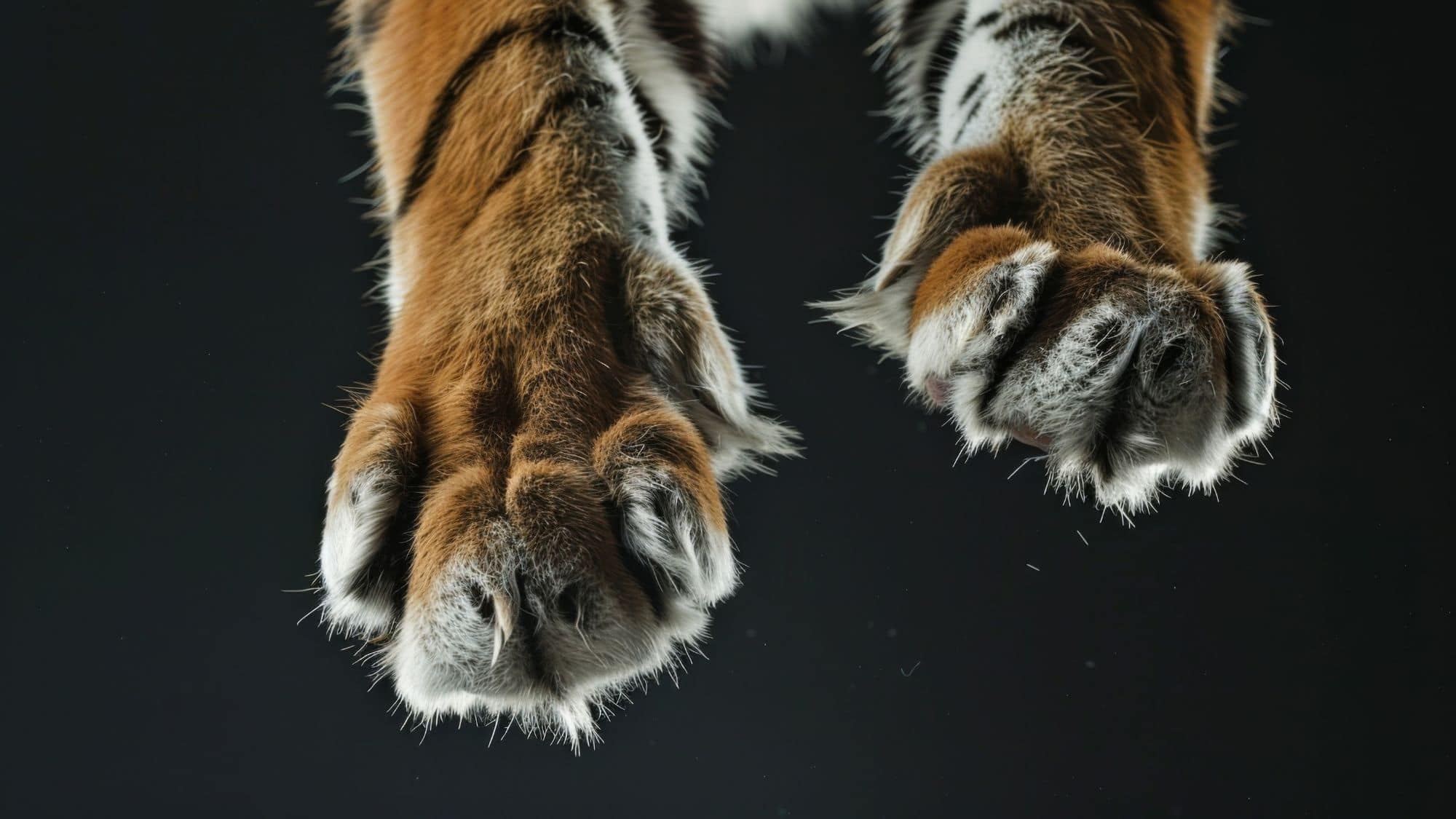
Most of us assume paw pads are just tough, leathery cushions, but tigers have a special adaptation that would make any ninja jealous.
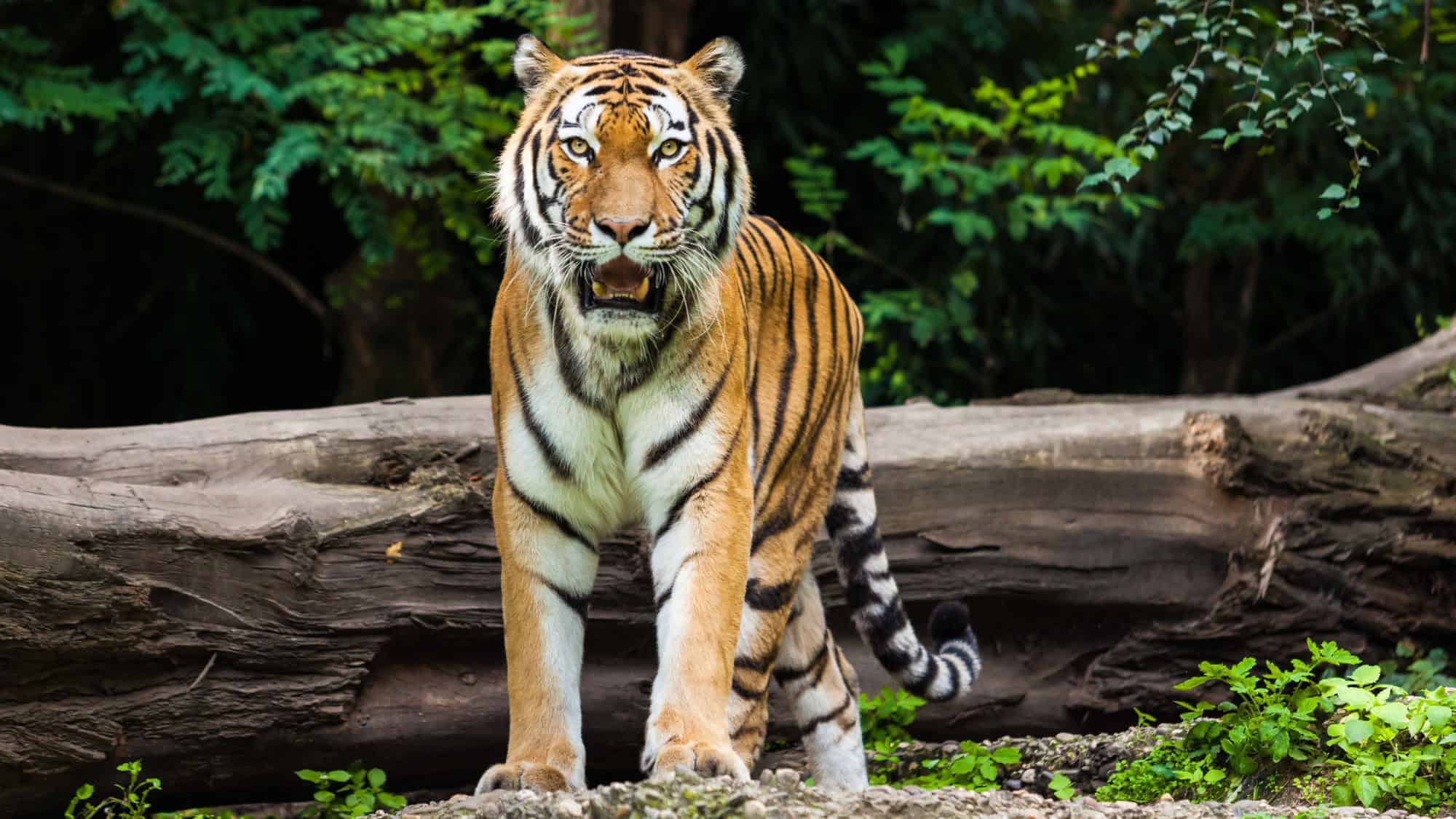
The spaces between their toes and the pads themselves are filled with thick, soft fur. This isn’t just for keeping their toes cozy during a chilly night in the Siberian taiga; it serves a critical tactical purpose. This fluff acts as a natural silencer, dampening the sound of their massive paws hitting the forest floor.
This adaptation allows a 600-pound male to move through dry leaves with barely a whisper, closing the distance to his prey without giving away his position.
It also provides traction on slippery surfaces like wet rocks or snow, ensuring they don’t perform a cartoonish slip-and-slide while chasing down a deer. It is essentially built-in stealth technology for the heavy-footed hunter.
Flea-Free
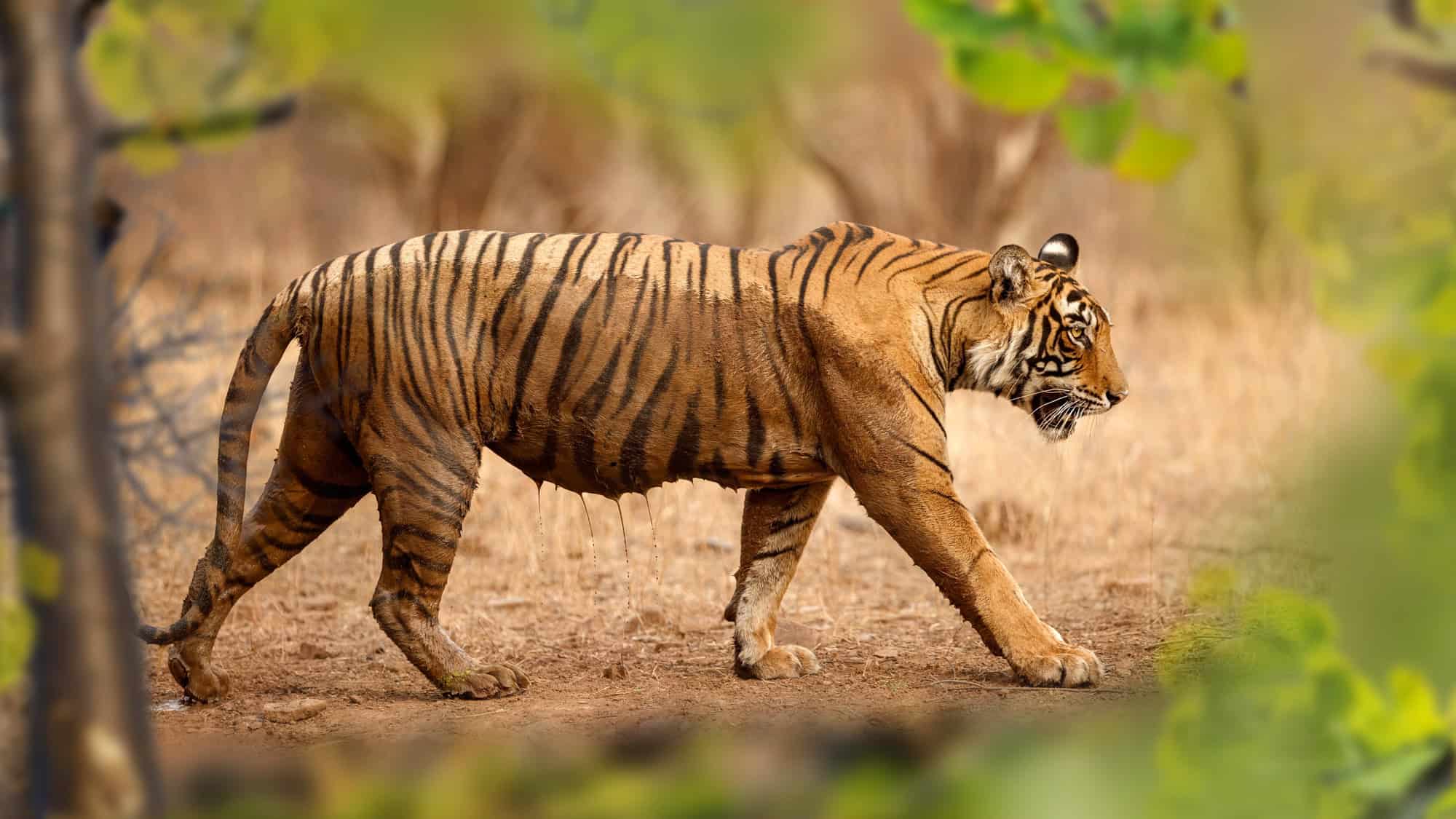
In the humid, insect-ridden climates where many tigers live, staying free of pests is a full-time job (and nobody wants to be itchy when they are trying to nap). And tigers are surprisingly fastidious groomers, spending a large portion of their waking hours cleaning their fur with tongues that are rough enough to strip paint.
This constant grooming helps keep parasites like fleas and ticks at bay, ensuring their coat remains in pristine condition.
Furthermore, unlike most domestic cats, who treat water like acid, tigers love to swim. Frequent dips in rivers and lakes serve a double purpose: cooling them off and drowning potential pests that try to hitch a ride.
While no wild animal is 100% immune to bugs, the tiger’s aquatic habits and obsessive hygiene routine make them significantly cleaner than your average alley cat.
Camouflage Masters
It seems counterintuitive that a bright orange cat would blend into a green forest, but evolution played a clever trick on the tiger’s prey. Most hoofed animals, like deer and wild boar, are dichromats (meaning they see the world in a limited color palette that doesn’t distinguish well between red and green).
To a deer, that vibrant orange coat looks perfectly dull and green, matching the surrounding vegetation seamlessly.
The vertical black stripes also break up the tiger’s body outline, a visual disruption known as disruptive coloration. This makes it incredibly difficult for prey to spot the predator in tall grass or dappled sunlight (until it is far too late).
It is basically an invisibility cloak designed specifically to fool the dinner menu, proving that sometimes standing out is the best way to hide.
Pseudo-Opposable Thumbs
While they won’t be texting you back anytime soon, tigers possess a physical trait that gives them a terrifying grip advantage. Their front paws feature a dewclaw that is positioned higher up on the leg, functioning somewhat like a pseudo-opposable thumb.
When a tiger swipes or grapples, this claw allows them to grasp and hold onto prey with significantly more stability than other carnivores. This anatomical quirk is crucial for hunting large animals, as it lets the tiger latch on while maneuvering its body for a bite to the neck.
It is not a true thumb in the primate sense, but in terms of grappling utility, it is incredibly effective. It turns their front limbs into powerful grasping tools rather than just pillars for walking (which is bad news for anything trying to wiggle away).
Rare Colors
We all know the classic orange and black look, but genetic rolls of the dice can produce some stunning variations that look like they walked out of a dream.
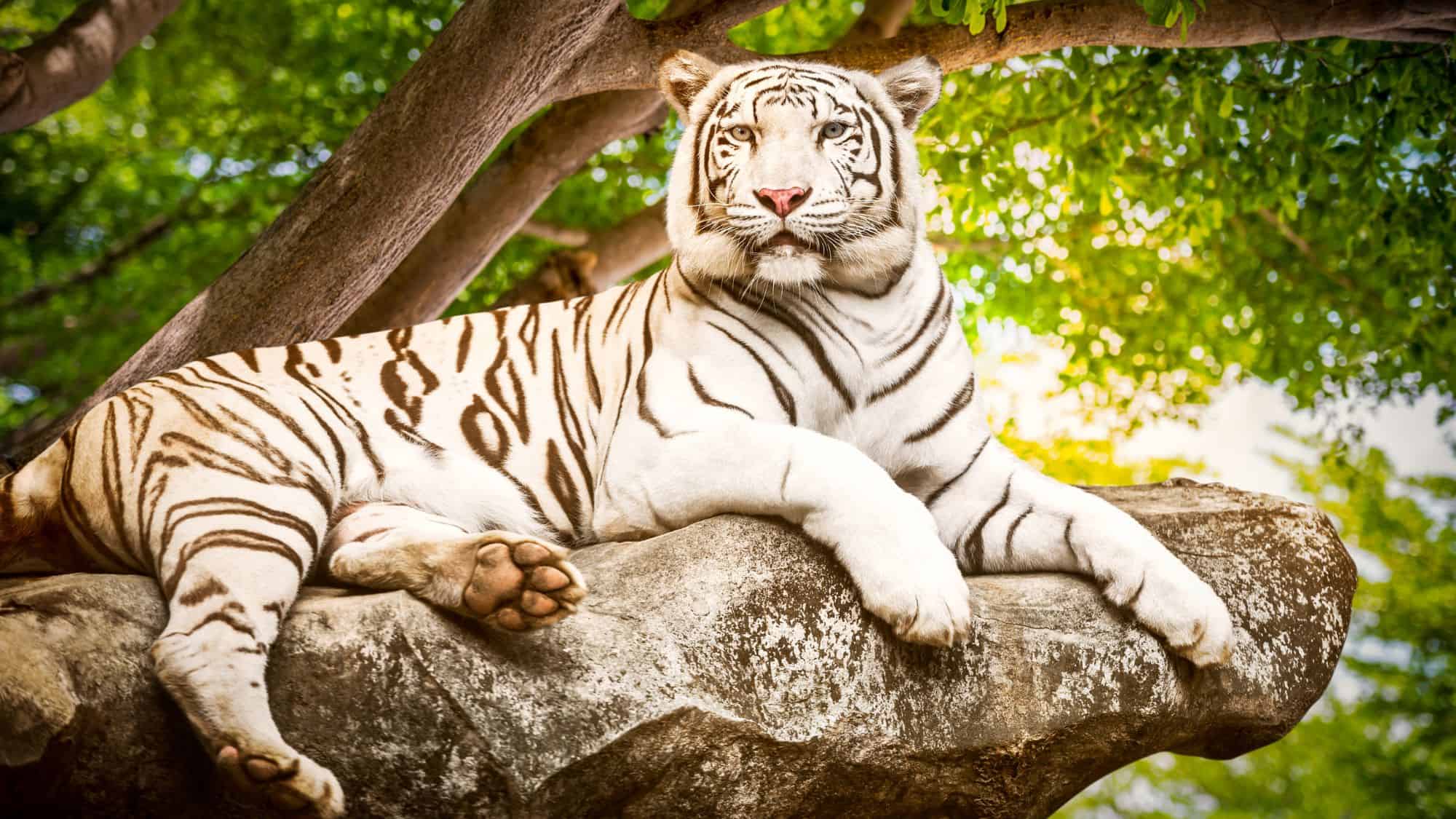
The most famous is the white tiger, which isn’t an albino but rather the result of a recessive gene that strips away the orange pigment, leaving white fur with chocolate-brown stripes and piercing blue eyes.
Even rarer is the “golden tabby” tiger, caused by a gene that suppresses black production, resulting in a strawberry-blonde coat with orange stripes and white legs. There is also the “snow white” or “stripeless” tiger, which is nearly pure white with barely visible ghost stripes.
These variations are incredibly rare in the wild and are mostly seen in captivity, proving that nature likes to experiment with the palette every now and then.
Interesting Tiger Skills
These predators are not just brute force; they possess a suite of sensory and physical skills that make them the ultimate survival machines.
Sensitive Whiskers
A tiger’s whiskers are not just facial decoration; they are highly tuned radar systems embedded deep into the muscle and connected to the nervous system.
In fact, these tactile hairs are so sensitive that they can detect subtle changes in air currents, helping the tiger navigate through dense, dark underbrush without bumping into obstacles. It is like having a built-in proximity sensor that works even in pitch blackness.
During a hunt, these whiskers play a critical role in the final moments of an attack. When a tiger lunges and bites, its whiskers wrap forward to sense the exact position of the prey’s neck, ensuring the bite is delivered with surgical precision.
It helps them locate the optimal spot to sever the spinal cord or crush the windpipe, maximizing efficiency and minimizing the risk of injury from a struggling animal.
Night Vision
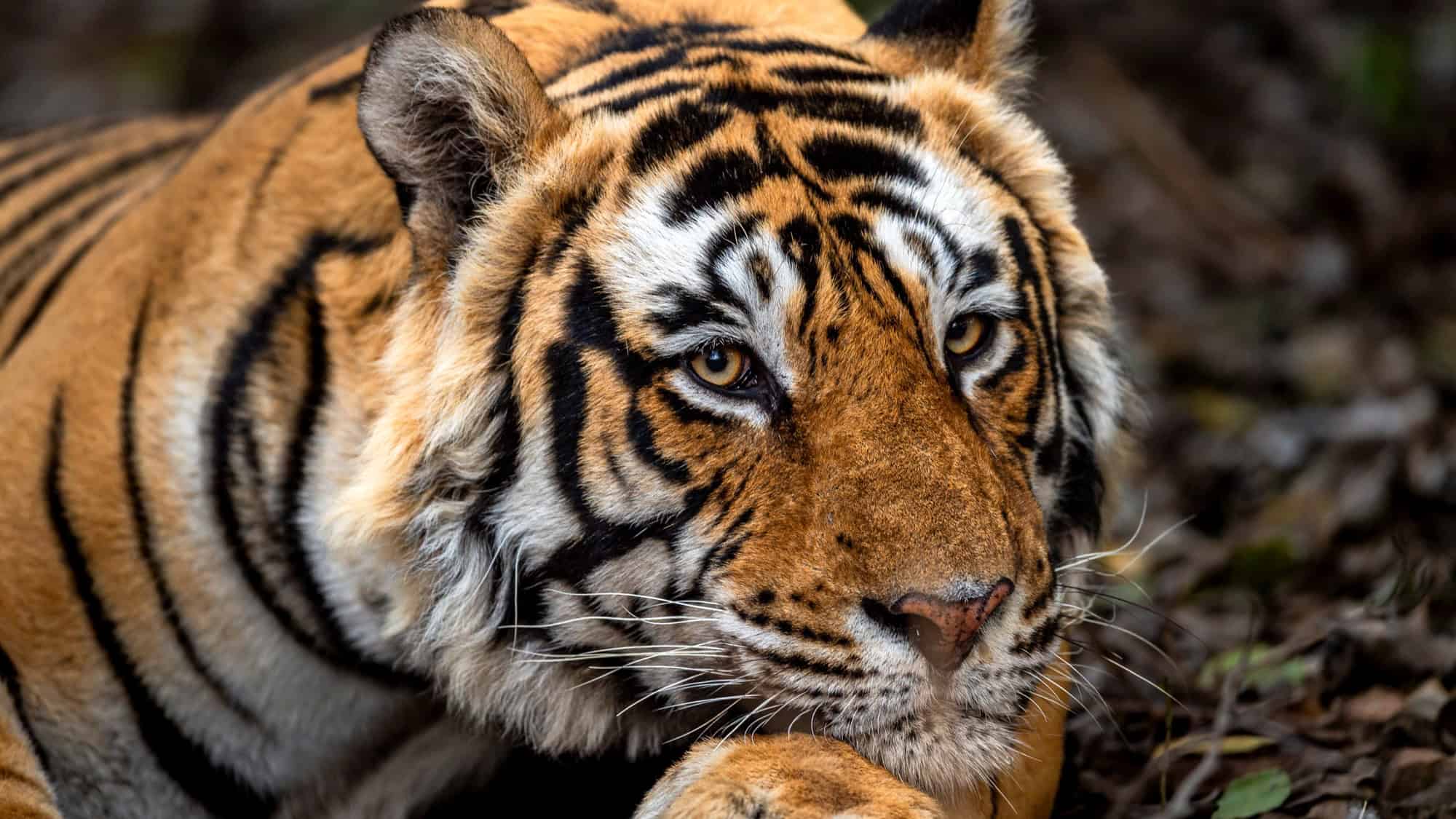
If you think your cat staring at a dark corner is creepy, be glad you aren’t standing in a jungle with a tiger at midnight. Why? Because tigers possess a specialized structure behind their retina called the tapetum lucidum, which reflects light back through the eye to boost vision in low-light conditions.
This gives them night vision that is six times better than that of a human. This biological night-vision adaptability allows them to hunt comfortably during twilight or deep night, avoiding the heat of the day.
Their eyes are also equipped with round pupils and yellow irises, unlike the slit pupils of domestic cats, which helps them function effectively in both dim and bright light. Basically, darkness is not an obstacle for them; it is an ally.
Swimming Skills
Most cats treat water like it’s radioactive, but tigers are the Michael Phelps of the feline world (minus the swim cap).
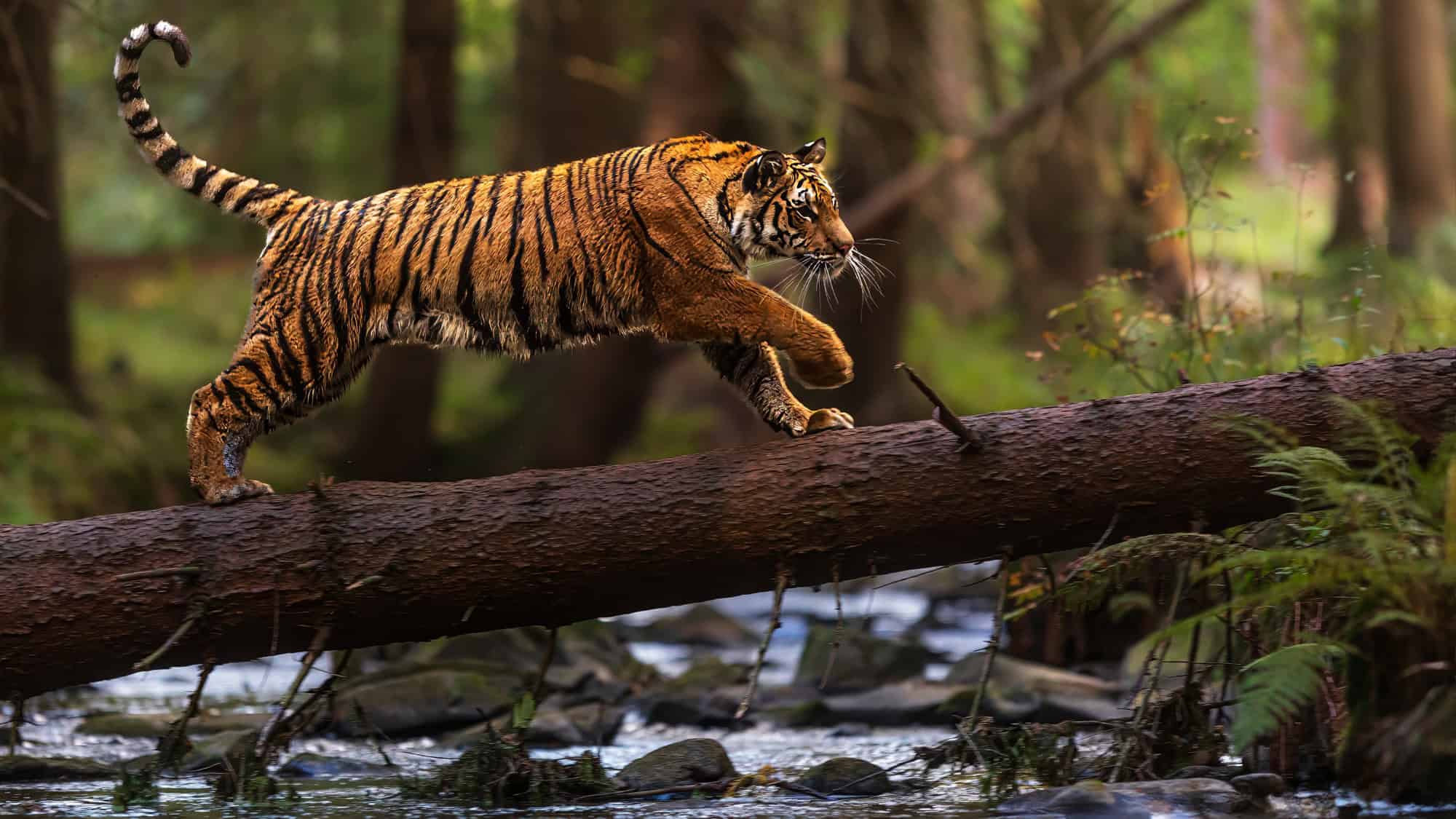
They have partially webbed toes that act like paddles, allowing them to propel their massive bodies through rivers and lakes with surprising speed and grace. They have even been recorded swimming up to 18 miles in a single day, often crossing wide rivers to patrol their territory or find a mate.
Water is also their favorite way to cool down. It is common to see a tiger lounging in a pool of water up to its neck during the heat of the day, looking perfectly content.
This affinity for water opens up their hunting grounds significantly, allowing them to chase prey into the water where other predators might stop, turning a river from a barrier into a trap.
Vocal Diversity
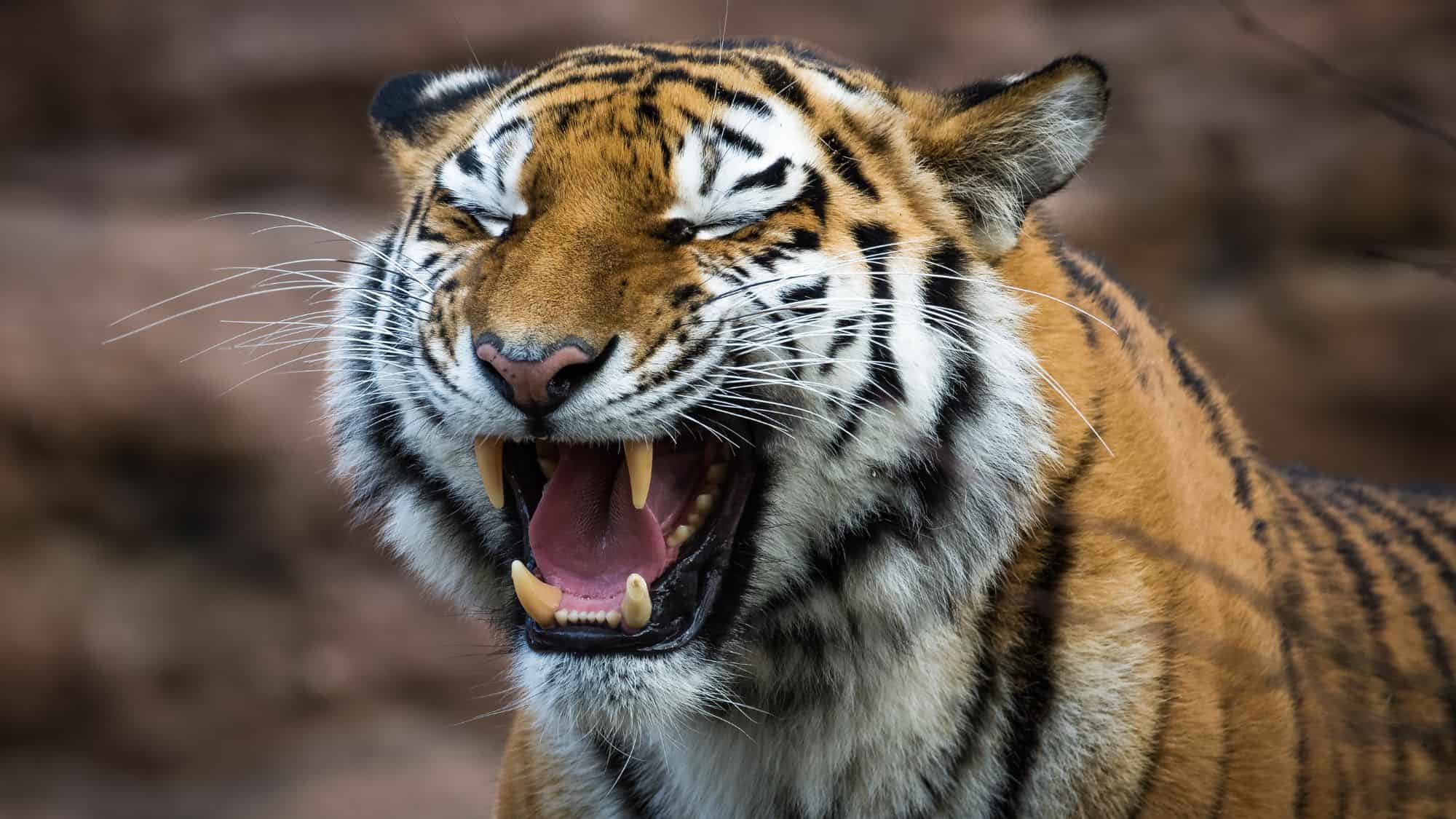
The roar of a tiger is a sound that vibrates in your chest, capable of being heard over two miles away, but their vocabulary is much more extensive than just loud screaming.
They use a sound called “chuffing” (a soft, breathy snort) as a friendly greeting between mates or mothers and cubs. It is the tiger equivalent of a friendly wave or a purr, signaling non-aggression and comfort.
They also produce deep moans, hisses, and growls, each communicating a different intent, from territorial warnings to mating calls.
Interestingly, the low-frequency infrasound hidden in their roar can actually paralyze prey (and humans) with fear for a split second. It is a sonic weapon that freezes dinner in place just long enough for the tiger to close the gap.
Excellent Memory
You might have heard that elephants never forget, but tigers give them a run for their money when it comes to brainpower. Research suggests that a tiger’s short-term memory lasts about thirty times longer than that of a human, and far longer than most primates.
This incredible retention allows them to remember the layout of their vast territories, including the best ambush spots and water sources, with pinpoint accuracy.
They also remember negative encounters for years. If a tiger is injured by a trap or a human, it will retain that information and avoid similar situations (or seek revenge) indefinitely.
This cognitive sharpness makes them incredibly difficult to trick twice, forcing conservationists and trackers to constantly update their strategies when monitoring these intelligent cats.
Blind Cubs
For an animal that grows up to be a lethal apex predator, tigers start life in a shockingly fragile state.
Cubs are born completely blind and helpless, weighing only about two to three pounds (that’s roughly the size of a large loaf of bread). And their eyes don’t open until they are about six to fourteen days old, leaving them entirely dependent on their mother for protection and sustenance.
This vulnerability means the mother must stay close to the den, often fasting for days to guard her litter against other predators, including male tigers.
The mortality rate for cubs is high, with only about half surviving to reach two years of age. It is a harsh beginning that weeds out the weak, ensuring only the strongest genetics make it to adulthood.
Antiseptic Saliva
When a tiger gets a scrape or a cut, it doesn’t need a first aid kit; it just needs a quiet spot to sit and lick. Turns out, their saliva contains natural antiseptic enzymes, such as lysozyme, which attack bacteria and help prevent infection in open wounds.
This is crucial for a solitary predator that cannot afford to be sidelined by a festering scratch from a thorny bush or a desperate prey animal.
The rough texture of their tongue also plays a role, acting like a scouring pad to clean away dirt, debris, and dead skin from the injury site. This self-medicating behavior allows them to recover from minor injuries relatively quickly without medical intervention. It is nature’s way of keeping the jungle’s top athlete in the game.
Reproductive Resilience
For a solitary animal that faces so many challenges, a tigress can’t afford to waste time when it comes to continuing her lineage. So nature has equipped her with a remarkably efficient reproductive system that helps her bounce back quickly from loss.
A female tiger can induce ovulation through the act of mating, which means she doesn’t have a regular cycle like many other mammals. This ensures that mating attempts are more likely to be successful when a suitable male is actually present.
After a relatively short gestation period of about three and a half months, she gives birth to her cubs. However, the world is a tough place for tiny, vulnerable predators.
If a litter is lost to another predator or illness, the tigress doesn’t have to wait a full year to try again. She can become receptive to mating again within just a few months, giving her a do-over.
It’s nature’s rapid-reset system, a crucial adaptation that gives the species a fighting chance to maintain its numbers against the odds.
Mimicry Calls
In a display of cunning that feels almost unfair, some tigers have been observed mimicking the calls of their prey to lure them closer. Specifically, there are accounts of tigers imitating the distinct call of the sambar deer, a large elk-like animal native to Asia.
By producing a sound that mimics the deer’s bark, the tiger can trick the animal into thinking a rival or a mate is nearby, drawing it out of the safety of the herd.
This auditory deception highlights the tiger’s intelligence and ability to adapt its hunting strategy beyond simple stealth. It turns the prey’s own social instincts against it, proving that the tiger isn’t just hunting with its claws, but with its mind.
It is a terrifyingly smart tactic that secures a meal with minimal energy expenditure.
Like Our Content? Follow Us on MSN (or click the Follow Button above) for more from Discover Parks & Wildlife.