Discover Parks & Wildlife contains affiliate links and is a member of the Amazon Services LLC Associates Program. If you make a purchase using one of the Amazon links, we may receive compensation at no extra cost to you. We may also use select AI tools to support our creative process, but all content is reviewed, refined, and finalized by our human team. See our disclosure policy and our AI use policy for more information.
9 U.S. National Parks That Turn January Into The Most Magical Month Of The Year
The start of a new year often feels like the world is collectively hitting the snooze button. The holiday chaos has passed, those ambitious resolutions are being nervously eyed from across the room, and a general quiet descends.
For many, this is prime time for hibernating, a cozy season of fuzzy socks and finally catching up on all the TV shows you told everyone you’ve already seen. But for those in the know, January is a golden ticket.
It is a secret season when the planet’s most magnificent landscapes are blissfully free of their usual crowds, and you can hear the wind without also hearing a stranger’s questionable playlist. This is the month you can trade the echo chamber of your living room for the profound silence of nature, discovering that the world’s most stunning places are at their best when everyone else is at home.
You will find that the quietest time of year is often when nature is ready for its most intimate and spectacular performance, and you have a front-row seat.
Biscayne National Park, Florida

If you picture hiking boots and a stern talk with your fear of heights when you think about heading out to a national park, allow Biscayne to gently laugh at your assumptions. Just a stone’s throw from Miami, this park is 95% water, which means your main mode of transportation is a boat, not your feet.
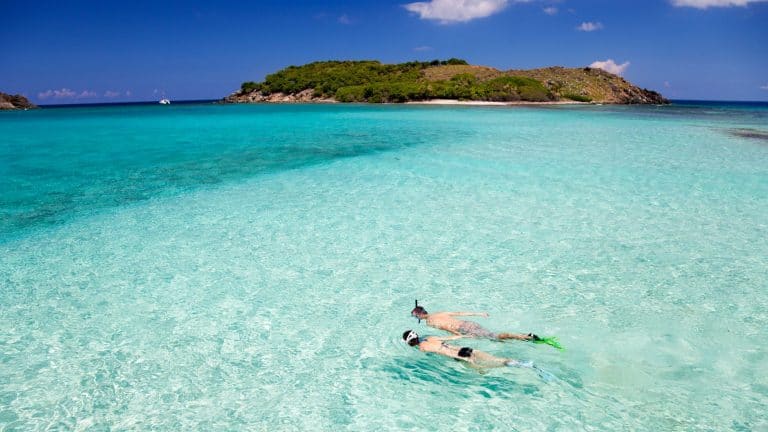
It’s the ultimate aquatic playground, a rare blend of aquamarine waters, emerald islands, and vibrant coral reefs. January weather is pure perfection, with mild temperatures and low humidity, ideal for exploring without looking like you just ran a marathon.
The park protects the northernmost section of the Florida Reef, which just so happens to be the third-largest coral reef system in the world. And this underwater metropolis is bustling with over 500 species of fish… all ready to photobomb your snorkeling selfies.
You can even explore shipwrecks along the Maritime Heritage Trail, where six wrecks spanning almost a century tell stories of some truly epic maritime fails. It’s an open-air museum, but you need fins instead of walking shoes.
Mammoth Cave National Park, Kentucky

While much of the country is dealing with winter weather, Mammoth Cave National Park offers a consistently perfect climate. No matter how cold it gets outside, the cave system stays at a comfortable 54°F, making it a brilliant escape from the January chill.
And this isn’t just any old cave; it’s the longest known cave system in the world, with over 420 miles of surveyed passageways. That is farther than the drive from Chicago to St. Louis, all tucked away underground.
The park offers a variety of tours, from easy, well-lit walks to more intense adventures that involve crawling and squeezing through tight spots (probably not the best time to wear your new white jacket). You’ll see stunning formations like Frozen Niagara, a massive flowstone deposit that looks like a petrified waterfall.
The cave is its own world, complete with unique ecosystems and eyeless creatures that have adapted to permanent darkness, like the Kentucky cave shrimp. It’s a subterranean wonderland that proves some of the best adventures are hidden right below the surface.
Gateway Arch National Park, Missouri

When you think “national park,” a giant, shiny metal arch in a city probably doesn’t pop into your head. But Gateway Arch National Park is a fascinating outlier, proving a park’s value isn’t always measured in miles of wilderness.
As America’s smallest national park, it honors one of the country’s biggest stories: the westward expansion of the United States. And visiting in January lets you skip the sweltering summer heat and the thick crowds that usually gather here.
You can even ride a tram to the top of the 630-foot-tall arch for incredible views of St. Louis and the Mississippi River without having to use your elbows to secure a window spot. Gotta love that bonus for coming in the off-season.
The entire structure is covered in stainless steel and is designed to sway up to an inch in high winds, a fun fact to recall when you’re 63 stories up.
Below the Arch, a fantastic museum details the lives of the pioneers and Native Americans who shaped the American West. It might not have canyons, but it offers a powerful connection to history, all within walking distance of a decent cup of coffee.
Virgin Islands National Park, U.S. Virgin Islands
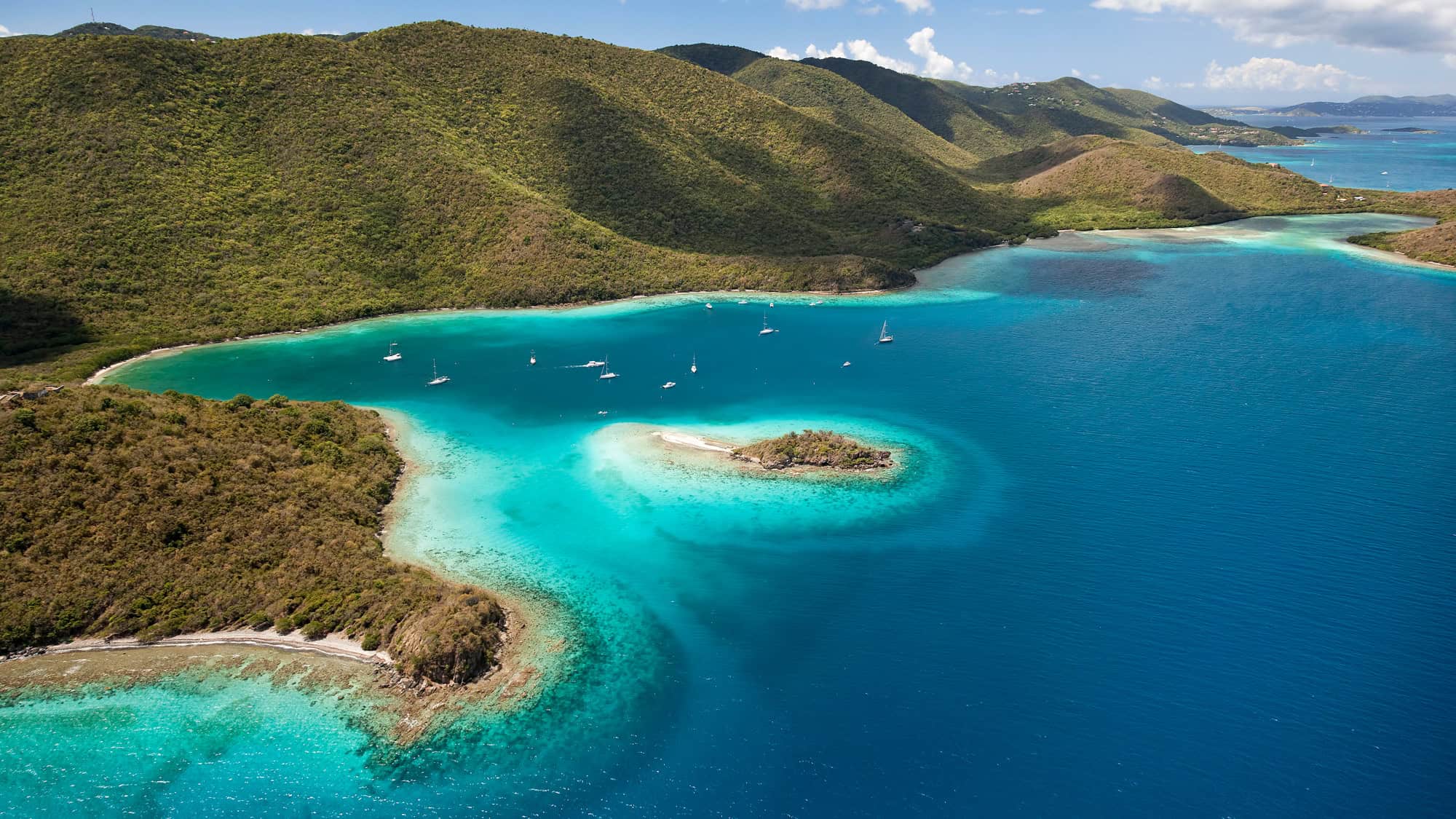
If you would prefer swapping snow boots for flip-flops, Virgin Islands National Park is calling your name. Covering about 60% of the island of St. John, this park is a postcard-perfect paradise of white-sand beaches, turquoise waters, and lush green hills.
While most of the U.S. is shivering, St. John is enjoying ideal weather with temperatures in the low 80s°F. And the park is famous for its world-class beaches, like Trunk Bay, which features a marked underwater snorkeling trail. You get to follow signs identifying different species of coral and fish, which is much more interesting than reading signs on the highway.
You can also hike to historic sugar plantation ruins that are being reclaimed by the forest, offering a peek into the island’s past.
The Reef Bay Trail is a great hike that descends through a shady forest, passes mysterious petroglyphs, and ends at a secluded beach. With over 20 trails and countless coves to explore, it’s a place where you can be as active or as lazy as you wish (and no one will judge you for choosing lazy).
Everglades National Park, Florida
Let’s be honest, the Everglades gets a bit of a bad rap. People hear “swamp” and immediately think of oppressive humidity, mosquitoes the size of small drones, and creatures with sharp teeth lurking in murky water.
While that’s not entirely wrong in the summer, January in the Everglades is a completely different world. This is the dry season, which means lower water levels, cooler temperatures, and far fewer mosquitoes trying to carry you away.
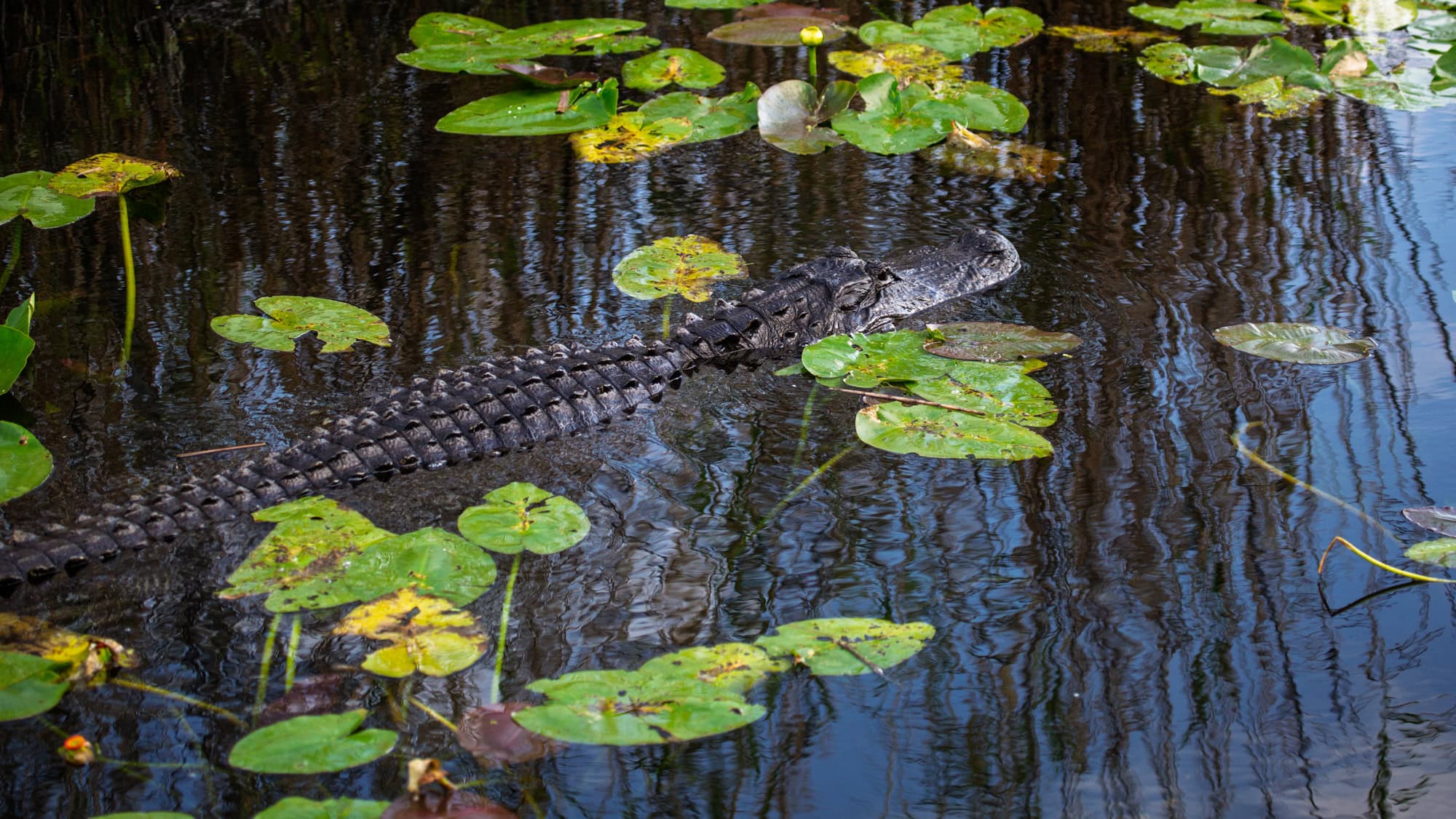
The receding waters concentrate wildlife around the remaining gator holes, turning the park into an all-you-can-see animal buffet. It’s nature’s version of a happy hour, and everyone’s invited.
Take a tram or bike the 15-mile loop in the Shark Valley area for guaranteed alligator sightings; they’ll be sunning themselves on the banks like scaly, prehistoric tourists who couldn’t care less about you.
And if you didn’t know, the Everglades is also the only place on Earth where alligators and crocodiles live together, so keep your eyes peeled for that rare crossover event.
Dry Tortugas National Park, Florida
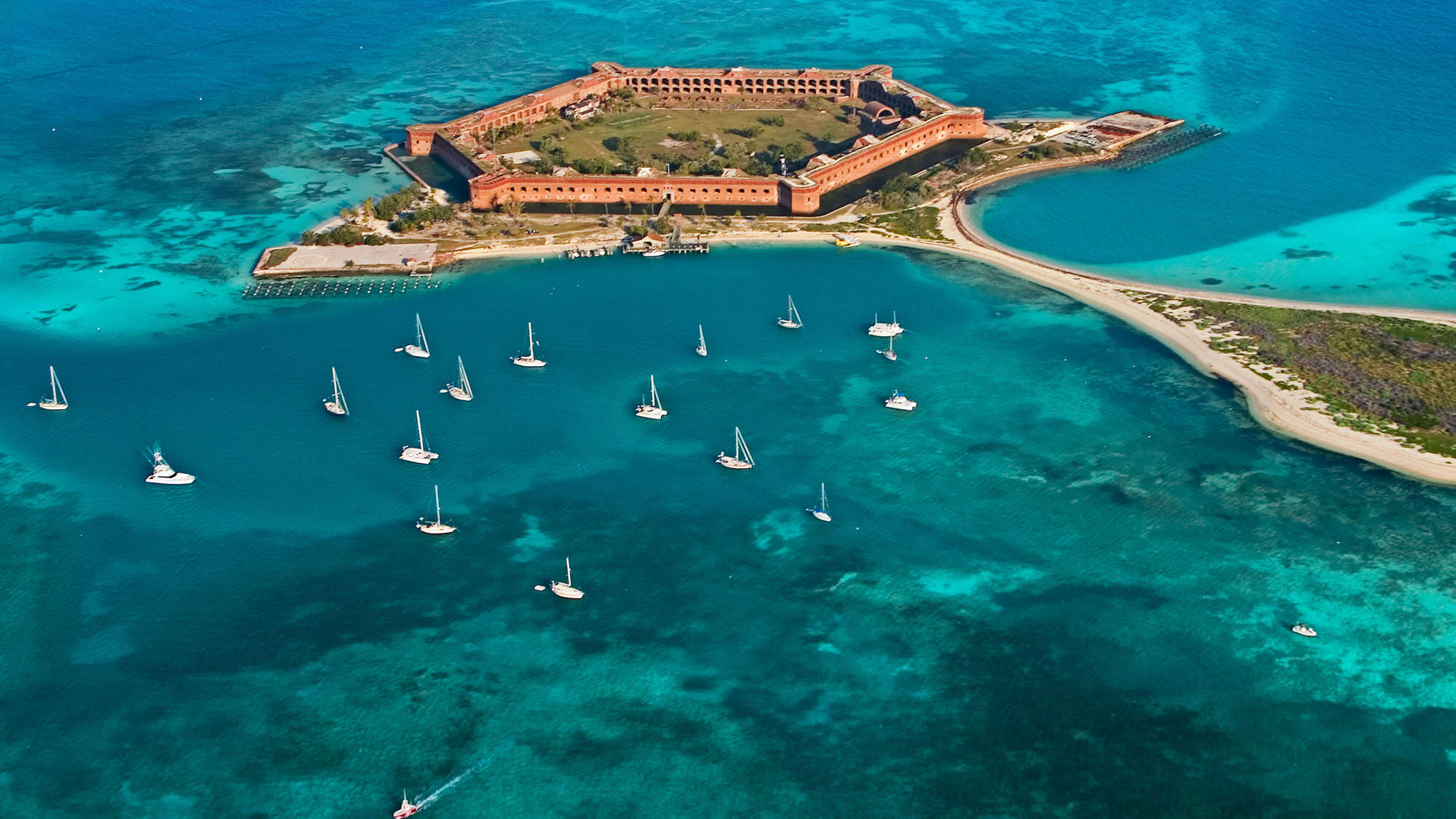
Getting to Dry Tortugas is half the fun, requiring a long ferry ride or a seaplane trip that will make you feel like you’re in a spy movie… minus the cool gadgets and tuxedo, unfortunately.
Located 70 miles west of Key West, this remote cluster of seven islands is about as off-the-grid as you can get without faking your own disappearance. The park’s main attraction is Fort Jefferson, a massive 19th-century fortress that looks like it was borrowed from a pirate’s dream board.
It is the largest brick masonry structure in the Americas, built from over 16 million bricks (which is probably more bricks than you’ll see in your lifetime unless you have a very specific hobby). And January offers calm seas and sunny skies, perfect for wandering the fort’s imposing walls.
The real treasure, however, is beneath the ridiculously clear turquoise water. The coral reefs here are some of the most pristine in the Florida Keys, offering world-class snorkeling right off the beach. You can swim with sea turtles, goliath groupers, and a whole cast of colorful tropical fish.
Hawaii Volcanoes National Park, Hawaii

If you want to see the Earth’s raw power of creation and destruction up close, there’s no better place than Hawaii Volcanoes National Park. Home to two of the world’s most active volcanoes, Kilauea and Mauna Loa, this park is a dynamic landscape of hardened lava fields, steaming craters, and surprisingly lush rainforests.
January brings great weather for exploring with fewer crowds than in the summer. You can take the Crater Rim Drive to appreciate the immense scale of the Kilauea caldera and walk through the Thurston Lava Tube, a 500-year-old cave formed by an underground river of molten rock.
The park also has over 150 miles of hiking trails that cross deserts, rainforests, and volcanic craters, so you can choose your own adventure.
Kilauea has been erupting almost continuously since 1983, adding hundreds of acres of new land to the Big Island. So make sure to see the glow of active lava at night. It’s a humbling reminder that the ground beneath our feet is very much alive and not just sitting there being boring.
Saguaro National Park, Arizona
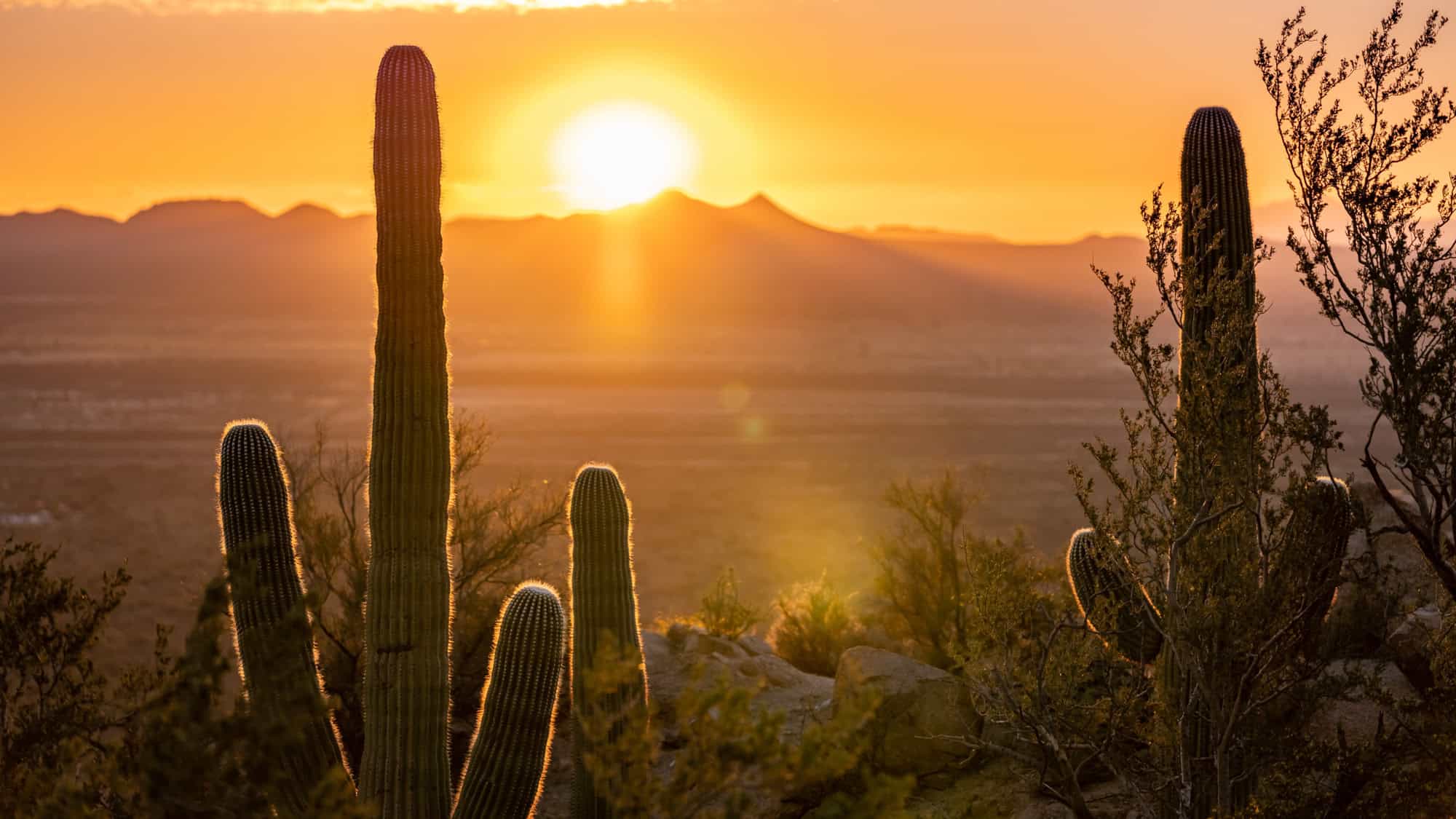
Nothing screams “American Southwest” quite like the iconic saguaro cactus, and this park is basically their kingdom. These majestic, multi-armed giants are found only in the Sonoran Desert and can live for over 150 years, growing up to 50 feet tall (almost as if they are trying to wave at airplanes).
Saguaro National Park, divided into two districts on either side of Tucson, protects the most magnificent forests of these cacti in the world. And January is the absolute prime time to visit, with daytime temperatures in the pleasant 60s°F, perfect for hiking. The summer, on the other hand, is an inferno you want no part of.
The park has over 165 miles of trails, from easy nature walks to challenging mountain treks. In the Rincon Mountain District to the east, you can drive the 8-mile scenic Cactus Forest Loop Drive.
The Tucson Mountain District to the west is known for its denser saguaro forests and incredible sunsets. Here, you can also check out ancient petroglyphs at Signal Hill, proof that people have been calling this desert home for thousands of years.
Haleakala National Park, Hawaii

A trip to Haleakala is like getting a two-for-one deal on parks. The Summit District is a stark, volcanic landscape that looks more like Mars than Maui, while the coastal Kipahulu District is a lush rainforest overflowing with waterfalls and bamboo.
January provides pleasant weather to both areas, though you should pack for all four seasons just in case. The summit, rising 10,023 feet above sea level, is famous for its breathtaking sunrises. Watching the sun paint the clouds from above is an unforgettable experience, though you’ll need reservations and warm clothes for the near-freezing temperatures (yes, in Hawaii). The volcanic crater is so vast that it could swallow the entire island of Manhattan.
It is also home to the Haleakala silversword, a bizarre plant that looks like a spiky silver pineapple and lives for up to 90 years, flowering only once before it dramatically dies… talk about a dramatic exit.
Down at sea level, the Kipahulu District features the stunning Pipiwai Trail, which winds through a dense bamboo forest to the 400-foot Waimoku Falls.
Like Our Content? Follow Us on MSN (or click the Follow Button above) for more from Discover Parks & Wildlife.
11 National Parks With Breathtaking Frozen Waterfalls To See In Winter

Ever wondered what happens when gravity and ice team up for the ultimate winter spectacle? Spoiler alert: it’s epic, and you’ll want to see it for yourself.
14 National Parks Offering Top Bird Watching Experiences This Winter
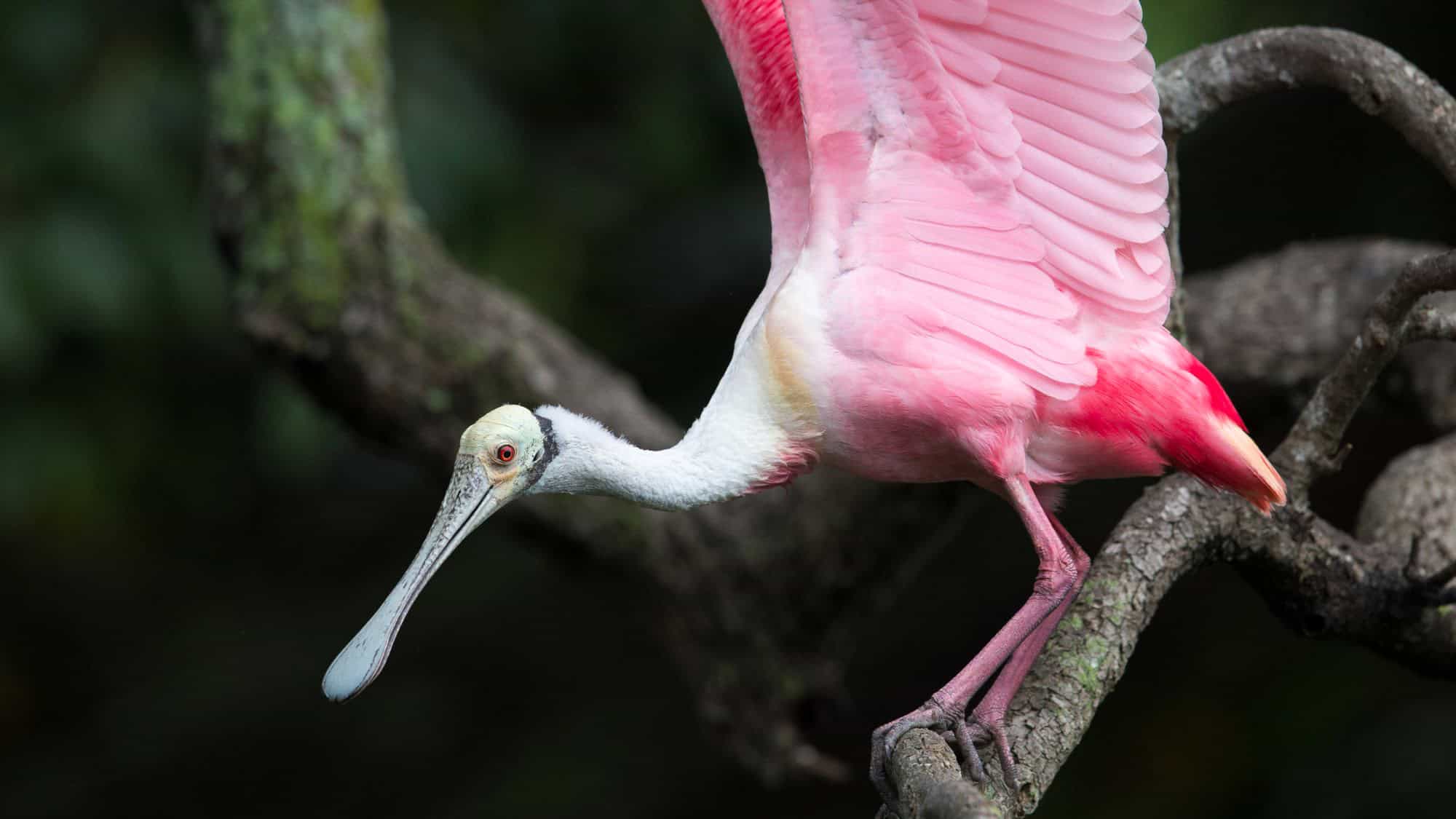
Think winter is just about snow and silence? Think again. It turns out, it’s also prime time for catching some feathered friends in action. You won’t believe who’s hanging out in the parks this season.
11 U.S. National Parks Where Snow Destroys Iconic Views
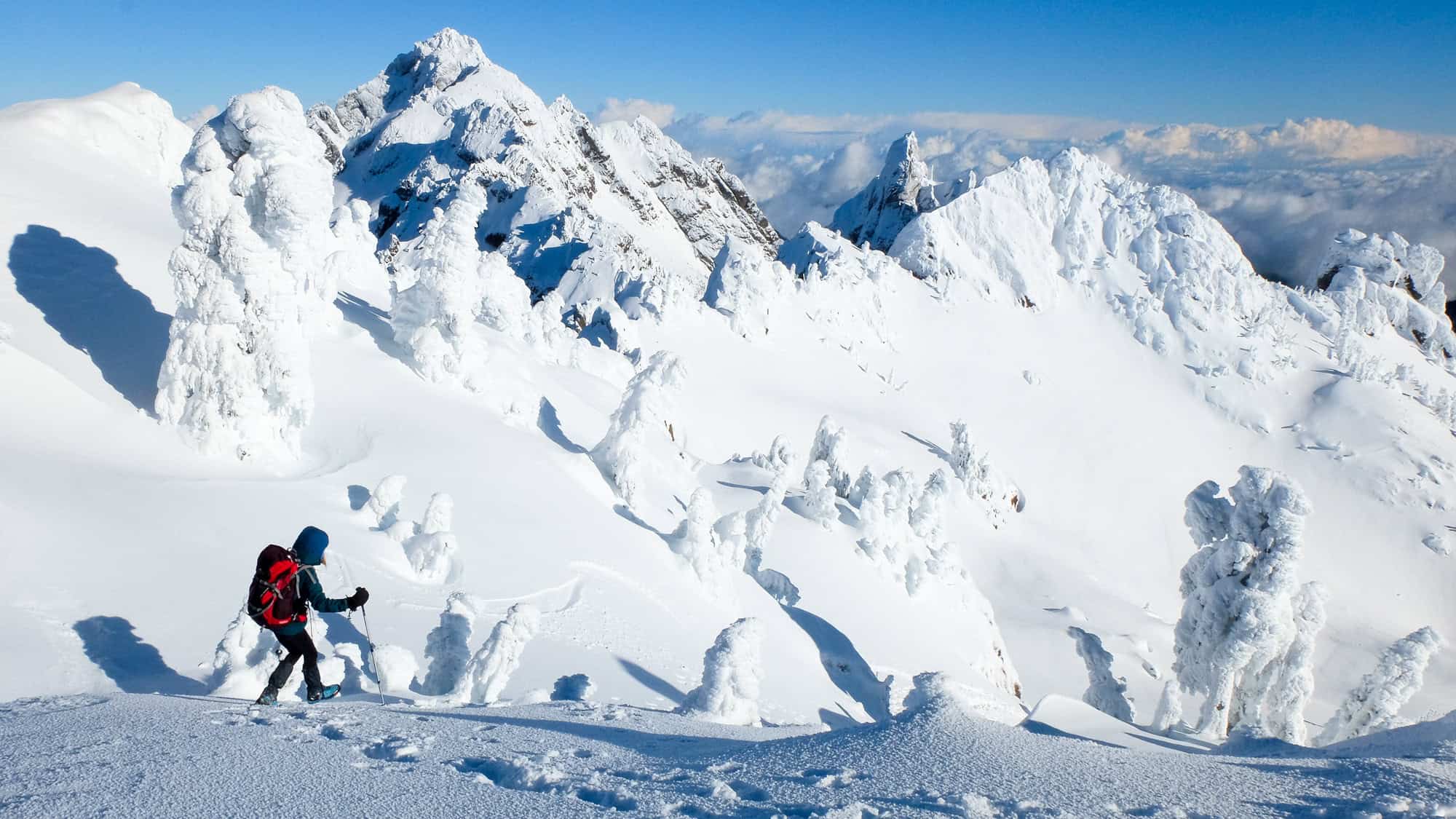
Thought you knew everything about breathtaking park views? Wait until you see what snow’s been up to. It’s flipping the script on iconic landscapes in ways you won’t believe.