Discover Parks & Wildlife contains affiliate links and is a member of the Amazon Services LLC Associates Program. If you make a purchase using one of the Amazon links, we may receive compensation at no extra cost to you. We may also use select AI tools to support our creative process, but all content is reviewed, refined, and finalized by our human team. See our disclosure policy and our AI use policy for more information.
15 Spectacular Canyons Around The Globe You’ll Want to Explore ASAP
There’s something about a canyon that makes you feel small in the best possible way. The kind of small that quiets your phone, hushes the noise in your head, and makes you look twice just to believe your own eyes.
Maybe it’s the way sunlight spills down stone walls, shifting from gold to rust to rose as the day rolls on. Or maybe it’s knowing that rivers carved these massive corridors grain by grain, long before GPS told us where to stand.
But what I do know is that these natural cathedrals stretch across continents, whispering the same story in different accents. Some cradle turquoise rivers; others guard hidden oases or ancient trails that seem to hum with history. But they are all incredible to see.
Each canyon has its own kind of magic, its own angle of light that catches your breath for just a second longer than you expected. And once you’ve stood on the edge of one, you’ll never look at flat land the same way again.
Grand Canyon, Arizona
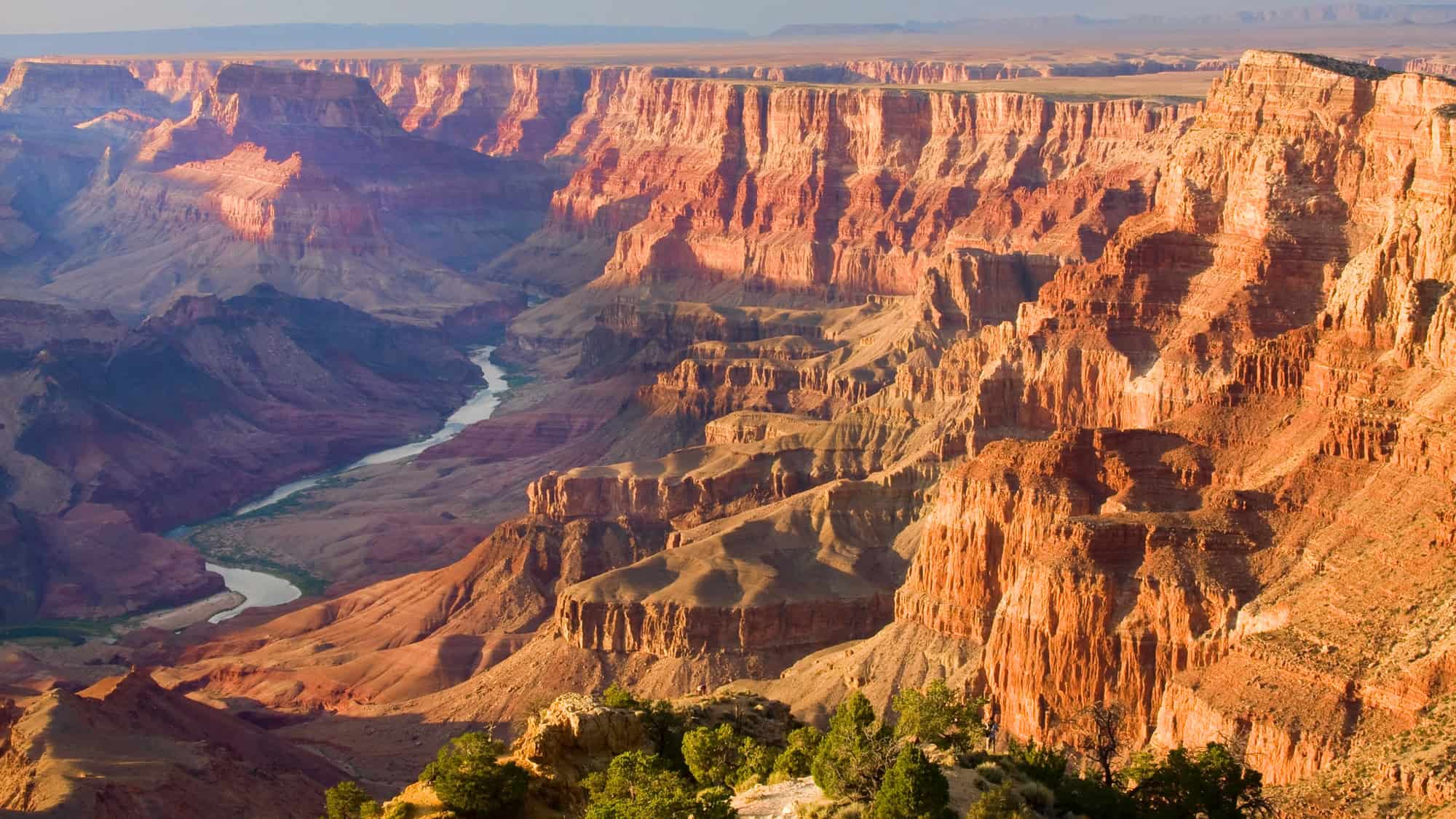
No photo ever truly does the Grand Canyon justice (though that doesn’t stop anyone from trying). Stretching 277 miles long and up to 18 miles wide, this Arizona marvel looks more like a painter’s fever dream than a slice of desert.
We’ve visited on several occasions, and somehow it still manages to take our breath away every time. Sunset on one trip was downright magical, with the light sliding across the canyon walls like liquid gold, deepening from amber to violet in minutes. And another time, we arrived to find the whole canyon socked in with fog so thick we couldn’t even see the bottom. It felt eerie and beautiful all at once, like standing on the edge of a cloud.
Most visitors start at the South Rim, where you can wander from Mather Point to Yavapai Observation Station, each lookout somehow grander than the last. If you prefer fewer crowds and a little mystery, the North Rim sits a thousand feet higher and feels like a secret only shared among the patient. You can hike the Bright Angel Trail or simply watch the light shift at sunset from a different angle.
Just remember, temperatures can soar above 100°F in summer, so early mornings are your best bet unless you enjoy feeling like a baked potato in hiking boots.
Blyde River Canyon, South Africa

The Blyde River Canyon in South Africa’s Mpumalanga province might just give the Grand Canyon a run for its money. It’s one of the largest green canyons in the world, blanketed in dense, subtropical forest that glows every shade of emerald after the rain.
We visited on our first trip to South Africa, and it was absolutely incredible. The hike up to God’s Window is no casual stroll; it’s a bit of an uphill trek that leaves you questioning your fitness halfway up. But once you reach the top, the view wipes all that away. From there, the land drops nearly 2,600 feet into a valley laced with rivers, waterfalls, and cliffs that fade into a soft, blue haze.
The sight is so vast your eyes don’t quite know where to land first. The “Three Rondavels,” towering rock formations shaped like traditional African huts, sit across the canyon like watchful sentries. And on a clear day, you can see all the way to the Lowveld, though mist often drifts in just to keep things dramatic.
Driving the Panorama Route (which is what we did) offers several overlooks worth pulling over for, each one just a little different from the last.
Tiger Leaping Gorge, China

Between two snowcapped peaks of China’s Yunnan province, Tiger Leaping Gorge cuts dramatically along the Jinsha River. Legend says a tiger once jumped across its narrowest point to escape a hunter, hence the name. Whether or not that’s true, the view feels mythical.
The main hiking route stretches roughly 14 miles, hugging cliffs that drop nearly 12,000 feet to the roaring river below. And guesthouses along the path offer tea and hot meals. Plus, waking up to sunrise over Jade Dragon Snow Mountain feels like cheating at travel photography.
Landslides can occasionally close sections, so check conditions before hiking. It’s not the easiest trek, but every turn seems designed to stop you mid-step in disbelief.
Colca Canyon, Peru

Twice as deep as the Grand Canyon, Colca Canyon in southern Peru is a vast, sunlit trench that could make even the most confident hiker rethink their leg day choices. Terraced fields from ancient Inca farmers cling to the walls, still green and productive after centuries. It creates a nice juxtaposition.
Early mornings are the best time to spot Andean condors gliding on thermal winds, their wings stretching nearly ten feet across as they float above the river far below. And the town of Chivay makes a good base, especially if you’re tempted by the nearby hot springs (trust me, you’ll want that soak).
Trails weave through villages, pre-Inca ruins, and steep cliffs where alpacas graze as casually as house cats. It’s quiet here, the kind of quiet that hums rather than echoes, with air so crisp it almost tastes sweet.
Tarako Gorge, Taiwan

Taroko Gorge, in eastern Taiwan, is carved from marble (yes, actual marble) that gleams white and silver under shifting sunlight. The Liwu River rushes through it, winding beneath towering cliffs that sometimes seem close enough to touch from the road.
The Shakadang Trail offers an easy stroll along turquoise water, while the Eternal Spring Shrine clings to a cliffside waterfall so perfectly that it looks staged. This is one of those places where you stop for “just one photo” and suddenly realize you’ve taken fifty.
The gorge sits inside Taroko National Park, where tunnels cut through mountains and hanging bridges sway above canyons. The best months to visit are October to April, when the air is crisp and typhoons are less likely. Bring a poncho anyway, the weather loves surprises.
Tara River Canyon, Montenegro

Carved through Durmitor National Park, the Tara River Canyon slices deep into Montenegro’s limestone mountains. It’s among Europe’s deepest gorges, plunging about 4,300 feet, and it feels almost too pristine to be real.
The water is the kind of blue you’d swear someone edited, clear enough to see smooth stones glinting beneath the surface. The Djurdjevica Tara Bridge arches elegantly over the river, and standing in the middle of it gives you a bird’s-eye view you won’t forget. Whitewater rafters love this place, though even from the banks, the sound of rushing water echoes like applause.
In spring, waterfalls tumble down from snowmelt, feeding into forests that look like they belong in a fairy tale. It’s not the largest canyon you’ll see, but it might be one of the most unexpectedly cinematic.
Kings Canyon, Australia

In the heart of Australia’s Northern Territory sits Kings Canyon, part of Watarrka National Park. It’s not the biggest canyon on the list, but it’s got the kind of otherworldly beauty that could make you forget how to blink. The red sandstone walls rise more than 300 feet, glowing fiery orange at sunrise and sunset.
The nearly 4-mile Rim Walk offers the best views, looping past rock domes known as the “Lost City” and a serene waterhole called the Garden of Eden. I mean, once you see it, you will understand why no other name fits something that pretty. But the trail can get brutally hot by midmorning, so starting early isn’t optional; it’s survival.
Kings Canyon may be remote, but that’s part of its charm. Out here, even the silence feels ancient, and the horizon seems to go on forever.
Copper Canyon, Mexico

Deep in the Sierra Madre Occidental of northern Mexico lies Copper Canyon, a network of six vast canyons larger and deeper than the Grand Canyon itself. The name comes from the copper-green hue of its canyon walls, shimmering at sunset as if someone polished the rock for dramatic effect.
The best way to see it is aboard the Chihuahua al Pacifico Railway (locals just call it El Chepe), which winds over 30 bridges and through 80 tunnels before dropping into the canyon’s heart. And Tarahumara villages perch along the cliffs, their bright homes scattered like wildflowers against the rugged slopes.
You can ride horseback near Creel, hike to Basaseachic Falls, or simply sit back with a plate of fresh tortillas and watch clouds pour into the gorge like fog from a dream. The altitude swings can surprise you: one moment you’re in pine forests, the next surrounded by cactus. But that’s part of its untamed beauty.
Fish River Canyon, Namibia

The Fish River Canyon stretches across southern Namibia like a scar carved by time itself. It’s Africa’s largest canyon, 100 miles long and almost 1,800 feet deep, with layers of rock that read like an open geology textbook. The land looks harsh, but there’s a strange softness in its silence.
Sunlight catches on the quartz and dolerite, giving the cliffs a faint shimmer by late afternoon. And the most famous viewpoint sits at Hobas, where the river below twists in a lazy horseshoe bend that photographers adore.
Hiking the canyon is not for the faint of heart. The full trail runs over 50 miles and can take up to a week, but the views make every dusty step worth it if you attempt it. Just keep in mind that summer temperatures often rise above 100°F, so the season between May and September is best.
Samaria Gorge, Greece

Crete’s Samaria Gorge isn’t vast like the Grand Canyon, but it packs drama into every mile. And it one-ups the Grand Canyon with its epic trail at the bottom. The trail runs about ten miles through White Mountains that rise like marble walls on either side.
At its narrowest point, known as the “Iron Gates,” the cliffs close in to about ten feet apart but tower nearly 1,000 feet above you. The path begins in a pine forest at Xyloskalo and ends at the Libyan Sea, where a dip in the blue water feels well-earned.
Along the way, you’ll spot Cretan goats called kri-kri hopping effortlessly across cliffs (they truly make the human hikers look clumsy). The gorge closes during winter and heavy rain, so plan your visit between May and October. Don’t forget to bring sturdy shoes, patience for steep descents, and maybe a little humility… gravity always wins here.
Waimea Canyon, Hawaii

Nicknamed the “Grand Canyon of the Pacific,” Waimea Canyon stretches 14 miles across the western side of Kauai. And its layered red and green walls catch the island’s sunlight in ways that seem almost unfair to the rest of Earth. Rain showers sweep through in quick bursts, leaving behind sudden rainbows and mist that make the canyon look freshly painted.
The Waimea Canyon Drive winds up to several overlooks, including Pu’u Hinahina and Pu’u o Kila, where the Napali Coast peeks out in the distance. And hikers can tackle the Canyon Trail to Waipo’o Falls, a two-tiered waterfall that feels straight out of a travel brochure.
The air here smells faintly of guava and wet soil, and the silence is so soft it almost feels padded. Just be prepared for rooster calls echoing down the canyon. They’re the unofficial soundtrack of Kauai.
Verdon Gorge, France
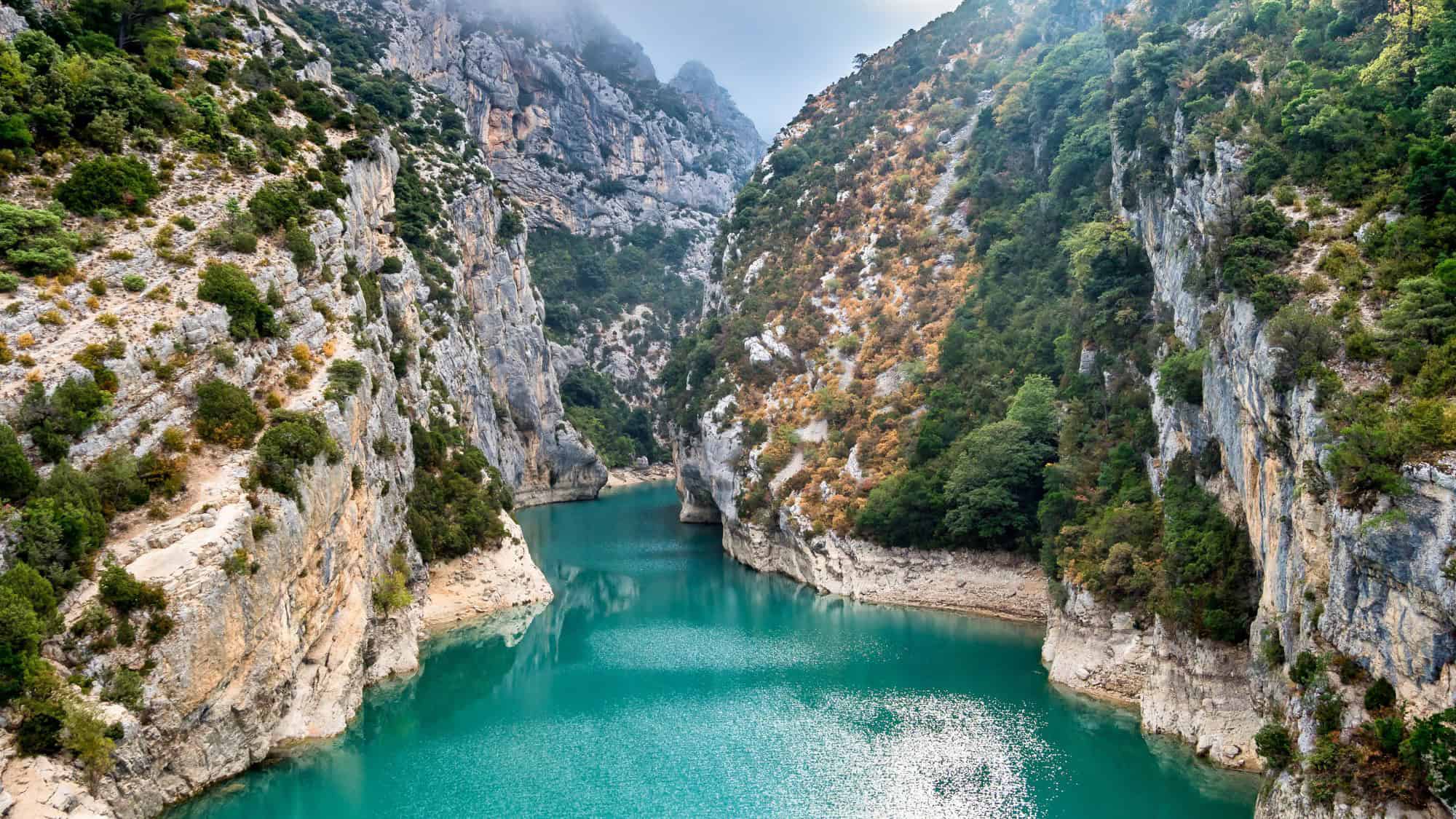
In southern France’s Provence region, Verdon Gorge slices through limestone cliffs with water so turquoise it could make a Caribbean beach jealous. And the Verdon River sparkles below as kayakers glide between towering walls nearly 2,300 feet high.
Scenic drives along the Rim Road reveal endless switchbacks and picnic spots where baguettes taste better just because of the view. The small town of Moustiers-Sainte-Marie sits nearby, its stone houses spilling down a hillside like something from a watercolor painting.
If you’re feeling brave, local guides offer rock climbing and paragliding, but honestly, sipping espresso while staring into the canyon feels just as thrilling. The gorge gets busy in summer, so early mornings or late afternoons are your best bet for quieter moments.
Itaimbezinho Canyon, Brazil

Hidden in southern Brazil’s Aparados da Serra National Park, Itaimbezinho Canyon is narrower than some but no less breathtaking. Sheer cliffs plunge nearly 2,300 feet into a deep green valley where waterfalls tumble in slow motion.
The most popular trails (Trilha do Cotovelo and Trilha do Vertice) follow the rim, offering panoramic views without requiring a full day’s hike. And morning mist lingers until late, giving everything a dreamy haze that photographs almost too well.
The name “Itaimbezinho” comes from the local Tupi-Guarani language, meaning “cut rock,” which feels like an understatement once you’re standing at the edge. Please note that the park limits visitors to protect fragile vegetation. So a bit of planning may be required. But that just keeps it blissfully quiet except for birdsong and the distant roar of water.
Charyn Canyon, Kazakhstan

Tucked away in Kazakhstan’s vast steppe, Charyn Canyon feels like a smaller, secret cousin of Arizona’s red-rock landscapes. The “Valley of Castles” section is the star, where wind and water have sculpted the cliffs into towers and spires that look hand-carved.
The colors shift from gold to crimson depending on the hour, and at sunset, the whole canyon glows like embers. It’s about a three-hour drive from Almaty, making it a perfect day trip for travelers craving something wild but accessible.
You can hike down to the river, camp overnight, or just stand at the rim feeling delightfully insignificant. In winter, light snow dusts the formations, adding a quiet surrealism that makes it feel like another planet.
Sianok Canyon, Indonesia

Tucked behind the busy town of Bukittinggi in West Sumatra, Sianok Canyon feels like a secret garden hiding in plain sight. It’s emerald valley winds between steep cliffs lined with palm trees, rice fields, and the occasional water buffalo wandering by.
A small river snakes through the gorge, reflecting early morning light in perfect stillness. Locals call it “The Dreaming Valley,” which makes sense once you see mist lifting from the fields at sunrise. There’s even a Japanese World War II tunnel built into the cliffs… a reminder that peace and beauty often share strange neighbors.
The canyon is easy to reach, so you can sip strong coffee in town one moment and be staring into a lush green abyss the next. It’s the kind of beauty that doesn’t announce itself; it just sits quietly, waiting to be noticed.
Like Our Content? Follow Us on MSN (or click the Follow Button above) for more from Discover Parks & Wildlife.