Discover Parks & Wildlife contains affiliate links and is a member of the Amazon Services LLC Associates Program. If you make a purchase using one of the Amazon links, we may receive compensation at no extra cost to you. We may also use select AI tools to support our creative process, but all content is reviewed, refined, and finalized by our human team. See our disclosure policy and our AI use policy for more information.
13 Forgotten National Park Units With Surprising Stories
There’s something irresistible about the NPS sites no one talks about. They sit quietly in their corners, overshadowed by the Grand Canyons and Yosemites of the world, holding stories that never asked for headlines.
These are the places that whisper rather than shout, the ones you stumble upon and then can’t stop thinking about. You don’t visit them for postcard fame; you go because they surprise you, because their beauty feels earned.
Some tell stories carved into rock or bone, others remind you how much courage it takes just to survive. In these places, history hides under sagebrush, behind church doors, or in caves that have seen more centuries than we can count. And each has its own secret rhythm: sometimes eerie, sometimes uplifting, always unforgettable.
If you’ve ever thought you’d seen everything the National Park Service had to offer, these hidden gems will prove you delightfully wrong. Just remember to bring curiosity and a good pair of shoes.
Russell Cave National Monument, Alabama

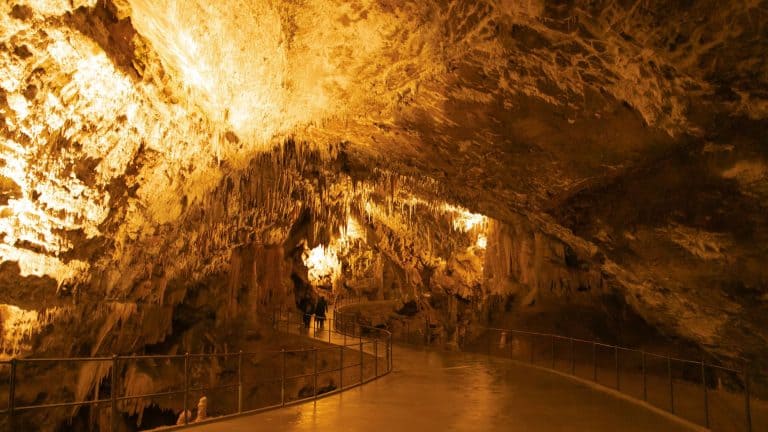
Russell Cave is the kind of place that makes you lower your voice without realizing it. Hidden in northern Alabama’s forested hills, this limestone cave sheltered humans for over 10,000 years, long before anyone thought to write down stories.
Archaeologists have found tools, pottery, and animal bones showing how different cultures adapted over millennia. In short, it’s Alabama’s original timeshare… just without plumbing.
The air stays cool and damp, the kind that clings to your sleeves and feels ancient. And outside, boardwalks wind through lush woods before revealing the cave’s yawning entrance, a mouth big enough to swallow history whole. It’s not flashy, there are no neon signs or gift shops, but that’s the point. You come here for quiet awe, not spectacle.
Standing at the threshold, you realize that for thousands of years, this was home. People laughed here, cooked here, raised families here. It’s humbling and oddly comforting to know that long before smartphones and highways, humans already knew a good shelter when they found one.
Knife River Indian Villages National Historic Site, North Dakota
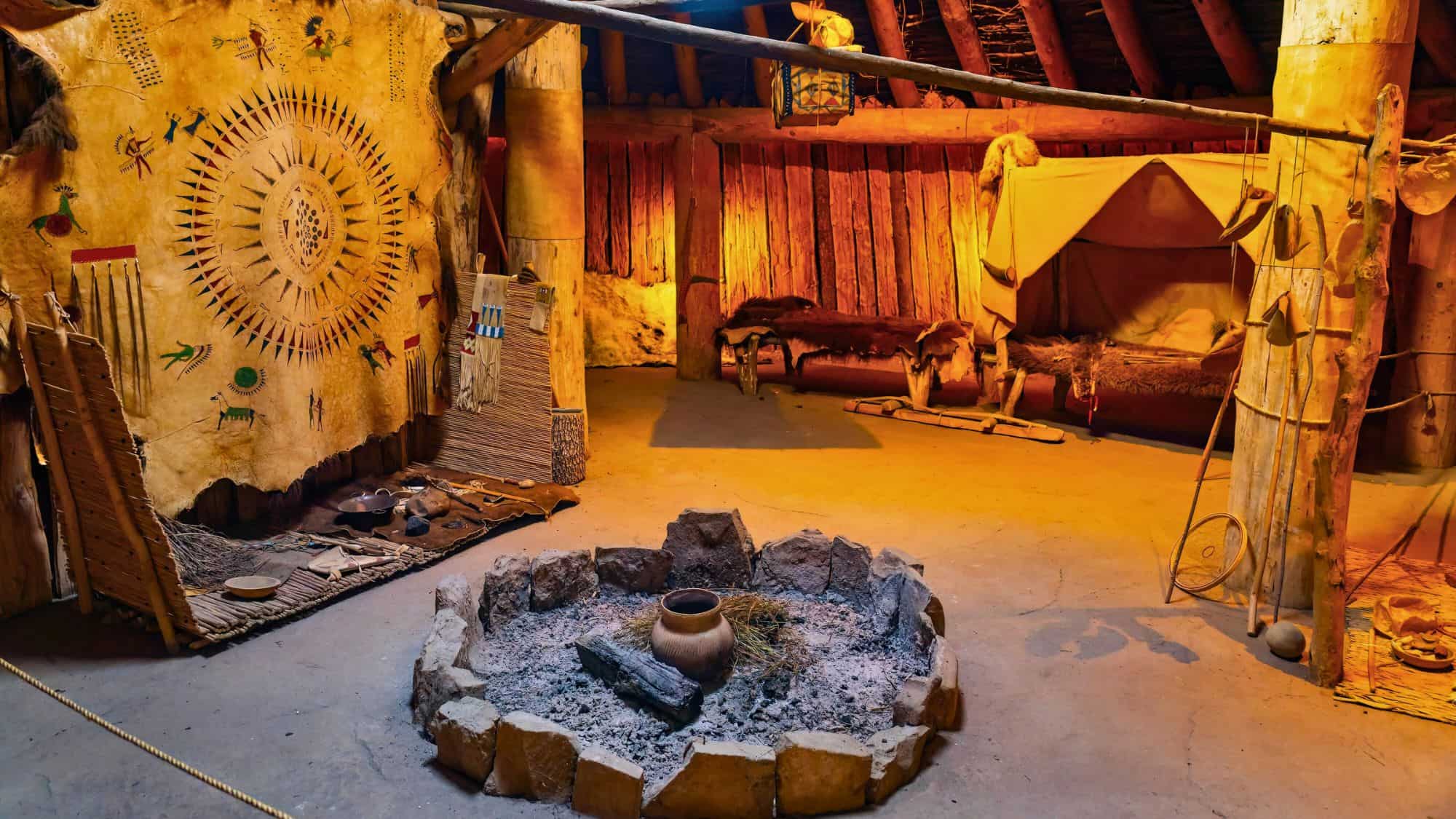
On the open prairie of North Dakota, the Knife River Indian Villages feel calm in a way that sneaks up on you. Centuries ago, this was the bustling heart of Hidatsa and Mandan trade, a hub of earthlodges and agriculture where families thrived (despite winters that could freeze your eyelashes mid-blink).
The reconstructed lodge smells faintly of willow and soil, its round walls cozy against the endless sky outside. When you look around, it’s hard not to imagine the sound of laughter and the rhythm of work that once filled this valley. The women here managed sophisticated farms of corn, beans, and squash. And traders traveled from distant coasts, bringing shells, obsidian, and copper.
Every artifact on display, from delicate beadwork to iron tools, tells a story of connection and endurance. There’s a quiet confidence to this place, a reminder that civilizations flourished here long before any explorers arrived with notebooks and flags. The land remembers, and if you listen long enough, it tells you exactly who built the foundation of the Great Plains.
Lava Beds National Monument, California

If Mars had a vacation home, it would look suspiciously like Lava Beds. This northern California monument sprawls across a desert of jagged basalt, where more than 700 lava tube caves twist and turn beneath the surface. Each one has its own personality: some are roomy, others require the flexibility of a yoga instructor.
The caves stay cool year-round, and stepping into one feels like time-traveling straight into Earth’s core. But beneath the geological wonder lies a fierce human story. This is where the Modoc people, led by Captain Jack, defended their homeland against the U.S. Army during the Modoc War of 1872–73. They used the rugged lava as their fortress, outsmarting troops for months.
And standing among the black rock and silence, you understand why. It’s a landscape built for hiding and surviving. Today, the park also happens to offer some of California’s clearest night skies, perfect for stargazing, or, if you’re brave, for realizing just how dark “dark” really is.
Florissant Fossil Beds National Monument, Colorado
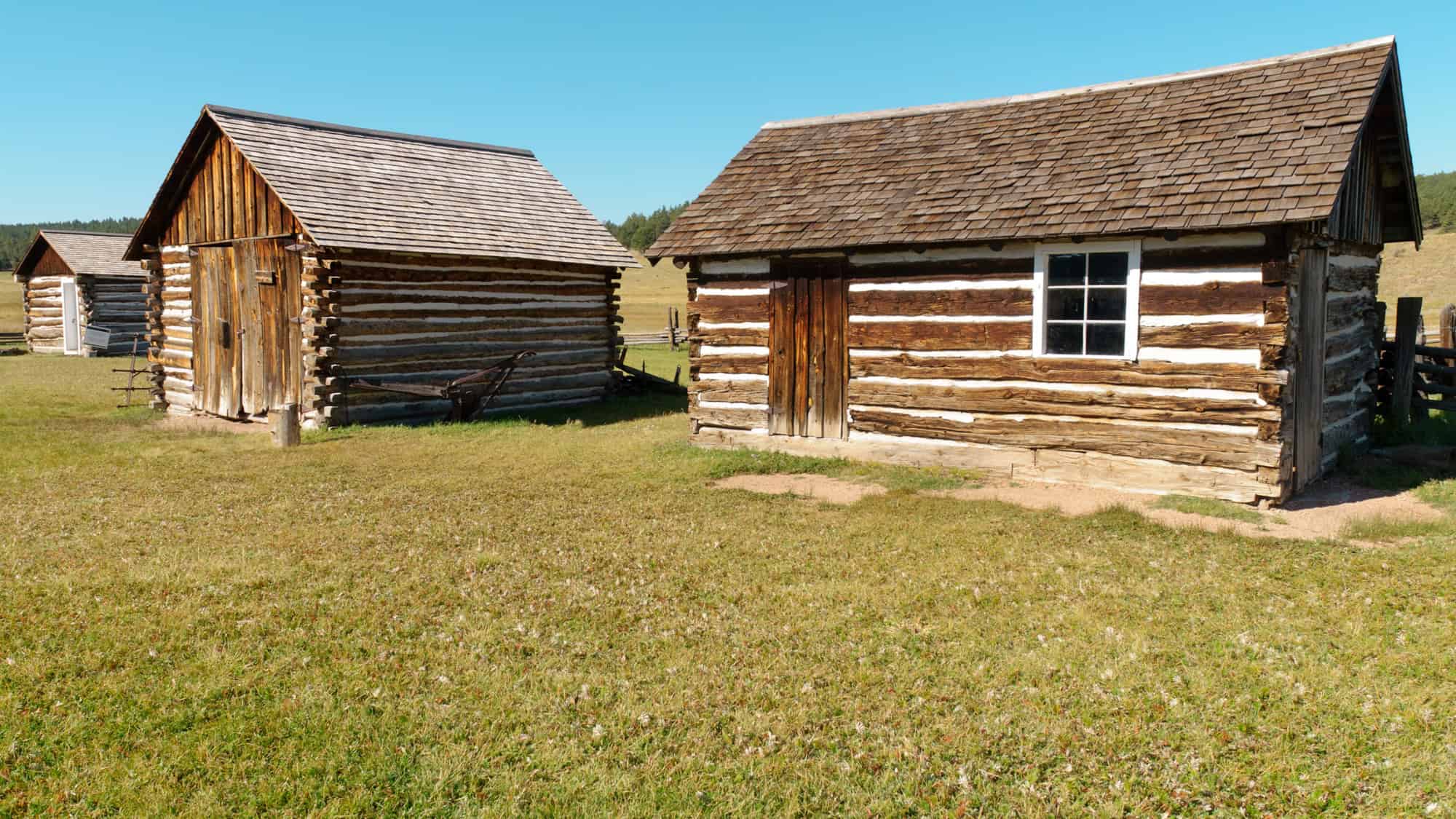
Colorado has a knack for stealing the show with its peaks and ski slopes, but the real drama at Florissant Fossil Beds happened 34 million years ago. A volcanic eruption buried an entire valley in ash, perfectly preserving plants and insects that look like they could still buzz or bloom.
Scientists have identified over 1,700 species here, including delicate butterflies and wasps that would make any entomologist weak at the knees. The star attractions, though, are the massive petrified redwood stumps (some wider than a pickup truck), proof that this now-cool valley once hosted a subtropical forest.
Trails loop through meadows and forests where you half expect a giant dragonfly to land on your shoulder. And the air smells clean and ancient, like rain on stone. Turns out, Colorado’s mountains may make you look up in awe, but this place makes you look down and realize how much life leaves behind.
Tule Springs Fossil Beds National Monument, Nevada

Just north of Las Vegas, where the casinos fade into scrubland, Tule Springs reminds you that not all the city’s history involves slot machines. This desert once hosted mammoths, camels, and saber-toothed cats. That right there is proof that Nevada used to be prime real estate long before neon arrived.
The landscape is stark, cracked, and strangely beautiful. Paleontologists call it a fossil jackpot, though you won’t find skeletons neatly laid out; most discoveries hide in fragments scattered across dry washes.
The monument was only established in 2014, making it one of the Park Service’s youngest members, but its story stretches back hundreds of thousands of years. There’s no visitor center yet and no paved trails, just wide horizons and the occasional raven supervising your hike.
If you ever need perspective, this place delivers: Las Vegas may sparkle, but it’s got nothing on a landscape that still remembers mammoths.
Nicodemus National Historic Site, Kansas

In the middle of the Kansas plains that seem to stretch forever, Nicodemus stands as living proof of resilience. Founded in 1877 by formerly enslaved people seeking a new start, this tiny town became a beacon of Black independence.
Life here wasn’t easy (droughts, blizzards, and isolation made sure of that), but the settlers refused to give up. They built churches, schools, and businesses, turning a windswept prairie into a home. Today, a few original buildings still stand, their weathered boards whispering the stories of those who wouldn’t quit. And the interpretive center tells of hope and determination stronger than any storm.
Each summer, descendants gather for Homecoming, filling the quiet streets with laughter that feels like a continuation rather than a memory. But at the end of the day, Nicodemus isn’t a monument frozen in time; it’s alive, stubborn, and proud. Kansas may be flat(ish), but the spirit that built this town has more backbone than any mountain.
Kalaupapa National Historical Park, Hawaii

Kalaupapa sits on one of the most beautiful (and tragic) coastlines in Hawaii. Towering sea cliffs seal it off from the rest of Molokai, creating a natural isolation that once served a heartbreaking purpose.
In the 1860s, people diagnosed with Hansen’s disease were forcibly sent here, cut off from their families and the world. More than 8,000 lived and died on this remote peninsula. Yet what could have been only a story of suffering became one of resilience and compassion. Residents built churches, played music, fell in love, and created community against impossible odds.
Access is restricted to preserve the dignity of the site, but even from above, it’s breathtaking. Kalaupapa reminds you that paradise can hold pain, and courage sometimes wears a humble face.
Minuteman Missile National Historic Site, South Dakota

There’s something unnerving about standing on a sunny prairie knowing a Cold War missile once lurked below your feet. At Minuteman Missile National Historic Site, the unassuming grassland hides a reminder of just how close humanity tiptoed to disaster.
Visitors can descend into an actual launch control center, complete with vintage phones and that red button everyone hopes was never pressed. The rooms are cramped and sterile, filled with the kind of 1960s optimism that tried to make nuclear war look organized.
Above ground, the silo’s heavy blast doors sit open, harmless now but still menacing. But the contrast is jarring: prairie wildflowers swaying gently above what was once the world’s most dangerous machinery. It’s fascinating, unsettling, and weirdly ordinary all at once.
Turns out, the apocalypse was waiting under South Dakota the whole time… and we were too busy driving past to notice.
Pea Ridge National Military Park, Arkansas

Today, Pea Ridge looks peaceful, with rolling hills, blooming meadows, and the occasional deer. But in 1862, this was the site of one of the Civil War’s most decisive battles west of the Mississippi. Union forces clashed with Confederate troops in a brutal two-day fight that kept Missouri under Union control.
The park preserves over 4,000 acres, remarkably intact, so it’s easy to trace troop movements or follow the self-guided drive through the battlefield. Cannons still dot the landscape, quiet now but impossible to ignore.
The visitor center’s exhibits balance history with humanity, showing personal artifacts that make the conflict feel painfully real. Pea Ridge obviously doesn’t have the fame of Gettysburg, but that’s part of its strength. It lets the silence do the talking. Standing on the ridge, it’s hard not to feel both the beauty of the land and the cost of holding it.
Agate Fossil Beds National Monument, Nebraska
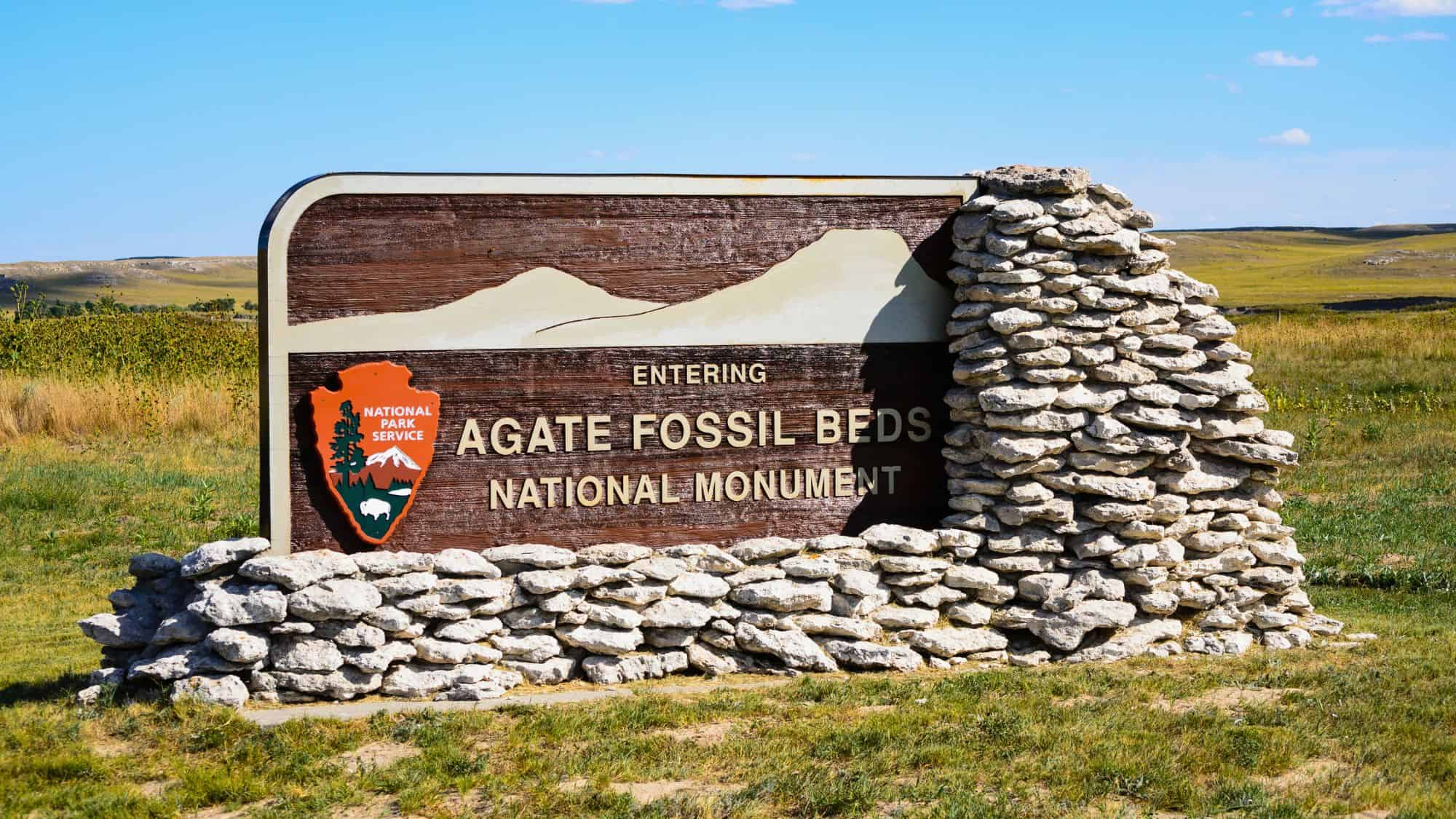
If Nebraska had a secret identity, this would be it. Agate Fossil Beds looks like rolling prairie, until you realize it’s hiding a prehistoric treasure trove. Millions of years ago, this was a watering hole for rhinos, camels, and massive pig-like beasts that make modern animals look underdressed.
The fossils discovered here are astonishing. Picture bones twisted in layers of ancient mud, telling a story of drought, desperation, and survival. Inside the visitor center, you’ll also find the James Cook Collection, an extraordinary trove of Lakota artifacts gifted by Chief Red Cloud’s family. It’s an unexpected pairing: fossils and friendship.
The trails outside wind through grassy hills where hawks circle overhead, and the wind sounds suspiciously like whispering. Honestly, it’s easy to forget you’re in Nebraska at all. And this place proves that the middle of nowhere can hold the biggest surprises.
Homestead National Historical Park, Nebraska

If determination had a zip code, it would be Beatrice, Nebraska. Homestead National Historical Park tells the story of the 1862 Homestead Act, which offered land to anyone gutsy enough to farm it for five years. Over 1.6 million people took that challenge, reshaping the entire American landscape in the process.
The restored tallgrass prairie sways where hopeful settlers once plowed, and the visitor center’s exhibits pull no punches about how tough that life really was. You can still visit the Freeman School, where kids once learned arithmetic and perseverance in equal measure. And the museum manages to make a plow look heroic (which feels about right).
Out on the trails, the wind blows through grass that’s taller than your knees, and you can’t help thinking about all the calloused hands that turned this soil into home. It’s not glamorous, but it’s the kind of history that built everything else.
Hopewell Culture National Historical Park, Ohio
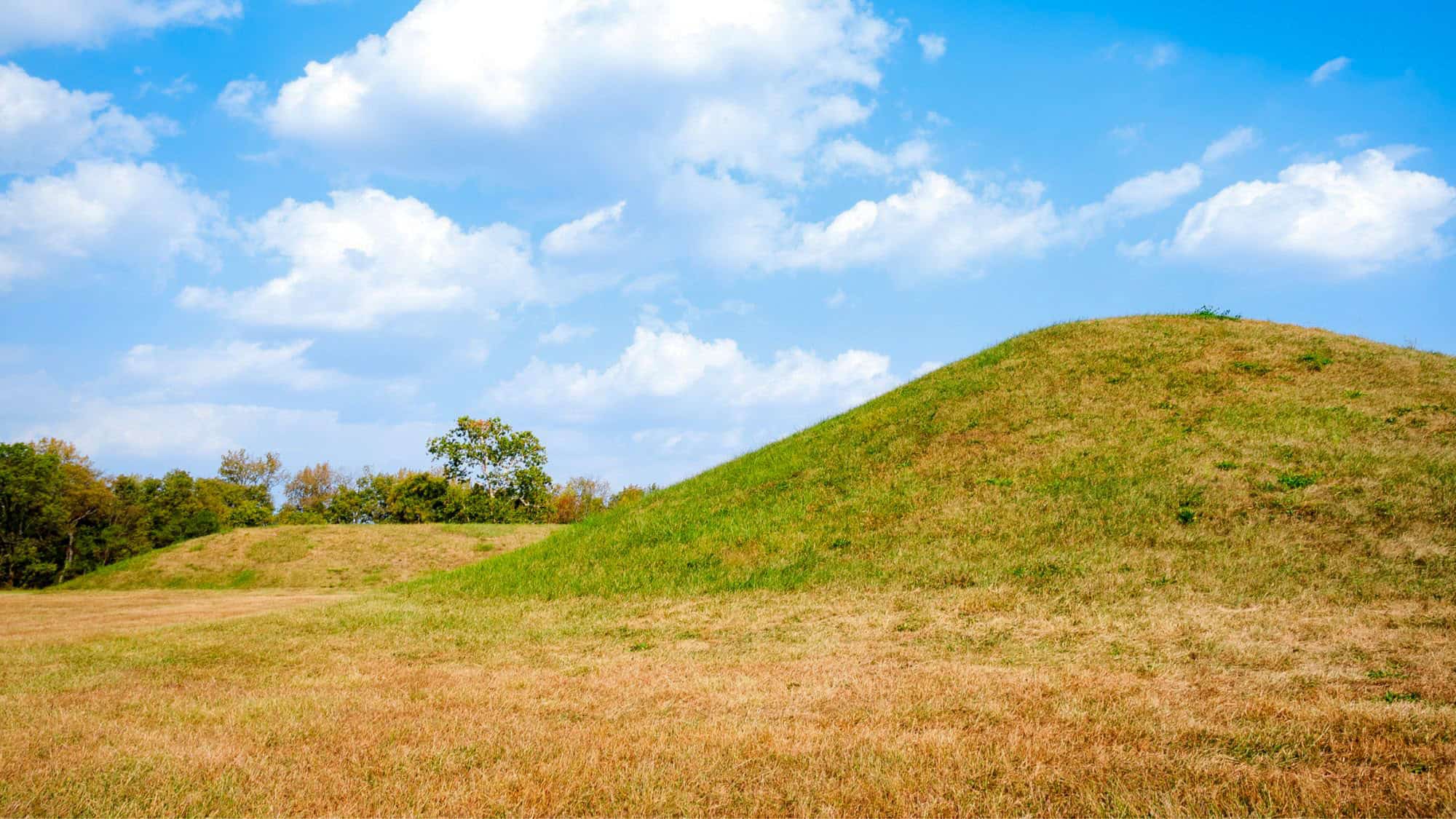
In southern Ohio, grassy mounds rise and curve with a precision that seems almost mystical. But these earthworks were built over 1,500 years ago by the Hopewell people, who managed to create massive geometric designs without metal tools or modern math. Just pure ingenuity. Some formations even stretch more than 1,000 feet across, aligned perfectly with celestial events.
Archaeologists have found trade goods from as far away as Yellowstone and the Gulf Coast, proof that these builders were part of a vast network long before the word “networking” existed. And walking the trails, you’ll feel a hush settle over you. Almost as if the earth itself still remembers the ceremonies held here.
The scale is impressive, but what really gets you is the artistry. It’s a reminder that ancient doesn’t mean primitive; it means enduring.
Aniakchak National Monument and Preserve, Alaska
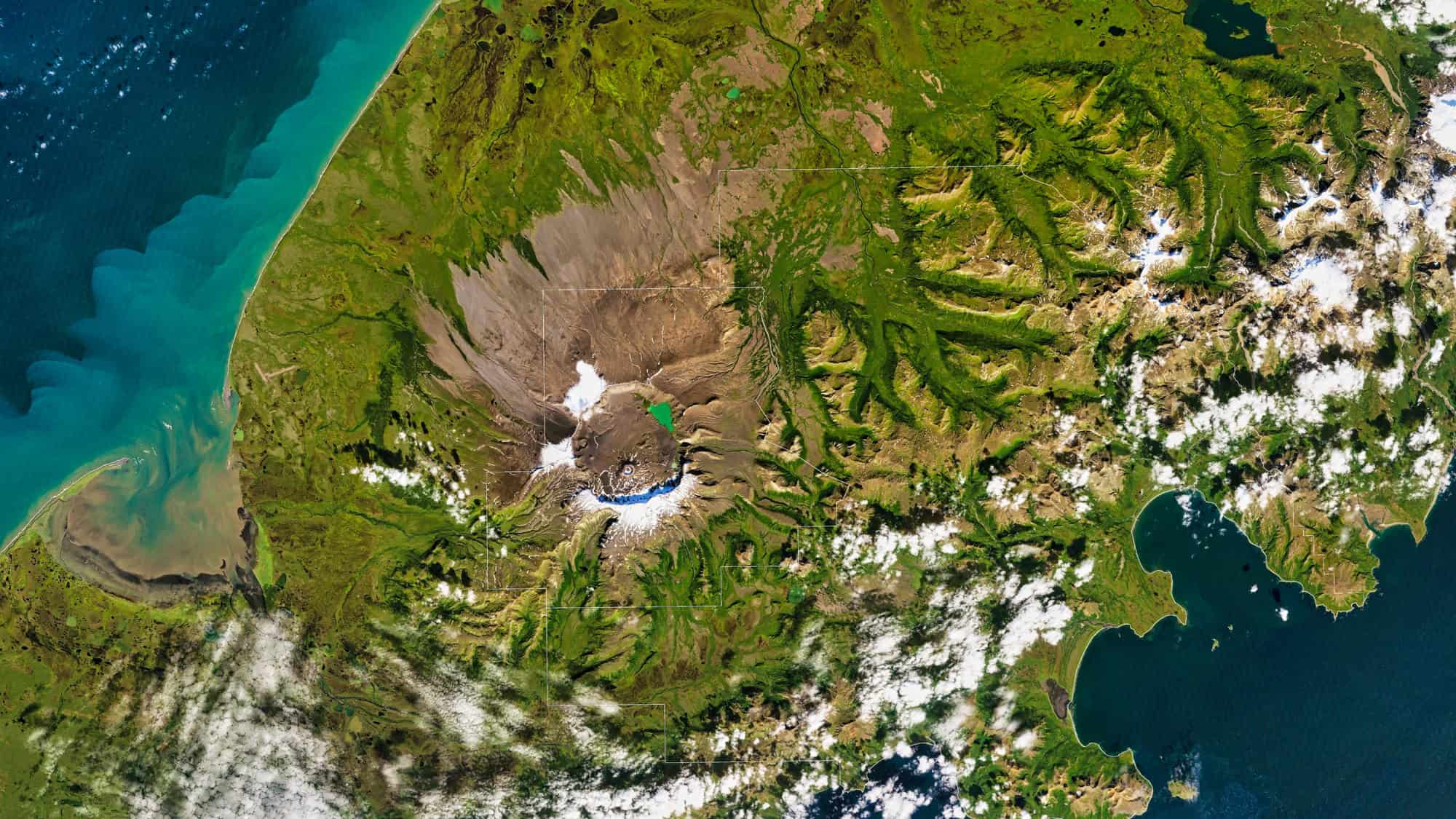
Aniakchak doesn’t care about convenience. Reached only by bush plane, this six-mile-wide volcanic caldera in remote Alaska offers all the drama of Yellowstone without the crowds… or, frankly, the safety nets.
The crater floor is a chaos of black rock, steaming vents, and a river that literally bursts out of the caldera wall. It’s wild in the truest sense. Think unpredictable, untamed, and probably laughing at your weather app.
Fewer than 200 people visit each year, mostly because just getting there requires luck and a pilot with nerves of steel. But those who make it describe something beyond words: the raw pulse of a planet still making itself.
Brown bears roam freely, salmon streak through rivers, and silence stretches for miles. It’s equal parts magnificent and mildly terrifying. If America’s wilderness had a personality, Aniakchak would be the moody one that doesn’t text back, but you’d still want to visit.
Like Our Content? Follow Us on MSN (or click the Follow Button above) for more from Discover Parks & Wildlife.