Discover Parks & Wildlife contains affiliate links and is a member of the Amazon Services LLC Associates Program. If you make a purchase using one of the Amazon links, we may receive compensation at no extra cost to you. We may also use select AI tools to support our creative process, but all content is reviewed, refined, and finalized by our human team. See our disclosure policy and our AI use policy for more information.
14 National Parks Where Winter Birdwatching Feels Like A Well-Kept Secret
Winter has a way of silencing the world that makes every sound feel amplified, like nature finally turned down the volume on the rest of the planet. You step out of the car, the air nips at your nose, and for a moment, it seems like nothing is moving.
But then you hear it, a rustle in the dry brush or a distant call echoing off a canyon wall. While the bears are snoozing and the summer tourists are busy fighting over parking spots at the mall, the national parks transform into something entirely different.
They become private stages for some of the most spectacular bird viewing of the year.
The leaves are gone from the deciduous trees. No longer do you have to squint through a dense canopy only to realize you’ve been tracking a particularly energetic squirrel for twenty minutes. And the stark landscapes highlight the movement of wings and the flash of feathers in a way summer never could.
This is the season for dramatic migrations, massive flocks descending on wetlands, and hardy residents fluffing up their feathers against the chill. So grab your binoculars and a very warm thermos of coffee, because the show is just getting started at these national sites across the USA.
Congaree National Park, South Carolina
If you think swamps are just muddy, bug-infested gloom factories, Congaree is ready to prove you wrong (and maybe make you feel slightly embarrassed for thinking so). Because in the winter, the mosquito population takes a much-needed, long-overdue vacation, leaving you to explore in peace.
This park protects the largest intact expanse of old-growth bottomland hardwood forest in the southeastern United States, and without summer leaves, the view is spectacular.
The bare branches turn the park into a visual buffet for birders, and you can finally see every flutter in the canopy without getting a crick in your neck.
The real stars here are the woodpeckers. With all those ancient, massive trees, it is basically a high-rise apartment complex for red-headed and pileated woodpeckers. The pileated ones are huge, looking like they flew right out of a prehistoric cartoon, and their drumming is loud enough to make you wonder if someone started a construction project in the middle of the forest.
Winter flooding often allows you to kayak right through the trees, giving you a unique, water-level view to spot barred owls. They watch silently from the branches, blending in so well with the grey bark that spotting one feels like winning a very quiet, very personal lottery.
Rocky Mountain National Park, Colorado

Birding here in winter requires a certain level of commitment to thermal underwear and a complete disregard for feeling your face. The landscape is buried under snow, and the wind can howl across the peaks with some serious attitude.
But the birds that stay are tough as nails. You have to respect a creature that weighs less than a smartphone yet decides to ride out a blizzard at 12,000 feet.
And the quiet is profound, which makes the sudden appearance of life feel magical, almost like you hallucinated it from the cold.
You will want to keep your eyes peeled for the white-tailed ptarmigan, a bird that must have invented camouflage. These clever masters of disguise turn completely white in the winter to match the snow, which is great for avoiding predators but absolutely maddening for birdwatchers.
It is essentially a game of “Where’s Waldo?” but on expert mode, and Waldo is a tiny, feathered snowball.
Down in the lower elevations, like Moraine Park, you can spot steller’s jays. With their striking blue plumage and aggressive mohawks, they are the punk rockers of the Rockies. They are loud, social, and will absolutely judge you for slipping in the snow.
Everglades National Park, Florida
While the rest of the country is shivering and questioning why they don’t live in a milder climate, the Everglades enters its dry season, which is the park’s peak social hour.
This is the absolute best time to visit because the receding water levels force fish and other wildlife into concentrated pools. It becomes an all-you-can-eat buffet for wading birds, and they show up in droves, ready to feast.
You don’t even really need binoculars here; the birds are practically walking across your feet, so confident in their celebrity status. It’s the one place where you can be a lazy birder and still feel like a pro.
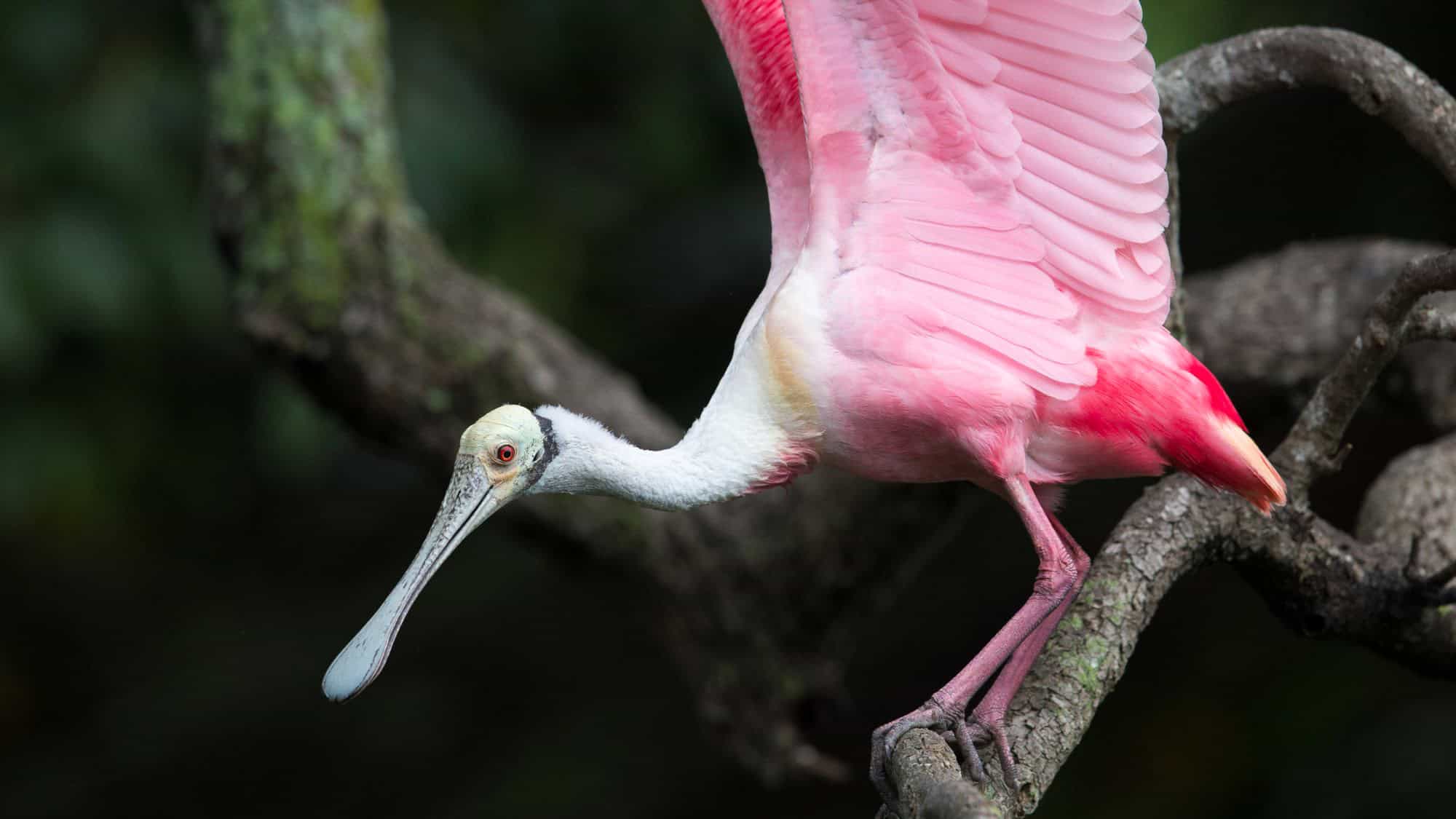
The Anhinga Trail is world-famous for a reason, and it is not an exaggeration. You can stand on the boardwalk and see great blue herons, white ibis, and roseate spoonbills just hanging out like they are at a party.
The spoonbills are particularly fun because they look like flamingos that got confused and decided a flat, spoon-shaped beak was a better fashion statement. Keep an eye out for the wood stork as well. It’s a bird with a face only a mother could love, but seeing them nest in huge colonies is genuinely impressive.
Just remember that the alligators are also enjoying the dry season sunshine, so keep your birdwatching enthusiasm on the boardwalk (and stay out of the water).
Big Bend National Park, Texas

Big Bend in the winter is a genuine relief. The scorching, egg-frying heat dissipates, leaving you with mild days perfect for wandering the desert without feeling like a dried apricot.
The park sits right on the border of Mexico, meaning you get a mix of eastern and western species, plus some Mexican specialties that barely cross the line. It is a melting pot of feathers, and frankly, the landscape is so dramatic it looks like a movie set for a western that ran out of budget for actors but splurged on scenery.
One of the big draws here is the greater roadrunner. Yes, they are real, and no, they do not make the “meep meep” sound (which is a childhood tragedy we all have to accept and move on from).
Watching them sprint across the desert floor hunting for lizards is endlessly entertaining; they look like tiny dinosaurs late for a meeting.
You should also scan the brush for the pyrrhuloxia, a bird that looks remarkably like a cardinal that spent too much time in the sun and got bleached gray. Down by the Rio Grande, you might also catch sight of a green kingfisher, a tiny emerald jewel that dives for fish with impressive precision.
Death Valley National Park, California

The name doesn’t exactly scream “teeming with life,” but Death Valley is actually full of surprises once you get past the ominous branding. In winter, the temperatures are actually survivable, and the park becomes an oasis for migrating species.
Because the surrounding landscape is so harsh, birds flock to the few spots with water and vegetation like desperate shoppers on Black Friday. It concentrates the action in very specific areas, making your job much easier (gotta love efficiency in nature).
Furnace Creek is a hotspot, literally and figuratively. The golf course and date palms attract everything from warblers to raptors who apparently enjoy a resort setting.
You can spot the say’s phoebe, a lovely little flycatcher that bobs its tail as if it is listening to a catchy song only it can hear. Or you might see the verdin, a tiny gray bird with a yellow head that looks like it dipped its face in mustard.
No matter what you spot, the stark contrast of colorful birds against the barren, salty landscape creates photos that will make your friends incredibly jealous of your “desolate” vacation.
Cuyahoga Valley National Park, Ohio

Situated right between Cleveland and Akron, this park is a winter wonderland that proves you do not need to go to the remote wilderness to see great birds (or freeze your toes off in solitude).
The Cuyahoga River often remains unfrozen in sections, which draws in waterfowl and raptors looking for an easy meal. It is accessible, beautiful, and you can end your day with a hot meal in town without driving for hours, which is a major victory in my book.
The main event here is the bald eagle. These majestic birds nest in the park, and winter is when they start repairing their nests and courting. Seeing two massive eagles locking talons and spiraling through the air is a sight that never gets old, even if it does look a bit terrifying and dangerous for a first date.
You should also check the trees for the great horned owl. They begin nesting in late winter, often taking over old nests from other birds (apparently, they are too busy being wise to build their own real estate).
Saguaro National Park, Arizona

Walking among the giant cacti in Saguaro National Park feels like wandering through a Dr. Seuss book that came to life. And in winter, the intense heat backs off, making it delightful to explore the Sonoran Desert without melting into a puddle.
The birds here have adapted to a prickly environment, which implies they are smarter than most of us who accidentally brush against a cactus and instantly regret everything.
The gila woodpecker is a common but fascinating resident. They drill holes right into the saguaro cacti to make their nests, which is a bold housing choice considering the neighborhood is made of needles.
You might also spot the phainopepla, a silky black bird with a crest and red eyes that looks like a goth cardinal having a moody day. They love mistletoe berries, so look for clumps of mistletoe in the mesquite trees.
Plus, watching a cactus wren build a nest in the sharpest part of a cholla cactus will give you a newfound appreciation for the comfort of your own bed.
Arches National Park, Utah

The red rock formations against a snowy backdrop in Arches National Park are stunning enough to make you forget to look for birds entirely. But you really should look, because the avian life here is spectacular.
The quiet of winter means the usual crowds are gone, leaving the trails open for you and the ravens, who seem to enjoy the solitude just as much as we do. It’s hauntingly beautiful, assuming you don’t mind the feeling that the rocks are watching you.
Common ravens are everywhere here, and they are incredibly intelligent. You can watch them perform aerial acrobatics, tumbling, and rolling in the wind just for the fun of it. They seem to know they are being watched and will often croak at you as if critiquing your hiking boots (or your pace).
Keep your eyes on the cliffs for peregrine falcons and golden eagles. Seeing a raptor soar through a stone arch is one of those perfect moments where nature shows just how cinematic it can be, putting every nature documentary to shame.
Joshua Tree National Park, California

Joshua Tree is where two deserts meet, and in winter, it is a birdwatcher’s playground that feels slightly alien.
The high Mojave Desert and the lower Colorado Desert mix to create a diversity of habitats. Plus, the joshua trees themselves are just weirdly beautiful, looking like they are frozen in mid-dance at a party that ended centuries ago.
You will likely see the Gambel’s quail, which runs around in groups with a goofy topknot of feathers bobbing on its head. They look perpetually panicked, which is relatable on a spiritual level.
The park is also home to the loggerhead shrike, a bird that looks innocent but has a habit of impaling its prey on thorns or the sharp spines of yucca plants. It is a gruesome habit that earned them the nickname “butcher bird,” proving that nature is equal parts beautiful and heavy metal.
Acadia National Park, Maine

Acadia National Park in winter is rugged, icy, and absolutely breathtaking, in a “takes your breath away because it’s so cold” kind of way.
The Atlantic Ocean crashes against the granite coast, and the sea smoke rises on particularly cold mornings. It is not for the faint of heart, but the coastal birding is top-tier.
You just need to dress like an onion, with as many layers as physically possible, until you can barely bend your arms like the kid brother in A Christmas Story.
Offshore, look for harlequin ducks. These are stunningly beautiful sea ducks with slate blue and chestnut markings that look like they were painted by an artist showing off their skills. They bob in the rough surf near the cliffs, seemingly unbothered by the freezing spray that would send us running for a heater.
Snowy owls also make regular appearances here in winter. Spotting one of these white ghosts sitting motionless on a rocky outcrop is a hauntingly beautiful experience that makes the frozen fingers and runny nose completely worth it.
Bosque Del Apache National Wildlife Refuge, New Mexico

Okay, technically, the rest of the list are not parks, but I’m calling an audible because they are still protected national sites. And excluding them from a winter birding list would be a crime punishable by bad birding karma forever.
Bosque del Apache National Wildlife Refuge is legendary. In winter, tens of thousands of sandhill cranes and snow geese converge here. In fact, the sheer volume of birds is hard to comprehend until you see it.
It’s like rush hour in Times Square, but with feathers and less honking (actually, probably more honking).
The morning “fly-out” is the big-ticket event. As the sun rises, thousands of geese take off at once in a chaotic, deafening explosion of wings and noise. It is visceral and overwhelming in the best way possible.
The sandhill cranes are a bit more elegant, dancing and bugling in the fields. Watching a four-foot-tall bird hop around to impress a mate is charming and slightly awkward, reminding us that romance is complicated for everyone, even if you have wings.
Padre Island National Seashore, Texas

If you prefer your winter birding with a side of sand in your shoes and wind in your hair, Padre Island is the spot. This barrier island is a major stopover on the central flyway.
While the summer beachgoers are gone, the shoreline is packed with birds probing the sand for food. It is windy, wild, and smells like salt spray, which is infinitely better than the smell of sunscreen and crowded boardwalks.
You can see the long-billed curlew here, a bird with a beak so long and curved it looks like a cartoon character drawn by an overenthusiastic animator. They use it to reach deep into the mud for crabs, which seems like a lot of work just for a small snack.
The Laguna Madre, the water between the island and the mainland, hosts massive rafts of redhead ducks. In fact, most of the world’s population of redheads winters right here.
Seeing thousands of them floating together is impressive, mostly because they manage not to bump into each other constantly (unlike us at the grocery store).
Point Reyes National Seashore, California

Point Reyes juts out into the Pacific, acting like a giant catching mitt for migrating birds that took a wrong turn or just needed a break. The diversity here is staggering, with ocean, bay, and grassland habitats all jam-packed together.
Winter brings rain and fog, but it also brings raptors and shorebirds in huge numbers. It’s moody and dramatic, perfect for pretending you are in a brooding novel while you look for birds.
The raptors are a highlight, with northern harriers gliding low over the pastures and white-tailed kites hovering in mid-air like they are on invisible strings.
On the beaches, look for the western snowy plover. These tiny balls of fluff hide in the sand and footprint indentations. They are endangered and incredibly small, so watching where you step is critical.
This is the type of place where the power of the ocean meets the delicate resilience of bird life, and you try not to trip over your own feet while watching it all in wonder.
Cape Cod National Seashore, Massachusetts

Cape Cod in the off-season has a melancholy beauty that feels very poetic. The summer cottages are shuttered, the traffic is gone, and the beaches are empty except for the hardy souls looking for sea ducks (and wondering why they didn’t pick Florida).
The Atlantic flyway funnels birds right past the outer cape, making it a prime location for seabird watching, provided you have a good windbreaker.
You can spot large flocks of common eiders, big, chunky ducks that ride the winter swells with ease. Their cooing calls carry over the water, sounding strangely like a cocktail party conversation happening just out of earshot.
Razorbills and dovekies can also be seen offshore, looking like tiny flying penguins (they are related to puffins, so the resemblance is fair).
It is cold, windy, and raw come winter, but seeing these oceanic wanderers from the shore feels like stealing a glimpse into a secret world where the birds are definitely in charge.
Like Our Content? Follow Us on MSN (or click the Follow Button above) for more from Discover Parks & Wildlife.