Discover Parks & Wildlife contains affiliate links and is a member of the Amazon Services LLC Associates Program. If you make a purchase using one of the Amazon links, we may receive compensation at no extra cost to you. We may also use select AI tools to support our creative process, but all content is reviewed, refined, and finalized by our human team. See our disclosure policy and our AI use policy for more information.
12 Parks That Prove Fall Is The Best Time To Visit
Cold air hits the lungs, and the trail smells of pine and damp earth. Then sun sits lower, turning granite warm and long, and the wind carries that dry rustle of leaves underfoot. This is the shoulder season that rewards patience: cooler days, clearer horizons, and fewer cars stacked at pullouts.
Mosquitoes fade after the first frost. Daylight shortens, which means golden hour arrives earlier and hangs around. And wildlife gets busy, with bull calls across valleys, bears packing on calories, and birds funneling south along ridgelines.
Fall color isn’t just a postcard trick; pigments stored all year finally break through once chlorophyll steps back. High-country storms can dust peaks, while valleys stay perfect for hiking. Many summer-only services taper, yet that can work in your favor: quieter trails, easier last-minute bookings, and timed-entry programs in several parks ending by late September.
You don’t need complicated plans: layers, a thermos, and a headlamp get you most of the way. We’re here for the quiet, the texture, the small sounds that carry far. In these months, national parks feel tuned for you. Fall doesn’t shout. It just delivers.
Rocky Mountain National Park, Colorado
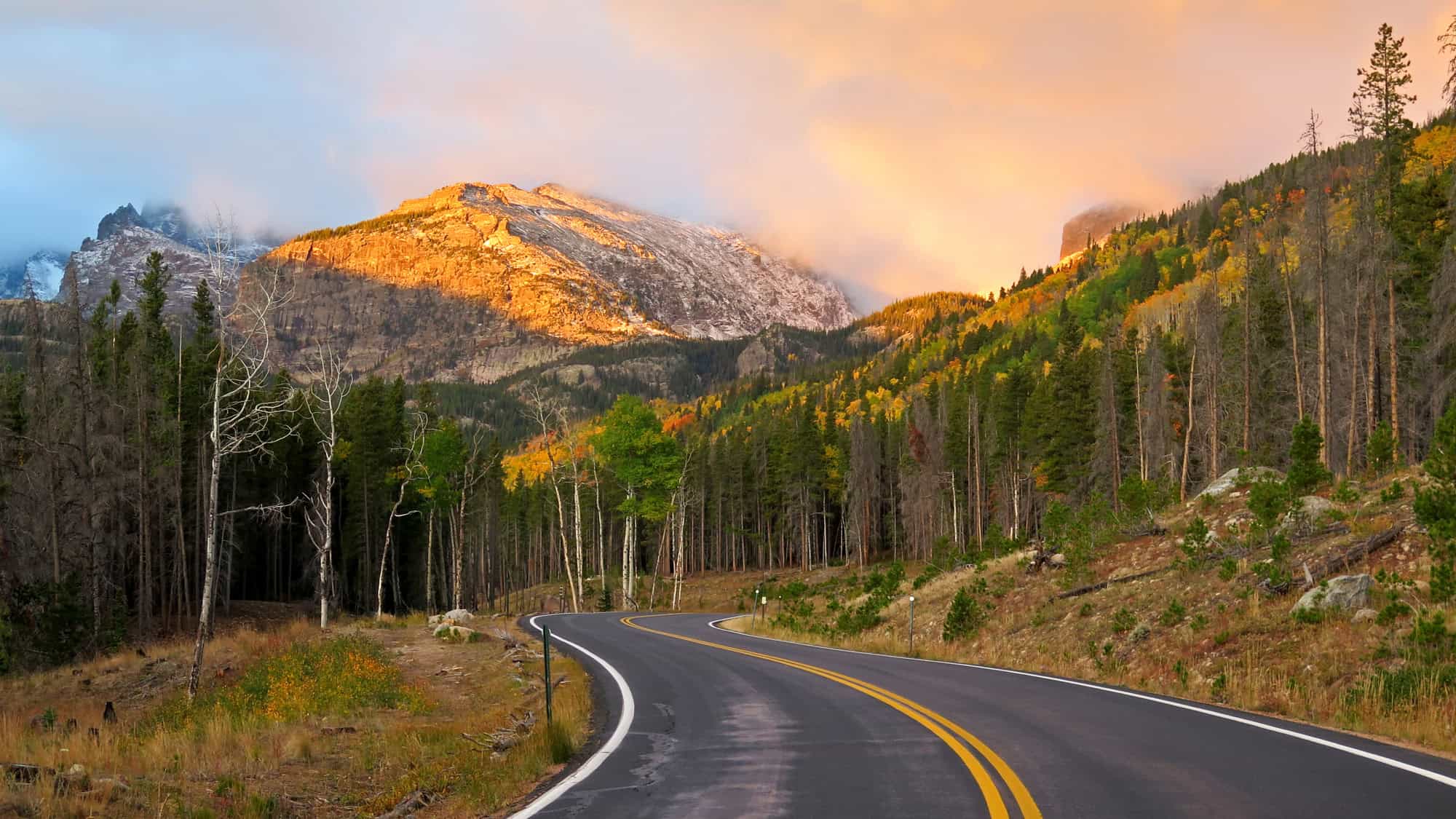
Frost rims the meadows, and your breath hangs in the blue morning. Then the sound hits: a high, metallic bugle rolling off Moraine Park as bulls test each other across the grass. The elk rut peaks from mid-September into October here, and rangers often stage roadside closures to keep both humans and antlers out of trouble.
Above you, slopes of aspen go from green to coin-gold, usually late September into early October, flashing hard against fresh snow on Longs Peak. The park spans from 7,800 feet to 14,259 feet, so temperatures swing fast. Remember to layer up and pack traction if a storm slides through.
Trail Ridge Road can close with early squalls, but most front-range trailheads stay accessible, and the paths to Bierstadt Lake or Cub Lake feel downright private on weekdays. You get the same wildlife and better light with half the conversation. Step quietly, and let the bugles stitch the morning together.
Shenandoah National Park, Virginia
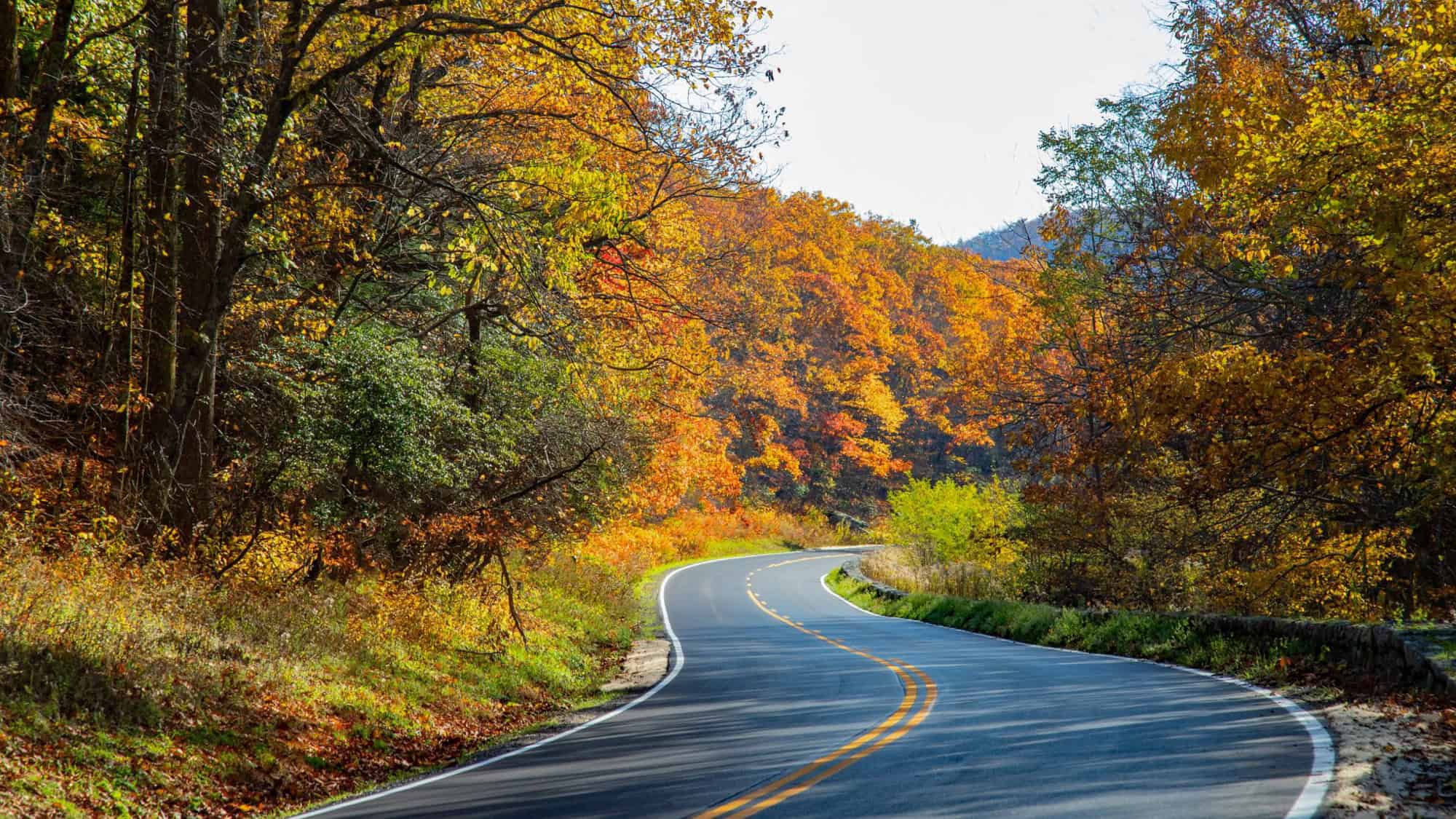
Skyline Drive rolls for 105 miles along the Blue Ridge crest, and by late October the oaks and maples torch the slopes in reds and golds while the traffic eases to a murmur. With a 35-mph speed limit and more than 70 named overlooks, you can pull off without playing musical chairs for a parking spot.
Elevations ride between roughly 2,000 and 4,000 feet, so temperatures swing; a fleece and a hat turn an exposed viewpoint from a quick glance to a long stare. Facilities scale back after fall, but the park stays open, and day-hike classics (like Old Rag, Hawksbill, Stony Man) feel less like a parade and more like your own staircase into the clouds.
If a bear crosses the road, it’s usually the bear’s schedule you’ll adjust to. Fewer cars, better light, and room to breathe.
Great Smoky Mountains National Park, Tennessee & North Carolina

Fog threads through the coves at first light, cool on your face, and the woods smell faintly of damp bark and woodsmoke. By mid to late October, the maples and sourwoods burn hot along Newfound Gap Road while the higher ridges turn earlier thanks to elevations that run from roughly 875 feet to 6,643 at Clingmans Dome.
The park stays open year-round and still has no entrance fee, though you’ll need a parking tag now for most stops. That small detail thins the lingerers and keeps the overlooks calmer once the morning rush passes. Hen Wallow Falls murmurs. Roaring Fork stops roaring. And Cades Cove, at its best on a weekday sunrise, feels closer to the 19th-century settlement it preserves.
This is the most visited national park in the country, topping 12 million visitors a year, but fall spreads people out across 500,000-plus acres of sheltering hardwoods. Bring a thermos and patience for the odd bear jam. The payoff is quiet road edges and clear sightlines.
Badlands National Park, South Dakota

By September and October, highs settle into the 60s and 70s°F, and the Badlands Loop Road (39 miles of SD 240) turns from a summer crawl into an easy cruise between overlooks. The rock here isn’t old mountain stuff; it’s soft sediment stacked in bands, much of it Oligocene, carved by rain into teeth and fins.
Pull off at Big Badlands or Pinnacles and you’ll likely have the rail to yourself. Out toward Sage Creek, bison graze and pronghorn ghost the hills while prairie dogs chirp like faulty smoke alarms. The Notch Trail runs 1.5 miles with a ladder tucked into a chute. Just watch your footing and mind the prairie rattlesnakes sunning near the edges.
The park covers roughly 244,000 acres, and fall spreads people thin across that space. Bring a windbreaker and let the horizons do the heavy lifting.
Zion National Park, Utah

By October, highs slide into the 70s°F and the main canyon shuttle feels less like a city bus and more like a lift to solitude. The six-mile Zion Canyon Scenic Drive stays closed to private cars most of the year, but fall seats open up and stop lines shrink for the shuttle.
Angels Landing now runs a permit system year-round, which keeps the chains civilized. So if you want to visit, plan ahead. The Narrows often drops to friendlier flows once the summer monsoon fades, though a dry suit still earns its keep. East of the tunnel, slickrock sprawls toward Checkerboard Mesa; to the northwest, Kolob Canyons carves a quieter red-walled annex.
Elevations run from roughly 3,700 feet on the canyon floor to over 8,700 on Horse Ranch Mountain, so a light puffy isn’t overkill at dawn. You’ll still share the place, of course, just not with everyone you went to high school with.
Bryce Canyon National Park, Utah

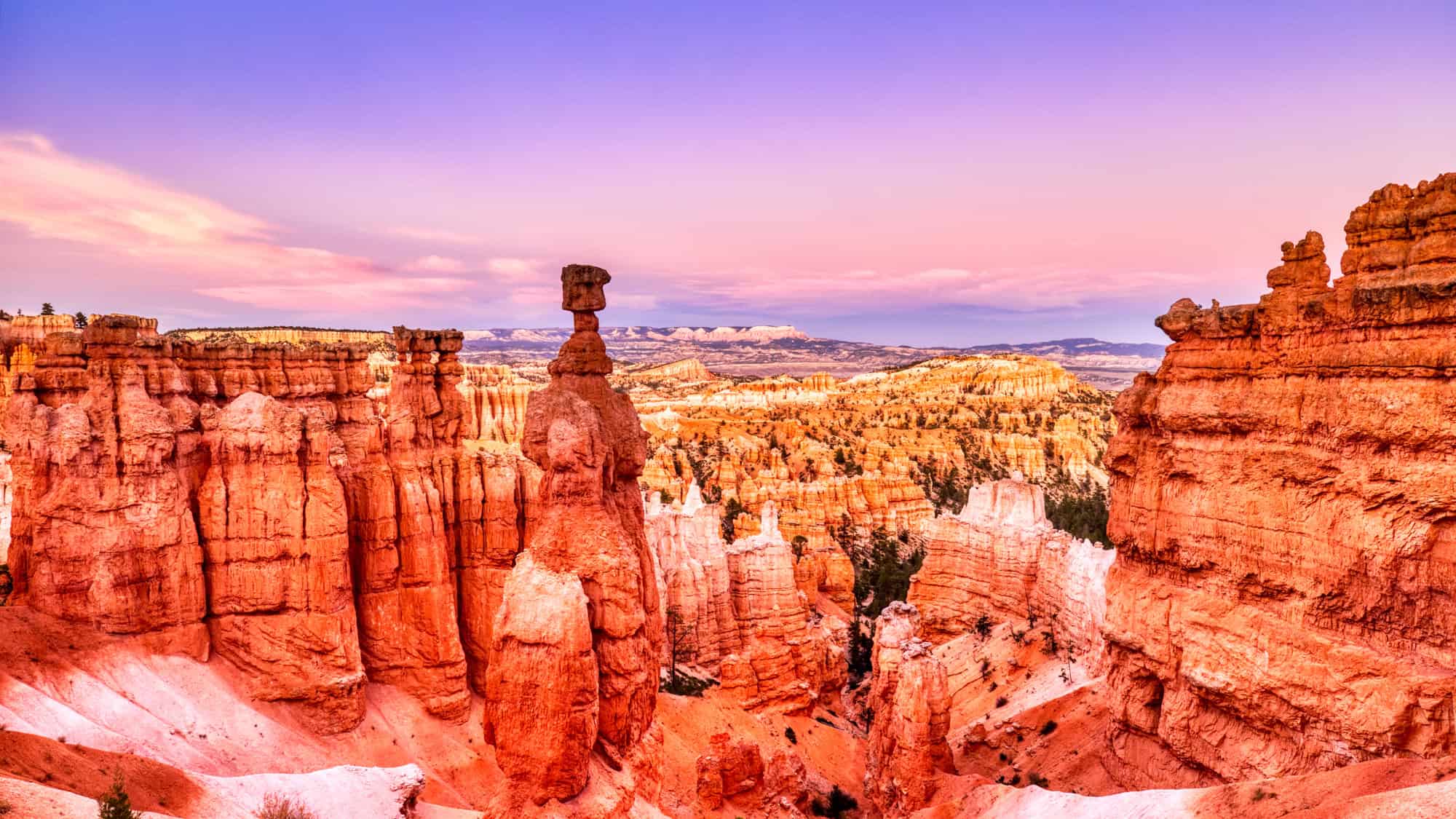
Cold bites at the rim, and the amphitheater exhales steam in the first light. Then the hoodoos catch fire (orange to copper), and the quiet stretches all the way to the pinyon fringe. Bryce rides high, with most viewpoints between 8,000 and 9,000 feet and Rainbow Point near 9,115 feet, so a beanie turns dawn from stunt to pleasure.
Those spires aren’t river work; they’re frost and time. Around 170 freeze–thaw days a year wedge the rock apart, carving fins into chimneys and chimneys into delicate towers. Drop the Navajo Loop to Queens Garden and you’ll hear your steps again, or take the 8-mile Fairyland Loop if you want the amphitheater without the chorus.
Services scale back, the seasonal shuttle winds down, and the Milky Way returns in force. Bryce holds International Dark Sky Park status, and the night earns it. Fewer voices, sharper light, and geology doing its slow labor; that’s fall delivering exactly what we came for.
Olympic National Park, Washington
Moist air gathers under the canopy, and every step lands softly on duff. In the Hoh and Quinault, bigleaf maples drip with lichen, and ferns crowd the path. The rainforest settles into a deeper green once the summer chatter fades.
Olympic protects about 922,000 acres and 73 miles of wilderness coast, with Mount Olympus punching up to 7,980 feet in the center. The Hoh averages more than 12 feet of rain a year, which explains the moss, the nurse logs, and the hush. Hurricane Ridge sits higher and cooler, a clean contrast of alpine views above the cloud deck when the road is open.
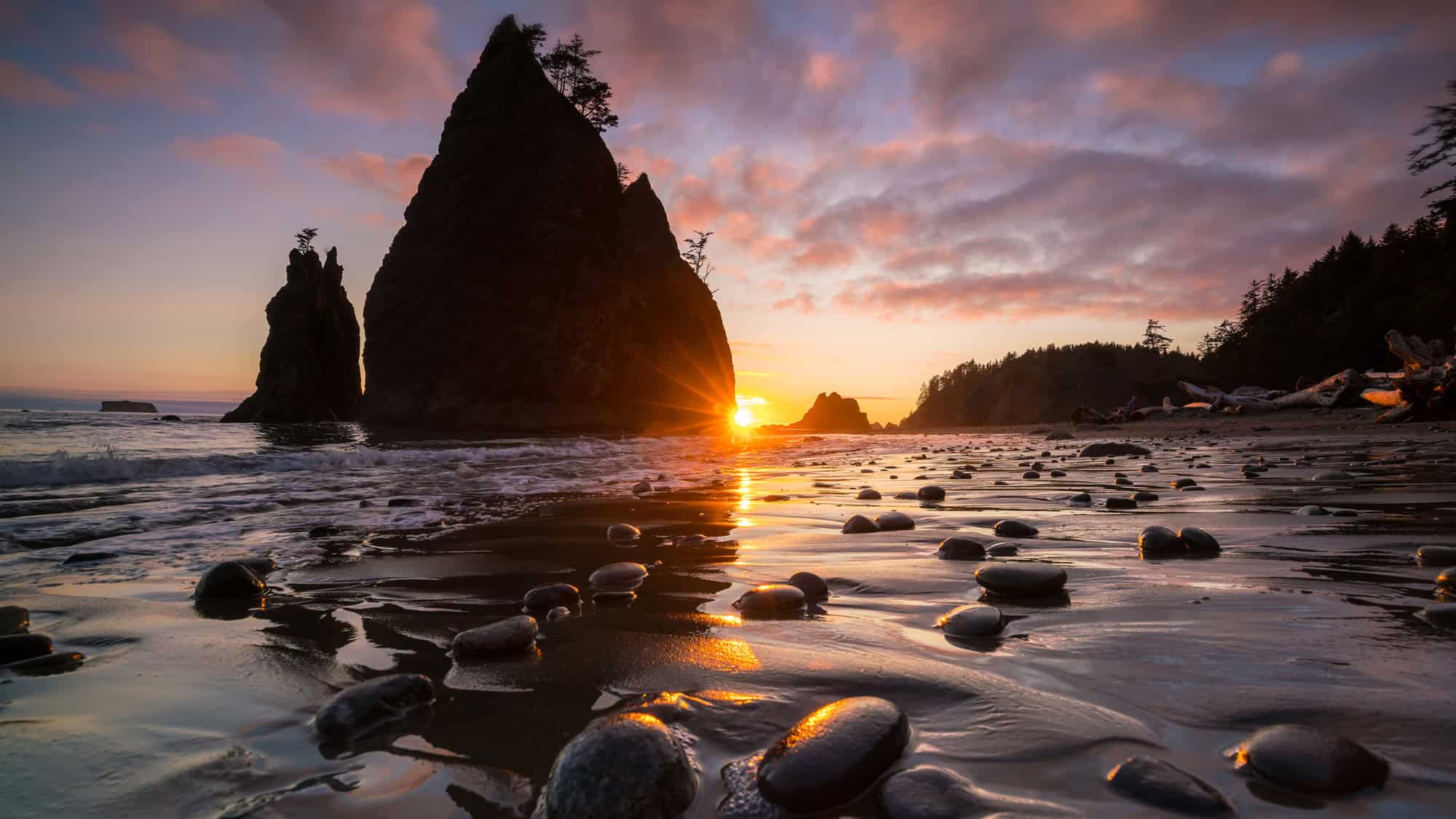
Down on Rialto or Second Beach, the Pacific hits a steady drumbeat against sea stacks, and you can count your company on one hand. US-101 links it all in a loose loop, easy to sample in day-sized bites without the summer caravan.
Arches National Park, Utah

The first thing you notice is the dryness. And by October, highs settle into the 70s°F and the sun stops punishing you for hiking past noon. Arches protects more than 2,000 natural stone arches (the greatest concentration on Earth), spread across mesas that sit roughly 4,000 to 5,600 feet above sea level.
Delicate Arch is the headliner, a 3-mile round-trip with 480 feet of gain that feels friendlier once summer heat and tour bus volume drop. Devils Garden stretches farther, past Landscape Arch, into a maze you can actually hear yourself walk through.
In recent years, the park has used a timed-entry system through late October. But fall dates tend to breathe easier regardless, especially at dawn. Fiery Furnace still requires a permit or ranger tour, which keeps it honest. And bring layers, extra water, and a headlamp for those long sunsets.
Capitol Reef National Park, Utah

Highway 24 threads the Fremont River corridor, then the Scenic Drive carries you about eight paved miles deeper, where the pullouts sit open and the engine ticks in the quiet. The park exists because of the Waterpocket Fold, a nearly 100-mile monocline that tips rock layers on edge and leaves domes, slots, and striped cliffs in its wake.
Fruita’s historic orchards, planted in the late 1800s, are still open for U-pick in September and October. So don’t forget to snip apples, weigh your haul, and pay on the honor system. Hickman Bridge is a tidy 1.8-mile round trip, good in cool air, while Cassidy Arch rewards a steadier climb.
Elevations swing from roughly 3,900 feet near Hanksville to benches above 8,000 feet, so a fleece earns its spot. Want deeper quiet? Point toward Cathedral Valley or the Burr Trail switchbacks.
Cuyahoga Valley National Park, Ohio

You hear the water first, a steady curtain at Brandywine Falls, and then the leaves, dry and papery under your boots. The park sits between Cleveland and Akron, more than 33,000 acres stitched by the old Ohio & Erie Canal.
Brandywine drops 60 feet over layered shale, framed by maples that turn copper and rust by mid-to-late October. The Towpath Trail threads the length of the valley, and within park bounds, you get roughly twenty miles of flat, bike-friendly cruising where summer’s stroller traffic thins to a few diehards in fleece.
Blue Hen and Bridal Veil Falls run quieter, the kind of stops where you can hear your own thermos click shut. And on certain days, the Cuyahoga Valley Scenic Railroad still rolls, a low horn echoing through second-growth forest that rebounded after the river’s infamous 1969 fire helped spur the Clean Water Act. Weekday mornings are best; the overlooks belong to you and the squirrels.
Grand Teton National Park, Wyoming
Cold air skims the lakes at dawn, and the Tetons stand razor-sharp in the glass of Jenny and String. Aspens along the Moose–Wilson corridor whisper yellow, and the trails carry that dry leaf sound underfoot. Grand Teton tops out at 13,775 feet, and the valley floor sits near 6,700 feet, so mornings start brisk even when the sun begins to show.
The 42-mile scenic loop lets you hit Oxbow Bend for Mount Moran’s reflection without elbowing a crowd, and wildlife patrols the edges. You might spot moose in the willows, bison nosing frost off grass.
Services wind down by late October, but the park stays open; Teton Park Road typically closes to cars on November 1 and turns into a long ribbon for skiers once snow lands. The Jenny Lake shuttle eases off by early fall, which only makes the water quieter.
Everglades National Park, Florida
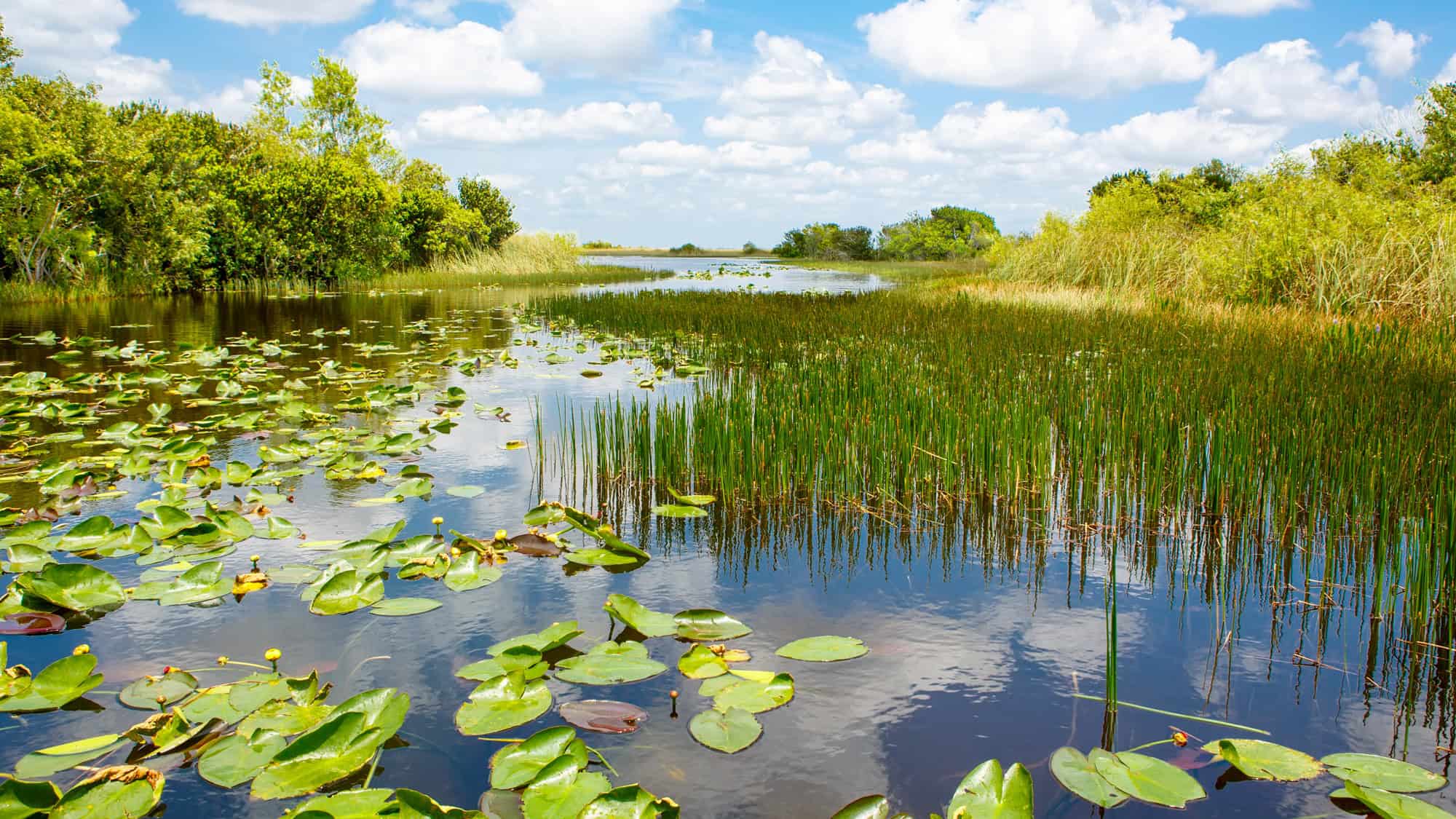
By late fall, the dry season begins. Mosquitoes crash and water levels drop, pulling wildlife into view along sloughs and ponds. This is a subtropical wilderness of roughly 1.5 million acres, the largest in the country, fed by a slow-moving “river of grass” sliding south from Lake Okeechobee.
Temperatures ease into the 70s°F by day, with cooler mornings that make boardwalks feel owned, not borrowed. At Shark Valley, alligators warm themselves like sunbathers with better dental plans, and the 15-mile loop rides quiet under blue herons.
The Anhinga Trail near Royal Palm becomes a live field guide, while farther south at Flamingo, you scan for manatees nosing around the marina. Airboats? Those are mostly outside park boundaries. In here it’s canoes, bikes, and your feet setting the pace. Fewer people, more animals, and clean air moving across the prairie; fall flips the Everglades from endurance test to easy watch.
Like Our Content? Follow Us on MSN (or click the Follow Button above) for more from Discover Parks & Wildlife.
12 National Parks You’ll Wish You Had Visited Sooner

Who needs a time machine when you can read about all the national parks you absolutely should have visited by now, and then just sulk in envy instead?
16 U.S. National Parks with Sunsets Worth the Trip
If you thought your life lacked a dash of dramatic flair, just wait until you set your sights on those sunsets at U.S. National Park. You know, the kind that might have you questioning why your backyard bonfire doesn’t quite cut it anymore.
15 Photos Every National Park Photographer Needs in Their Collection

Think you’ve mastered the art of the perfect shot? Wait until you see these must-have captures that’ll make your portfolio sing.