Discover Parks & Wildlife contains affiliate links and is a member of the Amazon Services LLC Associates Program. If you make a purchase using one of the Amazon links, we may receive compensation at no extra cost to you. We may also use select AI tools to support our creative process, but all content is reviewed, refined, and finalized by our human team. See our disclosure policy and our AI use policy for more information.
14 Unforgettable Moments At Arches National Park That Will Ruin Other Parks For You
In the high desert of eastern Utah, the earth seems to have forgotten the rules of geology. Here, the landscape is a riot of red rock fins, balancing boulders, and gravity-defying spans that look more like portals to another dimension than natural formations.
The air is dry and thin, carrying the scent of sagebrush and ancient juniper across miles of slickrock. When the sun dips low, the sandstone ignites in brilliant shades of burning orange and deep violet, creating a visual spectacle that has drawn artists, dreamers, and explorers for decades.
It is a place where time feels suspended, measured not in minutes but in the slow erosion of stone by wind and water. Twisted pinyon pines cling to cracks in the rock, and ravens circle high above the canyon walls, their calls echoing in the vast silence.
Arches National Park is not just a park; it is a testament to the raw, sculptural power of nature. It reminds you of your smallness in the face of deep time, a humbling and exhilarating realization. So if you are curious what sets this place apart, here are the most compelling reasons to see Arches National Park for yourself.
Fiery Furnace Guided Hike

Fiery Furnace is a natural labyrinth of narrow sandstone canyons, fins, and towers that challenge even experienced hikers. Because there are no marked trails here, visitors must secure a permit or join a ranger-led tour to enter this restricted area.
This policy protects the fragile ecosystem and ensures safety in a maze where GPS signals often fail, and landmarks disappear behind towering walls. Ranger-led tours run from spring through fall, typically lasting about two and a half hours.
During the guided experience, rangers explain the geology of the Entrada Sandstone, which forms the fins and arches, and point out the cryptobiotic soil, a living crust of cyanobacteria, moss, and lichen that stabilizes the desert floor. Stepping on this crust can destroy decades of growth in seconds, so staying on rock or sandy washes is critical.
The hike also requires scrambling over boulders, squeezing through tight cracks, and navigating uneven terrain, making it a physical and mental puzzle.
The name “Fiery Furnace” comes from the glow of the rocks at sunset, which resemble burning coals, though the canyon floor is often shaded and cooler than the surrounding desert.
Navigating this intricate network offers a sense of discovery that is rare in more accessible parts of the park, providing an intimate look at the forces of erosion that shape this unique landscape.
Windows Section

The Windows Section contains one of the highest concentrations of arches in the park, making it an ideal spot for visitors who want to see multiple features with relatively little effort.
A gentle gravel trail leads you to the North Window, South Window, and Turret Arch, all of which are massive spectacles of erosion. The North Window spans roughly 90 feet wide and 48 feet high, framing the La Sal Mountains in the distance. Nearby, the South Window sits slightly lower, creating a pair of “spectacles” when viewed from a distance.
Just across the parking area, a separate trail leads to Double Arch, which consists of two massive arches that share the same stone foundation.
The taller of the two openings rises 112 feet above the ground, the highest arch in the park, while the span stretches 144 feet wide, the second-longest span in Arches. Unlike many other formations carved by side-to-side erosion, Double Arch was formed by water flowing from above, creating a unique geological profile.
This area is particularly popular at sunrise, when the soft light illuminates the red rock without the harsh shadows of midday.
Because the trails are short and relatively flat, the Windows Section is accessible to a wide range of hikers, allowing families and casual walkers to stand beneath these colossal stone rainbows and marvel at their scale.
Stargazing

Arches National Park was designated an International Dark Sky Park in 2019, recognizing its exceptional quality of starry nights and nocturnal environment.
The park’s isolation from major cities and light pollution allows visitors to see thousands of stars, distant planets, and the cloudy band of the Milky Way with the naked eye. On a clear, moonless night, the sky becomes a crowded canopy of light, offering a view of the cosmos that is increasingly rare in the modern world.
Popular stargazing spots include the Garden of Eden, Panorama Point, and the Balanced Rock picnic area, where wide horizons offer unobstructed views of the celestial dome.
Rangers often host astronomy programs at the visitor center or specific viewpoints, setting up telescopes to show visitors the rings of Saturn or the craters of the moon. But even without equipment, simply lying on a blanket and looking up can be a profound experience.
Visitors are encouraged to use red light flashlights to preserve night vision and reduce light disturbance for others. The park is open 24 hours a day, so you can stay as late as you like, listening to the quiet rustle of the desert while the universe wheels overhead.
Petroglyphs

Near Wolfe Ranch Trailhead, a short walk leads to a panel of Ute petroglyphs carved into the rock face sometime between 1650 and 1850. These images depict horses and riders, bighorn sheep, and dog-like figures, offering a glimpse into the lives of the Native American people who inhabited this region for centuries.
The stylized figures are distinct from the much older Archaic and Fremont style rock art found elsewhere in the region, providing valuable cultural context. This panel, in particular, is significant because the inclusion of horses indicates that the carvings were made after the Spanish introduced the animals to the Southwest, marking a specific era in history.
While the Ute people are the most recent pre-European inhabitants, evidence suggests humans have traveled through these canyons for over 10,000 years.
Respect for these sites is paramount; touching the rock art transfers skin oils that can damage the delicate carvings, so observation from a distance helps preserve this history for future generations.
Visitors can view the panel from a fenced viewing area just off the trail to Delicate Arch.
Sand Dune Arch

Hidden between tall sandstone fins, Sand Dune Arch offers a shady, secluded retreat that feels worlds away from the exposed desert trails.
The hike to reach it is incredibly short, just 0.3 miles round trip, making it one of the easiest and most family-friendly destinations in the park. The trail leads through deep, soft red sand that feels like walking on a beach, a stark contrast to the hard slickrock found elsewhere.
Geologically, this arch is an example of a pothole arch, formed entirely within a fin of sandstone. The arch itself is relatively small compared to giants like Landscape Arch, spanning about 30 feet, but its intimate setting makes it special.
The surrounding fins provide shade for much of the day, creating a cool microclimate that is a relief during the hot summer months. Kids often enjoy playing in the sand at the base of the arch, kicking off their shoes to bury their toes in the fine grains.
The narrow slot canyons near the entrance add an element of exploration, inviting visitors to squeeze through gaps in the rock before emerging into the sandy clearing.
Incredible Sunsets
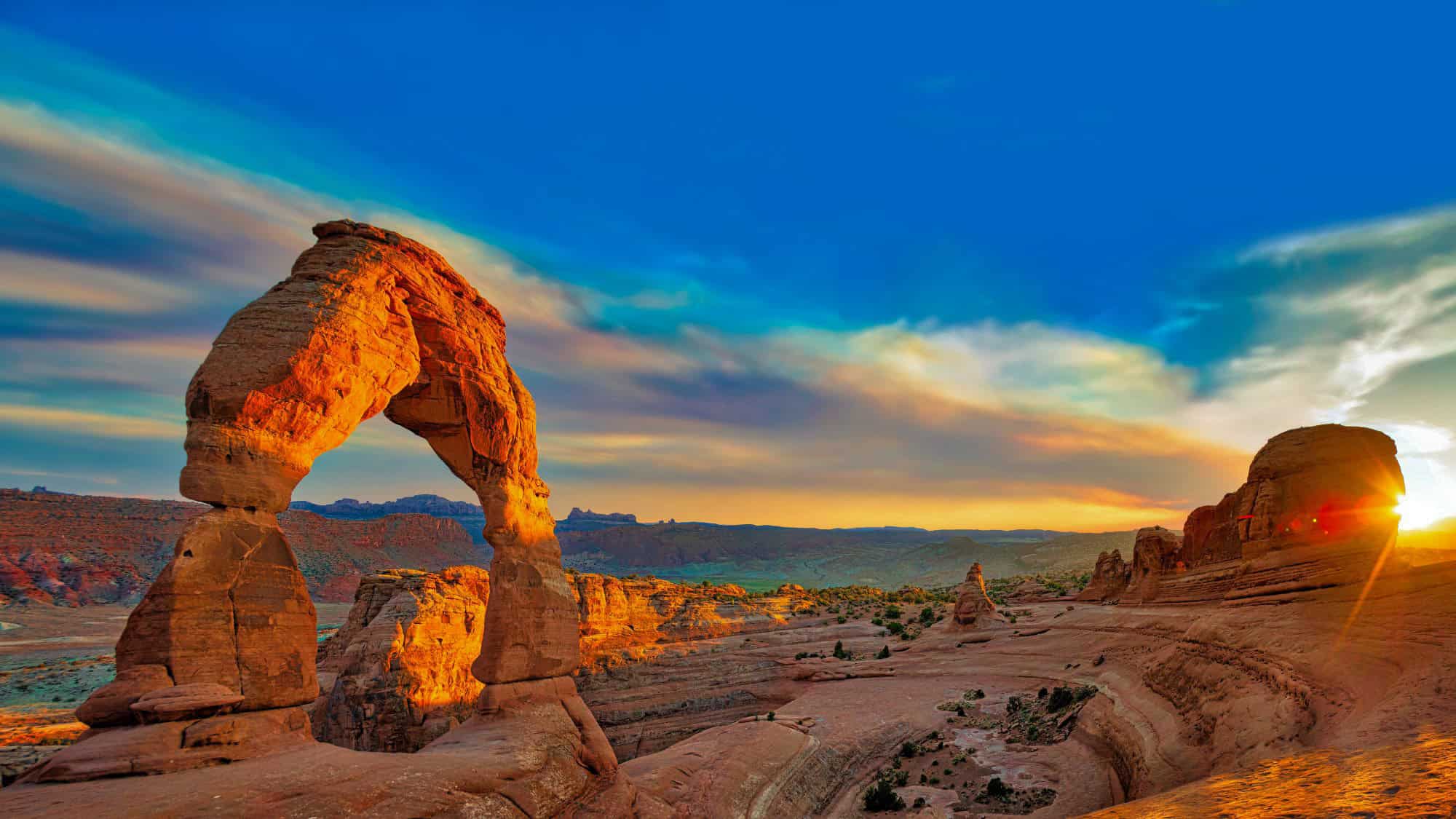
Sunset in Arches transforms the red rock landscape into a canvas of glowing embers. As the sun drops toward the horizon, the low angle of light enriches the natural rusty hues of the Entrada Sandstone, turning them a deep, vibrant crimson.
The La Sal Mountains to the east often catch the last rays, their snowy peaks turning pink and purple against the darkening sky.
Delicate Arch is arguably the most famous sunset location, drawing hundreds of photographers and hikers each evening who gather on the sandstone bowl to watch the spectacle. The arch glows intensely against the backdrop of the mountains, creating one of the most iconic images of the American West.
However, other spots like the Windows Section and Balanced Rock offer equally stunning views with fewer crowds. At the Windows, the setting sun can be framed through the North Window, while Balanced Rock casts a dramatic, elongated shadow across the desert floor.
Seasonal Wildflowers

While the desert may seem barren, spring brings a surprising burst of color to Arches National Park. From April to June (provided there has been sufficient winter moisture) wildflowers bloom across the sandy dunes and rocky slopes.
You might see the bright red petals of Indian paintbrush, the delicate white cups of evening primrose, or the vibrant yellow of twinpods.
One of the most striking plants is the prickly pear cactus, which erupts with large yellow or pink flowers in late spring. These blooms attract pollinators like bees and hummingbirds, adding a hum of activity to the quiet landscape.
The bloom times vary depending on elevation and rainfall, with lower elevations seeing flowers earlier in the season. Even the pinyon and juniper trees release clouds of yellow pollen, a less colorful but vital sign of life.
Spotting these flowers requires a slower pace; many are small and hug the ground to conserve moisture and avoid the wind. But they are a testament to the adaptability of life in an environment that receives less than 10 inches of rain a year, turning the harsh desert floor into a mosaic of resilience and beauty.
Balanced Rock

Standing at an impressive 128 feet tall, Balanced Rock is one of the most recognizable features in the park.
The massive balancing stone at the top is the size of three school buses and stays perched on its pedestal solely due to gravity and friction. It is visible from the main park road, but a short, paved 0.3-mile loop trail allows you to walk around the base and appreciate its precarious nature from all angles.
The formation is composed of two different types of rock: the top boulder is the harder Entrada Sandstone, while the pedestal is the softer Dewey Bridge member of the Carmel Formation. The softer base erodes faster than the caprock, a process that will eventually cause the boulder to topple.
In fact, a smaller companion formation named “Chip Off the Old Block” fell during the winter of 1975-1976, proving that these geological sculptures are temporary.
The view from the trail also extends toward the Windows Section and the distant La Sal Mountains, making it an excellent spot for photography, especially at sunset when the rock glows a brilliant red-orange.
Panoramic Viewpoints
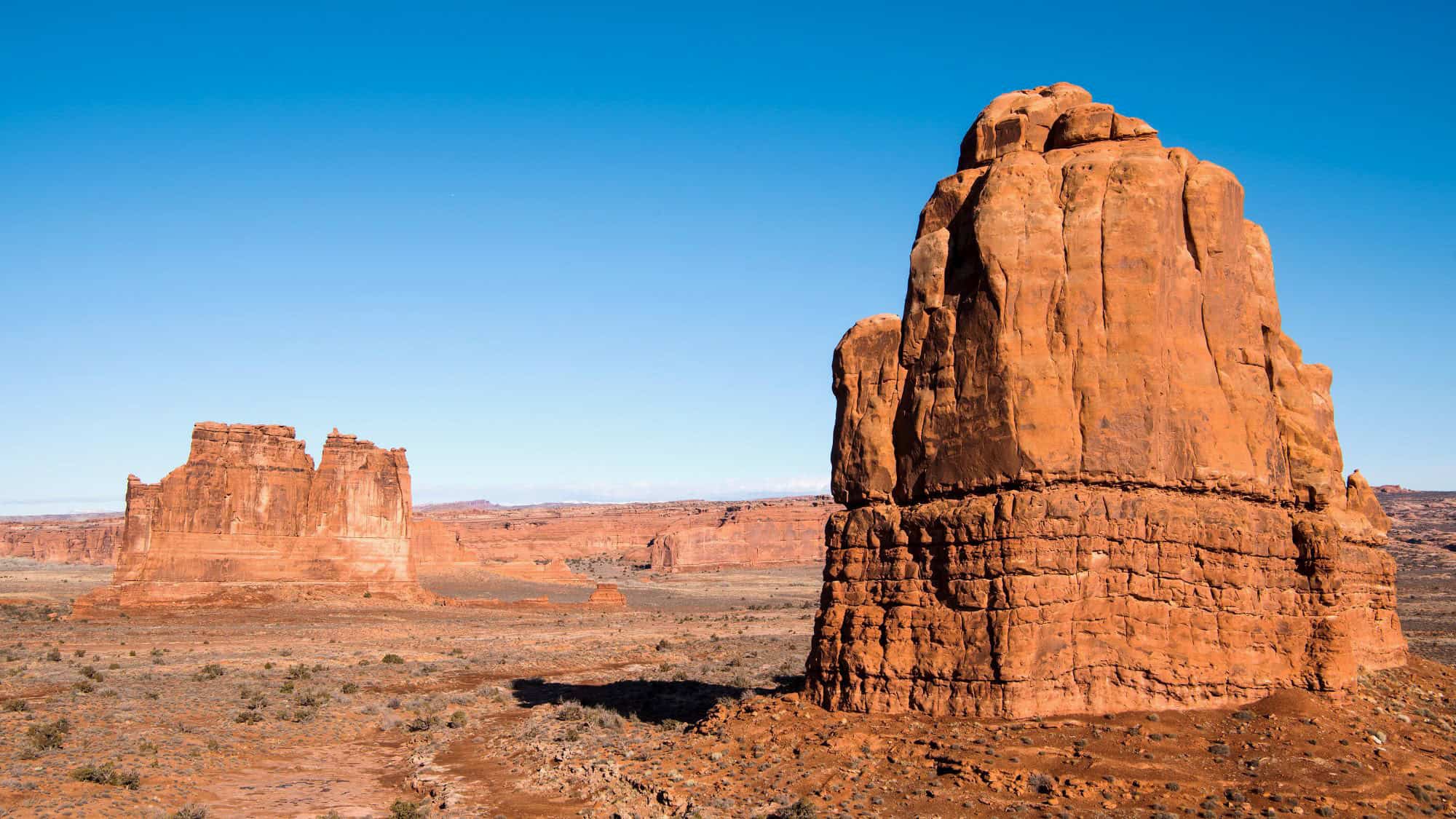
Arches is designed with scenic driving in mind, and several panoramic viewpoints along the main park road offer sweeping views without the need for hiking.
The Park Avenue Viewpoint is often the first stop for visitors, showcasing a towering wall of sandstone slabs that resembles a city skyline. From here, you can see famed formations like the Three Gossips and the Sheep Rock.
Further along, the La Sal Mountains Viewpoint provides a 360-degree perspective of the red rock desert juxtaposed against the high, often snow-capped peaks of the La Sal range, which reach over 12,000 feet. This contrast between the arid canyonlands and the alpine mountains is one of the defining visual characteristics of the region.
Panorama Point lives up to its name, offering wide-open views of the Fiery Furnace and the Devil’s Garden area.
These pull-outs are accessible and paved, ensuring that visitors of all ability levels can witness the grandeur of the park’s geology. Each stop offers interpretive signs explaining the geological history, helping you understand the slow movements of salt beds thousands of feet underground that created the surface wonders you see today.
Desert Wildlife
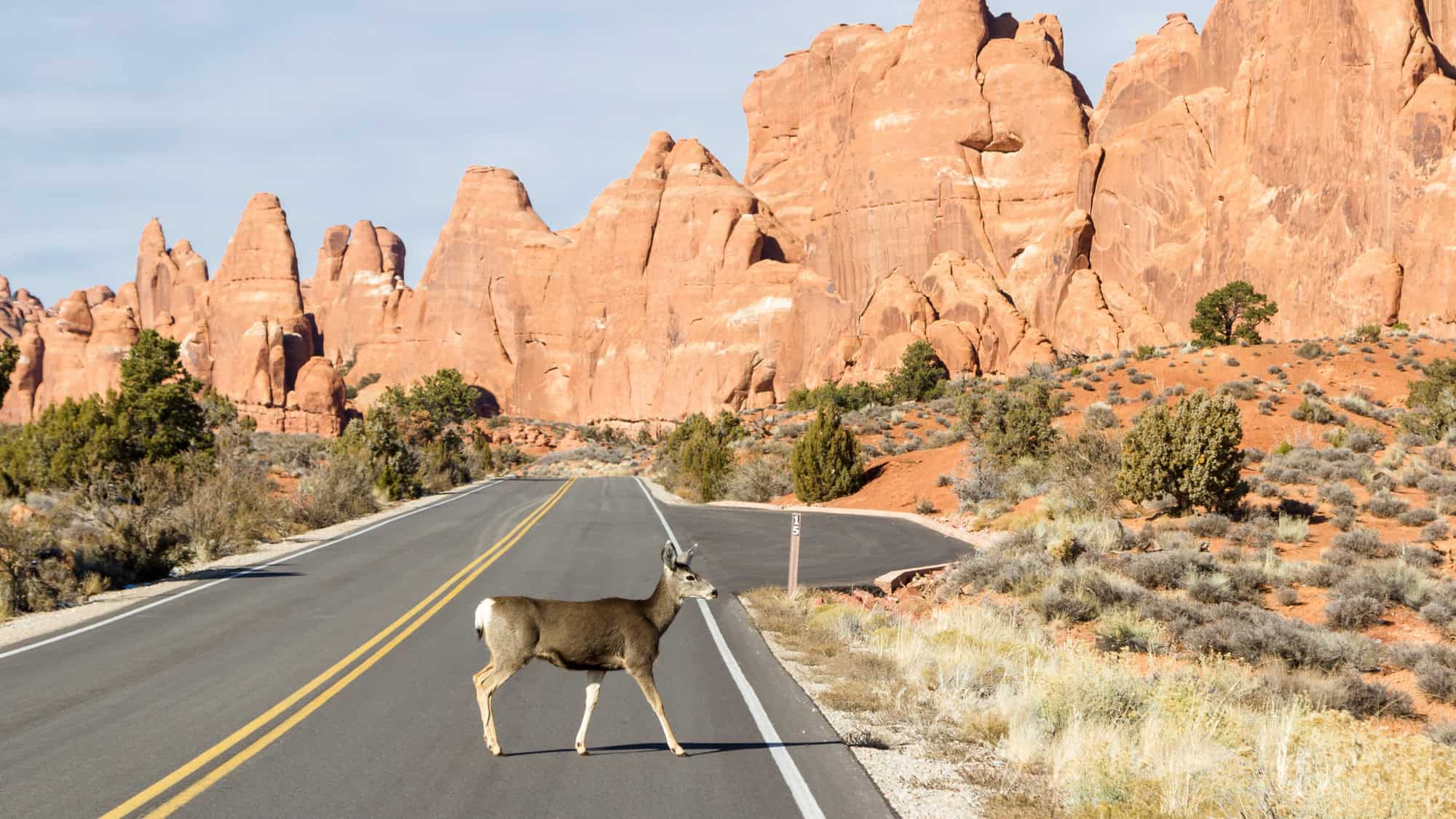
Despite the extreme temperatures and lack of water, Arches is home to a diverse array of animals adapted to desert life.
Mule deer are frequently spotted in the early mornings or late evenings near the campground or visitor center, browsing on vegetation. Desert cottontails and black-tailed jackrabbits are common sights, darting between the sagebrush to escape predators like coyotes and bobcats.
Reptiles are the masters of this environment. The colorful collared lizard is often seen basking on rocks to regulate its body temperature, while the elusive midget faded rattlesnake (a subspecies unique to this region) stays hidden in rock crevices.
Birdwatchers can look for peregrine falcons nesting in the high cliff walls or hear the cascading song of the canyon wren echoing in the narrow passages.
Because most desert animals are nocturnal or crepuscular (active at dawn and dusk) to avoid the midday heat, timing your wildlife viewing is key. But seeing a creature thrive in this stone wilderness adds a layer of appreciation for the delicate balance of the desert ecosystem.
Delicate Arch

Delicate Arch is the crown jewel of the park and the most famous natural arch in the world. Standing 46 feet high and 32 feet wide, this freestanding icon is not attached to any other rock, which makes its isolation even more dramatic against the backdrop of the La Sal Mountains.
The hike to reach it is a moderately strenuous 3.3-mile round trip that climbs over 600 feet in elevation, much of it over open slickrock with no shade.
The trail passes by the Wolfe Ranch cabin and the Ute petroglyphs before ascending the steep rock face. The final approach involves walking along a narrow rock ledge carved into a sandstone wall, which heightens the anticipation before the arch suddenly comes into view.
For those who cannot make the hike, the Lower and Upper Delicate Arch Viewpoints offer distant views of the formation from across a canyon.
This arch has become a symbol of Utah, appearing on license plates and postage stamps. Geologists estimate it will eventually collapse due to erosion, reminding visitors that they are witnessing a fleeting moment in geological time.
Geological History Exhibits At The Visitor Center
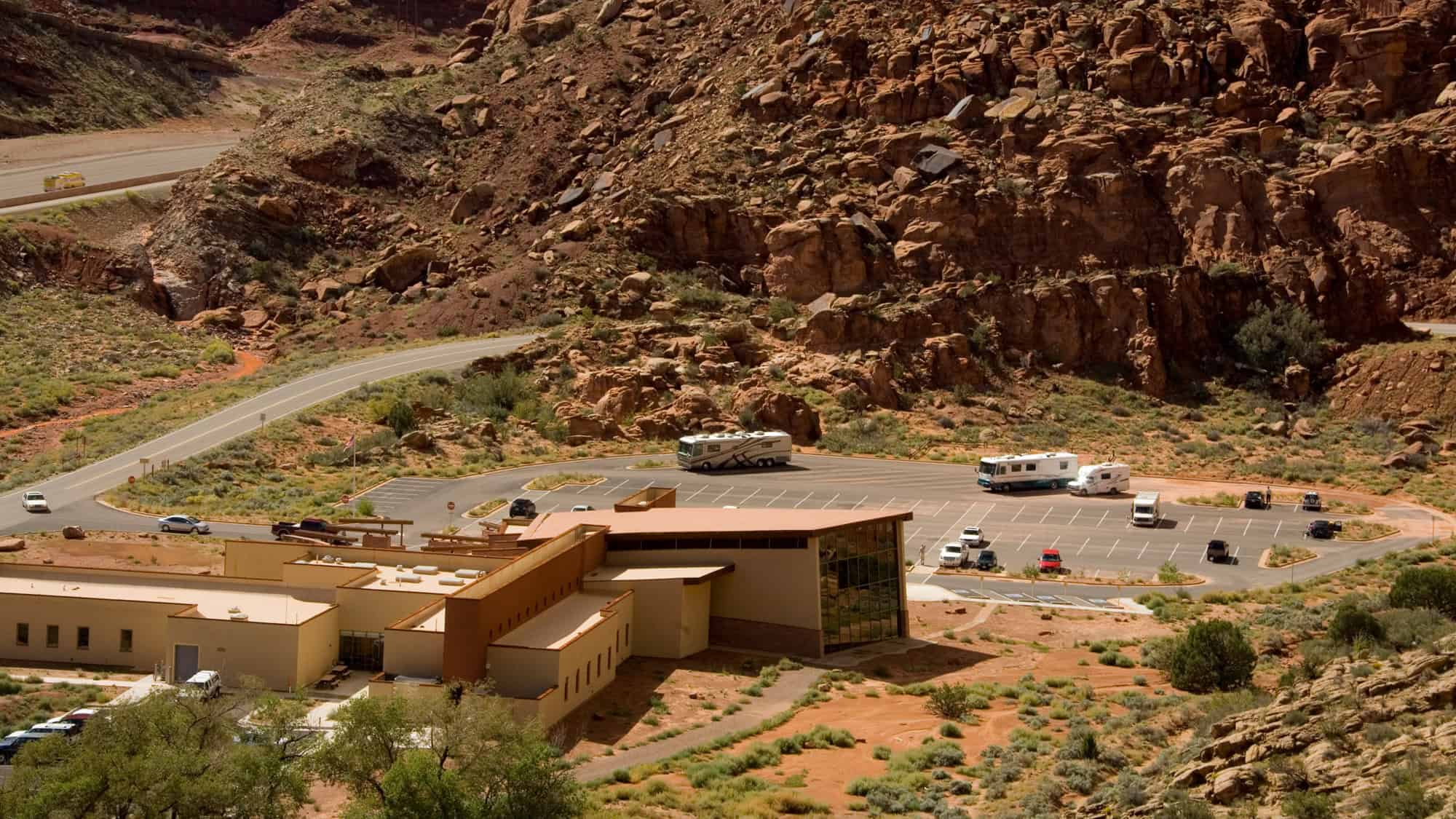
Before venturing into the park, a stop at the Arches Visitor Center provides essential context for what lies ahead. The exhibits here explain the paradoxical role of salt in shaping the landscape.
The entire park sits atop a salt bed thousands of feet thick, deposited when ancient seas evaporated 300 million years ago. Under the weight of overlying rock, this salt flowed like toothpaste, pushing up the earth and creating domes that later collapsed and eroded into fins and arches.
Interactive displays and videos illustrate how water, specifically rain and snowmelt, is the primary architect of the arches. Water seeps into cracks, freezes, expands, and breaks off chunks of rock in a process called frost wedging.
The visitor center also features a bookstore and information desk where rangers can provide current trail conditions and weather forecasts.
Rock Climbing
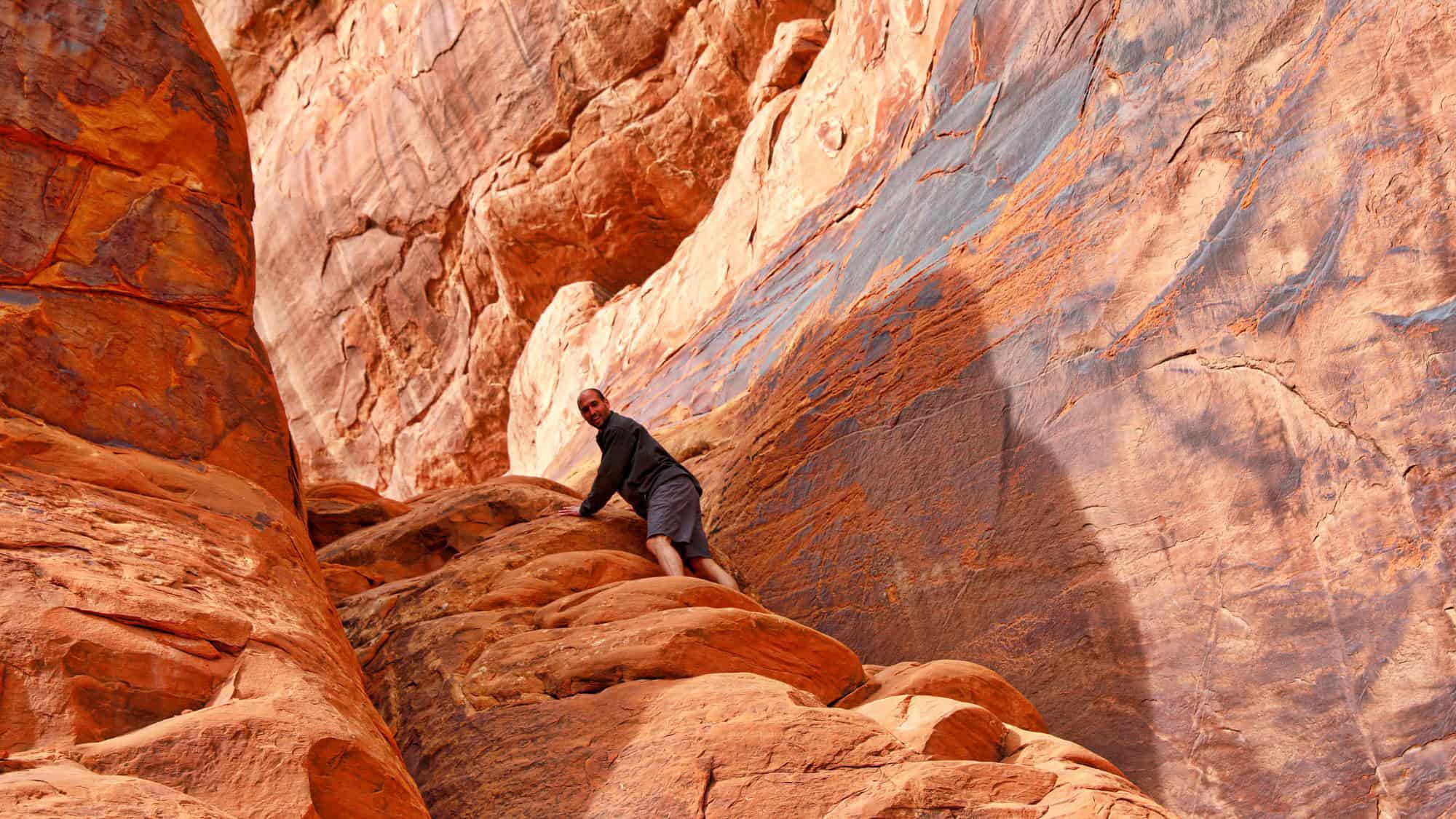
For adventurous visitors who want to get vertical, Arches offers world-class rock climbing on its sandstone towers and spires.
While climbing on any named arch is strictly prohibited to preserve the iconic formations, there are many other established routes throughout the park, such as the Owl Rock and the Three Penguins.
Most routes here require advanced techniques, as the soft sandstone can be brittle, and protection hardware is often sparse. Climbers are required to encourage “clean climbing” techniques that minimize damage to the rock, like avoiding hammers or leaving permanent gear.
For those who want to feel the grip of sandstone without the need for ropes and harnesses, bouldering offers a fantastic, accessible alternative. Bouldering involves climbing on smaller rock formations at heights safe enough to jump down from, requiring only climbing shoes and perhaps a crash pad.
The areas around Big Bend and near the visitor center feature numerous large boulders perfect for scrambling. This tactile experience lets you connect with the geology intimately, feeling the texture of the Entrada Sandstone under your fingertips.
It’s a great way for average visitors or families to experience the thrill of climbing in a low-stakes environment while still enjoying the stunning desert backdrop.
Courthouse Towers

The Courthouse Towers area is a collection of massive monoliths that rise abruptly from the desert floor, resembling the skyline of a giant city. As you drive or hike through this section, you pass formations with evocative names like the Tower of Babel, the Organ, and the Three Gossips.
The scale here is immense; the sandstone walls shoot straight up for hundreds of feet, dwarfing cars and hikers below.
An easy, almost one-mile one-way trail connects the Park Avenue Viewpoint to the Courthouse Towers Viewpoint. This trail descends into a canyon bottom (often called “Park Avenue” because of the skyscraper-like walls) and winds through the wash, surrounded by sheer cliffs.
You will also be able to spot the Three Gossips along the way. It features three distinct heads atop a single column, looking as if they are whispering to one another.
This is one of the best places in the park to feel small. Just note that the trail is non-looping, so hikers either need a shuttle driver or must hike back the way they came.
Like Our Content? Follow Us on MSN (or click the Follow Button above) for more from Discover Parks & Wildlife.