
Discover Parks & Wildlife contains affiliate links and is a member of the Amazon Services LLC Associates Program. If you make a purchase using one of the Amazon links, we may receive compensation at no extra cost to you. We may also use select AI tools to support our creative process, but all content is reviewed, refined, and finalized by our human team. See our disclosure policy and our AI use policy for more information.
14 Astonishingly Rare Animals Clinging To Survival Around The World
Somewhere on this spinning blue marble, a few stubborn creatures are hanging on by the tips of their claws, fins, and feathers. They don’t know they’re famous, of course. The California condor isn’t sitting on a cliff scrolling through bad news about itself, and the vaquita isn’t reading conservation updates with a sigh.
Still, their numbers are so small it feels almost rude to whisper about them. And you can’t help but root for them, the rarest of the rare, each one proof that nature has both a flair for drama and a slightly wicked sense of humor.
From forest ghosts to ocean phantoms, these animals are balancing on the thinnest edge of existence. Some are victims of bad luck, others of bad behavior (ours, mostly). Yet each carries centuries of history in its bones, feathers, or shell.
If they vanish, entire stories go with them; stories no scientist can fully rewrite. So, let’s pause the noise of modern life and meet the survivors who are still out there, quietly reminding us that beauty and fragility often live side by side.
California Condor

With a wingspan that can stretch nearly ten feet, the California condor looks like it flew straight out of prehistory. Once soaring freely across western skies, this massive scavenger nearly disappeared in the 1980s, when the population dropped to a shocking twenty-seven birds.
Lead poisoning from bullets and habitat loss nearly sealed its fate, but a massive recovery program brought the species back from the brink. Today, condors are cruising over California, Arizona, and Utah again, though every flight still feels like a small miracle.
Scientists still monitor most of them closely, even giving each bird a number tag for easy ID. And while their numbers have improved, condors breed slowly and face constant threats from lead fragments in animal carcasses. Every chick hatched is celebrated like a royal birth.
Their story proves what stubborn human effort can do, but also how fragile progress remains when nature has to rely on our good behavior to survive.
North Atlantic Right Whale

If patience were a virtue measured in whales, the North Atlantic right whale would win hands down. These enormous creatures, reaching up to fifty-five feet long, migrate slowly and gracefully along the East Coast of North America. Unfortunately, that same unhurried pace makes them easy targets for ship strikes and entanglement in fishing gear. It’s a grim reminder that “sharing the sea” isn’t something we’ve mastered yet.
Named “right whales” because early whalers thought they were the right ones to hunt (they floated when killed… morbid, I know), their population plummeted over the centuries. Even now, scientists estimate that fewer than one hundred breeding females remain.
Mothers are fiercely protective, often seen nudging calves through cold Atlantic waters like overcaffeinated nannies. And conservationists have pushed for slower ship speeds, seasonal no-fishing zones, and better tracking methods, but recovery is painfully slow. The good news? Each calf born is cause for celebration. The bad news? Calves are few and far between.
Red-Fronted Macaw
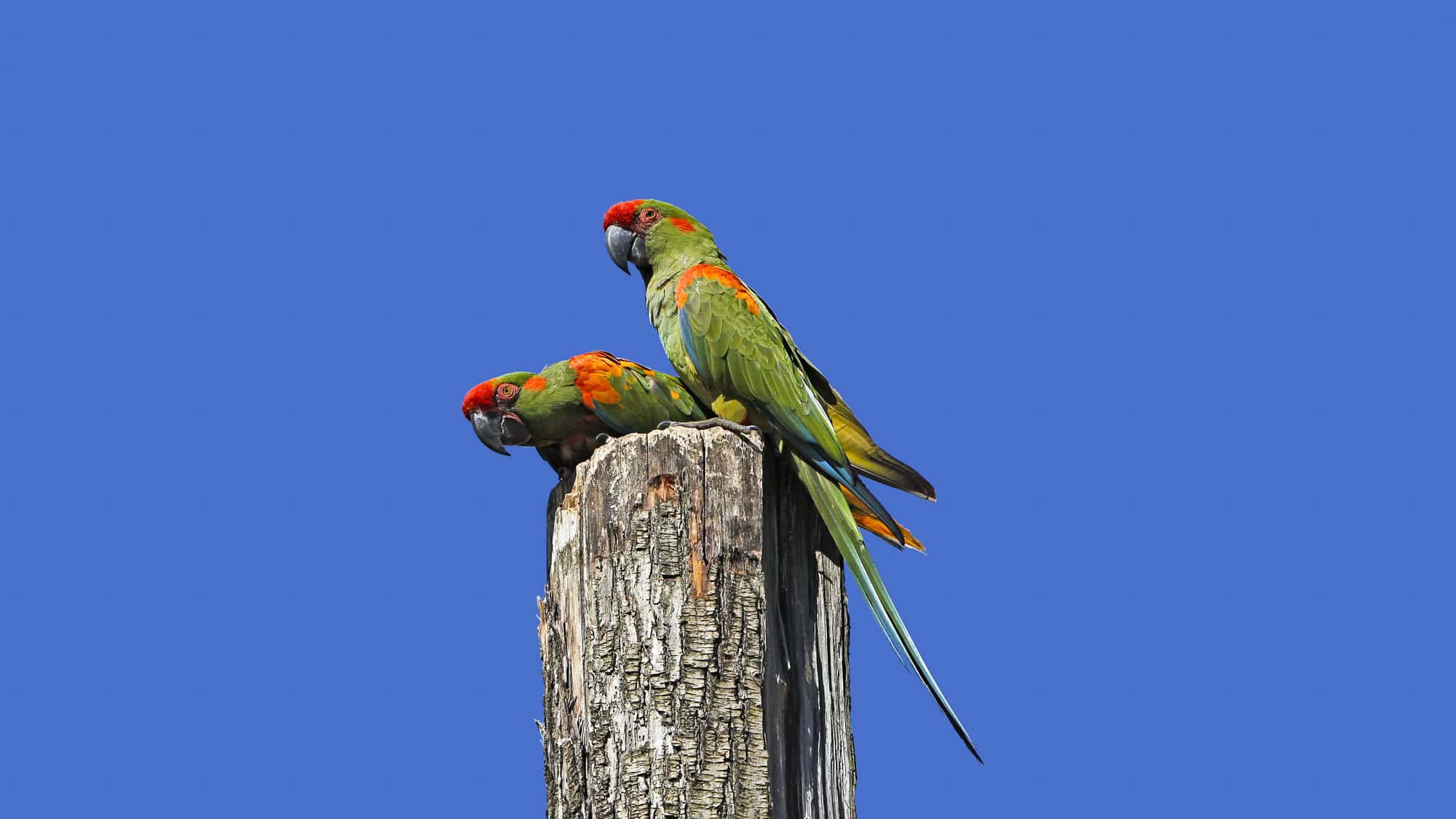
Some birds sing. The red-fronted macaw squawks like it’s trying to start a debate. Native only to a small region in Bolivia, this parrot’s emerald feathers and bright crimson forehead make it look like it is dressed for a carnival every day. Yet behind the feathers lies one of the rarest parrots in the world. Once common across Bolivia’s dry valleys, habitat loss and illegal pet trade have pushed it into steep decline.
Red-fronted macaws live in rugged canyons where cactus and thorny scrub rule the landscape. They nest in cliffside crevices, where pairs raise chicks with surprising tenderness. And these birds mate for life, which sounds romantic until you realize how few partners are left to choose from.
Farmers sometimes see them as pests because they raid cornfields, but ongoing community programs are changing that reputation by linking protection with eco-tourism. Conservationists are now working with local schools to teach kids about these bold survivors. Because if any bird deserves to keep shouting across the canyons, it’s this one. Silence, in this case, would be tragic.
Kakapo
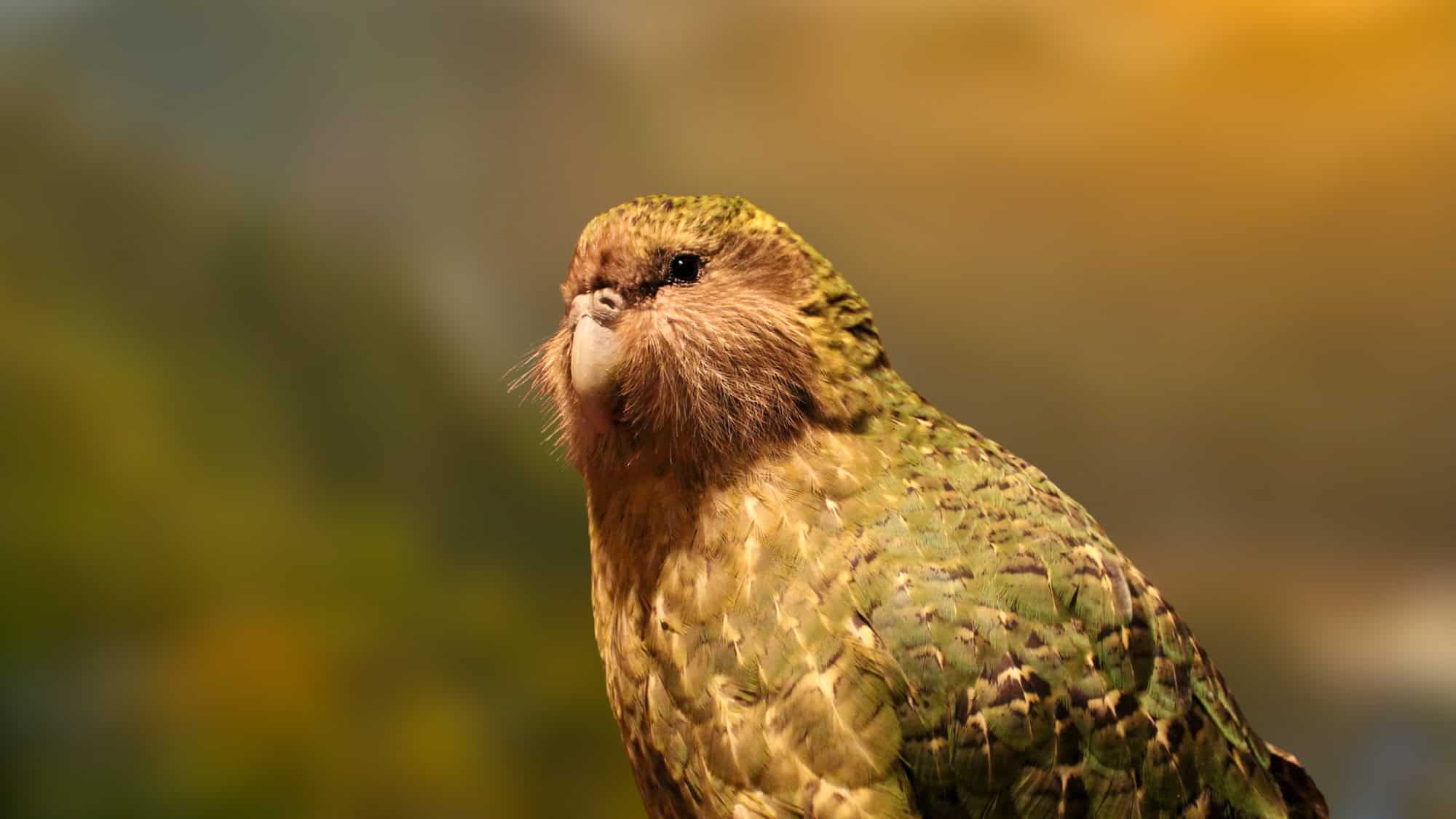
If an owl and a parrot had a very confused baby, it might look like the kakapo. This rotund, moss-green bird from New Zealand can’t fly, smells oddly sweet (think slightly fruity laundry), and walks through the forest. It is nocturnal, gentle, and utterly unique. Unfortunately, it’s also one of the world’s rarest birds.
Once common throughout New Zealand, kakapos fell victim to introduced predators like stoats and cats, which found them to be easy midnight snacks (since they don’t fly). By the 1990s, only about fifty birds remained. Thanks to an extraordinary breeding program involving island sanctuaries and around-the-clock monitoring (some kakapos even have names and individual caretakers), the population has climbed to roughly 240.
Kakapos have quirky habits, including a deep “booming” mating call that can travel miles through the forest. Which is quite useful, since potential dates are scarce. And their chubby charm has turned them into national celebrities, complete with social media accounts run by conservationists.
Florida Panther

Somewhere in the swamps and pine flatwoods of southern Florida, a few panthers still stalk through the palmetto shadows like ghosts in sneakers. Sleek, tawny, and silent, the Florida panther is the last surviving population of cougars east of the Mississippi River.
Once roaming across the Southeast, their territory shrank until only a few dozen survived by the 1970s. Thanks to protection efforts, numbers have slowly crept upward, but fewer than 240 remain. They need enormous ranges (about 200 square miles per male), and that’s a problem when highways and housing developments keep cutting through their hunting grounds.
Road collisions are one of the leading causes of death, which feels tragically modern for a wild cat (imagine surviving centuries of hunters only to be defeated by traffic). So conservationists have added wildlife underpasses and highway signs warning drivers to slow down, which has helped a little. Still, habitat loss and inbreeding are constant threats.
Ploughshare Tortoise

If you think your daily routine moves slowly, meet the ploughshare tortoise. Native only to Madagascar, this tortoise carries one of the world’s rarest shells. In fact, its golden, high-domed shell is so beautiful that it’s become a target for illegal collectors, pushing the species toward extinction. Fewer than 200 individuals remain in the wild, mostly within protected areas of Baly Bay National Park.
The tortoise’s name comes from the shape of its front shell, which resembles a plough blade. Unfortunately, that hasn’t helped it “plough” through the challenges of poaching and habitat loss. The illegal pet trade remains its greatest threat, with traffickers willing to smuggle them across continents for private collections.
Conservationists have formed armed patrols to guard these tortoises and created breeding programs to help rebuild the population. Each hatchling is carefully numbered and tracked, almost like a tiny armored celebrity. With luck and protection, these golden shells may just keep glinting in the Madagascar sun for centuries longer.
Amur Leopard

Some cats demand attention; the Amur leopard prefers to disappear. Living in the snowy forests of eastern Russia and northern China, this elusive feline is the rarest big cat on Earth. Its coat is a masterpiece: thick, pale gold with rosettes that seem painted by an artist. Sadly, that beauty almost got it killed. Poaching and habitat loss reduced their numbers to fewer than 40 in the early 2000s, though careful protection has helped them climb to around 130 today.
These leopards can leap nearly twenty feet and sprint up to 35 miles per hour. Quite impressive for an animal that also enjoys long naps. They survive harsh winters, often hunting roe deer and hares in deep snow. Conservation zones in Russia’s Land of the Leopard National Park now protect most of their remaining habitat.
Still, their biggest challenge is isolation. With so few individuals, genetic diversity is dangerously low. Scientists are even considering managed crossbreeding with closely related leopards to keep the species healthy. It’s a delicate, high-stakes experiment, but if any cat deserves a fighting chance, it’s this icy phantom of the Far East .
Pygmy Three-Toed Sloth

If slow living were a competitive sport, the pygmy three-toed sloth would hold every gold medal. This tiny, shaggy creature lives only on one small island off the coast of Panama, Isla Escudo de Veraguas, and it barely moves from its mangrove trees (to be fair, why hurry when you’ve got a private island?). But paradise has its price. Fewer than 100 individuals are believed to remain.
These sloths weigh less than eight pounds and spend nearly their entire lives in trees, feeding on leaves that don’t exactly offer much energy. Their biggest threats come from human visitors and habitat disturbance. Even eco-tourism, if unmanaged, can stress them out.
Scientists have been working with local communities to protect mangrove areas and restrict access during breeding seasons. And because they move so little, even small disruptions can make a big impact. Watching one slowly turn its head or reach for a leaf feels like watching time stretch itself thin. They may look like sleepy tree ornaments, but these sloths are proof that sometimes survival requires mastering the art of doing absolutely nothing.
Saola

The saola, often called the “Asian unicorn,” isn’t mythical; it’s just incredibly good at staying out of sight. Discovered by scientists only in 1992 in the forests of Vietnam and Laos, this shy antelope-like animal became an instant legend. With elegant horns and dark, gentle eyes, it looks almost too perfect to be real.
Saolas live deep in remote mountain forests, which makes studying them nearly impossible. Few people have ever seen one in the wild, and camera traps rarely catch more than a glimpse. Their biggest threats are snare traps set for other animals and habitat loss from logging. Ironically, they’re disappearing faster than scientists can learn about them.
Unfortunately, only around 100 are estimated to exist. But conservation groups in Southeast Asia are racing to establish breeding centers and anti-poaching patrols, hoping to give this mysterious species a future. The saola may not grant wishes like a unicorn… but it certainly inspires them.
Dusky Gopher Frog

Found only in a few isolated ponds in Mississippi, this plump, warty frog spends most of its time hiding underground in old gopher tortoise burrows. When it does appear, it lets out a call that sounds oddly like snoring. Not exactly the stuff of romance, but it works.
Once widespread across the Gulf Coast, its population crashed due to habitat loss and drought. Today, fewer than 75 individuals remain in the wild, making it one of the rarest amphibians in North America. Conservationists have worked tirelessly to breed and reintroduce them, restoring temporary ponds and replanting native longleaf pine forests.
The dusky gopher frog isn’t flashy, but it’s an important part of its ecosystem, helping control insect populations. Plus, its ability to survive in fluctuating wetlands shows nature’s adaptability (when we let it). Scientists now keep a close watch over every known breeding site, counting eggs like precious gems. With any luck, the snoring chorus might grow louder each spring.
Yunnan Box Turtle

The Yunnan box turtle might be the world’s most reluctant celebrity. For years, scientists thought it was extinct. Then a few individuals somehow turned up in China’s Yunnan Province, quietly proving everyone wrong. Unfortunately, that surprise comeback didn’t come with safety guarantees. Fewer than 50 are believed to exist today, and each one is about as rare as a winning lottery ticket.
This freshwater turtle has a domed shell with golden-brown markings and a knack for staying hidden in ponds and rice paddies. Sadly, those same habitats are vanishing fast due to agriculture and development. And the illegal pet trade has made things worse, as collectors will pay small fortunes for a rare shell.
Conservationists are now guarding known habitats and managing captive-breeding programs in China and Vietnam. Each turtle is monitored with almost parental intensity, because losing even one means a measurable dent in the species’ future. These turtles might look calm and unbothered, but their situation is anything but.
Red Wolf

Meet the red wolf, a creature so rare it’s almost become a legend in its own homeland. Once prowling across the southeastern United States, this slender, reddish-gray canid now survives mainly in eastern North Carolina.
Red wolves are smaller than gray wolves but larger than coyotes, which unfortunately leads to confusion (and crossbreeding). Hybridization, along with habitat loss and hunting, has pushed their population to the brink. At night, their mournful howls echo across the coastal plains, a haunting reminder of what once filled those forests.
Today, fewer than 30 remain in the wild, making it one of the most endangered mammals in North America. Conservationists have reintroduced wolves into protected areas, but challenges persist. Vehicle strikes, illegal shootings, and public misunderstanding keep undermining recovery. Still, captive-breeding programs offer hope, and every new litter feels like a tiny rebellion against extinction.
Vaquita

If rarity had a face, it would belong to the vaquita, a tiny porpoise found only in Mexico’s Gulf of California. With its dark-ringed eyes and petite frame (barely five feet long), the vaquita looks permanently surprised. Unfortunately, only about eight to ten remain, making it the most endangered marine mammal on the planet.
The vaquita’s decline has been heartbreakingly fast. It’s not hunted directly but gets caught in gillnets used for illegal fishing of another species, the totoaba. These nets drown vaquitas before fishermen even realize what’s happened. Despite bans and patrols, enforcement remains tricky across such a vast area (think trying to find one net in an ocean-sized haystack).
Conservationists have launched desperate rescue efforts, including surveillance drones and acoustic monitoring to detect their faint clicks. But the remaining vaquitas are now so elusive that spotting one feels like seeing a living ghost. Yet there’s still hope. A few births have been recorded recently. The species hangs on by a thread, reminding us that even the smallest creature can reveal how fragile our oceans truly are.
Northern White Rhino

If tragedy had a mascot, it might be the northern white rhino. Once roaming across Central Africa, this massive creature has been driven to the edge of extinction by poaching for its horn (a structure made of keratin, the same thing as human fingernails). Now, only two females remain, Najin and Fatu, both living under armed guard in Kenya’s Ol Pejeta Conservancy. No males are left.
These rhinos are watched around the clock, their keepers more like bodyguards than zookeepers. Imagine having your own 24/7 security team just for eating grass all day. But scientists are using advanced reproductive technology, including stored sperm and surrogate southern white rhinos, to try and resurrect the subspecies. It’s a scientific moonshot, but one worth attempting.
The northern white rhino’s story reads like a cautionary tale carved into stone. It’s proof that even giants can fall fast when greed outweighs protection. Yet there’s still a flicker of hope in the labs and sanctuaries working tirelessly to bring them back. Najin and Fatu may never walk beside a male again, but their legacy might help rebuild their species one frozen cell at a time.
Sometimes, survival is a matter of pure human determination.
Like Our Content? Follow Us on MSN (or click the Follow Button above) for more from Discover Parks & Wildlife.
15 Animal Species That Have Adapted Well To Human Encroachment

If you think the animal kingdom couldn’t surprise you more, wait until you meet the crafty critters thriving in our concrete jungles. They’ve got survival skills that would put spies to shame!
14 Galapagos Exclusives: Animals You Won’t See Anywhere Else

Curious about creatures that make unicorns seem ordinary? You’ll want to check this out. It’s like unlocking a secret level of wildlife wonder.
15 Dangerous Rainforest Animals That Command Respect
Curious about the kind of animals that laugh in the face of danger? You’re in for a wild ride with rainforests’ most respect-demanding resident. Don’t say I didn’t warn you.