Discover Parks & Wildlife contains affiliate links and is a member of the Amazon Services LLC Associates Program. If you make a purchase using one of the Amazon links, we may receive compensation at no extra cost to you. We may also use select AI tools to support our creative process, but all content is reviewed, refined, and finalized by our human team. See our disclosure policy and our AI use policy for more information.
Why February Is The Hidden Sweet Spot At These 11 National Parks
February usually feels like the gloomy waiting room of the calendar year. You have likely packed away the holiday glitter, your New Year’s resolutions have been quietly abandoned (don’t worry, your secret is safe with us), and spring feels impossibly far away.
Most people spend this month aggressively scraping ice off windshields or staring out at gray skies while dreaming of beach vacations that are months away. But seasoned travelers know a little secret that the summer crowds completely ignore.
Nature does not shut down just because the department stores are aggressively marketing Valentine’s Day chocolate in heart-shaped boxes. In fact, some of the country’s most spectacular landscapes are quietly having their best days right now, without the sweaty masses ruining your photos.
The stifling heat that turns desert parks into ovens has vanished, replaced by breezes that actually feel pleasant against your skin rather than like a hair dryer to the face. The thick crowds that clog scenic drives in July remain at home, leaving wide-open spaces that allow you to actually hear the wind instead of shutter clicks.
At these parks, conditions are perfect. The wild is calling. Will you answer it?
Big Bend National Park, Texas

Texas does everything big, and Big Bend is certainly no exception to this rule. While this massive park is scorching enough to melt the rubber off your hiking boots in June, February offers a meteorological apology in the form of mild, sunny days.
The average high temperatures hover comfortably in the mid-60s to low 70s°F, making it the perfect time to tackle trails that would be dangerous endurance tests in summer. And you can actually enjoy the stark beauty of the Chihuahuan Desert without feeling like you are the main course in a solar oven (nobody looks good when they are heat-exhausted).
You should head to the Chisos Basin, where the jagged peaks rise dramatically out of the desert floor. And the Lost Mine Trail is a non-negotiable stop here. It offers panoramic views that will make you feel incredibly small in the best way possible.
Just keep an eye out for the local wildlife; javelinas look like pigs but are actually peccaries, and they have more attitude than a teenager who just got grounded.
Down by the Rio Grande, the Santa Elena Canyon features limestone walls that shoot 1,500 feet straight up. It is an impressive sight that feels almost cathedral-like in its grandeur.
February is also prime time for stargazing here. Big Bend is an International Dark Sky Park, meaning the nights are so dark you might trip over your own feet, but the Milky Way will be bright enough to guide you home.
Haleakala National Park, Hawaii

Most people pack swimsuits for Hawaii, but for Haleakala, you need to pack a parka unless you want to turn into a human icicle. It sounds like a cruel prank, but the summit of this dormant volcano sits at 10,023 feet, and February temperatures can dip into the 30s°F or even lower with wind chill.
Standing above the cloud layer to watch the sunrise is one of those life-changing experiences that justifies waking up at 3:00 AM on vacation (which is usually a crime against relaxation). But remember that you need a reservation for sunrise viewing, and the park rangers will turn you away if you don’t have one.
Once the sun is up and you have thawed out, the landscape looks remarkably like Mars, just without the rovers.
The Sliding Sands Trail takes you down into the crater floor, where you can spot the rare silversword plant. It looks like a metallic succulent from a sci-fi movie and grows nowhere else on Earth, making it the ultimate botanical VIP.
After you have had your fill of high-altitude chill, you can drive the winding road down to the Kipahulu District on the coast. It is a completely different world of humid rainforests, thundering waterfalls, and bamboo forests that clack musically in the wind.
Gateway Arch National Park, Missouri

Some national park purists might scoff at an urban park dominated by a steel structure, but those people are missing out on a serious engineering marvel.
Gateway Arch National Park is ideal for February because much of the experience is indoors, climate-controlled, and completely immune to the slushy weather outside.
The Arch itself stands 630 feet tall, making it the tallest monument in the United States. It is a shiny, stainless steel loop that dominates the St. Louis skyline and serves as a literal gateway to the West (and to some excellent pizza nearby).
The real adventure is the tram ride to the top. It involves squeezing into a small, futuristic pod that looks like a washing machine mixed with a space capsule. It rotates as it ascends to keep you upright, which is a massive relief for your equilibrium.
At the top, small windows offer views stretching up to 30 miles on a clear day. You can even see Illinois, which isn’t exactly exotic, but it is technically another state.
Below the Arch, the museum is surprisingly extensive and well-designed. It covers the history of westward expansion, colonial St. Louis, and the construction of the Arch itself.
Heading to this park in February means you can likely hop right onto a tram without the hours-long wait times typical of summer. Plus, you can grab some toasted ravioli in the city afterward, which is a cultural experience in its own right.
Death Valley National Park, California
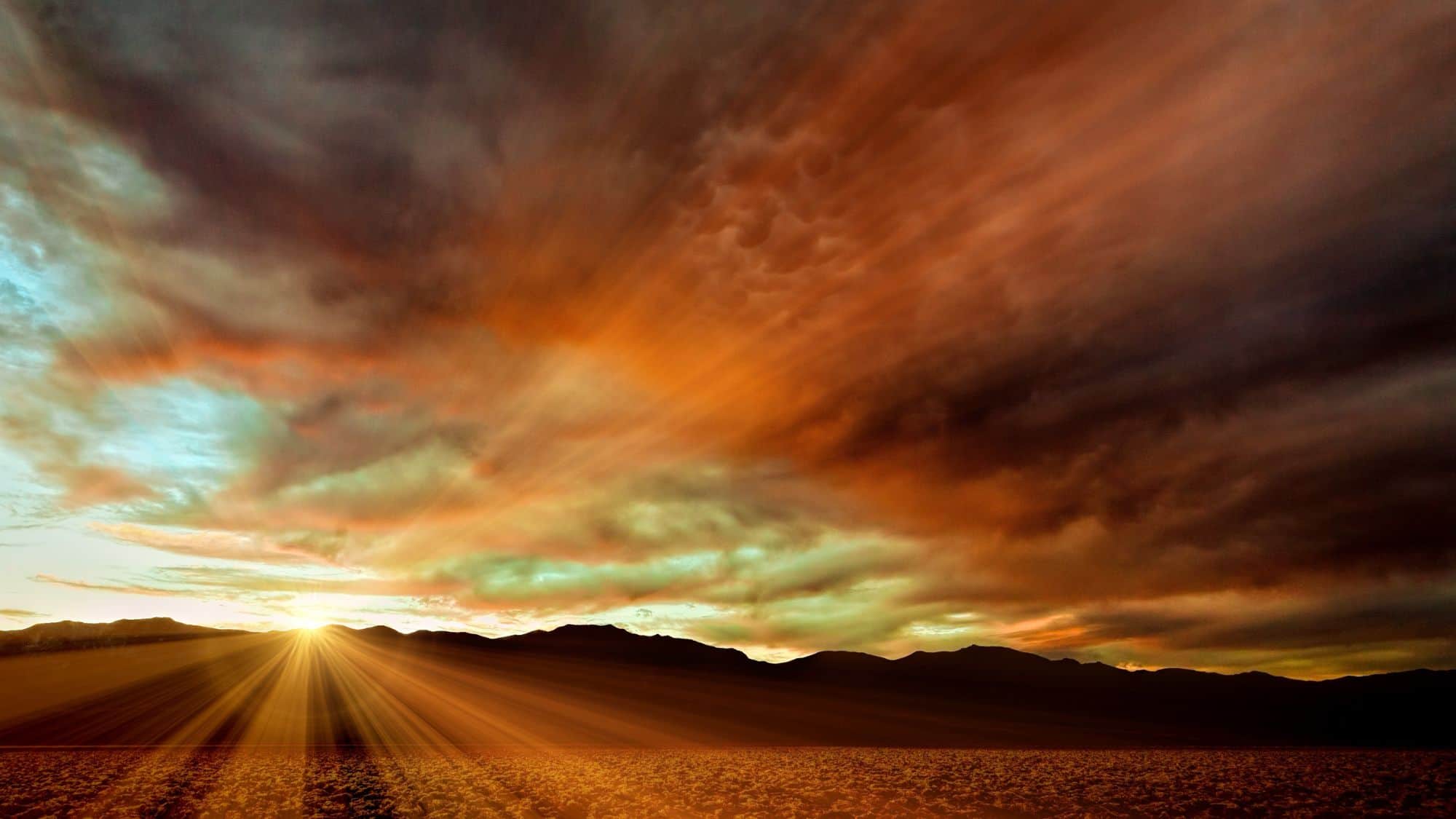
The name alone suggests you should probably avoid this place in August, when temperatures can casually hit 120°F, and your shoes might start sticking to the asphalt. But February in Death Valley is a revelation.
The average highs sit pleasantly in the low 70s°F, which transforms this forbidding landscape into a hiker’s playground. It is the largest national park outside of Alaska, and the sheer scale of the golden canyons and salt flats is enough to break your brain a little bit.
You must visit Badwater Basin, the lowest point in North America at 282 feet below sea level. Walking out onto the polygonal salt formations feels strange and out of this world.
And in February, you can walk far out without worrying about dehydration setting in within minutes. The salt crust crunches satisfyingly under your boots, stretching out for miles like a frozen ocean that forgot to melt.
If the winter rains have been cooperative, February is also the start of wildflower season. It is not guaranteed every year, but when a superbloom happens, the valley floor explodes in golds and purples like a desert miracle. Even without the flowers, the painted hills of Artists Drive are vibrant enough to make you wonder if your sunglasses are polarized.
Just bring layers because while the days are perfect, the desert nights will still chill you to the bone faster than a ghost story.
Pinnacles National Park, California

Pinnacles is the underdog of California parks, often overshadowed by its famous cousins like Yosemite (who gets all the press). But in February, while Yosemite is buried in snow, Pinnacles is waking up and showing off.
This park is the result of an ancient volcano that was sliced in half by the San Andreas Fault and moved 195 miles north (because geology is apparently restless). The resulting rock formations are towering spires that attract climbers and hikers looking for something weird and wonderful.
The absolute highlight here is the talus caves. These aren’t traditional caves carved by water but are formed by massive boulders tumbling into narrow canyons, creating roofed passages. You will need a flashlight to navigate the Bear Gulch Cave, which is home to a colony of Townsend’s big-eared bats.
The caves can be damp in February, but the sound of rushing water through the dark passages adds to the atmosphere (and makes you feel like Indiana Jones).
February is technically the wet season here, but that is actually a good thing. The rain turns the rolling hills a shocking, vibrant green that contrasts beautifully with the reddish-orange rocks.
It is also the best time to spot the California Condor. These massive birds have a nine-foot wingspan and look like prehistoric gliders patrolling the skies. Seeing one soar overhead is humbling and makes you realize that, yes, dinosaurs are definitely still among us.
Grand Canyon National Park, Arizona
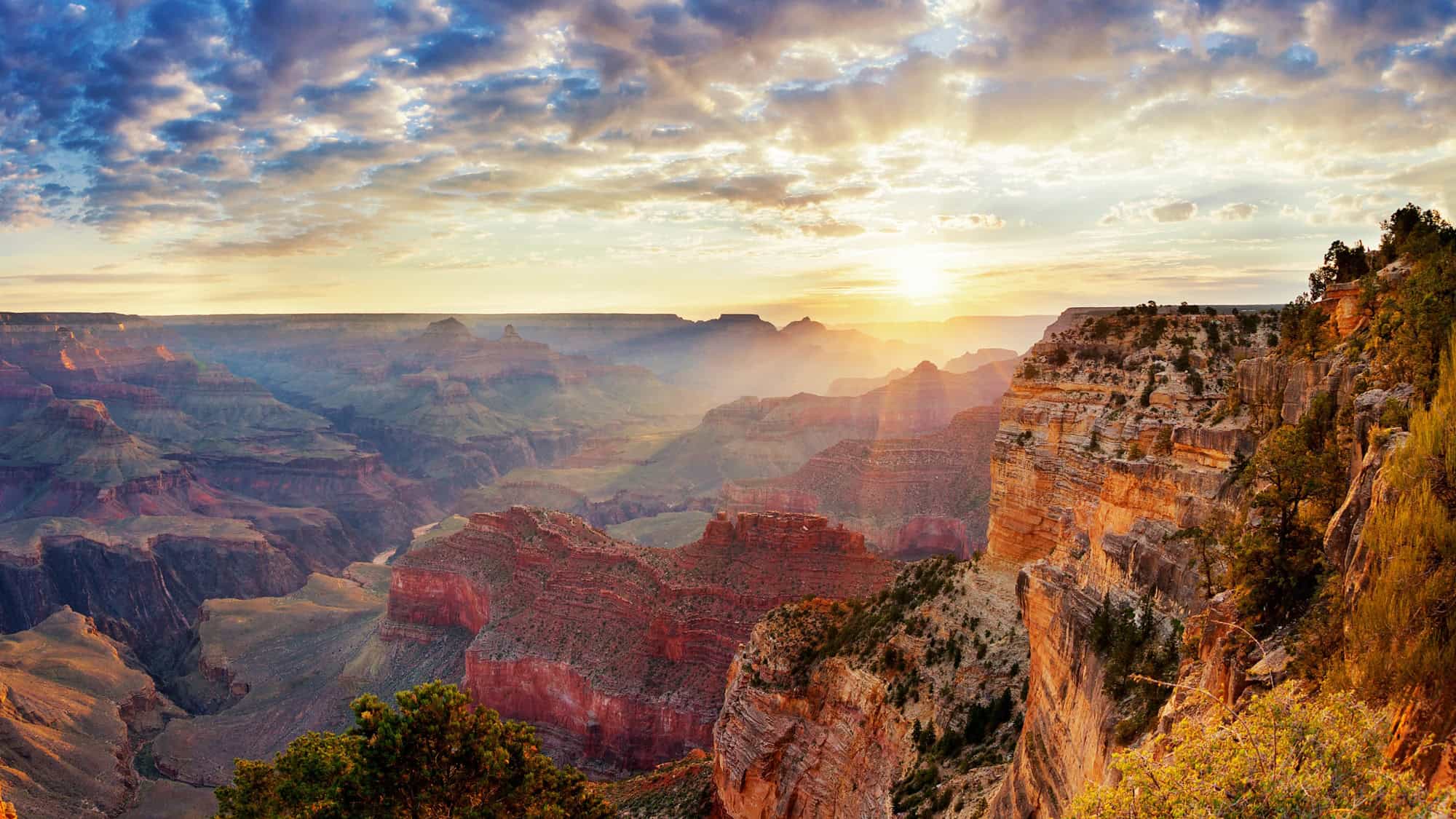
Most people see the Grand Canyon in summer, standing shoulder-to-shoulder with thousands of others while the heat radiates off the rocks like a pizza oven. On the contrast, February offers a quieter, colder, and more contemplative experience.
The South Rim remains open year-round, and seeing the canyon dusted with snow is arguably more beautiful than seeing it in full sun. The red rock layers pop against the white snow, creating a visual drama that photographs beautifully without needing a single filter.
The secret weapon of a February visit is Hermit Road. For most of the year, this scenic seven-mile drive is closed to private vehicles, and you are forced to pack onto shuttle buses like sardines.
But from December through February, the road is open to private cars. You can drive yourself to the overlooks, stay as long as you want, and blast your own questionable music without judgment. This privilege ends on March 1st, so catching it now is key.
If you want to wander into the canyon, pack traction cleats for your boots. Trails leading down into the canyon can be icy. But even if you just stay on the rim, the lack of crowds allows you to actually appreciate the immense silence of the canyon.
Joshua Tree National Park, California

Joshua Tree feels like a landscape designed by Dr. Seuss on a tight deadline. The twisted, spiky trees (actually a species of yucca) and massive piles of boulders create a playground that begs to be climbed.
February is prime time here because the scorching heat is gone, leaving crisp days perfect for scrambling over rocks without burning your hands. Climbers flock here this month, so you will see plenty of people hanging off vertical rock faces by their fingertips (better them than us, right?).
The Hidden Valley trail is a must-do for anyone visiting. It is a short loop enclosed by rock walls that were once used by cattle rustlers to hide stolen herds (which sounds like the plot of a western movie, but is all too true). It feels like a natural fortress.
You should also check out the Cholla Cactus Garden. These “teddy bear” cacti look fuzzy and huggable, but that is a trap designed by nature. They are viciously sharp and will latch onto your clothes if you even look at them wrong.
Nights in February are cold, but the skies make freezing worthwhile. The stars are incredibly bright here, and the silhouettes of the Joshua trees against the Milky Way are hauntingly beautiful.
It is the desert at its most eccentric, and the cool weather lets you explore every weird corner of it without heatstroke.
Dry Tortugas National Park, Florida

If you are strictly anti-winter and refuse to embrace the cold (I hear you loud and clear), Dry Tortugas is your escape hatch. Located 70 miles west of Key West, this park is mostly open water and accessible only by boat or seaplane.
February falls right in the middle of the dry season, meaning you get sunshine, temperatures in the mid-70s°F, and none of the humidity that turns Florida into a steam room later in the year.
The centerpiece is Fort Jefferson, a massive 19th-century coastal fortress composed of over 16 million bricks. It is the largest brick masonry structure in the Americas, and it sits oddly in the middle of the turquoise ocean like someone dropped a castle into a swimming pool.
Wandering the moat wall gives you a view of the coral reefs right below the surface; just watch your step unless you want to go for an unplanned swim (and fall up to 40 ft).
Snorkeling here is fantastic, with vibrant coral and tropical fish accessible right from the beach. And because the park is so remote, the number of daily visitors is capped by the ferry capacity. You will never feel crowded.
There is also zero cell service, which forces you to disconnect and actually look at the ocean instead of your work email. It is a tropical paradise that requires a bit of effort to reach, but the solitude is worth the boat ride.
Hawaii Volcanoes National Park, Hawaii

While the mainland is shivering, the Big Island of Hawaii is doing its own thing entirely, including protecting two active volcanoes, Kilauea and Mauna Loa, within Hawaii Volcanoes National Park boundaries.
February is generally part of the rainy season, but the rain here often comes in passing mists that create rainbows over the craters. It is still humid and warm in general, but the higher elevations can get nippy, so layers are your best friend (even in paradise).
One of the best things to do is walk through the Thurston Lava Tube, a massive tunnel formed by flowing lava that looks like the gullet of a stone monster. It is damp, dark, and incredibly cool.
The Chain of Craters Road is a spectacular drive that descends 3,700 feet to the coast, passing ancient lava flows that have frozen into black rivers of rock. You can see exactly where the lava stopped and where the vegetation is stubbornly trying to reclaim the land.
The Steam Vents are another highlight where groundwater hits hot volcanic rocks and rises as steam. It is a free, natural facial, though it smells distinctly of sulfur (rotten eggs), so maybe don’t breathe too deeply.
Keep in mind that checking the park website before you go is essential, as volcanic activity can change closures instantly. But walking on land that is younger than you are is a surreal experience you won’t soon forget.
Saguaro National Park, Arizona
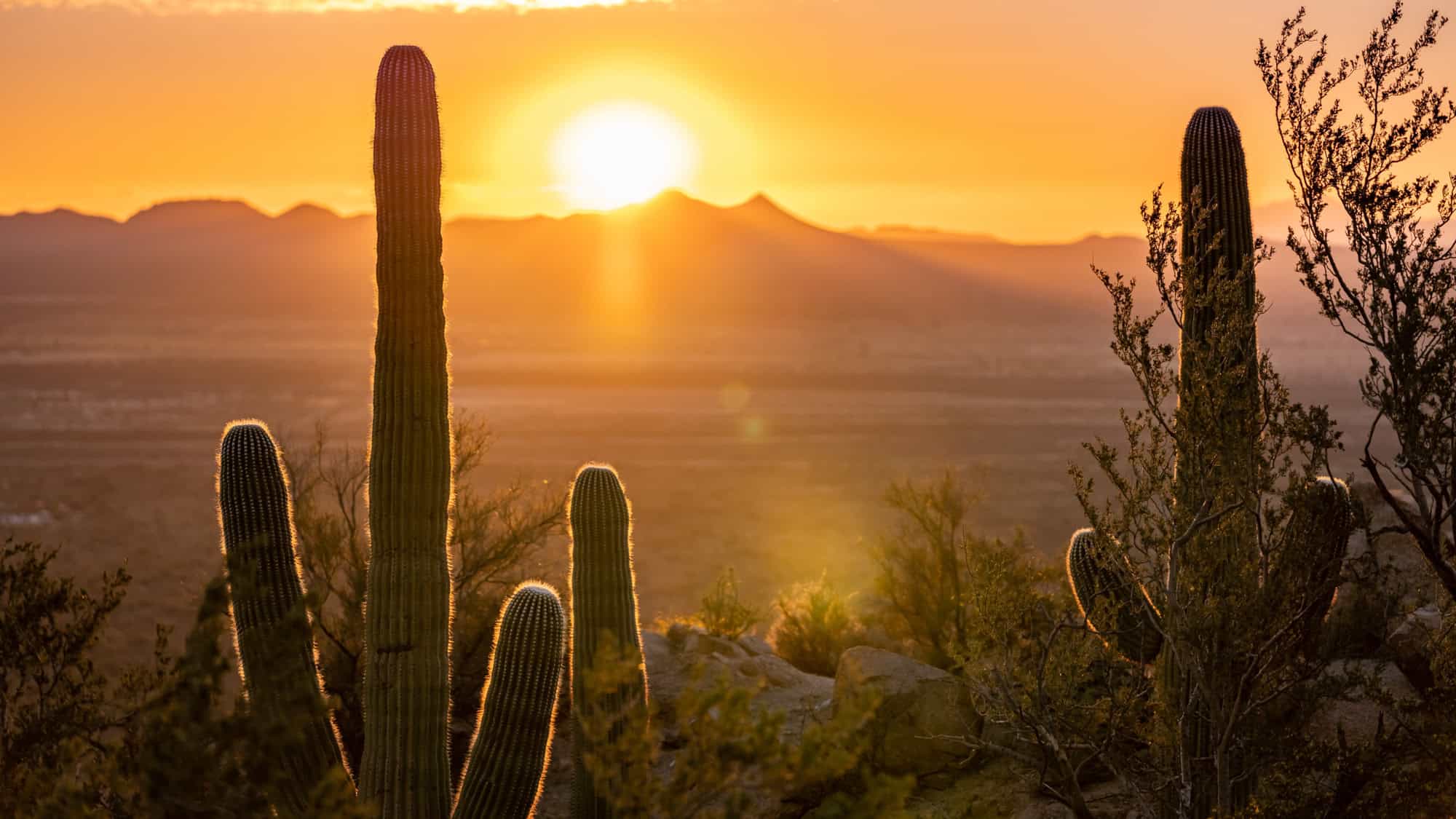
Saguaro National Park is split into two districts flanking the city of Tucson, and both are home to the giant saguaro cacti that serve as the universal symbol of the American West. These giants can live for 200 years and weigh several tons, which commands some serious respect.
Seeing them in person is like walking through a crowd of silent, green giants freezing in mid-wave to say hello.
Hiking in Saguaro during summer is a legitimate health hazard, but February offers highs in the 60s°F, which is absolute perfection for hitting the trails.
The Signal Hill Trail in the West District (Tucson Mountain District) is short but rewarding, leading you to ancient petroglyphs etched into the rocks by the Hohokam people centuries ago. The contrast of ancient art against the backdrop of a cactus forest is striking and makes you wonder about the people who stood there before you.
The desert floor is lush (by desert standards) in winter, and you might see blooming ocotillos adding splashes of red to the green and brown landscape. Just remember that everything here has thorns, spikes, or spines.
It is a strictly look-but-don’t-touch environment, but it is undeniably beautiful under the winter sun.
Mammoth Cave National Park, Kentucky

Mammoth Cave plays by its own rules and ignores the weather report entirely. While the surface weather in Kentucky in February can be a nasty mix of rain, sleet, or snow, the cave maintains a constant temperature of around 54°F year-round. It is nature’s own HVAC system working overtime.
What’s so special about this place? Well, this is the longest known cave system in the world, with over 400 miles of explored passageways, and they are still finding more (which is slightly terrifying if you think about it too long).
Winter is the quiet season here, so tour groups are smaller. Maybe try the “Frozen Niagara” tour to see cascading flowstones that look like a waterfall frozen in time (and stone).
The sheer size of the chambers, particularly in the Rotunda, is disorienting. You could literally fit a cathedral inside some of these spaces and still have plenty of headroom for the bats.
The history here is fascinating as well, ranging from prehistoric exploration to 19th-century saltpeter mining. And the gothic atmosphere of the cave matches the dreary February mood outside, but in a cool, adventurous way rather than a depressing one.
Like Our Content? Follow Us on MSN (or click the Follow Button above) for more from Discover Parks & Wildlife.