Discover Parks & Wildlife contains affiliate links and is a member of the Amazon Services LLC Associates Program. If you make a purchase using one of the Amazon links, we may receive compensation at no extra cost to you. We may also use select AI tools to support our creative process, but all content is reviewed, refined, and finalized by our human team. See our disclosure policy and our AI use policy for more information.
11 U.S. National Parks Where Winter Conditions Sabotage Picture-Perfect Views
There’s a special kind of betrayal that happens when you plan a trip around a breathtaking photograph, only to arrive and find the main attraction has taken the season off.
You’ve seen the pictures: majestic peaks reflected in a serene lake, a winding road snaking through a canyon, or a waterfall cascading into a lush valley. You book the flight, pack the car, and maybe even buy a new puffer jacket that makes you look like a marshmallow, all in anticipation of that perfect view.
But winter has other plans. It’s a season that loves to throw a wrench in the works, often in the form of a very large, very unmovable snowbank or a gate with a sign that politely says, “Nope, not today.” This is the reality of chasing those postcard moments when the temperature drops.
The dramatic landscapes don’t just disappear; they just become experts at playing hard to get, hiding behind a veil of fog, a blanket of snow, or a set of rules that seem personally designed to thwart your itinerary. Here are a few of the worst culprits, proving nature doesn’t really care about your travel schedule or your desire for the perfect social media post.
Yosemite National Park, California

Planning a winter trip to Yosemite for the views is a bit of a gamble, and the house almost always wins. If you dream of that iconic shot from Glacier Point, the one with Half Dome looking all majestic and stoic, you should probably just keep dreaming.
The park service closes Glacier Point Road as soon as the snow gets serious, which is usually around November. It won’t reopen until the plows can find the asphalt again in late spring. This means the best seat in the house is unavailable unless you fancy a 10.5-mile round-trip ski trek from the Badger Pass area.
Another major road, the Tioga Road, gets so completely buried under snow that it’s shut down from November until late May or even June. So, your plan to cruise the high country and see Tuolumne Meadows becomes a non-starter.
You can still hang out in Yosemite Valley, looking up at the granite cliffs like a tourist at the bottom of a skyscraper, but the grand, sweeping views from above are on a long winter vacation.
Even the waterfalls are fickle, sometimes freezing into giant icicles or dwindling to a trickle, waiting for the spring melt to put on a real show.
Olympic National Park, Washington
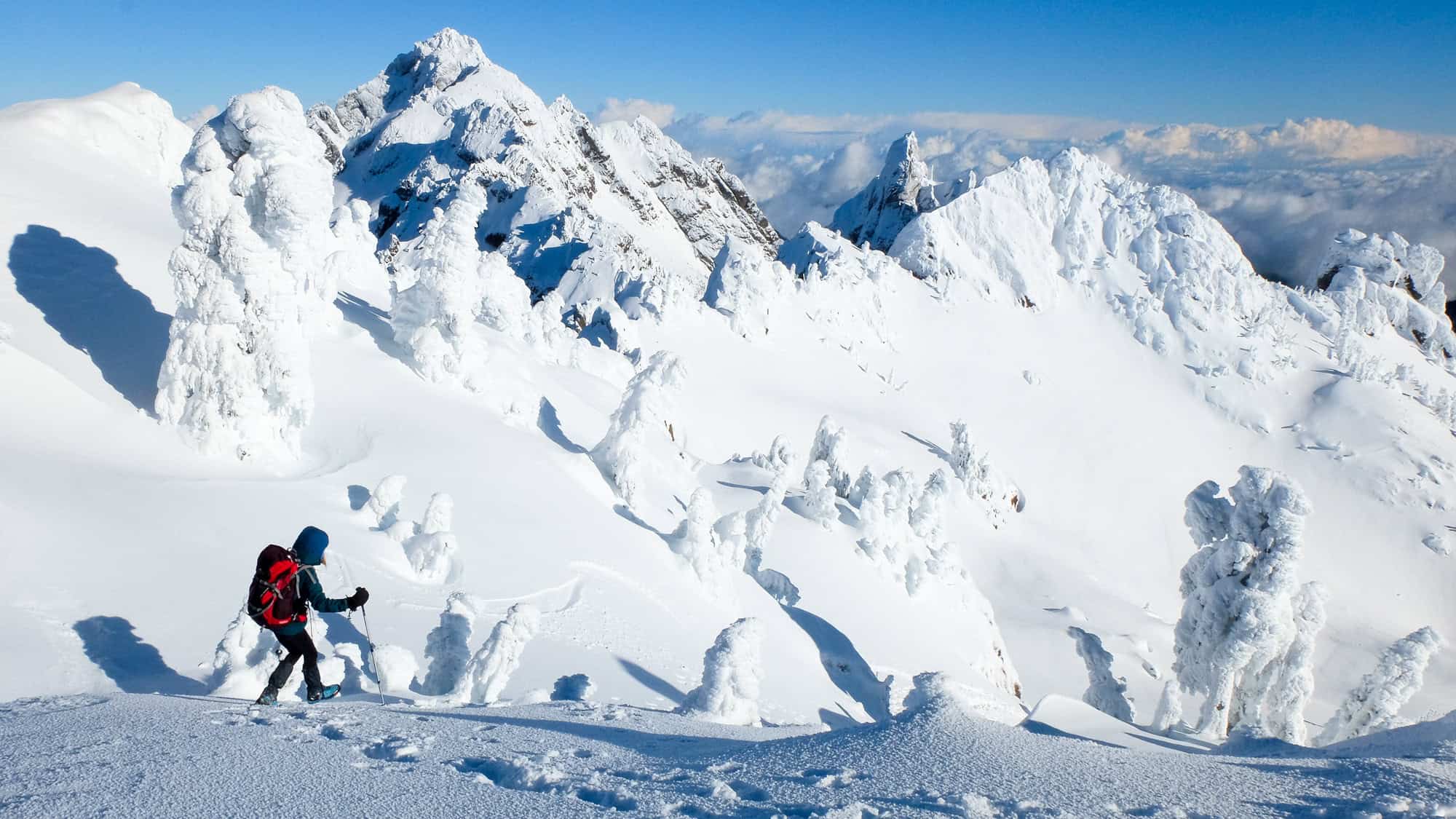
Olympic National Park is a triple threat of rainforests, coastlines, and mountains, but the mountains get a little shy in winter.
The main stage for alpine views is Hurricane Ridge, a name that should tell you everything you need to know about its weather. The road up is scheduled to be open on weekends, but that comes with a big asterisk labeled “weather permitting.”
Storms have a habit of rolling in and shutting the whole operation down, leaving you to ponder the snowy peaks from sea level while getting soaked. Even if you make it up, the view itself might be on strike.
The peninsula gets smacked by Pacific storms that cook up a thick fog, turning the landscape into a giant white ping-pong ball. You can drive all the way up to the 5,242-foot visitor center just to stand in a cloud.
And the Hoh Rain Forest? It leans hard into its name, receiving over 140 inches of rain annually. In winter, this translates to a beautifully lush, but also profoundly damp and muddy. It’s an experience that tests the limits of your waterproof gear and your cheerful disposition.
Grand Canyon National Park, Arizona

The Grand Canyon is basically a giant, spectacular hole, and the best way to see it is from the edge. The problem is, half of that edge clocks out for the winter.
The North Rim, sitting at a lofty 8,000 feet, gets absolutely buried in snow. The road closes to all vehicles from December 1st until May 15th, making the entire northern viewpoint inaccessible unless you have a strange desire to hike 21 miles across the canyon from the South Rim (a truly terrible idea in winter).
The South Rim stays open year-round, but it has its own sneaky ways of ruining your photos. Winter temperature inversions can fill the entire canyon with a thick blanket of clouds, right up to the brim.
While it’s a cool phenomenon for photographers (and one we have personally seen), for the average visitor, it’s like walking up to the edge of one of the world’s greatest wonders and seeing… nothing. Just white fluff, as if you’re looking out an airplane window.
Driving the scenic Desert View Drive can also become an icy ordeal, with sudden snowstorms reducing visibility to near zero. You might travel hundreds of miles just to shiver while staring into a foggy abyss.
Denali National Park, Alaska

Visiting Denali in winter is the travel equivalent of playing on expert mode. The mountain itself is a beast, standing at 20,310 feet and generating its own chaotic weather. But seeing it is a logistical puzzle.
The park has one 92-mile road, and in winter, the plows give up after Mile 3. That’s your entire driving range. Three whole miles.
The kicker? The mountain isn’t even visible from this section of the road. To get even a glimpse of the peak, you need to venture much deeper into the park on skis, snowshoes, or by dog sled, which is a bit more commitment than most of us are prepared for.
Even if you go to all that trouble, Denali is famously elusive. It’s hidden by clouds about two-thirds of the time in summer, and winter is even worse.
Add to that the fact that in December, you get less than five hours of daylight. You have a microscopic window of opportunity to see a mountain that is probably hiding, all while standing on a road that goes practically nowhere. It’s a long way to go for a view of some very cold trees.
Mount Rainier National Park, Washington

Mount Rainier is the undisputed queen of the Washington skyline, but she is a fickle monarch who often refuses to hold court.
The most popular spot, Paradise, lives up to its name in summer, but in winter, it’s more like a heavily guarded fortress. The road to Paradise is gated at Longmire, and access is completely at the mercy of avalanche conditions and the plow crews’ ability to keep up.
You can drive all the way to the park entrance, full of hope and breakfast burritos, only to be politely but firmly turned away by a ranger who has seen your desperate, pleading face a thousand times before.
When you can get through, the mountain itself is likely hiding. It creates its own weather, frequently wrapping itself in a thick blanket of clouds. The area gets an average of 640 inches of snow a year, which is over 53 feet.
You could be standing directly in front of the most glaciated peak in the contiguous U.S. and have no idea because visibility is about the length of your car. It’s a cruel game of hide-and-seek that the mountain seems to enjoy far more than its visitors.
Lassen Volcanic National Park, California

Lassen Volcanic National Park is home to the world’s largest plug dome volcano, a fact that sounds incredibly cool until you realize you can’t get anywhere near it in winter.
The main park highway, California Highway 89, closes down completely once the snow starts to stick. This closure cuts off access to nearly all the park’s greatest hits, including the bubbling mud pots of Bumpass Hell and the trail to Lassen Peak itself.
Instead, your visit is confined to the areas right around the visitor centers at the north and south entrances, which amounts to about one mile of plowed road at each end.
While you can snowshoe for miles along the buried highway, the otherworldly volcanic features that make the park so unique are a serious backcountry trek away. So for most people, a winter trip to Lassen consists of admiring a very nice visitor center and a whole lot of snow-covered pine trees.
The park’s fiery, geothermal heart is effectively put on ice until the road crews can dig it out, usually in late spring or even early summer. The whole “volcanic” part of the park’s name feels a bit like false advertising until the thaw.
Yellowstone National Park, Wyoming

Yellowstone is the granddaddy of all national parks, but in winter it becomes one of the most exclusive destinations on the continent. Most park roads shut down for regular cars in early November and don’t reopen until spring.
The only way to see Old Faithful or the Grand Canyon of the Yellowstone is to book a spot on a guided snowcoach or snowmobile tour. You can’t just roll up in your rental and go looking for bison, no matter how nicely you ask.
Even if you splurge on a tour, Yellowstone has another trick up its sleeve. The extreme cold (where temperatures can plummet far below zero) causes the steam from the geysers and hot springs to become incredibly thick and expansive. This creates a dense fog that hangs over the thermal basins, obscuring everything.
You could be standing near a herd of bison or right next to a bubbling mud pot and see nothing but a wall of white steam. Because of this, the famous, brilliant colors of Grand Prismatic Spring are often completely hidden.
You’ll definitely smell the sulfur, but the spectacular view you came for might be lost in the mist, which is a pretty big letdown.
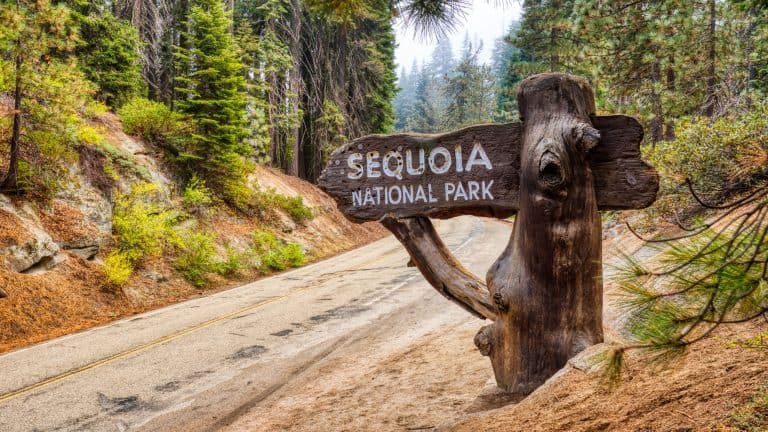
Sequoia National Park, California

The main attractions in Sequoia National Park are trees so massive they’re practically impossible to miss. Getting to them in winter, however, is another story.
The Generals Highway, which connects Sequoia and Kings Canyon, often closes the section between the parks, meaning you have to take a very long, roundabout detour if you want to see both. Inside Sequoia, the winding road to the Giant Forest Museum and the General Sherman Tree is usually kept open, but it’s a nail-biting drive.
Chain controls are almost always in effect, and if you don’t have chains (and the patience of a saint to put them on in the freezing cold), you’re not getting up the mountain.
Once you do arrive, you’ll find that the parking lots have shrunk dramatically thanks to giant piles of snow. And the paved Congress Trail becomes a treacherous sheet of ice, making a simple walk feel more like an Olympic sport. You’ll spend so much time staring at your feet to avoid an embarrassing and painful fall that you might forget to look up at the giant trees you came to see.
It’s hard to appreciate their scale when you’re preoccupied with just staying upright.
Zion National Park, Utah

Zion Canyon is a desert park, so you might think it’s a safe bet for a winter trip. You’d be wrong.
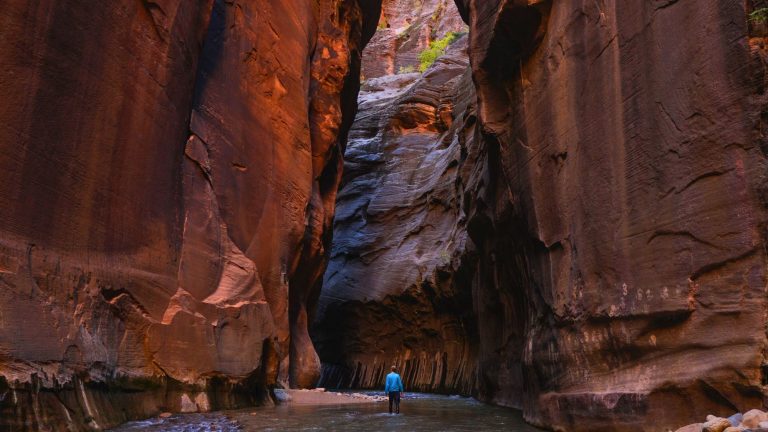
While it doesn’t get buried in snow, it trades that problem for a far more intimidating one: falling ice. The canyon’s towering sandstone cliffs collect snow on their upper rims, and as the sun works its magic, this snow melts and refreezes into massive icicles.
When the temperature rises, these frozen daggers can break off and plummet hundreds of feet onto the trails below. It’s nature’s version of a medieval siege.
Because of this terrifying hazard, popular trails such as The Narrows and Weeping Rock are frequently closed. And the legendary Angels Landing hike, already a challenge for anyone with a healthy fear of heights, becomes a nightmarish slip-and-slide. That final ascent, where you cling to chains along a narrow spine of rock with thousand-foot drop-offs, is simply not worth the risk on ice.
You may get to see the beautiful sight of red rocks dusted with snow, but the iconic hikes that make Zion famous will likely be off-limits, leaving you to admire the view from a safe distance.
Rocky Mountain National Park, Colorado

Rocky Mountain National Park is all about altitude, and its star attraction is Trail Ridge Road, the highest continuous paved road in the United States. It crests at a breathtaking 12,183 feet, which is fantastic in July but a complete non-starter in January.
The road closes for the season in October and doesn’t reopen until the brave plow drivers can find it again around Memorial Day. This closure effectively locks away the entire alpine tundra ecosystem from the average visitor.
You can’t just drive up to the Alpine Visitor Center and enjoy those Continental Divide views from your heated car seat. Instead, you’re relegated to the lower elevations, primarily the Bear Lake Road corridor.
While beautiful, this area can get incredibly crowded, with the parking lot at Bear Lake often filling up early, even on winter weekends. The lake itself is frozen solid and covered in snow, transforming from a shimmering mirror reflecting Hallett Peak into a flat, white expanse.
It’s pretty, in a quiet, subdued way, but it lacks the dramatic, high-altitude punch that makes the park so famous in the summer.
Acadia National Park, Maine

Acadia National Park is the crown jewel of the New England coast, but in winter, much of that jewel is kept under lock and key.
The famous 27-mile Park Loop Road, which provides access to highlights like Sand Beach and Thunder Hole, is mostly closed to vehicles from December 1st until mid-April. You can still access a small portion of Ocean Drive, but the full scenic tour is off the table.
The most significant closure is the road up Cadillac Mountain. This summit is renowned for offering the first glimpse of sunrise in the United States during certain times of the year and provides stunning panoramic views of Bar Harbor and the surrounding islands. But in winter, that road is gated and locked.
Getting to the top requires a strenuous 3.5-mile hike or snowshoe trip up an icy road, a journey that most visitors wisely decide to skip. This means the signature, must-see view of the park is completely out of reach.
You’re left to explore the coastal sections that are accessible, which are certainly beautiful, but the sweeping, god’s-eye perspective from the summit remains strictly for the birds and the most hardcore winter adventurers.
Bonus #12: Banff National Park, Canada

Let’s cross the border for a moment, because Banff is the gold standard for epic alpine-daydreams-turned-winter-plot-twists. Chances are, you’ve seen those pictures of Moraine Lake radiating the kind of electric turquoise that makes a Caribbean beach look dull.
Plot twist: show up between mid-October and early June, and what you get isn’t neon water, but a firmly locked gate. Turns out, Moraine Lake Road closes completely due to avalanche risk. That’s right, the most iconic photo spot in Canada pulls a disappearing act for a solid eight months.
Lake Louise? You can reach it, but you’ll need to squint to spot the legendary blue. By January, the lake is buried under thick ice and snow, and the only thing reflected is your disbelief.
People walk on the surface without realizing they’re crossing what’s basically a frozen celebrity. You won’t get that postcard-perfect shot of Victoria Glacier unless you’ve got X-ray vision.
Banff’s mountains are still jaw-dropping (there’s no escaping that), but winter transforms the whole scene into a black-and-white landscape so stark, you half-expect a bighorn sheep to loan you a scarf.
Like Our Content? Follow Us on MSN (or click the Follow Button above) for more from Discover Parks & Wildlife.